The Amarillo Starlight Diamond
Open FREE Unlimited Store Join Our Newsletter
Origin of Name
The diamond gets its name from the town of origin of the finder/owner of the diamond, Mr. W.W. Johnson of Amarillo, Texas, who discovered the 16.37-carat rough diamond in 1975, at the world's one and only diamond mine open to the public, the Arkansas Crater of Diamonds State Park, where one could search for diamonds after paying a nominal fee and keep what he finds.
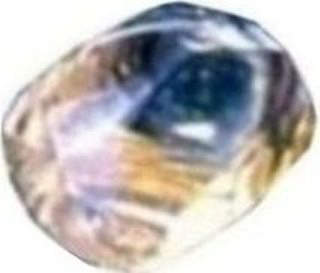
16.37-carat Amarillo Starlight rough diamond - Enlarged

Characteristics of the diamond
The Amarillo Starlight diamond is a 7.54-carat, marquise-cut, white diamond of unknown color and clarity grades.
If the white diamond is an absolutely colorless diamond also known as a D-color diamond, it is a Type IIa, which are said to be chemically pure and structurally perfect diamonds. Factors that can cause color in diamonds are absent in these Type IIa diamonds. Hence their absolutely colorless nature. Two important factors that can cause color in diamonds are presence of trace quantities of impurities in the crystal and plastic distortion of the crystal.
If on the other hand the diamond is near colorless or has at least a tinge of yellow, the diamond becomes a Type Ia diamond, in which the color is caused by trace quantities of nitrogen atoms being present in the crystal. Nitrogen atoms present as aggregates of odd numbers can impart a pale to medium yellow color to diamonds. Such diamonds are known as Type Ia. If nitrogen atoms are scattered as single atoms in the crystal they impart an intense yellow color to the diamonds such as canary yellow. These diamonds are known as Type Ib.
History
The discovery of the diamond
The Amarillo Star rough diamond, a 16.37-carat white stone was discovered in 1975 by W. W. Johnson of Amarillo, Texas, while he was on vacation with his family, at the Crater of Diamonds State park, in Arkansas. Mr. Johnson decided to take his family out on the popular diamond searching adventure in the park, a pastime in which all visitors to the park usually engage in, and was rewarded with this unusual and impressive find.
Cutting of the rough stone into a 7.54-carat marquise-cut diamond with a loss of 54 percent of the rough stone
In keeping with the park's policy that "finders are keepers" Mr. Johnson became the owner of the diamond. He subsequently got the diamond cut into a marquise-shape weighing 7.54 carats, with the inevitable loss of 8.83 carats, equivalent to 54% of the original rough diamond. Such losses are common in the processing of diamonds, in the attempts to achieve the highest quality diamonds, with the maximum fire and brilliance, i.e. cutting for quality at the expense of quantity.
The Amarillo Starlight is the 4th largest rough diamond discovered in the history of exploitation of the crater, and the largest diamond discovered since the crater was established as a state park
The 16.37-carat white rough diamond became the largest diamond ever unearthed by a park visitor following the Crater's establishment as a state park in 1972. The diamond still holds this record up to date. However, in the list of notable diamonds discovered at the Crater of Diamonds Park, the Amarillo Starlight occupies the 4th position, being the 4th largest rough diamond discovered so far in the history of exploitation of the crater.
List of notable diamonds discovered at the Crater of Diamonds, Arkansas, arranged in descending order of carat weights of the rough diamonds.
S/N |
Name | Discoverer | Year found | Rough carat weight | Finished carat weight | Color |
| 1 | Uncle Sam | W.O. Basham | 1924 | 40.23 | 12.42 | white |
| 2 | Star of Murfreesboro | John Pollock | 1964 | 34.25 | uncut | blue |
| 3 | Lee J. Wagner diamond, displayed at the NMNH | Lee J. Wagner | 1917 | 17.86 | uncut | canary yellow |
| 4 | Amarillo Starlight | W.W.Johnson | 1975 | 16.37 | 7.54 | white |
| 5 | Star of Arkansas | 1956 | 15.33 | 8.27 | white | |
| 6 | Star of Shreveport | Carroll Blakenship | 1981 | 8.82 | uncut | white |
| 7 | Illusion diamond | Beth Gilbertson | 2011 | 8.66 | white | |
| 8 | Lamle diamond | Betty Lamle | 1978 | 8.61 | brown | |
| 9 | Connel diamond | 1986 | 7.95 | white | ||
| 10 | Dickinson/Stevens diamond | Dickinson & Steven | 1998 | 7.28 | uncut | yellow |
| 11 | Cooper diamond | Richard Cooper | 1997 | 6.72 | uncut | purplish-brown |
| 12 | Gary Moore diamond | 1960 | 6.43 | uncut | canary yellow | |
| 13 | Roden diamond | Donald & Brenda Roden | 2006 | 6.35 | uncut | honey-brown |
| 14 | Lee diamond | 1988 | 6.30 | white | ||
| 15 | Newman diamond | 1981 | 6.25 | white | ||
| 16 | Bleeding Heart diamond | Joe Fedroza | 1991 | 6.23 | brownish-yellow | |
| 17 | Stockton diamond | 1981 | 6.20 | white | ||
| 18 | Schall diamond | 1981 | 6.07 | white | ||
| 19 | Cooper diamond | Richard Cooper | 1997 | 6.00 | uncut | brown/cognac |
| 20 | Sunshine diamond | Bob Wehle | 2006 | 5.47 | uncut | canary yellow/flawless |
| 21 | Sweet Caroline | Richard Burke | 2008 | 4.68 | white | |
| 22 | Kimberley diamond | Denis Tyrrell | 2008 | 4.42 | uncut | white |
| 23 | Johnson diamond | Chad Johnson | 2007 | 4.38 | uncut | brown/tea colored |
| 24 | Khan Canary | George Stepp | 1977 | 4.25 | uncut | canary |
25 |
Okie Dokie diamond | Marvin Culver | 2006 | 4.21 | uncut | canary yellow/flawless |
| 26 | Strawn Wagner diamond | Shirley Strawn | 1990 | 3.09 | 1.09 | white |
| 27 | Royce Walker diamond | Royce Walker | 2009 | 2.93 | dark honey-brown | |
| 28 | Brown Rice diamond | Glenn Worthington | 2010 | 2.13 | brown | |
| 29 | Easter Sunrise diamond | Glenn Worthington | 2009 | 2.04 | 1.09 | yellow |
Images of some diamonds discovered at the Crater of Diamonds State Park
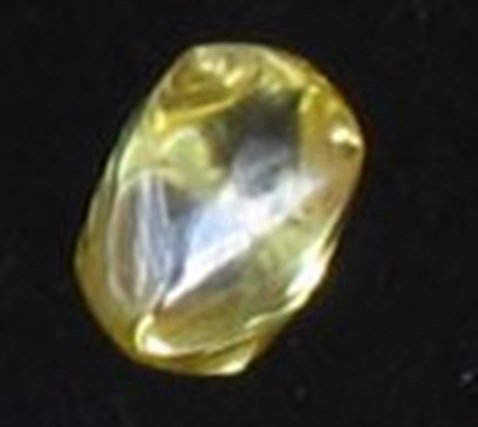
4.21-carat Okie Dokie canary yellow diamond discovered by Marvin Culver in 2006
© Crater of Diamonds State Park
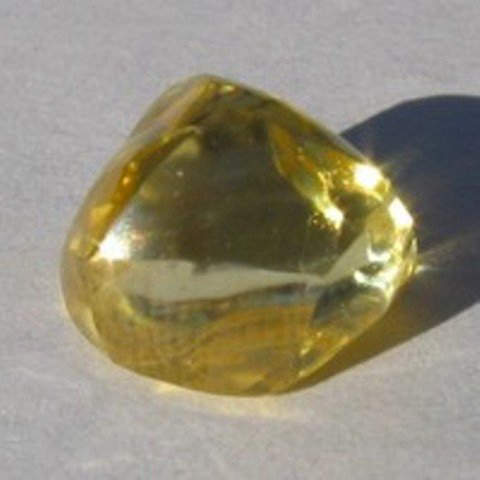
5.47-carat canary-yellow Sunshine diamond discovered by Bob Whele in 2006
© Crater of Diamonds State Park
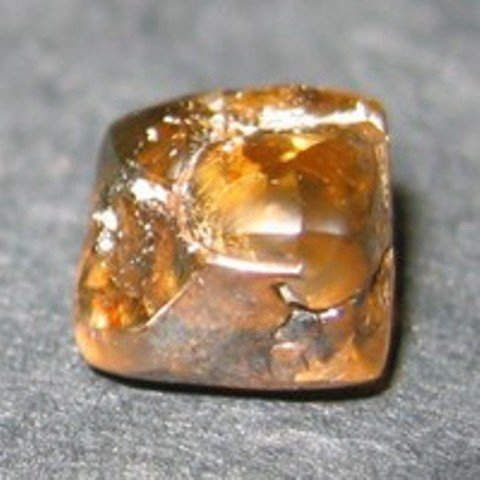
6.35-carat honey-brown Roden diamond discovered by Donald & Brenda Roden in 2006
© Crater of Diamonds State Park
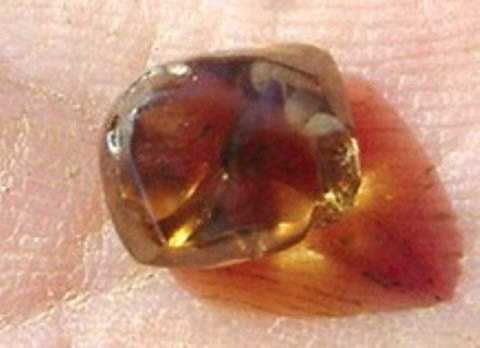
4.38-carat tea-colored diamond discovered by Chad Johnson in 2007
© Crater of Diamonds State Park
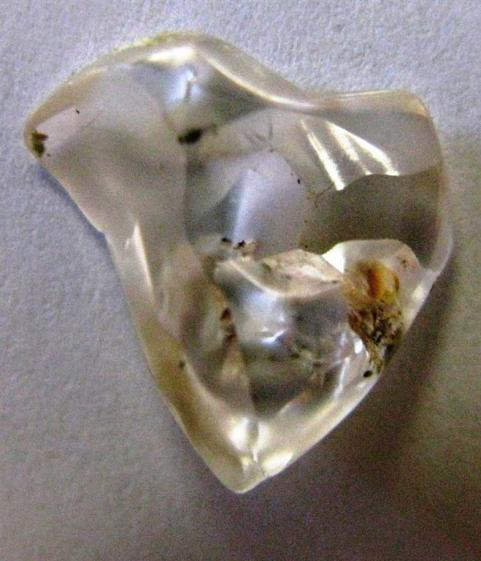
4.68-carat Sweet Caroline diamond disovered by Richard Burke in 2008
© www.arkansasstateparks.com
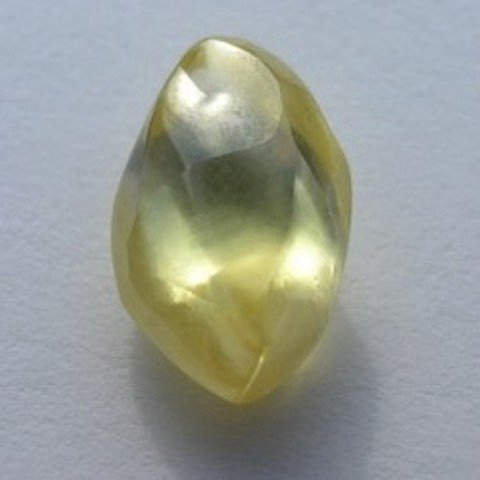
2.04-carat yellow-colored Easter Sunrise diamond discovered by Glenn Worthington in 2009
© Crater of Diamonds State Park
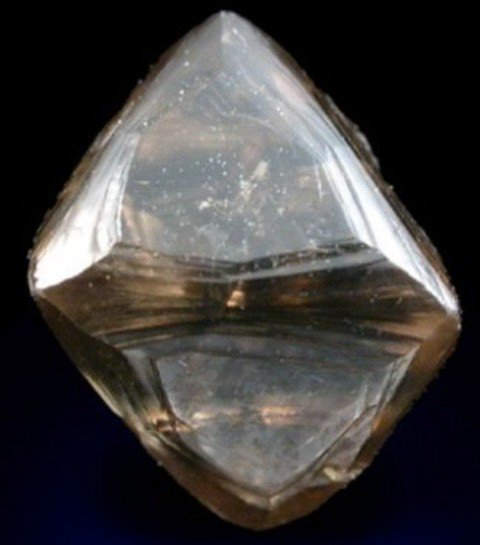
2.93-carat dark honey-brown colored diamond discovered by Royce Walker in 2009
© Crater of Diamonds State Park
History of the Crater of Diamonds State Park
The history of the Crater of Diamonds State Park can be divided into three periods :-
1) First period - 1906 to 1952. Period of unsuccessful commercial mining.
2) Second period - 1952 to 1972. Period of development as a privately owned tourist attraction, known as the Crater of Diamonds.
3) Third Period - 1972 to date. Period of development as a state-sponsored tourist attraction, known as the Crater of Diamonds State Park.
1) History of Crater of Diamonds - First Period - 1906 to 1952
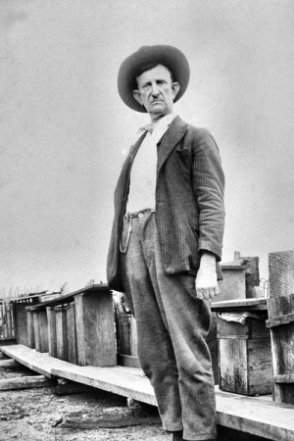
John Wesley Huddleston who first discovered diamonds in the Crater of Diamonds Park site in 1906
Crater of Diamonds Archive - Photograph circa 1924
This period extends from the time of discovery of diamonds in the crater in 1906 up to the time the two mining companies ceased their activities in 1952. Diamonds were first discovered accidentally on the site in 1906 by a farmer named John Huddleston, whose farm was situated on the site. In the unprecedented diamond rush that followed in the immediate aftermath of the accidental discovery, Mr. Huddleston's property escalated in value, and he was able to dispose of his farm for $ 36.000, to a diamond mining company who immediately closed the farm area to the public. Within a few years the entire land covering the eroded surface of the Prairie Creek Kimberlite Pipe, was acquired by two rival companies, the Arkansas Diamond Company and the Ozark Diamond Mines Corporation.
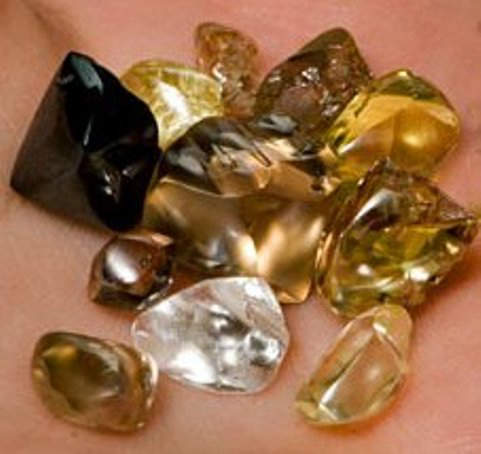
Some diamonds found at the Arkansas Crater of Diamonds State Park
© www.arkansasstateparks.com
The two companies engaged in sporadic mining activity, which was hampered by mismanagement, lack of finance, court cases and sabotage. Moreover it became apparent that the turn out of the mine was not sufficient to sustain the economic viability of the project. The diamonds produced were smaller in size, even though quality-wise they were comparatively of a higher grade, than normal. Besides, the added costs of processing the diamonds, would not provide sufficient returns at least to break even. The Argyle Diamond Mines in Western Australia, had faced a similar problem at the initial stages of its production. These mines had a enormous production of small brown diamonds, which were of a lesser quality than the Arkansas diamonds. Yet the companies that operated these mines were able to make the project economically viable, by going into a mutually beneficial partnership with Indian-based diamond processing factories to process their enormous production of small brown diamonds. While the companies got their diamond processed at cheaper rates in India, where labor costs were cheap compared to the rates prevailing in Australia, the Indian diamond processing factories that were starved of rough diamonds to keep their factories running had an enormous supply of diamonds from Australia, which caused a boom in the diamond processing industry, and helped provide employment to the skilled craftsmen. Argyle markets its brown diamonds as champagne and cognac diamonds, and jewelry set with brown diamonds have become very popular.
2) History of Crater of Diamonds - Second Period - 1952 to 1972
The two companies that owned the vast 37-acre site decided to form a partnership in 1952, in order to develop the site as a tourist attraction. A novel suggestion to allow visitors to prospect for diamonds on their own manually, using simple tools, and for a nominal fee, allowing them to keep what they find, was adopted. The search area was known as the "Crater of Diamonds," and with aggressive advertising, the popularity of the site as a tourist attraction soared. Some of the well known diamonds found by tourists during this period are the 15.33-carat Star of Arkansas in 1956, the 6.43-carat Gary Moore diamond in 1960, and 34.25-carat Star of Murfreesboro in 1964. See table above.
3) History of Crater of Diamonds - Third Period - 1972 to date
The Crater of Diamonds was acquired by the Arkansas State Government in 1972, and developed as a State Park, known as the Crater of Diamonds State Park. The policy adopted by the previous owners of the site to allow visitors to prospect for diamonds for a nominal fee and keep what they find was continued. But facilities available to the visitors were expanded and new facilities were added, making the site one of the most popular tourist attractions in the nation. Facilities provided for visitors include, camp sites, picnic sites, cafe, standard pavilion with rest rooms, laundry, and gift shops, interpretive programs for park visitors, and hiking trails, and an aquatic play ground called the Diamond Springs. The interpretive programs instruct the visitors on the geology and history of the site, techniques of looking for diamonds, tips on identifying rough diamonds etc. Diamond mining tools are available for rent or purchase. Diamonds are identified and certified free-of-charge by the Diamond Discovery Center.
Average number of visitors to the park and the average discovery of diamonds each year
Today an average of 60,000 people visit the park each year, and an average of 600 diamonds are found every year. This works out to an average of about two diamonds each day. Over 70,000 diamonds have been discovered in the area since 1906, out of which 25,000 were discovered after the site became a state-owned park. The largest diamond discovered after the crater became a state park in 1972, was the 16.37-carat white diamond the Amarillo Starlight found in 1975, which is the subject of this web page. At least 11 other diamonds weighing more than 6 carats have been discovered during this period. See table above. Three of the most famous diamonds discovered after 1972, are the 4.25-carat Khan Canary diamond, the 3.03-carat Strawn Wagner diamond and the 4.21-carat Okie Dokie diamond.
You are welcome to discuss this post/related topics with Dr Shihaan and other experts from around the world in our FORUMS (forums.internetstones.com)
Related :-
References :-
1) Crater of Diamonds State Park - From Wikipedia, the free encyclopedia
2) Arkansas State Parks - www.arkansasstateparks.com
3) Diamond Mines - Crater of Diamonds State Park. www.craterofdiamondsstatepark.com
4) www.arkansasstateparks.com/enews
5) The Encyclopedia of Arkansas History and Culture - Crater of Diamonds State Park. encyclopediaofarkansas.net
 Home
Security & Guarantee
How it Works
Technology Partners
Updated Tables
Famous Diamonds
More Famous Diamonds
Famous Pearls
Famous Gemstones
Contact Dr Shihaan Larif
Contact Senior Editor
Famous Jewelry
Reference Database
Forums
Learning Center
Gemstone Gallery
e-mail Notifications
Advertise
Press Release
About Us
Privacy Policy
Contact Us
FAQ'S
Site Map
Staff Mail Login
Staff Documents
Birthstones
History
Minerals
Shows
Live Metal Prices
Jewellery Gallery
News
Marketplace
Marketplace Support
Open Store
Online Auctions
Join Us & Contribute
Directory
Classifieds
List your products
Wholesale Trading
Post Buy Request
Go Green Policy
Site Updates
Upcoming-ToDo List
Latest News
Latest Articles
Latest Blog Updates
Chat Rooms
Job Board
User Gallery
Videos
New Newsletter Archive
Old Newsletter Archive
Jewelry & Mineral Blog
User Blogs & Social Network
Search
Answers (Q & A)
Valuation
Help me find a diamond/jewelry
pin.internetstones.com- Social Pinboard- Sart yours & connect with millions
Invite Friends From Yahoo, Gmail etc-One Click
Home
Security & Guarantee
How it Works
Technology Partners
Updated Tables
Famous Diamonds
More Famous Diamonds
Famous Pearls
Famous Gemstones
Contact Dr Shihaan Larif
Contact Senior Editor
Famous Jewelry
Reference Database
Forums
Learning Center
Gemstone Gallery
e-mail Notifications
Advertise
Press Release
About Us
Privacy Policy
Contact Us
FAQ'S
Site Map
Staff Mail Login
Staff Documents
Birthstones
History
Minerals
Shows
Live Metal Prices
Jewellery Gallery
News
Marketplace
Marketplace Support
Open Store
Online Auctions
Join Us & Contribute
Directory
Classifieds
List your products
Wholesale Trading
Post Buy Request
Go Green Policy
Site Updates
Upcoming-ToDo List
Latest News
Latest Articles
Latest Blog Updates
Chat Rooms
Job Board
User Gallery
Videos
New Newsletter Archive
Old Newsletter Archive
Jewelry & Mineral Blog
User Blogs & Social Network
Search
Answers (Q & A)
Valuation
Help me find a diamond/jewelry
pin.internetstones.com- Social Pinboard- Sart yours & connect with millions
Invite Friends From Yahoo, Gmail etc-One Click




Our Global Jewelry Industry Job Network


Buy & Sell in our Marketplace

Subscribe to our Newsletter

List in our Classifieds

List in our Directory

User Uploaded Gallery

Powered by Ultra Secure
Amazon (USA) Cloud Network

Founder Internet Stones.COM
Register in our Forums

| Featured In
|
|
|
|
|
|
|
|







Blog & Education Feed
Articles Feed
 |
 |
 |

Copyright © .Internet Stones.COM. All rights reserved.