The Arcot Diamonds
Open FREE Unlimited Store Join Our Newsletter
Origin of Name
Lareef A. Samad B.Sc (Hons)
The Arcot diamonds get their name from one of the three Nawabs of Arcot who ruled the Carnatic between 1761 and 1818, who gifted the diamonds to Queen Charlotte, wife of King George III and Queen Consort of the United Kingdom
The Arcot diamonds get their name from one of the Nawabs of Arcot, who ruled between 1761 and 1818, the period of rule of Charlotte of Mecklenburg, wife of King George III (1760-1820) and Queen Consort of the United Kingdom. Queen Charlotte was presented the diamonds by the Nawab of Arcot, presumably in 1777, not only as a token of the Nawab's loyalty to the English Monarchy, commonly referred to as "Nazrana" in India, but also as symbol of appreciation for British military assistance against the French and their local Indian allies, in the preservation of their kingdom in the Carnatic region of India. However, the gift of the diamonds could not prevent the British East India Company from completely taking over the territories of the Nawabs of Arcot in 1801, during the rule of Nawab Azim-ud-Dawla, as compensation for the heavy debts the Nawabs had incurred by inviting British military assistance for the preservation of their kingdom. The British East India Company took over the entire civil and municipal administration of the Carnatic, and Azim-ud-Daula became a mere titular ruler, receiving one-fifth of the total revenue of the State for the maintenance of his palaces.
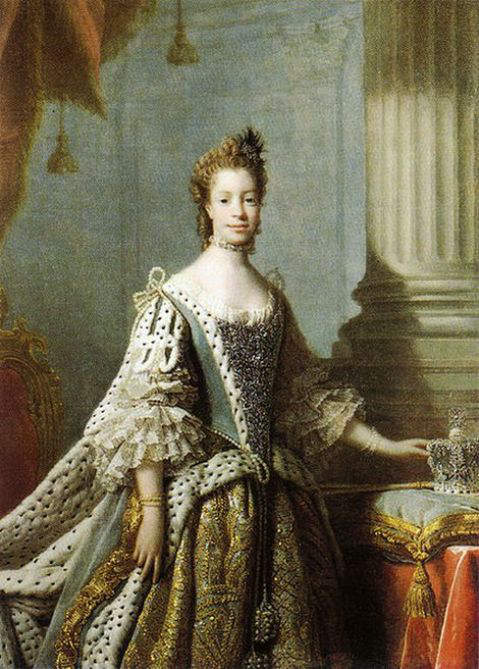
Queen Charlotte,wife of King George III and Queen Consort of the United Kingdom from 1761 to 1818

The assumption that Nawab Azim-ud-Dawla gifted the diamonds in 1777 to Queen Charlotte is factually incorrect, as Nawab Azim-ud-Dawla ascended the throne of Arcot only in 1801
It has been generally assumed that the Arcot diamonds were gifted to Queen Charlotte by Nawab Azim-ud-Dawla in the year 1777. However, a verification of the historical facts show that this is factully incorrect, as Nawab Azim-ud-Dawla ascended the throne of Arcot only in 1801, soon after the death of his father Ghulam Hussain Umdat-al-Umra who ruled from 1795 to 1801.
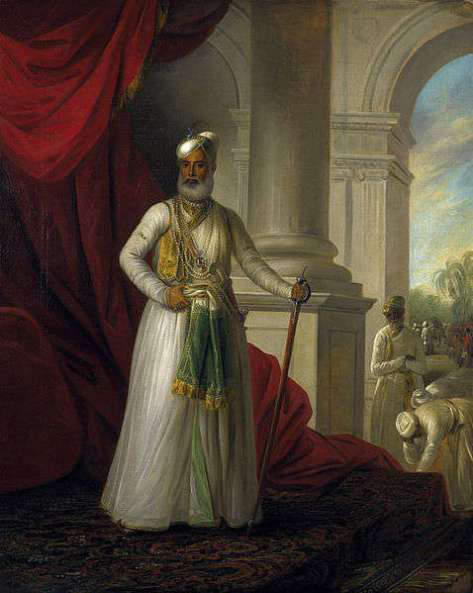
George Willison's 1777 portrait of Nawab Muhammad Ali Khan Wala-Jah, a strong ally of the British, who ruled between 1752 and 1795
The Nawab who gifted the diamonds to Queen Charlotte in 1777 was most probably the reigning Nawab at that time, Nawab Muhammad Ali Khan Wala-Jah, who was totally indebted to the British, for restoration of his throne and maintenance of his kingdom
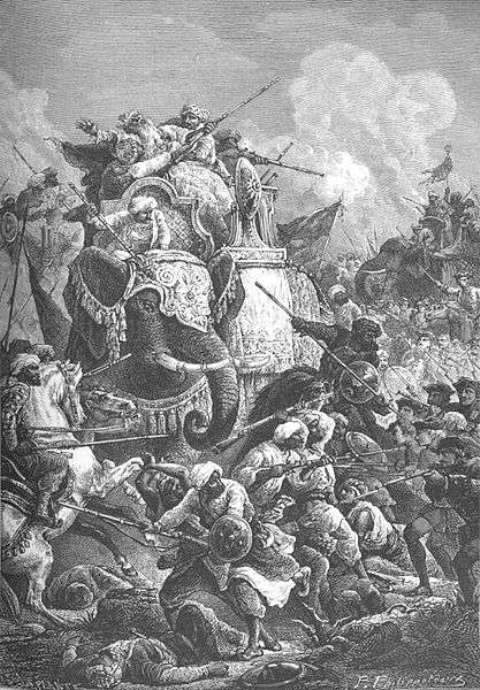
Killing of Nawab Anwaruddin Muhammad Khan by the French and their local Indian allies in 1749 by Paul Phillipoteaux
The Nawab who was reigning in 1777, at the time the Arcot diamonds were purportedly gifted to Queen Charlotte was Nawab Muhammad Ali Khan Wala-Jah who reigned from 1752 to 1795, after the throne of Arcot usurped by Chanda Sahib with the help of the French, by killing his father, Nawab Anwaruddin Muhammed Khan in 1749, was again restored to him, by the British after Chanda Sahib and his son were defeated in battle by the British. Hence, the restoration of Nawab Muhammad Ali Khan Wala-Jah to the throne of Arcot in 1752 was achieved with British Help, and the Nawab continued to engage the British for the defence of his territory by the payment of an annual fee of 400,000 Pagodas, equivalent to £160,000 and giving the British land grants. Thus, Nawab Muhammed Ali Khan Wala-Jah was totally indebted to the British for the maintenance of his kingdom, and hence the gift of the Arcot diamonds in 1777 to the British Queen Charlotte, without any doubt came from Nawab Muhammad Ali Khan Wala-Jah and not Nawab Azim-ud-Dawla who ascended the throne only in 1801.
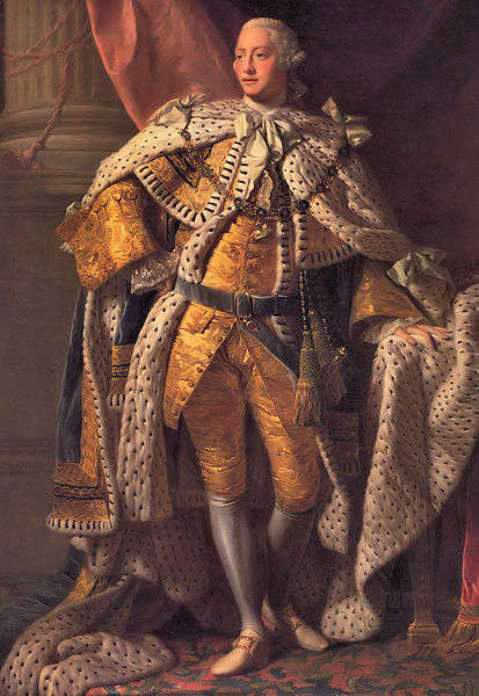
King George III, King of the United Kingdom and Hanover from 1760 to 1820 and husband of Queen Charlotte
It is highly unlikely that Nawab Azim-ud-Dawla would ever think of gifting a set of valuable diamonds to Queen Charlotte, as the British were responsible for usurping all his powers and reducing him to the status of a figurehead Nawab
If we assume that Nawab Azim-ud-Dawla was the actual Nawab who gifted the Arcot diamonds to Queen Charlotte, then the year of giving the gift, cannot be 1777, but any where between 1801 and 1819, the period of his titular reign over his kingdom, still falling within the period of rule of Queen Charlotte from 1761 to 1818. It is highly improbable that Nawab Azim-ud-Dawla would ever think of gifting a set of valuable diamonds, to a Queen whose agents in India, the British East India Company, was responsible for usurping all his powers as a Nawab and reducing his status to that of a figurehead Nawab.
The relationship between Nawab Ghulam Hussain Umdat-al-Umra and the British were at a very low ebb during his period of rule from 1795 to 1801, and hence it is highly unlikely that Nawab Umdat-al-Umra was the Nawab who gifted the diamonds
The other Nawab of Arcot whose period of rule from 1795 to 1801, falls within the period of rule of Queen Charlotte, is Nawab Ghulam Hussain Umdat-al-Umra. Unlike his father Nawab Muhammad Ali Khan Wala-Jah, who was a stern ally of the British, Nawab Ghulam Hussain Umdat-al-Umra was suspected of secretly providing assistance to Tippu Sultan during the 4th Anglo-Mysore war. With the fall of Tippu Sultan in 1799, the British accused Nawab Ghulam Hussain Umdat-al-Umra of collaborating with Tippu Sultan, and demanded the entire administration of the kingdom be given to them as indemnity. Nawab Ghulam Hussain Umdat-al-Umra registered his vehement opposition to the British move, but died soon afterwards in 1801. He was succeeded by his son Nawab Azim-ud-Dawla, and soon after he ascended the throne, the British compelled the new Nawab to sign a treaty, handing over the entire civil and municipal administration of the Carnatic to the British East India Company. Thus, the relationship between the British and Nawab Ghulam Hussain Umdat-al-Umra was at a very low ebb, and hence it is highly unlikely that he could be the Nawab who gifted the Arcot diamonds to Queen Charlotte.
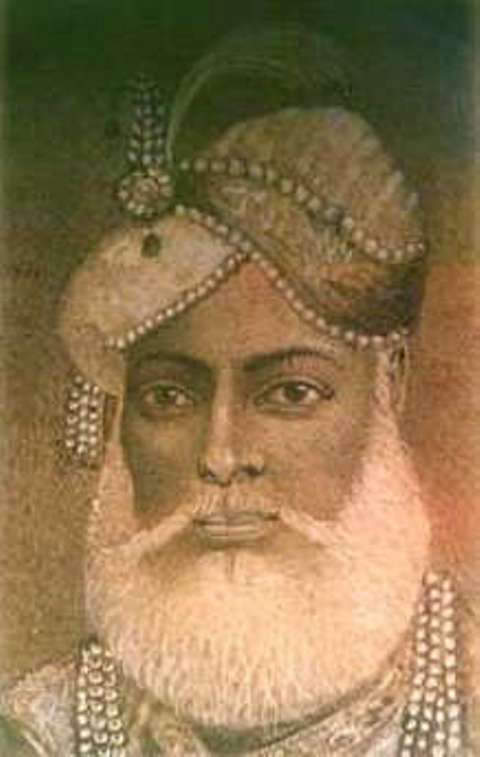
Another Portrait of Muhammad Ali Khan Walajah
All available historical evidence points to Nawab Muhammad Ali Khan Wala-Jah as the Nawab who gifted the Arcot diamonds to Queen Charlotte in 1777
Hence according to all available historical evidence,the gift of diamonds to Queen Charlotte actually came from Nawab Muhammad Ali Khan Wala-Jah, a staunch ally of the British in the Carnatic, who ruled between 1752 and 1795, and not Nawab Azim-ud-Dawla, the figurehead Nawab who reigned between 1801 and 1818, as generally assumed. A list of all Nawabs of Arcot since the creation of the Nawabdom by Mughal Emperor Aurangzeb in 1692 is given below. The Nawabs were the agents of the Mughal empire in the Carnatic from 1692 to 1744, semi-independent under Nawab Anwaruddin Muhammad Khan from 1744 to 1749 and under European influence from 1749 to 1855, first under the French from 1749 to 1752 and later under the British from 1752 to 1855.
List of Nawabs of the Carnatic from 1692 to 1855
S/N |
Name of Nawab | Beginning of reign |
End of reign |
Notes |
|---|---|---|---|---|
1 |
Zulfiqar Ali Khan Nusrat Jung | 1692 |
1703 |
Appointed by Mughal emperor Aurangzeb as the first Nawab of the carnatic in 1692. Recalled to Delhi in1703 and continued as Commander of Mughal forces in the eastern Deccan against the Marathas. |
2 |
Daud Khan | 1703 |
1710 |
Appointed by Emperor Aurangzeb as successor to Zulfiqar Ali Khan.Recalled to Delhi in 1710. |
3 |
Muhammad Sa'adatullah Khan I | 1710 |
1732 |
Appointed by Emperor Bahadur Shah successor to Emperor Aurangzeb. Moved the Capital from Gingee to Arcot. Picked his nephew Dost Ali Khan as successor. Rejected the authority of Bahadur Shah's successor Emperor Jahandar Shah. |
4 |
Dost Ali Khan | 1732 |
1740 |
Nephew and successor to Muhammad Sa'adtullah Khan. Killed by the Marathas when they invaded the Carnatic in 1740 |
5 |
Safdar Ali Khan | 1740 |
1742 |
Son of Dost Ali Khan. Recognized as the Nawab of the Carnatic by the British. Assassinated by his brother-in-law Murtuza Ali in 1742. |
6 |
Muhammad Sa'adatullah Khan II | 1742 |
1744 |
Minor son of Safdar Ali Khan, proclaimed as Nawab of Arcot by the British, supported by Nizam ul Mulk Asaf Jah I of Hyderabad. Anwaruddin Muhammad Khan was appointed as regent to the minor Nawab. Like his father assassinated in 1744. End of the first dynasty of the Nawabs of Arcot. |
7 |
Anwaruddin Muhammad Khan | 1744 |
1749 |
Regent to previous Nawab. Confirmed as Nawab by the British and Nizam-ul-Mulk.Founder of the second dynasty of the Nawabs of Arcot. Helped to restore Madras and Cuddalore to the British after these towns were captured by the French in 1746. Killed in battle in August 1749, at the age of 77, fighting with the British against the French and Chanda Sahib |
8 |
Chanda Sahib | 1749 |
1752 |
Chanda Sahib installed as Nawab by the French in 1749 |
9 |
Muhammad Ali Khan Wala-jah | 1752 |
1795 |
Son of Anwaruddin Muhammad Khan, restored as Nawab by the British after defeating Chanda Sahib's forces, a campaign in which Clive Robert played a crucial role. A staunch ally of the British in the Carnatic. |
10 |
Ghulam Hussain Umdat-al-Umrah | 1795 |
1801 |
Son of Muhammad Ali Khan Wala-jah, suspected of secretly assisting Tippu Sultan in the 4th Anglo-Mysore War. After the fall of Tippu Sultan in 1799, the British accused the Nawab of collaborating with Tippu Sultan, and demanded that he surrender the entire administration of the kingdom to them as indemnity, a move vehemently opposed by the Nawab. |
11 |
Azim-ud-Dawla | 1801 |
1819 |
Son and successor to Ghulam Hussain Umdat-al-Umrah. Reduced to a figurehead Nawab by the British, who took over the entire civil and municipal administration of the Carnatic. |
12 |
Azam Jah | 1819 |
1825 |
Son and successor to Azim-ud-Dawla, but still a figure head Nawab. |
13 |
Ghulam Muhammad Ghouse Khan | 1825 |
1855 |
13th and the last Nawab of the Carnatic, proclaimed Nawab at the age one year, with his uncle Azim Jah as regent. Did not leave behind any male issue. Nawabdom formally annexed by the British East India Company in 1855, citing the doctrine of lapse, and setting aside the claim of Azim Jah. |
14 |
Azim Jah | 1867 |
1874 |
Granted the title "Nawab of Arcot" by Queen Victoria in 1867 after court action taken by Azim Jah, and given a political pension. |
©internetstones.com
Please do not copy our tables without our permission. We may be compelled to inform the search engines if our content and tables are plagiarised.
Characteristics of the Diamonds
The cut, color and carat weight of the two Arcot diamonds before recutting
The Arcot diamonds consisted of five brilliants, out of which only the first two were of significant sizes, and were antique oval or pear-shaped, colorless or near-colorless diamonds with the larger one having a weight of 33.70 carats and smaller one 23.65 carats. When the diamonds were presented to Queen Charlotte by the Nawab, they were set on a matching pair of earrings, as the diamonds appeared to match each other in terms of size and shape, even though their weights were different. Queen Charlotte was famous for superbly bejewelling herself while at court or for formal state occasions. The portrait of Queen Charlotte below show her wearing drop earrings, and hair ornaments with at least two drop-shaped diamonds and a collar brooch with at least three drop-shaped diamonds. If the pair of drop earrings she is wearing is not what the Nawab of Arcot had gifted, from among the remaining five drop-shaped diamonds, two of them might be the pear-shaped Arcot diamonds gifted by the Nawab.
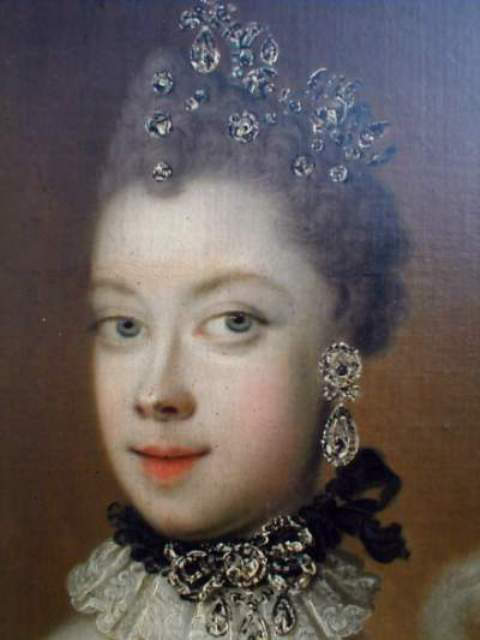
Queen Charlotte,wife of King George III and Queen Consort of the United Kingdom from 1761 to 1818
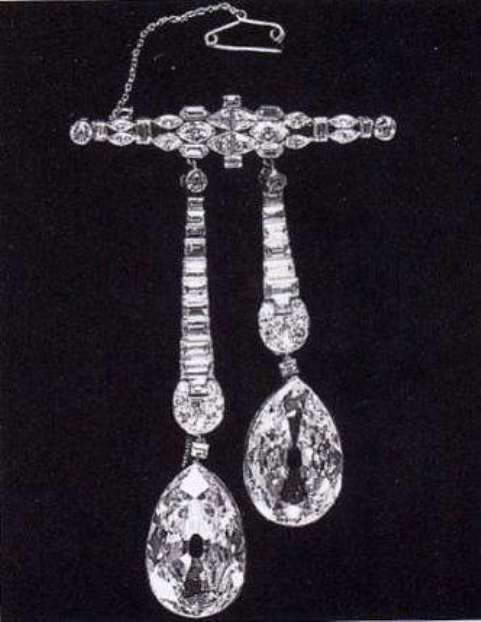
The original Arcot Diamonds suspended from a bar brooch after dismounting from the Westminister Tiara
The two Arcot diamonds in the photograph above, the original diamonds before recutting, appear to match each other in size and shape, despite their differences in weight, the larger one being 33.70 carats and smaller one 23.65 carats.
The Arcot diamond pair is separated by Harry Winston after 182 years, slightly recut and remounted on different rings and sold to two different American customers
The Arcot diamonds were originally thought to be a matching pair when Harry Winston purchased them at an auction in June 1959. They were mounted on the Westminster Tiara and also could be dismantled from the tiara, and suspended as pendants from a bar brooch. Harry Winston dismounted the diamonds, and discovered that they were not a perfectly matching pair. Therefore, he decided to recut the diamonds slighty to improve their clarity and brilliance, and the new weights of the diamonds became 31.01 carats for the larger Arcot that came to be known as Arcot I and 18.85 carats for the smaller one, that became Arcot II. He then mounted the two diamonds on two different rings,and sold them to two American customers in 1959 and 1960.
The diamonds are without any doubt Type IIa Golconda diamonds
The diamonds being stones of 18th century India, no doubt have the color and clarity of the famous Golconda diamonds, and appear to be Type IIa diamonds, which are absolutely colorless, being chemically pure in the absence of impurities like nitrogen and boron, and structurally perfect in the absence of plastic deformations in the crystal, which can impart various fancy colors to the diamond.
History
Early History of the Diamonds
The Arcot diamonds enter the personal jewelry collection of Queen Charlotte
Thus, it has been convincingly shown above, that the Nawab of Arcot who gifted the Arcot diamonds to Queen Charlotte in 1777, was Nawab Muhammad Ali Khan Wala-Jah, a staunch ally of the British and not the figurehead Nawab Azim-ud-Dawla who ascended the throne only in 1801. The Arcot diamonds were the most outstanding among the large collection of Jewelry amassed by Queen Charlotte, and deserved special mention in her last will as how the celebrated diamonds were to be disposed of, after her death, to benefit her four daughters. The Arcot diamonds being gifts the Queen had received from other monarchs, entered the personal jewelry collection of the Queen, which she was free to dispose of as she pleased.
Location and importance of Arcot as the capital city of the Nawabdom of the Carnatic
Arcot was a fortress city, situated in the northeastern part of Tamil Nadu State of India, on the Palar river, located at the point where the Palar river valley meets the Coromandel coast. It commands the inland route from Madras to Bangalore, between the Mysore Ghat and the Javadi Hills. Arcot was a fortified capital of the Muslim Nawabs, and was the scene of numerous battles between the Muslims, Marathas, French and the British, in the 17th and 18th centuries. Present day Arcot is a locality and part of Vellore city, in the State of Tamilnadu in southern India. It is located on the eastern end of the Vellore City, on the southern banks of Palar river. It was the 3rd Nawab of Arcot Muhammad Sa'adatullah Khan I, who shifted the capital of the Carnatic from Gingee to Arcot during his period of rule from 1710 to 1732. Since then the fortified city of Arcot remained the seat of the Nawabdom until its annexation by the British in 1855.
The fortified city of Arcot became famous for its capture and defense by Clive Robert in 1751, during the war between the rival claimants to the throne of the Carnatic.
In 1751, Chanda Sahib - an ally of the French, who was installed as the Nawab of Arcot in 1749, after the defeat of the forces of 7th Nawab, Anwaruddin Muhammad Khan and his British allies, a battle in which the Nawab himself was killed - heard that the deceased Nawab's son, Muhammad Ali Khan Wala-jah was claiming the throne of Arcot and the British had already recognized his claims. Chanda Sahib was based in Arcot, the seat of the Nawabs of Arcot, and his rival claimant Muhammad Ali took refuge in the rock fortress of Tiruchirapally (Trichinopoly). Chanda Sahib with the help of his French allies besieged Trichinopoly, and Muhammad Ali and the British forces supporting him were placed in a desperate situation.
Clive Robert, a 26-year old young British civilian employed as a scribe and book-keeper by the British East India Company, who was in Madras at the time, offered to lead a diversionary attack against Chanda Sahib's base at Arcot, to relieve the pressure on Muhammad Ali, by drawing away part of Chanda Sahib's army from Trichinopoly. He led a force of 200 Europeans and 300 Indians, against the fortress of Arcot, and seized it on August 31st, 1751. Chanda Sahib then dispatched a 10,000 strong force under the command of his son, Raza Sahib to retake Arcot. Raza Sahib placed the fortress of Arcot under siege, and Clive Robert was able to withstand the siege for 53 days, until it was broken by a combined army of British soldiers based in Fort St. George and other enlisted Indians and a reinforcement of two thousand Maratha horse under the command of Madina Ali Khan and Yunus Khan,two commanders of Muhammad Ali Walajah, who defeated Raza Sahib's forces. Muhammad Ali Khan Walajah was restored as the Nawab of the Carnatic.
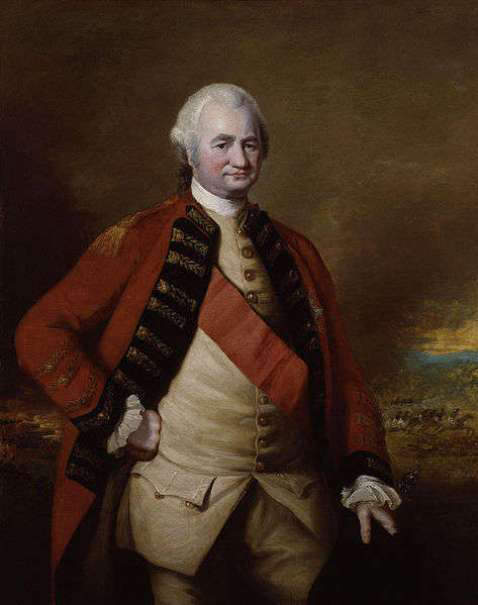
Portrait of Robert Clive, 1st Baron Clive by Nathaniel Dance executed between 1755 and 1774
Clive Robert became famous in Europe for his conduct during the 53-day seige. The extraordinary feat achieved by Clive Robert elevated his status as an able commander, and Clive established himself as a brilliant exponent of Guerilla tactics. Clive, who had never received any form of military training, was described by the Prime Minister William Pitt as the "heaven-born general" endorsing Clive's commander Major Lawrence's observations on his military capabilities. In early 1753 Clive boarded a London-bound ship from Madras, and returned to England after being away from home for 10 years. Clive Robert was promoted as Lieutenant-Colonel in the King's army, and sent back to India in July 1755 as deputy Govenor of Fort St. David, a small settlement south of Madras. Clive Robert was subsequently appointed as Governor of the Presidency of Fort William in Bengal from 1755 to 1767, and in this capacity successfully consolidated the power of the British in this region of India, leading several successful military campaigns inclluding the famous Battle of Plassey.
Death of Queen Charlotte in the year 1818, and her last will that spelt out details how her personal jewelry were to be disposed of and the beneficiaries of the proceeds of the sale
Queen Charlotte died in the year 1818, and left a last will that spelt out in detail how the jewelry belonging to her were to be disposed of. The Clause in the will pertaining to the jewelry read as follows :- ".... of chief value being the jewels. First those which the King bought for £ 50,000 and gave to me. Secondly, those presented to me by the Nawab of Arcot, to my four remaining daughters, or to their survivors or survivor in case they or any of them should die before me, and I direct that these jewels should be sold and that the produce shall be divided among them, my said remaining daughters or their survivors, share and share alike." Under the terms of this will the Arcot diamonds were ordered to be sold to Rundell & Bridge, who in 1804, were appointed jewelers and silversmiths to the Crown, by King George III.
King George IV appropriates his mother's personal jewelry including the Arcot diamonds, making it difficult for the terms of his mother's last will to be executed
However the will of the Queen could not be implemented, as her eldest son King George IV, who succeeded his father George III, after his death in 1820, unilaterally decided that he should inherit the entire property belonging to his father as well as his mother. Consequently, George IV, appropriated the jewelry and other valuables belonging to both his parents. Subsequently, the Arcot diamonds were set in a crown for King George IV. The same Arcots were later set in the Crown of Queen Adelaide, the consort of William IV, the successor to King George IV.
The Arcot diamonds are set on the coronation crown of King George IV in 1821, but later dismantled with other hired diamonds as parliament refused to sanction funds to purchase the hired jewels outright
George IV, who ascended the throne of the United Kingdom on January 29, 1820, was noted for his extravagant and controversial artistic tastes when he was the Prince of Wales and later the Prince Regent for his mentally sick father King George III from 1811 to 1820. Soon after ascending the throne, George IV planned to introduce an innovation in the conduct of British coronations, by introducing a single crown that would be used for both the coronation and subsequent state occasions,such as the State Opening of Parliament, etc. instead of having two separate crowns, one for the coronation only and the other for state occasions. He commissioned the Crown Jewelers Rundell & Bridge to design a new crown that would serve this purpose, using hired jewels as well as jewels left behind by his mother, Queen Charlotte, that also included the famous Arocot diamonds. Philip Liebart was entrusted with the design of the crown, which followed the standard shape and design of British crowns. The crown consisted of four half-archers each joined to the band with a cross pattee set with diamonds. The four half-archers met together at a jewelled monde, on top of which sat a cross. The gold and silver crown frame was designed in such a way that made the frame almost invisible behind the jewels set in the crown, that totalled 12,314 jewels, mainly diamonds.
George IV's intention in designing this new crown, was to make it the official crown of England, in preference to the St. Edward's Crown. After the coronation of George IV held on July 19, 1821, using this new crown, the king sought for funds from parliament in order to purchase outright the hired jewels that decorated the crown, and thereby legitimize the use of the crown for future coronations. However, parliament refused to sanction the necessary funds in spite of pressure exerted by the King for almost two years. Having failed in his attempt to convince parliament, The king instructed the Crown Jewelers, Rundell & Bridge in 1823 to dismount the hired jewels and return them to their owners. The Arcot diamonds that were also a part of this crown were dismantled during this exercise. The empty shell of the crown was never again used by any monarch, and remained part of the Crown Jewels for nearly 180 years. It has been reported that the empty shell of the crown has now been rejewelled with diamonds provided by De Beers, and the reconstructed George IV crown is now put on display in the Tower of London.
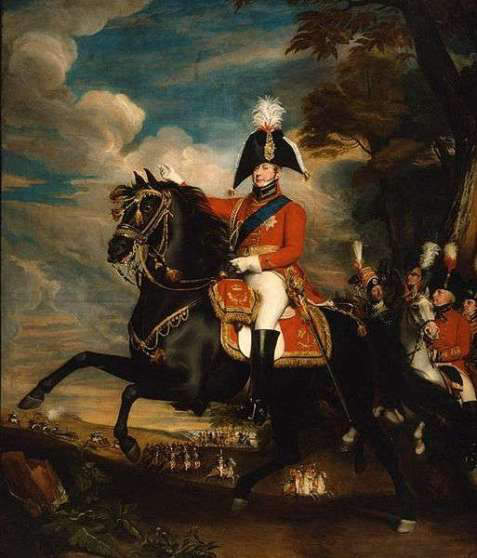
Equestrian portrait of King George IV circa 1809, by John Singleton Copley
The Arcot diamonds are again set on the special coronation crown for Queen Adelaide in 1831 but dismounted with other diamonds soon after the coronation
George IV, who died on June 26, 1830, without legitimate issue, was succeeded by his younger brother William, who ascended the throne as William IV. He inherited the throne when he was 64 years old. Prince William married Princess Adelaide of Saxe-Meningen, who was 27 years younger to him, in 1818. The couple could not produce an issue that survived into aulthood, as Princess Adelaide's pregnancies either ended in miscarriages or the children born would not survive into adulthood. When Prince William ascended the throne as king, Princess Adelaide became the Queen consort of the United Kingdom and Hanover. The coronation of William IV was held on September 8, 1831. In view of this coronation, it was thought that the Crown of Mary of Modena, first made for the wife of King James II, and traditionally used for the crowning of Queen consorts of England and the United Kingdom, was unfit for the coronation of Queen Adelaide, and the court jewelers were commissioned to create a new coronation crown for the Queen, that came to be known as the "Crown of Queen Adelaide."
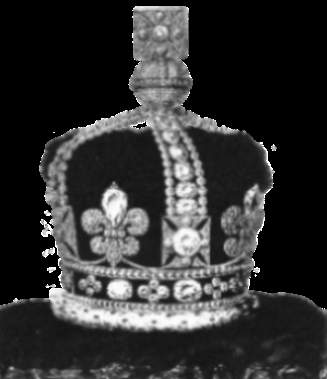
Crown of Queen Adelaide that also incorporated the Arcot diamonds
The design of the crown was based on the traditional British model, with four half-arches meeting a globe or monde, on top of which sat a cross. The Queen who objected to the standard practice of hiring diamonds and other jewels for the designing of crowns, provided diamonds from her own private jewelry to be installed on the crown. However, the Arcot diamonds which were now unmounted and in the custody of the Crown Jewelers were again used, perhaps with the permission of the Queen, to supplement her own diamonds. A large pear-shaped diamond was mounted on the four trefoils of the crown, as seen on the lithograph of the crown. Out of these four pear-shaped diamonds, two are undoubtedly the Arcot diamonds, if the report about the use of the Arcot diamonds on the crown is correct. Soon after the coronation in September 1831, the diamonds were all removed and the Crown of Queen Adelaide was stored as a shell. Queen Adelaide set the precedent for the creation and use of special consort crowns for the coronation, which was followed by other British Queen Consorts after her, such as Alexandra of Denmark in 1902, Mary of Teck in 1911, and Elizabeth Bowes-Lyon in 1937. The Arcot diamonds of Queen Charlotte was once again unmounted, and remained in the custody of the Crown Jewelers.
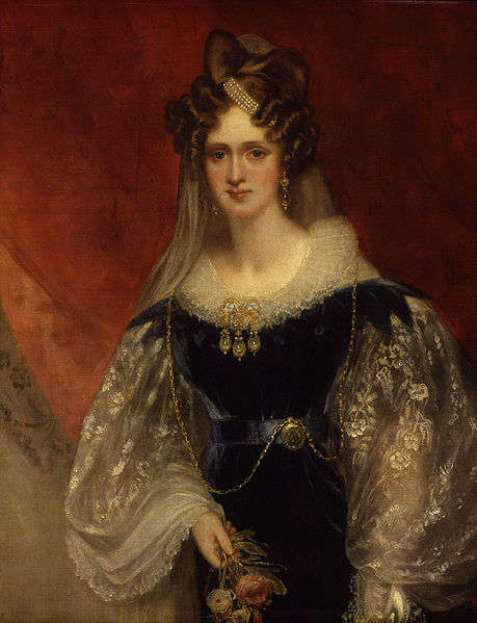
Princess Adelaide of Saxe Meiningen, wife of King William IV and Queen Consort of the United Kingdom
Queen Charlotte's last will executed only after the deaths of King George IV in 1830 and John Bridge, proprietor of Rundell & Bridge in 1834
Thus, the terms of Queen Charlotte's will concerning the pieces of jewelry were not executed, until many years after she died. King George IV died on June 26, 1830, and the proprietor John Bridge of the Crown Jewelers Rundell & Bridge, died in 1834. The Firm was sold, and the executors ordered the sale of the Arcot diamonds together with the round brilliant, probably the Hastings diamond, which was set together with the Arcots on George IV's crown. The long awaited and historic sale took place on June 20, 1837, 19 years after the death of Queen Charlotte, in London, at Willis' Lower Room, King Street, St. James. The Arcots fetched a price of £10,000, and was bought as a birthday gift for his wife, by the first Marquess of Westminster, who also purchased the round brilliant Hastings diamond and the Nassak diamond (Idol's Eye diamond) that belonged to Emmanuel Brothers at the same auction.
Modern History of the Diamonds
History of the Grosvenor family
The Grosvenor family of Eaton, Cheshire, has a history dating back to the early 17th-century when Sir Richard Grosvenor, a Tory M.P. for Cheshire between 1621 and 1629, was created a Baronet on February 23, 1622. In 1761, the 7th Baronet Sir Richard Grosvenor was created a Baron Grosvenor and elevated to the House of Lords, after being M.P. for Chester since 1754. In 1784 he was created Earl Grosvenor. On his death in 1802, he was succeeded by his eldest son, Robert Grosvenor, who became the 2nd Earl Grosvenor. As part of the Coronation Honours of 1831, Robert Grosvenor was created the first Marquess of Westminster, at the Coronation of King William IV in 1831. He participated in the coronation of Queen Victoria in 1837, and in 1841 he was received as a Knight of the Garter. Robert Grosvenor died in 1845 and was succeeded by his eldest son Richard Grosvenor who became the 2nd Marquess of Westminister. In 1874, Queen Victoria created the title of Duke of Westminster, which was bestowed upon Hugh Grosvenor, the 3rd Marquess of Westminster, the eldest son of the 2nd Marquess. The current holder of the title is Gerald Grosvenor, the 6th Duke of Westminster.
Robert Grosvenor, the first Marquess of Westminister, purchased the Arcot diamonds in 1837 as a birthday gift for his wife
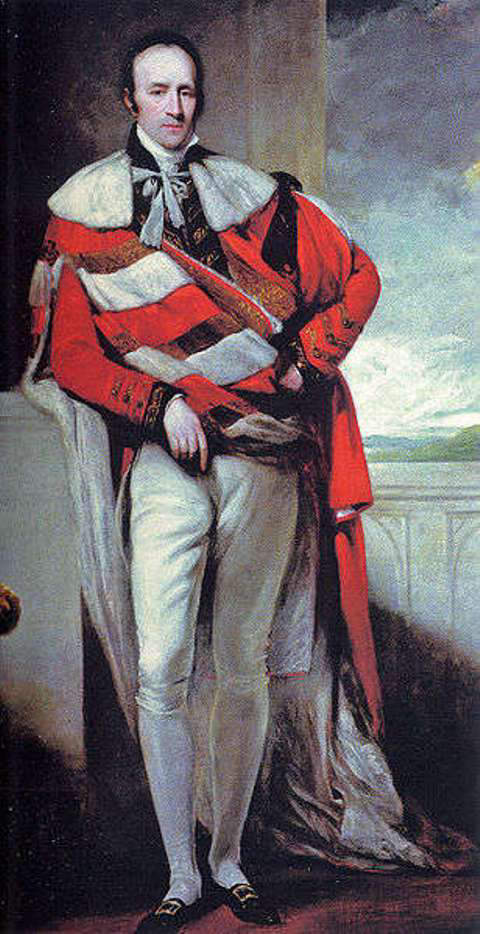
Robert Grosvenor, the first Marquess of Westminster who purchased the Arcot Diamonds
Born on March 22, 1767, Robert Grosvenor was the third son and only surviving child of Richard Grosvenor, the 1st Earl of Grosvenor, whom he succeeded in 1802. Educated at Westminster School and Harrow School and later at Trinity College, Cambridge, he graduated in 1786 with an MA. Robert Grosvenor married Eleanor in 1794, the only child of Sir Thomas Egerton who subsequently became the 1st Earl of Wilton. They had four children, three sons and a daughter. He was elected M.P. for East Looe in 1788 and then M.P. for Chester in 1790, which he served until 1802. He was Mayor of Chester from 1807 to 1808. He was created the 1st Marquess of Westminister, during the Coronation of King William IV in 1831. He rebuild the country house at Eaton Hall in Cheshire and also developed the Grosvenor London estate. He continued the family interests in art and horse racing.
In 1837, the first Marquess of Westminster, purchased Queen Charlotte's Arcot diamonds set as drop earrings, that came up for sale at Willis' Lower Room, King Street, St. James, for £10,000 and presented them to his wife Eleanor as a birthday gift. Eleanor used the Arcot diamonds in its original setting as drop earrings. The diamonds remained as a family heirloom of the Grosvenor family for almost 100 years.
The Westminster Tiara
The Arcot diamonds are incorporated in a halo-shaped tiara by renowned Parisian Jeweler Lacloche in 1930, on the instructions of the 2nd Duke of Westminster
In the year 1930, on the instructions of the 2nd Duke of Westminster, Hugh Richard Arthur Grosvenor, the Arcot diamonds together with the 32.20-carat round brilliant-cut Hastings diamond and 1,421 smaller diamonds, consisting of marquise-cut diamonds, round brilliants, and diamond baguettes, were mounted on the famous Westminster Tiara, the family head-piece of the Westminsters, by the renowned Parisian jeweler Lacloche. Thus, the bandeau-style Westminster Tiara was made up of a total of 1424 diamonds.
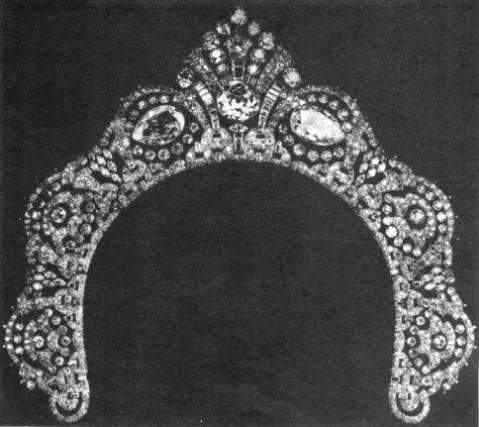
The pear-shaped Arcot diamonds set in the Westminister tiara on either side of the central round brilliant-cut Hastings diamond. The tiara has a total of 1,424 diamonds.
Ian Balfour in his book "Famous Diamonds" gives a vivid description of the design of the Westminster Tiara "....of bandeau form, together with the round brilliant and no less than 1421 smaller diamonds. The tiara was pierced to form a design of pavè-set scrolls with arcading, and with clusters of navette-shaped diamonds between the sections, tapering slightly at the sides, with baguette diamond banding framing the large centre stone and with diamond baguettes dispersed singly throughout the ornament."
In 1931, Cecil Beaton photographed the Duchess of Westminster, Loelia Mary Ponsonby wearing the famous halo-shaped, Westminster Tiara.
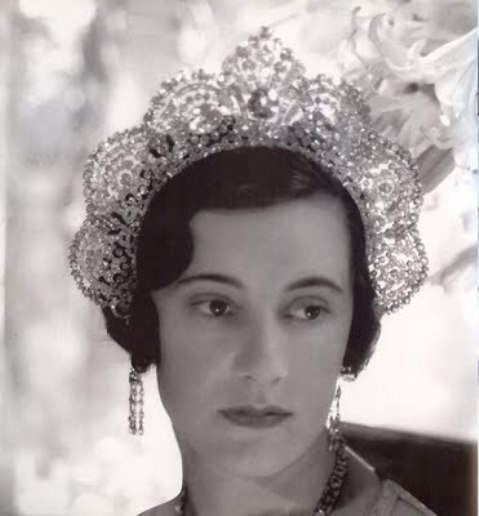
1931-Photograph by Cecil Beaton of Loelia Mary Ponsonby, the Duchess of Westminster wearing the famous halo-shaped Westminster tiara
The Arcot Diamonds could be dismounted from the tiara and worn as pendants to a bar brooch
The Arcot diamonds could be dismounted from the Westminster Tiara, and worn as pendants suspended from a bar brooch. See photograph above. Writing about the Arcot Diamonds worn as a bar brooch, in her memoirs, Loelia Mary Ponsonby, the Duchess of Westminster and the third wife of Hugh Grosvenor, 2nd Duke of Westminster (1879-1953), states, "fixed by themselves on the safety-pin they looked extremely bogus, so that a friend who saw me that evening remarked, 'What on earth does Loelia think she's doing, pinning those two lumps of glass on herself?'"
The 2nd Duke of Westminster became famous for his military campaigns in Egypt between 1915 to 1917
Hugh Richard Arthur Grosvenor, the 2nd Duke of Westminster was the grandson of Hugh Grosvenor, the 1st Duke of Westminster, and succeeded him after his death in 1899. He was a cousin of King George V. The Duke became famous for his campaigns in Egypt in 1916, during World War I. As part of the Western Frontier Force under General Wiliam Peyton, the Duke, who was then a Major, commanded the armoured cars of the regiment and took part in the destruction of a Sanussi force at the Battle of Agagia, near Sidi Barani on February 26, 1916. The Sanussi was a politico-religious order originating in the Maghreb, and subsequently fighting a guerilla war with the Italians in Libya and the British in Egypt from 1915 to 1917, led by Sayyed Ahmed. In 1916, the British sent an expeditionary force against them led by Major-General William Peyton.
Remnants of the Sanussi from Agagia, retreated 50 miles west to Sollum and Peyton decided to follow up and strike again. The British Column re-assembled outside Sollum on March 9, 1916, and were getting ready to advance on Sollum, when news reached that the Sanussi evacuated Sollum on March 14, 1916. The Duke of Westminster was ordered to pursue the enemy. He moved with his light armoured car brigade, consisting of 9 armoured and one open Ford, with a total crew of 32 men. They discovered the enemy camp at Bir Asiso, 23 miles from the British positions, and attacked and destroyed it, killing 50, wounding many more, taking 3 Turkish officers and 40 other men prisoners, and capturing all 40 guns and machine guns of the enemy. From information gathered from the prisoners, it became clear that the crew of the ships HMS Moorina and HMS Tara were being held at Bir Hakkim some 70 miles west of Sollum. The Duke of Westminster immediately dashed off with his armoured car battery, and moving through 120 miles of hostile territory reached Bir Hakim and rescued all the prisoners without loss of life. For his brilliant exploit Major Hugh Richard Arthur Grosvenor,the 2nd Duke of Westminster was awarded the DSO (Distinguished Service Order), a British military decoration for distinguished service in action and later promoted as Colonel on May 26,1917.
The Westminster Tiara is put up for auction by the 3rd Duke of Westminster in 1959 to help meet the cost of heavy death duties
The 3rd Duke of Westminster, William Grosvenor, son of Lord Henry Grosvenor, who held the title from 1953 to 1963, decided to sell the Westminster Tiara in 1959, to help meet the cost of heavy death duties. The tiara was put up for auction at Sotheby's London, in June 1959. Harry Winston, the New York City jeweler, was the successful bidder for the tiara at the auction. His winning bid was £110,000, a world record price for a single piece of jewelry at that time at an auction. Harry Winston, dismantled the Arcot diamonds from the tiara, and as discussed earlier got them slightly recut, and mounted on separate rings, which were sold in 1959 and 1960 to two anonymous American clients from Texas.
Arcot 1 is acquired by Van Cleef & Arpels and set as a pendant to an all diamond necklace
The larger of the two Arcots, the Arcot I, weighing 31.01 carats, was later acquired by Van Cleef & Arpels in the early 1990s, who modified the setting of the diamond, this time as a pendant to an all diamond spectacular necklace consisting of marquise, pear and round brilliants.
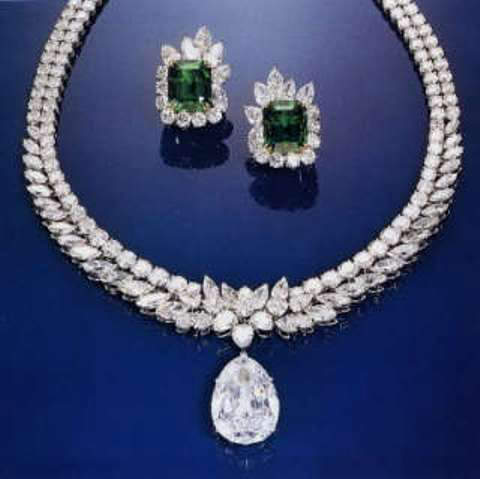
Arcot I hanging as a pendant from a Van Cleef & Arpels all diamond neklace
Van Cleef & Arpels necklace with the Arcot I pendant appears at a Christie's auction in Geneva in November 1993 and sold for a record price of £918,243
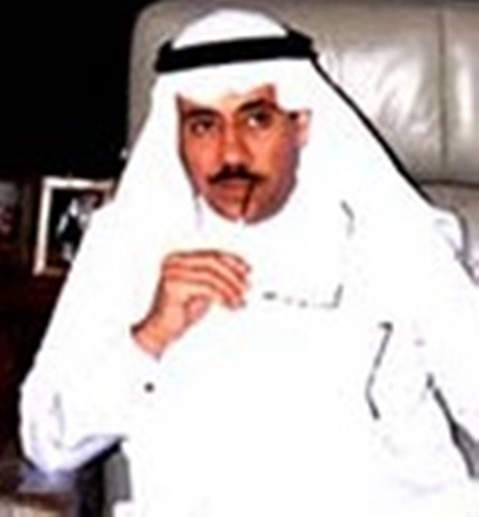
Sheik Ahmed Hassan Fitaihi
The Van Cleef & Arpels necklace with the pear-shaped Arcot I diamond as its centerpiece and hanging as a pendant, appeared at a Christie's auction in Geneva, in November 1993. The successful bid for the necklace at £918,243 came from none other than Sheik Ahmed Hassan Fitaihi, the renowned Saudi Arabian jeweler, who is also a collector and connoisseur of diamonds, who together with Laurence Graff had been responsible for some of the highest prices recorded for some famous diamonds, at public auctions.
You are welcome to discuss this post/related topics with Dr Shihaan and other experts from around the world in our FORUMS (forums.internetstones.com)
Related :-
References :-
1) Famous Diamonds - by Ian Balfour, Christie's 2000.
2) The Arcots - famousdiamonds.tripod.com
3) Arcot Diamonds - www.diamond-talk.com
4) Arcots - www.langantiques.com
5) Charlotte of Mecklenberg-Strelitz - From Wikipedia, the free encyclopedia
6) George III of the United Kingdom - From Wikipedia, the free encyclopedia
7) Harry Winston - From Wikipedia, the free encyclopedia
8) Nawabs of the Carnatic - From Wikipedia, the free encyclopedia
9) Anwaruddin Muhammad Khan - From Wikipedia, the free encyclopedia
10) Chanda Sahib - From Wikipedia, the free encyclopedia
11) Muhammad Ali Khan Wallajah - From Wikipedia, the free encyclopedia
12) Umdat-ul-Umra - From Wikipedia, the free encyclopedia
13) Azim-ud-Dawla - From Wikipedia, the free encyclopedia
14) Robert Clive - First Baron Clive - From Wikipedia, the free encyclopedia
15) Crown of Queen Adelaide - From Wikipedia, the free encyclopedia
16) Coronation Crown of George IV - From Wikipedia, the free encyclopedia
17) William IV of the United Kingdom - From Wikipedia, the free encyclopedia
18) Dukes of Westminster - From Wikipedia, the free encyclopedia
19) Hugh Grosvenor - 2nd Duke of Westminster, From Wikipedia, the free encyclopedia
20) Robert Grosvenor - 1st Marquess of Westminster, From Wikipedia, the free encyclopedia
 Home
Security & Guarantee
How it Works
Technology Partners
Updated Tables
Famous Diamonds
More Famous Diamonds
Famous Pearls
Famous Gemstones
Contact Dr Shihaan Larif
Contact Senior Editor
Famous Jewelry
Reference Database
Forums
Learning Center
Gemstone Gallery
e-mail Notifications
Advertise
Press Release
About Us
Privacy Policy
Contact Us
FAQ'S
Site Map
Staff Mail Login
Staff Documents
Birthstones
History
Minerals
Shows
Live Metal Prices
Jewellery Gallery
News
Marketplace
Marketplace Support
Open Store
Online Auctions
Join Us & Contribute
Directory
Classifieds
List your products
Wholesale Trading
Post Buy Request
Go Green Policy
Site Updates
Upcoming-ToDo List
Latest News
Latest Articles
Latest Blog Updates
Chat Rooms
Job Board
User Gallery
Videos
New Newsletter Archive
Old Newsletter Archive
Jewelry & Mineral Blog
User Blogs & Social Network
Search
Answers (Q & A)
Valuation
Help me find a diamond/jewelry
pin.internetstones.com- Social Pinboard- Sart yours & connect with millions
Invite Friends From Yahoo, Gmail etc-One Click
Home
Security & Guarantee
How it Works
Technology Partners
Updated Tables
Famous Diamonds
More Famous Diamonds
Famous Pearls
Famous Gemstones
Contact Dr Shihaan Larif
Contact Senior Editor
Famous Jewelry
Reference Database
Forums
Learning Center
Gemstone Gallery
e-mail Notifications
Advertise
Press Release
About Us
Privacy Policy
Contact Us
FAQ'S
Site Map
Staff Mail Login
Staff Documents
Birthstones
History
Minerals
Shows
Live Metal Prices
Jewellery Gallery
News
Marketplace
Marketplace Support
Open Store
Online Auctions
Join Us & Contribute
Directory
Classifieds
List your products
Wholesale Trading
Post Buy Request
Go Green Policy
Site Updates
Upcoming-ToDo List
Latest News
Latest Articles
Latest Blog Updates
Chat Rooms
Job Board
User Gallery
Videos
New Newsletter Archive
Old Newsletter Archive
Jewelry & Mineral Blog
User Blogs & Social Network
Search
Answers (Q & A)
Valuation
Help me find a diamond/jewelry
pin.internetstones.com- Social Pinboard- Sart yours & connect with millions
Invite Friends From Yahoo, Gmail etc-One Click




Our Global Jewelry Industry Job Network


Buy & Sell in our Marketplace

Subscribe to our Newsletter

List in our Classifieds

List in our Directory

User Uploaded Gallery

Powered by Ultra Secure
Amazon (USA) Cloud Network

Founder Internet Stones.COM
Register in our Forums

| Featured In
|
|
|
|
|
|
|
|







Blog & Education Feed
Articles Feed
 |
 |
 |

Copyright © .Internet Stones.COM. All rights reserved.