The Beau Sancy Diamond
Open FREE Unlimited Store Join Our Newsletter
Lareef A. Samad B.Sc. (Hons)
Origin of Name
The "Beau Sancy" or "Little Sancy," a 34-carat, pear-shaped, colorless diamond gets its name from Nicholas Harlay de Sancy, seigneur de Sancy (Lord of Sancy), a nobleman, financier, and diplomat of 16th-17th century France, and Superintendent of Finance to Henry IV from 1594 to 1599, who was also a collector, connoisseur and dealer of diamonds. Nicholas Harlay de Sancy also had a 55.23-carat, shield-shaped, colorless diamond, which came to be known as the Great Sancy or Sancy diamond, which subsequently became one of the the most celebrated, historic diamonds in the world, intertwined with the history of many Eurpoean nations.
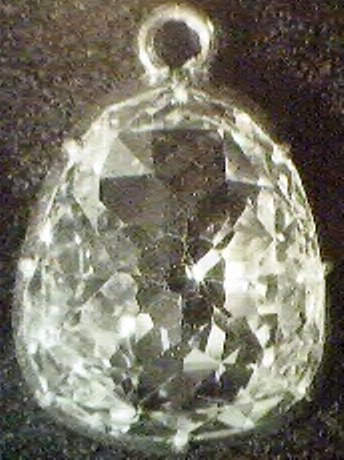
Beau Sancy Diamond - A valued possession of the House of Hohenzollern

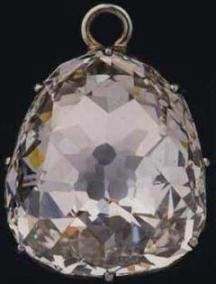
Another view of the Beau Sancy/Little Sancy Diamond
Characteristics of the diamond
The diamond appears to be a D-color, internally flawless diamond originating from one of the diamond mines of the Eastern Deccan region of India
The "Beau Sancy" diamond is a colorless, flawless, rounded pear-shaped diamond of 34 carats. The exact color and clarity grades of the diamond are not known, as the diamond perhaps has not been tested in a modern laboratory. But, the diamond appears to be D-color, and internally flawless. Considering the period in which the diamond first appeared, between 1475 and 1590, it must have originated in one of the diamond producing areas in the eastern Deccan region of India, including the mines at Golconda if it originated after the 1550s. Golconda was famous for producing colorless diamonds of exceptional clarity, which became the international standard for comparing diamonds originating from other sources.
The most striking feature of the diamond is the perfect symmetry of its facets, which is unique for a diamond of the 15th-16th centuries
The most striking feature of the diamond, is the perfect symmetry of its facets as seen in the net diagram below, which is unique for a diamond of the 15th-16th centuries. The significance of this will be discussed under the caption "History" of the diamond. There are 110 facets including the two small table facets, in this rounded, double-sided, pear-shaped diamond. The net of each side of the diamond looks identical, as depicted below, and if they are perfectly identical, the no of facets on each side must be 55.
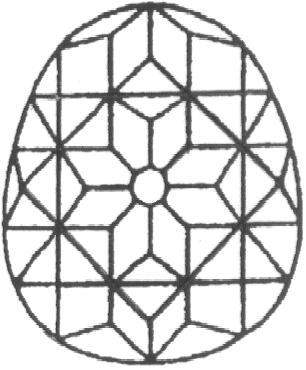
An accurate net of the Beau Sancy Diamond drawn by Thomas Cletscher, in the 17th-century
The diamond is most probably a Type IIa diamond, known as the "purest of the pure" of all diamonds
If the diamond is absolutely colorless without even a tinge of yellow color, it becomes a Type IIa diamond, which are said to be the "purest of the pure" of all diamonds. These diamonds are chemically pure and structurally perfect diamonds. They are chemically pure because of the absence of impurities like nitrogen and boron which can impart color to the diamonds. They are structurally perfect, as there are no distorted areas in the crystal, that can impart rare fancy colors like red, pink, purple etc. to the diamond. Thus in the absence of two important factors that can cause color in diamonds, these diamonds are absolutely colorless. However they constitute only about 1-2 % of all naturally occurring diamonds.
History
Early History of the diamond
The possible country of origin of the diamond
The diamond being a 15th-16th century stone, undoubtedly originated in India, the only source country for diamonds during this period. Diamonds from the Landak area in western Borneo came to the Amsterdam markets only in the 17th and 18th centuries, after Borneo became part of the Dutch East Indies. Diamonds from Brazil entered the international markets beginning from the early 18th-century, as diamonds were first discovered by the Portuguese in Brazil in 1727.
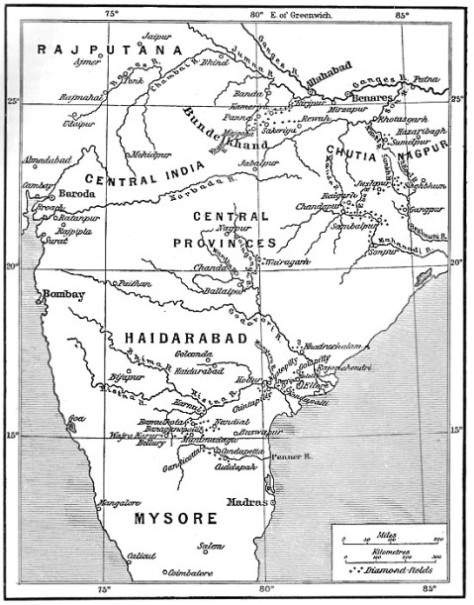
Map of the diamond fields of India
The possible mine of origin of the diamond in India
The diamond possibly originated in one of the five groups of mines situated on the eastern side of the Deccan in central and southern India. These groups of mines are :-
1) The Cuddapah Group on the Penner river known as the Chennur mines, situated on the southern bank of the Penner river, near the town of Cuddapah
2) The Nandial Group between Penner and Kistna rivers, known as the Karnul diamond mines,situated near the town of Nandial.
3) The Ellore or Golconda Group on the Kistna river, known as the Kollur or Golconda mines, situated on the lower portion of the Kistna river, and include some of the oldest and most famous of Indian diamond mines, such as the Kollur mines and Parteal mines. Diamonds were first disovered in Kollur around 1560.
4) The Sambalpur Group on the Mahanadi river in Central India, the most ancient diamond mines of India. Mahanadi river is believed to be the diamond river referred to by Ptolemy,the Alexandrian-Roman mathematician, astronomer and geographer of the 1st-2nd century A.D. However, diamonds were found only around the neighborhood of Sambalpur on a fertile plain situated between the Mahanadi and Brahmani rivers ahead of their confluence.
5) The Panna Group in Bundelkhand known as the Panna mines, the most northerly group between the Khan and Son rivers.
If the Beau Sancy diamond is of 15th-century origin, believed to have been purchased around 1475 by Charles the Bold, the Duke of Burgundy, from western travelers who either reached India or Istanbul (Constantinople) in Turkey, a transit point for Indian diamonds, the diamond most probably originated in the most ancient diamond mines of India,the Sambalpur Group, as the exploitation of the other diamond mines including the Golconda Group had not yet begun by then.
How the diamond mined in India reached Europe in the 15th and 16th centuries ?
In the 15th century, before Vasco da Gama rounded the Cape of Good Hope and reached India in 1498, and subsequently in the early 16th-century, before the Portuguese colonized certain coastal towns in eastern India, such as Calicut in 1505, and Goa in 1510, trade contacts if any between Europe and India, took place mainly via the overland route, along the Silk and Spice routes, in which goods were transported over vast distances, using pack animals such as horses, camels, mules and donkeys. Some of the main transit points for diamonds origiating in India, were Isfahan in Iran, Baghdad in Iraq and Istanbul (Constantinople) in Turkey. European diamond dealers who would not venture out as far as India, preferred to do business in Istanbul, which became one of the main transit points for Indian diamods. Hence, the Beau Sancy diamond would have reached France, either through the medium of a traveller,who dared take the risk of travelling all the way to India by land, or a dealer who purchased the diamond in Istanbul.
Though the first authentic record of the existence of the diamond comes from the year 1589, there is evidence to show that the diamond was purchased by Charles the Bold more than a century before that between 1467 and 1477.
The first authentic record of the existence of the diamond comes from the late 16th century in 1589, when the diamond that was in the possession of Nicholas Harlay de Sancy, Seigneur de Sancy, an ardent monarchist, was pledged in Switzerland or Amsterdam to raise funds for Henry III's war efforts against the Huguenots (Protestants). The name used for the 34-carat, pear-shaped, colorless diamond before it came into Sancy's hands is not known. But, it is believed that the stone was part of the jewels that belonged to Charles the Bold, the Duke of Burgundy, who also owned the other Sancy diamond, the Great Sancy, which he used to carry into his battles, in the belief that it brings good luck. Charles the Bold was the last of the great dukes of Burgundy, who ruled between 1467 and 1477. Charles the Bold, is believed to have purchased the Beau Sancy rough diamond, together with two other diamonds of Indian origin, from travellers, who probably purchased them at Istanbul, a transit point for Indian diamonds that reached the west at that time.
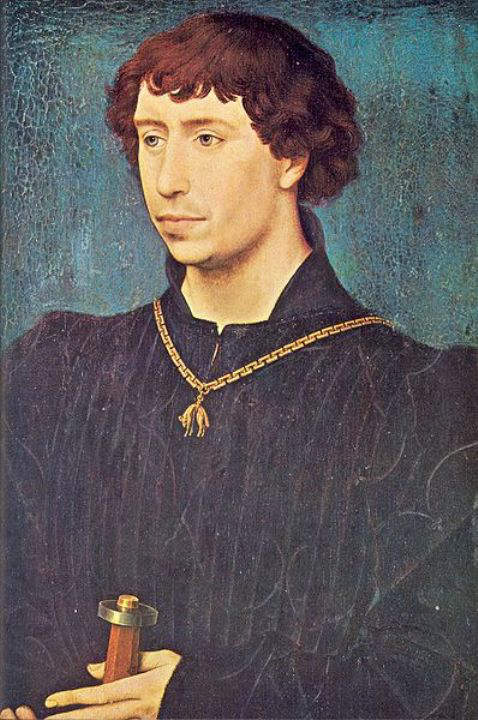
Charles the Bold, the last Duke of Burgundy, who ruled from 1467 to 1477
Charles the Bold sends three large diamonds in 1475 to Louis de Berquem for cutting and polishing, one of which was transformed into the colorless, flawless, rounded pear-shaped diamond of 34 carats, that became the Beau Sancy diamond over a hundred years later
It is on record that Charles the Bold had sent three large rough diamonds in 1475 to the famous diamond cutter Louis de Berquem of Bruges - who is said to be the discoverer of the modern art of symmetrical diamond faceting - for cutting and polishing. One of these diamonds is believed to have become the "Beau Sancy" which Charles the Bold added to his jewel collection. Charles the Bold presented the second diamond to Pope Sixtus IV and the third diamond to King Louis XI of France.
Louis de Berquem, father of modern symmetrical diamond faceting invented in 1465
Louis de Berquem, a resident of Bruges is normally credited with the discovery of the modern art of symmetrical diamond faceting in 1465, that enhanced the play of light and increased the fire and brilliance of diamonds. Diamond cutting had existed long before that in Europe, and much longer than that in India and China, but the cuts were not perfectly symmetrical. Berquem also invented a polishing wheel,that could be used with diamond dust for the cutting and polishing of diamonds.
Louis de Berquem experiments with his new techniques using the three large diamonds provided by Charles the Bold, and the "Beau Sancy" diamond is perhaps the first Indian diamond in Europe that was cut with symmetrical facets
Berquem's discovery aroused much interest and attention in Burgundy, that the Duke of Burgundy, Charles the Bold, commissioned him in 1475, to cut and polish, these three large rough diamonds, which he had purchased from travellers. This gave Berquem the opportunity to experiment with his new techniques and it is said that Berquem accomplished his task to the fullest satisfaction of Charles the Bold, who paid him 3,000 ducats for a job well done. This establishes the significant fact that the Beau Sancy diamond is perhaps the first Indian diamond in Europe, that was cut with symmetrical facets using a technique invented by the "father of modern diamond cutting" Louis de Berquem. This also explains the perfect symmetry in the net of the Beau Sancy diamond, the most striking feature of the diamond, which is rare and unique for a 15th-century diamond.
The fate of "Beau Sancy" between the time of Charles the Bold's death in 1477 and its purchase by Nicholas Harlay de Sancy around 1589, in one of the diamond markets of Europe is not exactly known
The fate of the "Beau Sancy" after Charles the Bold's death in 1477 is not known. Like its larger cousin the "Great Sancy" the fate of the diamond in the immediate aftermath of his death at the "Battle of Nancy" on January 5, 1477, seems to be shrouded in mystery. However, in the case of the "Great Sancy" the diamond that was believed to have been lost, turned out to have been actually hidden away,by the Bishop of Basel, along with another famous jewel that also belonged to Charles the Bold, the "Three Brothers Jewel, both of which were subsequently sold to the famous German financier and banker, Jacob Fugger, who in turn sold the Great Sancy, recut to its present weight of 55.23 carats, to Manuel the Fortunate, the King of Portugal (1495-1521) and the "Three Brothers' Jewel" to an unknown customer who in turn sold it to Edward the VI, King of England from 1547 to 1553.
The possible courses the Beau Sancy would have taken during the period 1477 to 1589
The "Beau Sancy" like the "Great Sancy" and the "Three Brother's Jewel" probably fell into the hands of a respected figure like the Bishop of Basel, who was close to the monarchy of Burgundy, and subsequently became the property of an anonymous collector until its appearance in one of the jewelry markets of Europe in the late 16th-century, such as Amsterdam, Antwerp, Paris, or Istanbul, where it was purchased by Nicholas Harlay de Sancy, Seigneur de Sancy, while he was serving as diplomat or during one of his official or personal visits to such cities.
Alternatively, the "Beau Sancy" would have remained a family heirloom of the Dukes of Burgundy after Charles the Bold. The Duchy of Burgundy was annexed by France in 1477 after the death of of Charles the Bold, but the remaining Burgundian inheritance such as Palatinate of Burgundy, Duchy of Lorraine, Duchy of Luxemburg, County of Flanders, County of Holland etc. still remained within the Dukedom of Burgundy and was ruled by dukes/duchesses such as Mary of Burgundy (1477-1482), who succeeded her father, Charles the Bold; Philip the Handsome (1482-1506), Mary's son and successor, and the last of the Dukes of Burgundy, who predeceased his father Maximilian I, Holy Roman Emperor, and Archduke of Austria, who took over the reign of the dukedom and technically the last Duke of Burgundy from 1506 to 1519, before the dukedom of Burgundy, and the Hapsburg, Castilian and Aragonese inheritances were united as the Holy Roman Empire, under Charles V, son of Philip the Handsome, and grandson of Maximillian I, who ruled from 1519 to 1556. The Beau Sancy would have been disposed of, by any one of the successors of Charles the Bold, probably before the absorption of the dukedom of Burgundy into the Holy Roman Empire in 1519. In any case the diamond eventually reached one of the diamond markets of Europe, where it was purchased by the Seigner de Sancy, Nicholas Harlay de Sancy.
Edwin Streeter's account about the history of the "Beau Sancy" diamond as given in his book, "Great Diamonds of the World :Their History and Romance" first published in London by Messrs George Bell and Sons in 1882.
One of the detailed accounts of the history of the "Beau Sancy" diamond comes to us from Edwin Streeter, as published in his book, "Great Diamonds of the World :Their History and Romance" first published in London by Messrs George Bell and Sons in 1882. The following is the extract from his book relevant to the "Little Sancy" diamond, Chapter 65, pp 309-310 :-
At the time of the marriage of Prince Albert of Prussia with Princess Mary of Sachsen-Altenburg in Berlin, the bride was described in the newspaper accounts of the wedding as wearing " the crown necklace, with the celebrated 'Sancy' diamond." Much surprise and mystification were caused by this statement, apparently made on authority; for amongst the many strange peregrinations of the "celebrated ' Sancy ' diamond," a visit to the Prussian " Schatz-Kammer " had not hitherto been mentioned. We are now in a position to clear up the mystery, thanks to the subjoined extract from an official communication obligingly made to us on June 7 , 1881, by Herr Smernitz, minister of the Royal Household, Berlin:
"Amongst the numerous diamonds of the Royal Treasury there is one only possessing historical interest. This is a brilliant of splendid shape weighing 34 carats, worn as a pendant to a necklace, and known as the ' Little Sancy.' This diamond was bought by Prince Frederick Henry, of Orange,who died in the year 1647, and who was grandfather of King Frederick I., of Prussia. Through King Frederick it passed from the Orange bequests to the Prussian royal treasury."
It thus appears that at her wedding Princess Mary of Sachsen-Altenburg wore, not the celebrated " Sancy" diamond, but the " Little Sancy," correctly enough described as attached to the "crown necklace." Of the very existence of this " Little Sancy," the public has hitherto been profoundly ignorant. Nor does it even now appear by what right it bears the name of " Sancy " at all. The explanation, however, is not far to seek. We have already seen that Nicholas Harlai, Signeur de Sancy, was evidently a diamond collector, and that he died in the year 1627. After his death his collection was no doubt dispersed by the family, and in this way the diamond, weighing 34 carats, would be thrown on the market. Hence its purchase by Frederick Henry of Orange, in 1647, is easily accounted for. A diamond of its weight, rare enough in those days, at least in Europe, would naturally be associated with its owner, the famous collector, M. Sancy, and as the largest, weighing 54 carats, was known as the " Great Sancy;" the other, weighing 34 carats, probably the next in size, took the name of the " Little Sancy."
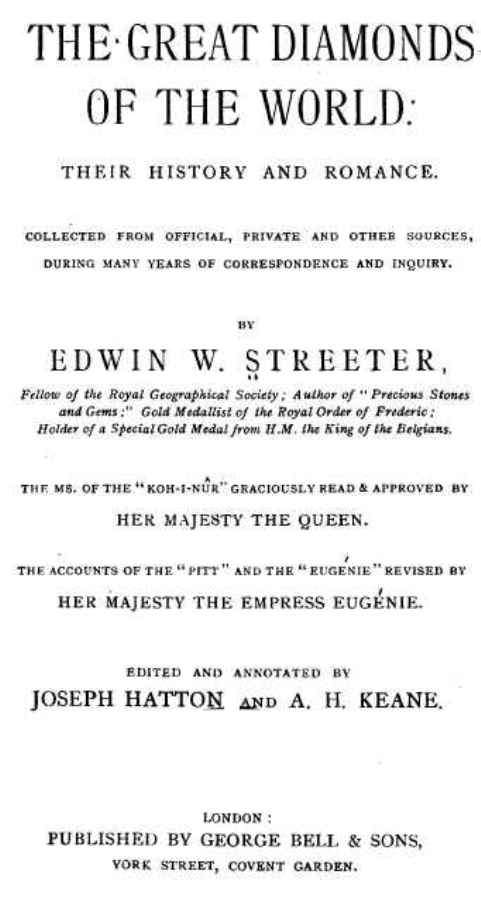
Front Page of Edwin Streeter's Book, The Great Diamonds Of The World - Their History and Romance
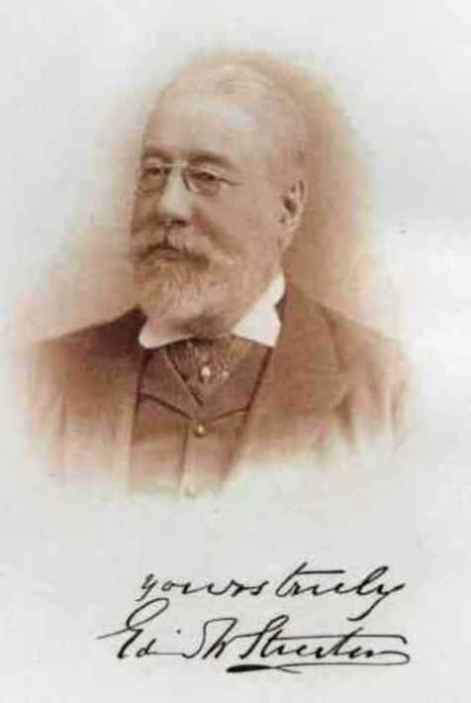
Edwin Streeter - from his book "Precious Stones and Gems" published 1898
Edwin Streeter's account of the history of "Beau Sancy" publicizes the existence of two separate Sancy diamonds, but is inaccurate on the period of the sale of "Beau Sancy" after the death of Nicholas Harlay de Sancy
The above account of Edwin Streeter is significant in that it publicizes the existence of two separate Sancy diamonds, the larger "Great Sancy" and the smaller "Little or Beau Sancy," in an attempt to clear-up the confusion caused by the announcement, at the time of the wedding of Prince Albert of Prussia with Princess Mary of Sachsen-Altenburg of Berlin on April 9, 1873, when it was stated that the bride wore the crown necklace that incorporated the celebrated "Sancy" diamond. His account is fairly accurate except for the speculation that the "Beau Sancy" was sold after the death of Nicholas Harlay, Seigner de Sancy in 1627 (actually 1629), and was subsequently purchased by Prince Frederick Henry, of Orange, prior to his death in 1647. In fact the Beau Sancy was sold by Nicholas Harlay de Sancy himself to Marie de Medicis, the Queen consort of King Henry IV of France, in 1604, long before he died in 1629.
Another extract relevant to "Beau Sancy" from Edwin Streeter's book, "Precious Stones and Gems" - Their History, Sources and Characteristics, published in 1898, by George Bell & Sons London, Pp 20-21
It was in Bruges, in 1456, that Louis de Berquem who had lived long in Paris, made known his famous discovery of a mode of cutting the Diamond into regular facets. This increased the play of light considerably, and wrought so thorough a revolution in the jeweller's art, that his contemporaries regarded him as the father of Diamond- polishing and cutting. Just ten years afterwards, a guild of diamond -cutters and lapidaries was established in Bruges.
In 1475, Louis de Berquem made his first experiment with the object of obtaining the perfect cut, on three rough Diamonds of extraordinary dimensions, sent to him by Charles the Bold, Duke of Burgundy.
No. I. Historically known as the "Beau Sancy," was a thick stone, cut all over with facets. The author has had this stone examined and many models of it taken, and his impression is that the stone commonly called the " Beau Sancy " is the work of an Indian lapidary.
No. 2. Passed into the hands of Pope Sixtus IV.
No. 3. A badly proportioned stone, shaped as a triangle, was set in a ring, which, as a symbol of constancy,, represented two hands clasped. Strange to say, it fell into the hands of that most faithless and inconstant of kings, Louis XI It was presented to him by the Duke of Burgundy. Robert de Berquem relates that his grand- father, Louis, received from Charles the Bold 3000 ducats for his work.
Edwin Streeter gives a glowing account above of Louis de Berquem and his discovery of the modern symmetrical diamond faceting, but in the same breath belittles the first finished products of the master-cutter completed by applying the new techniques
In this section, from his book "Precious Stones and Gems - Their History, Sources and Characteristics," published in 1898, Streeter gives a glowing account of Louis de Berquem and his discovery of the modern symmetrical diamond faceting in 1465 (inadvertently given as 1456), that brought about a revolution in the jeweller's art, subsequently earning him the title of the "father of modern diamond faceting." He goes on further, mentioning about the three rough diamonds sent by Charles the Bold, to Louis de Berquem in 1475, on which the renowned master-cutter performed his first experiments in trying to achieve the perfect cut. However, trying to describe the three diamonds after Berquem's assigment was completed successfully to the satisfaction of Charles the Bold, for which the Duke paid him 3,000 ducats, Streeter contradicts himself by belittling the finished products.
It is very strange that Edwin Streeter failed to observe what Thomas Cletscher observed 200 years earlier in the 17th century about the perfect symmetry of the faceting in the Beau Sancy diamond.
Referring to diamond No 1, which subsequently became the Beau Sancy, he characterizes it as a thick stone, cut all over with facets, and goes onto say that he had personally examined the stone and taken many models of it and believes that the so called Beau Sancy is actually the work of an Indian lapidary. In other words the diamond was already cut when it was brought to Europe in the 15th-century. If that was so he fails to mention as to what happened to the large rough diamond given to Berquem by Charles the Bold, that is believed to have become the Beau Sancy subsequently. It is very strange that a gemologist of the calibre of Edwin Streeter failed to observe in the 19th-century, what Thomas Cletscher, a 17th-century gemologist observed and made accurate drawings of 200 years ealier. Thomas Cletscher, made some very accurate drawings of the net of some famous diamonds of the 17th-century and before, such as the Florentine diamond, the Great Sancy and Beau Sancy diamonds, in a sketchbook that now resides in the Boymans-van Beuningen Museum in Rotterdam. Comparison of the Sancy and Beau Sancy diamonds with the net drawings made by Thomas Cletscher has established the accuracy of his drawings beyond any doubt. Hence, Cletcher's net drawing of the Beau Sancy given above, is an accurate representation of the facets of this diamond, as executed by the master-cutter Louis de Berquem, in 1475, that supports our belief that the Beau Sancy was the first Indian diamond in Europe, that was cut with symmetrical facets, which unfortunately Edwin Streeter failed to observe and record in his publications. As such there is no substance in Edwin Streeer's claim that the "Beau Sancy" is the work of an Indian lapidary.
Nicolas de Harlay, Seigneur de Sancy, Colonel General of the Swiss Ambassador, Superintendent of Finance
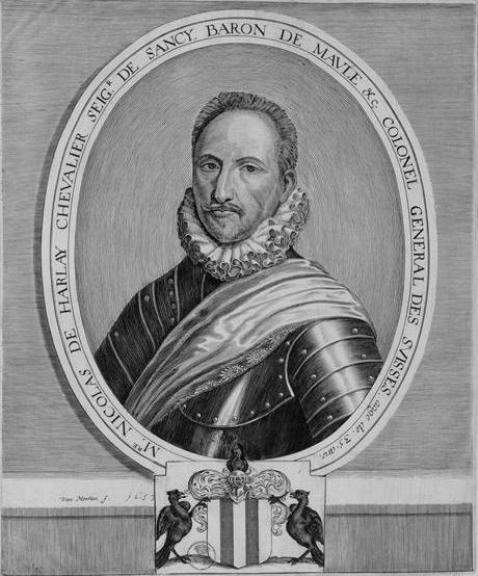
Nicolas de Harlay, Seigneur de Sancy, Colonel General of the Swiss Ambassador, Superintendent of Finance
Attribution for above photograph - europeana, think culture and Réunion des Musées Nationaux, France
Nicholas Harlay de Sancy was a man of great wealth. A former soldier turned diplomat and financier, he was a member of the financial council of both Henry III and Henry IV. In French he was referred to as Nicolas de Harlay, Seigneur de Sancy, Colonel Général des Suisses, ambassadeur, Surintendant des finances which translated into English reads as Nicolas de Harley , Lord de Sancy, Colonel -General of the Swiss ambassador, Superintendent of Finance.
Nicholas Harlay de Sancy pawned his diamond collection in 1589, in Geneva and Berne, to raise funds for a mercenary army to help Henry III during the French Wars of Religion
Nicholas Harlay de Sancy was also a collector and connoisseur of diamonds. He seems to have acquired the Sancy and the Beau Sancy, during one of his many official visits to Amsterdam, Antwerp, Geneva or Berne, in the 1580s or 1590s. Nicholas Harlay de Sancy was an ardent monarchist and in 1589 he is said to have pawned his diamond collection, that perhaps also included the Beau Sancy, in Geneva and Berne, Switzerland, to help Henry III raise a mercenary army, during the French civil war between the Protestants (Huguenots) and the Catholics. Nicolas himself was a Huguenot but converted to Catholicism in 1572, during the massacres of Huguenots. Henry III was assassinated in 1589 and was succeeded by his cousin Henry IV, the first Bourbon Monarch of France, who too was a Huguenot but had to convert to Catholicism, in order to be recognized as the legitimate ruler of France.
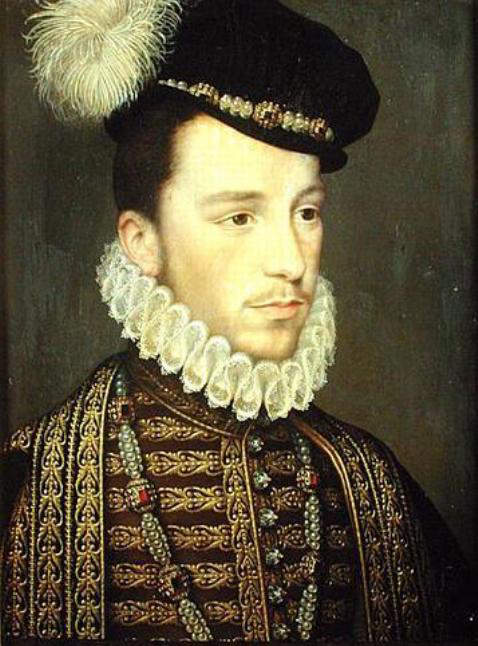
Portrait of Henry III by Jean Decourt executed in 1570
Nicholas Harlay de Sancy continued to support Henry IV as Superintendent of Finance from 1589 to 1599
Nicholas Harlay de Sancy also supported Henry IV during his nine years of struggle against the holy league to secure his kingdom. Peace and religious harmony was finally restored to France in 1598, after Henry IV signed the edict of Nantes, which confirmed Roman Catholicism as the religion of the state, but granted a large measure of religious freedom to the Protestants. He continued to serve as a member of the Financial Council under Henry IV, who also appointed him as the Superintendent of Finance, and served in this capacity from 1589 to 1599.
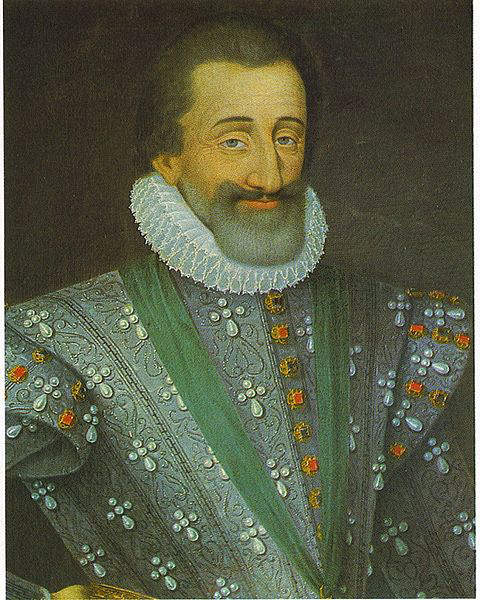
King Henry IV of France
Circumstances that led Nicholas Harlay de Sancy to sell some of his valuable diamonds. The celebrated Sancy diamond was sold to King James I in 1604
However, after peace was restored in France, Nicholas Sancy found himself in a difficult situation as he was excluded from Henry IV's financial council and went out of royal favor, due to the intrigues of Henry's mistress Gabrielle d'Estrees, who favored Maximilien de Bethune, duc de Sully as the new Superintendent of Finance. He even converted himself to Catholicism a second time, to assure Henry's court of his sincerity, but his influence at the court waned, and he eventually retired from public life in 1605.
As a result of this, Nicholas Sancy was in difficult financial straits and was forced to sell some of his diamonds. In 1604 he sold the Great Sancy diamond to King James I, the successor to the childless Queen Elizabeth I, and the first Stuart King of England. Details of the journey of the Sancy diamond in history is dealt with elsewhere in a different web page, but it must be stated here that the Sancy is the most celebrated stone in history, that has passed through more countries, and affected more royal families than any other diamond in history.
The Beau Sancy was sold to Marie de Medicis, the Queen consort of King Henry IV, also in 1604, but payment for the diamond was made by the king
The smaller diamond the Beau Sancy was sold in the same year 1604, to Marie de Medicis, the Queen consort of King Henry IV of France. It has been suggested that the King himself paid for the diamond in order to assuage the feelings of indignation aroused in the Queen, when she learnt that Nicholas Sancy had sold his bigger diamond to the King of England. Marie de Medicis got the Beau Sancy diamond mounted on the crown which she wore for her coronation on May 13, 1610. But, unfortunately her husband King Henry IV was assassinated the very next day, on May 14, 1610, by a Catholic fanatic, after two previous attempts on his life by others, had failed in August 1593 and December 1594. King Henry IV was succeeded by his 9-year-old son, who ascended the throne as Louis XIII, with his mother Marie de Medicis acting as regent.
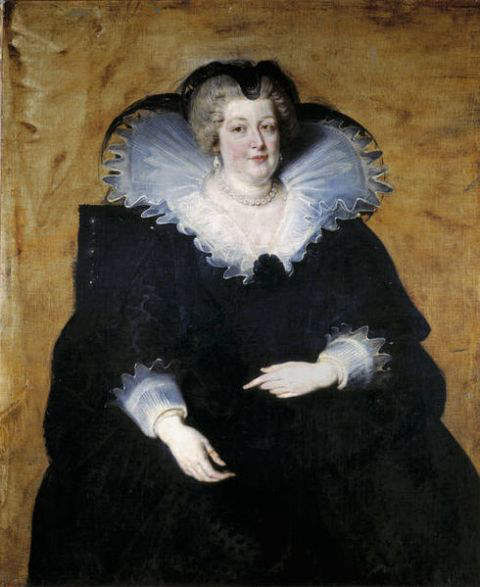
Marie de Medicis, the Queen consort of King Henry IV of France
Marie de Medicis becomes power-hungry and continues to rule France even after her son attained majority, but is exiled to Blois by her son Louis XIII in 1617
Marie de Medicis acted as regent until Louis XIII came of age, and devoted herself to the affairs of the state. She developed a passion for power, and after Louis XIII came of age in 1614, continued to govern France for another three years ignoring his son. In 1617, Louis XIII resentful at being excluded from power, got his mother exiled to Blois, with the help of his closest adviser Charles d'Albert, who soon became the dominant figure in the government.
After raising two unsuccessful rebellions against her son in 1619-1620, Marie de Medicis eventually reconciles with him through the intervention of Cardinal Richelieu
Marie de Medicis, having raised two unsuccessful rebellions against her son in 1619-20, was finally reconciled to Louis XIII in August 1620, through the intervention of Cardinal Richelieu, her principal adviser. Cardinal Richelieu eventually gained Louis' confidence and was appointed principal minister in the government. With Louis' failing health Cardinal Richelieu became the dominant figure in the government.
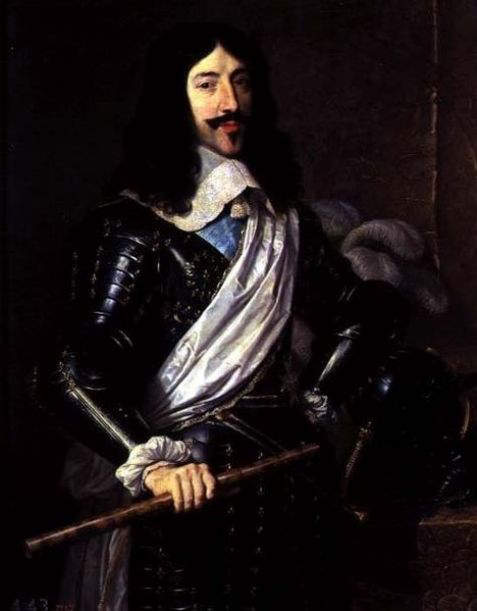
King Louis XIII of France
Marie de Medicis falls out with Cardinal Richelieu and is exiled for the second time in 1631 to Compiegne, from where she escapes to Brussels in Spanish Netherlands (later Belgium) and later moves to Amsterdam.
Cardinally Richelieu eventually fell out with Marie de Medicis over his policy of rejecting the Franco-Spanish alliance, and instead supporting the Protestant powers. Things came to a head when Marie de Medicis demanded the dismissal of Cardinal Richelieu, but Louis XIII instead stood by his chief minister. In February 1630, Marie de Meidicis was exiled for the second time to Compiegne, from where she fled to Brussels in Spanish Netherlands (presently Belgium) in 1631, and later moved to Amsterdam in 1638, where she was given a rousing welcome by the leaders of the new Dutch Republic created in 1580, a confederation of seven provinces, with a chief executive and a nominal Stadtholder, who were traditionally appointed from the princes of Orange-Nassau, beginning with William the Silent, the main leader of the Dutch Struggle for independence from Spain.
William the Silent, the first Stadtholder of the United Provinces of the Netherlands, assassinated in 1584 and is succeeded by his son Maurice of Nassau
William the Silent was assassinated by a Spanish sympathizer in 1584 and was succeeded by his eldest son, by his second marriage, Maurice of Nassau, a Protestant, as Stadtholder of the United Provinces of the Netherlands, the position of the nominal head-of-state, non-inheritable and open only to Protestant Calvinists. William the Silent's other title, the Prince of Orange was inherited by his eldest son, by his first marriage, Philip William, who was brought up and educated in Spain as a Roman Catholic, and died in 1618 as a Roman Catholic. After 1618, Maurice of Nassau, inherited the title of Prince of Orange, while still holding the title of Stadtholder.
Maurice of Nassau appointed as Captain-General of the Army and turns out to become the best military strategist in Europe in the early 17th-century
Maurice was appointed Captain-General of the army in 1587 at the age of 19 years. Maurice studied military history, military strategy and tactics, as well as mathematics and astronomy, and helped to reorganize the Dutch States Army, together with his cousin and brother-in-law Willem Lodewijk. He eventually turned out to be the best military strategist in Europe at that time, inflicting defeat after defeat against the Spanish army, and capturing many fortresses, and towns, expanding the borders of the Dutch Republic to secure defendable positions. Maurice, who was a protege of the much older, Johan van Oldenbarnevelt, a contemporary of his father, William the Silent and the chief spokesman of the States-General that wielded executive power, went into confrontation with him, over his decision to sign a peace treaty with Spain, known as the Twelve Year Truce, that lasted from 1609 to 1621. This gave the Spanish army an opportunity to regroup and rearm for a fresh assault after 1621, which they did, reversing the gains of Maurice. Johan van Oldenbarnevelt was eventually arrested, tried and executed in 1618, and from 1618 until his death in 1625, Maurice wielded uncontested power in the republic.
Prince Frederick Henry succeeds his elder brother Maurice of Nassau as Prince of Orange and the Stadtholder of the United provinces of the Netherlands
Maurice of Nassau, never married and after his death in 1625, was succeeded by his younger half-brother, Prince Frederick Henry, the youngest son of William the Silent by his 4th-wife, as Prince of Orange and Stadtholder of the United provinces of the Netherlands, and as Captain and Admiral-General of the Union. Frederick Henry was born on January 24, 1584, just six months before his father was assassinated. Young Frederick Henry was educated at the University of Leiden, and was appointed as a member of the council of state at the age of 17 years. He began to take part in most of Maurice's military expeditions, and was sent on various foreign missions. Until the age of 40, Frederick Henry, the Prince of Orange, was reputed to be too fond of women to tie himself permanently to one of them. But, under strong pressure from Maurice who had no legitimate offspring, and almost at the latter's deathbed, he got married in 1625. His wife was lady-in-waiting to the exiled Queen of Bohemia.
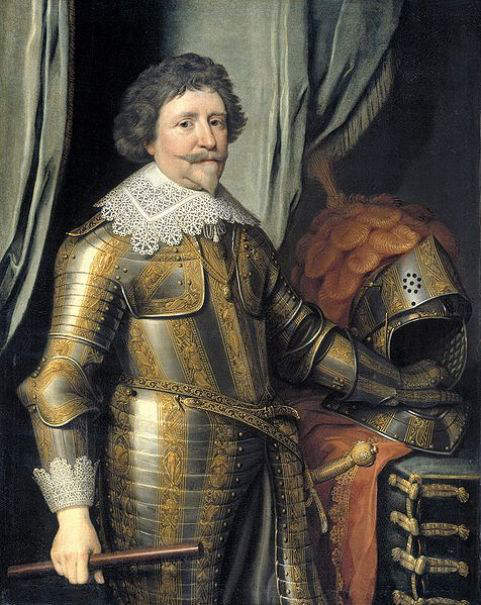
Portrait of Frederick Henry, Prince of Orage and Stadtholder of the United Provinces of Netherlands from 1625 to 1647
Frederick Henry, the Prince of Orange becomes an able successor to his brother, and his period of rule from 1625 to 1647 became famous as the "Golden Age" of the Dutch Republic
Frederick Henry, became an able successor to his brother, proving himself to be a good general as his brother, but a far more superior politician and statesman. His 22-year period of rule from 1625 to 1647 is referred to as the "Golden Age" of the Dutch Republic, marked by great military and naval triumphs, worldwide maritime and commercial expansion, and great developments in the field of art and literature. Frederick Henry was a brilliant soldier and military strategist, and everyone of his yearly campaigns had the conquest of some important town or fortress as it's aim. Hence the borderline between the modern kingdoms of Belgium (Spanish Netherlands) and the Netherlands came to be drawn largely according to Fredrick Henry's success and failures. He proved himself to be a great statesman towards the end of his life when he concluded a peace treaty with Spain, which was eventually signed after his death in 1648, that ended the Eighty Years War between the Dutch Republic and Spain, that gave the United Provinces all what they had been seeking for eighty years.
Marie de Medicis sold most her jewelry while living in Amsterdam. The Beau Sancy diamond is sold to Prince Frederick Henry, Prince of Orange and becomes an heirloom of the successive Princes of Orange
At the time Marie de Medicis reached Amsterdam in 1638, the Stadtholder of the United Provinces of the Netherlands was Prince Frederick Henry, the Prince of Orange, who gave her a grand welcome, and extended his hospitality to her for a comfortable stay in Amsterdam. While living in exile in Amsterdam, Marie de Medicis decided to sell most of her valuable possessions including her jewelry. She sold the Beau Sancy diamond to her honorable host, Prince Frederick Henry, the Prince of Orange, for 80,000 florins. Since then the Beau Sancy diamond becomes an heirloom inherited by the successive Princes of Orange.
While in Amsterdam Marie de Medicis traveled to Cologne in 1642, where she fell sick and died on July 4, 1642, and was buried in the Cathedral of Cologne.
Frederick Henry is succeeded by his son William II in 1647, who ruled for a short period of only 3 years as he died of small pox in November 1650
Frederick Henry's son and heir, William II, married Mary Henrietta Stuart, the eldest daughter of King Charles I of Great Britain and Queen Henrietta Maria in May 1641. William II succeeded his father Frederick Henry as the Stadholder of the United Provinces of Netherlands, after his death in 1647. He also assumed the offices of Captain General and Admiral General of the Union, and the title of Prince of Orange. William II died on November 6, 1650, after contracting small pox. William II's wife Mary Henrietts Stuart gave birth to a baby boy eight days after his death. This boy, who was the grandson of Prince Frederick Henry, grew up to become William III (1672-1702), the Prince of Orange and Stadholder of the United provinces of the Netherlands, after the Act of Seclusion, that excluded the House of Orange from power, was rescinded.
William II was succeeded by his infant son William III as Prince of Orange on November 4, 1650, but the post of "Stadtholder" was suspended under the Act of Seclusion in 1654
William II was succeeded as Prince of Orange, by his infant son William III, who was born on November 4, 1650, just 8 days after his death. However, the post of Stadtholder was suspended after the death of William II, under pressure from Oliver Cromwell, who included the "Act of Seclusion" in the "Treaty of Westminster" that followed immediately after the First Anglo-Dutch War which ended in 1654, under which the appointment of a member of the House of Orange as Stadthollder was forbidden. The Act of Seclusion was rescinded only after the death of Oliver Cromwell in 1658 and the fall of the republican Commonwealth. The guardianship of infant William III was shared between his mother, Mary Stuart, his paternal grandmother Amalia of Solms-braunfels, his paternal aunt Louise Henrietta and her husband, Frederick William, the Elector of Brandenburg. After early education at home at the hands of Dutch governesses and Calvinist priests, he had his formal education under the guidance of a professor of ethics, from 1659 to 1666, at the University of Leiden, until the age of 16. In 1666, his education was taken care of by Johann de Witt, a leading politician of the Republic, who taught him the basic skills of State Craft.
William III is reinstated as Stadtholder of the United Provinces of the Netherlands in 1672, in the aftermath of the Anglo-French invasion of that year, successfully thwarted by William III
In May 1670, at the age of 20 years, William was admitted as a member of the Council of State, with full voting rights. In November 1670, he travelled to England with permission, to pay a visit to his uncles, king Charles II and James. However, such contacts with his uncles, could not avert an Anglo-French invasion in 1672, during which William as the Captain-General and Admiral-General of the Dutch armed forces, demonstrated his capabilities, by defeating the Anglo-French fleet and blocking the advance of the French army by ordering the flooding of the Dutch Water Line. His achievements during the war boosted his popularity and the Dutch provinces including Holland, which were previously reluctant to appoint him as Stadtholder of the United Provinces of the Netherlands, now readily agreed to his appointment. Thus, on July 4, 1672, William was appointed as the Stadtholder of the United Provinces of the Netherlands, with the title William III. William III allied the Dutch Republic with Spain and Brandenburg in its war against the Anglo-French invasion. Further defeats of the Anglo-French forces, particularly their naval fleet in three different battles, forced Charles II to withdraw his forces, and sign a treaty with the Dutch Republic, followed by the withdrawl of French forces in 1673.
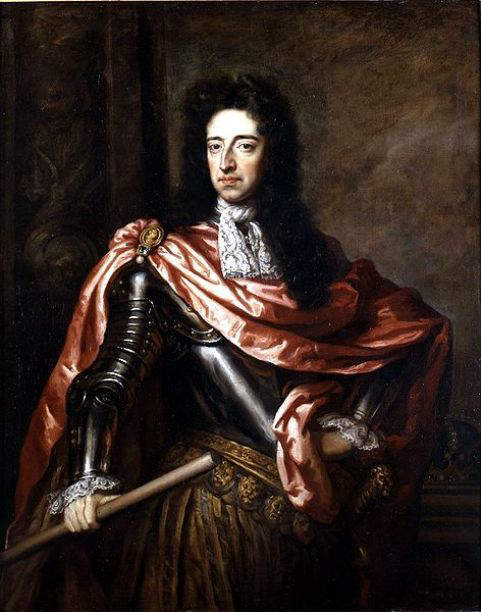
Portrait of William III, Prince of Orange (1650-1702), Stadtholder of Netherlands (1672-1702) and the King of England, Scotland and Ireland (1689-1702)
Wiliam III gives the Beau Sancy diamond as a gift to his consort Mary Stuart at the time of their wedding on November 4, 1677
Soon after the war, William III proposed to marry his first cousin, Mary Stuart, daughter of James (subsequently King James II of England) and niece to King Charles II, with a view of increasing his chances to succeed to Charles' kingdom, and to draw England away from its pro-French policies. Under pressure from Charles II, James reuctantly agreed to the marriage. and the marriage of William III and Mary was solemnized on November 4, 1677. William III, who inherited the family heirloom, the Beau Sancy diamond, gave it as a wedding gift to his consort, Mary Stuart of England.
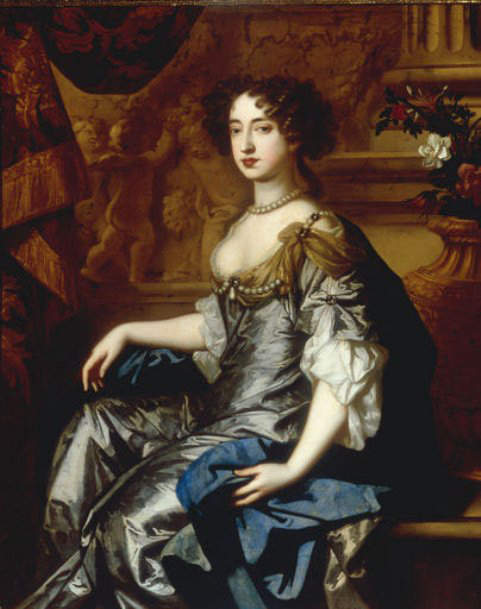
Queen Mary II, co-ruler of England, Scotland and Ireland with King William III, Prince of Orange
As the most powerful protestant leader in the region, William III is invited by Protestant leaders and nobles in England to intervene to eliminate the threat posed to Protestants by a pro-Catholic and pro-French king in England. William III and Mary Stuart are installed as joint rulers of England on April 11, 1689.
After the death of Charles II in 1685, his brother James, though a Roman Catholic, ascended the throne as King James II. His ascension to the throne was viewed with suspicion by most of his subjects who were Protestants. King James II antagonized his subjects by his pro-French and pro-Catholic policies, and by his designs to become an absolute monarch. The situation exploded when King James II produced a legitimate Catholic heir, born to his consort Anne Hyde on June 10, 1688, raising the possibility of a Catholic monarchy for a long time to come. Concerned Protestant nobles and clergy appealed to William III, Prince of Orange and Stadholder of Netherlands (son-in-law and nephew of King James II), the most powerful Protestant leader in the region, to intervene. He obliged and invaded England on 5th November 1688, landing a 15,000 strong army at Brixham in southwest England. James II fled to France and King William III and Queen Mary II were installed as joint rulers of England on April 11, 1689 - a series of events that came to be known as the "Glorious Revolution." Scotland followed suite one month later on May 11, 1689, and Catholic Ireland was subdued after a series of battlea in 1691. William and Mary had no surviving issue, and Queen Mary II died of smallpox in 1694, leaving William III to rule alone. He continued to rule for another eight years and died of Pneumonia in 1702. After his death his sister-in-law Princess Anne ascended the throne as Queen regnant of England, Scotland and Ireland.
Modern History of the Diamond
After Queen Mary II's death, the Beau Sancy diamond was gifted by William III to his first cousin, Frederick III, Elector-Prince of Brandenburg and first King of Prussia as Frederick I, from 1701 to 1713
Since William and Mary were childless, after her death there was no one to inherit the "Beau Sancy" diamond. William III knew that the diamond was a valuable family heirloom of the Princes of Orange, and therefore should be quite rightly inherited by someone closely related to the family. As such he decided to gift the diamond to Frederick III, Elector-Prince of Brandenburg (1688-1713) and Duke of Prussia, from the House of Hohenzollern, who became the first King of Prussia, as Frederick I, from 1701 to 1713. Frederick III & I was a grandson of Prince Frederick Henry, Prince of Orange and Stadtholder of the United provinces of the Netherlands, through his eldest daughter Louise Henriette, who married the Elector of Brandenburg, Frederick William. He was thus a first cousin to William III.
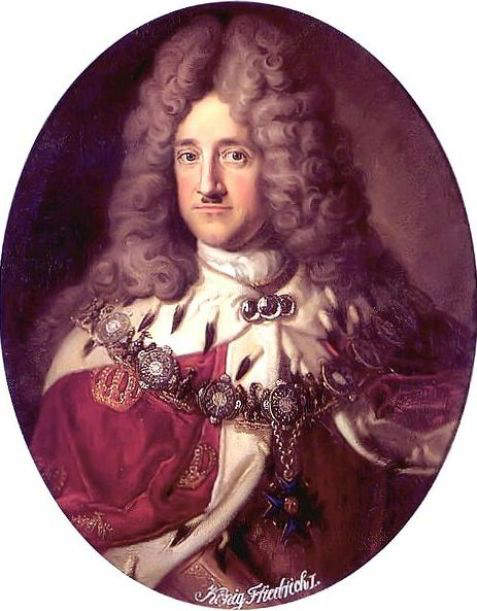
Frederick III, Elector-Prince of Brandenburg and Frederick I, King of Prussia
The Beau Sancy a treasured family heirloom of the Princes of Orange become an important possession of the House of Hohenzollern from the beginning of the 18th-century
Thus, the celebrated "Beau Sancy," which was a treasured family heirloom of the Princes of Orange, now became a treasured possession of the Kings of Prussia, from the House of Hohenzollern, from the beginning of the 18th-century. The "Beau Sancy" became the most important stone in the crown jewels of Prussia and was set in the royal crown. In an inventory of the crown jewels in 1913, the Beau Sancy featured as the pendant to a necklace made of 22 diamonds.
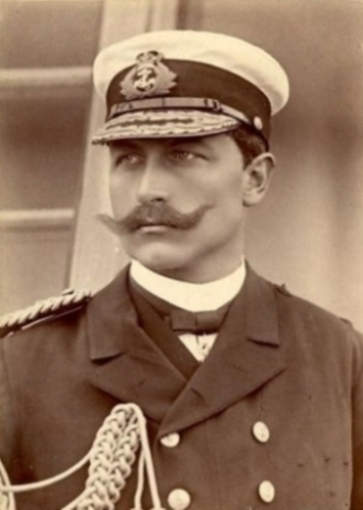
Wilhelm II - Kaiser William II, last emperor of Germany and king of Prussia
The Beau Sancy comes into the possession of Prince Louis Ferdinand, Prince of Prussia and Head of the House of Hohenzollern from 1951 to 1994
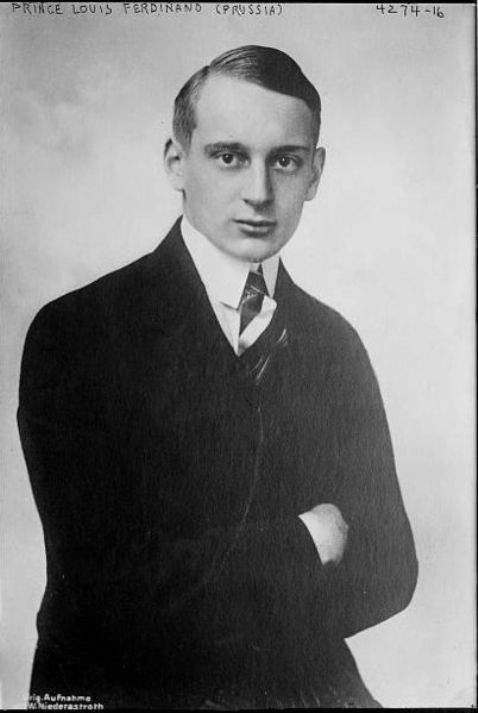
Photograph of Prince Louis Ferdinand, Prince of Prussia, and Head of the House of Hohenzollern from 1951 to 1994
The Beau Sancy, that was inherited by successive Kings of Prussia in the 18th and 19th centuries, finally came into the possession of Kaiser William II, the last Emperor of Germany and King of Prussia, who ruled from 1888 to 1918. In 1918, after Kaiser William's abdication and voluntary exile to Netherlands, the monarchy in Germany was abolished. After the renunciation of succession rights by his elder brother, Prince Wilhelm of Prussia in 1933, and the deaths of Kaiser William in exile in 1941, and the Crown Prince William in Brandenburg in 1951, Prince Louis-Ferdinand of Prussia became the head of the House of Hohenzollern, a nominal title which he held from 1951 until his death in 1994. The Beau Sancy diamond, the valued heirloom of the Kings of Prussia, finally came into the possession of Prince Louis Ferdinand, and has now been inherited by his son and successor, Prince Georg Friedrich, the present head of the House of Hohenzollern. The diamond mounted as a pendant to a diamond necklace, still remains one of the prized possessions of the Royal Prussian House of Bremen, Germany.
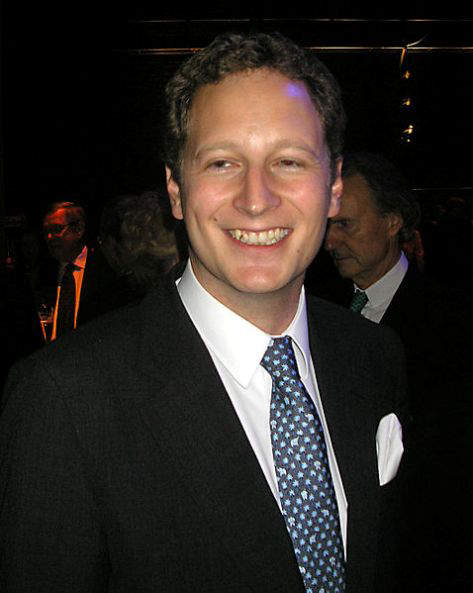
Prince Georg Friedrich, present Head of the House of Hohenzollern
The Beau Sancy and Great Sancy are reunited in 1972 after a lapse of 368 years
In 1972, due to the concerted efforts of a Finnish gemologist, Herbert Tillander, the two historic and celebrated diamonds, the Great Sancy and Little Sancy/Beau Sancy, whose net diagrams were sketched accurately by Thomas Cletscher in the 17th-century, and were owned by Charles the Bold from 1467 to 1477, and again by Nicholas Harlay de Sancy, Seigneur de Sancy from around 1589 to 1604, were once again reunited, at an exhibition of the two diamonds, held in Helsinki. The two diamonds were reunited after 368 years, since they were last sold by the Seigneur de Sancy in 1604. The historic exhibition, titled "Two Historic Diamonds" involving years of preparation and correspondence, leading to the persuasion of the then owners of the Sancy, the Astor family of England and the Beau Sancy, the Hohenzollern family of Germany, was declared open by none other than Prince Louis Ferdinand himself, Head of the House of Hohenzollern, and the owners of the Beau Sancy diamond.
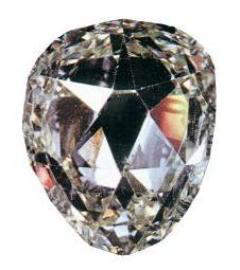
55.23-carat Sancy diamond (left) and 34-carat Beau Sancy diamond (right) reunited after 368 years
The Beau Sancy and Sancy are reunited again for the second time at an exhibition held in 2001, at the Gallery of Mineralogy and Geology at the French Natural History Museum, Paris, organized by the Mineralogy Department of the Museum and sponsored by Robert Mouawad
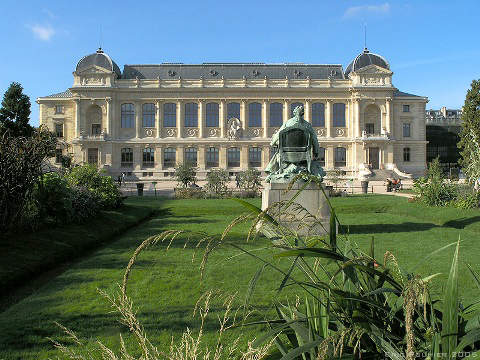
Natural History Museum of Paris, France
 https://creativecommons.org/licenses/by-sa/2.5/deed.en
The two historic diamonds, the Beau Sancy and Sancy were reunited once again, 29 years later, at an Exhibition held at the French Natural History Museum, Paris, from March 10 to July 15, 2001, organized by the Mineralogy Department of the Museum and sponsored by Robert Mouawad, the Head of the international jewelry empire, the Mouawad Jewelers. This was the most comprehensive diamond and jewelry exhibition ever held in any country in the world. The exhibition was held at the Gallery of Mineralogy and Geology, consisting of 350 items, spread over three sections, the colonnade hall, the picture gallery and the treasury vault. While the first two sections contained exhibits related to the natural history of the diamond, diamond deposits, diamond cutting, and the picture gallery, the treasury vault contained around 100 items of famous diamonds, crown jewels and jewels of the aristocracy, and the jewelry niches of three international companies, Mouawad Jewelers, Tiffany's and Cartier. The treasury vault is an impregnable concrete chamber with thick steel doors situated downstairs. Some of the exhibits displayed in the treasury vault were :-
1) De Beers Special Collection, consisting of the rough octahedral 616 diamond crystal, a 40-ct. octahedral crystal ad a 60-ct. macle.
2) Eddy Elza's Rainbow Collection, consisting of around 300 fancy colored diamonds from all over the world, including 3 of 11 red diamonds in existence.
3) The largest black diamond in the world, the 312.24-carat Spirit of de Grisogono, belonging to Fawaz Gruosi.
4) The Nassak or Idol's Eye diamond, from Robert Mouawad's collection of diamonds.
5) The Shah Jahan diamond, one of the three engraved historic diamonds, a 56.71-carat, light pink. table-cut diamond.
6) Jewelry belonging to several Indian Maharajahs, the most prominent being the turban ornament of the Maharajah of Patiala.
7) President Vargas IV diamond, of Brazilian origin, belonging to Robert Mouawad's Collection, set in a bracelet.
8) The Star of Africa also known as the Dudley diamond, a 47.69-carat, pear-shaped, D-color, three-sided, stellar brilliant, belonging to a private collector.
9) The Crown Jewels of Portugal, exhibited for the first time outside Portugal.
10) The Crown Jewels of France consisting of the Regent diamond, the Sancy diamond, the Pink Hortensia, and the Mazarin diamonds belonging to the Louvre Museum. Some items of the French Crown Jewels sold in 1887, and belonging to private American collectors, were also added to the exhibits.
The most significant exhibit was the re-unification of the Great Sancy belonging to the Louvre Museum, with the Beau Sancy, the most precious jewel of the Prussian Royal House, currently owned by the great-grandson of Kaiser Wilhelm II, Prince George Friedrich of Prussia. The two famous diamonds were once owned by Charles the Bold, from 1467 to 1477 and over a century later by Nicholas Harlay de Sancy, Seigneur de Sancy from around 1589 to 1604.
11) The Crown Jewels of the Kingdom of Denmark.
12) The Crown Jewels of the former Kingdom of Egypt.
13) Crown Jewels of the Indonesian Sultans, form the National Museum of Jakarta.
You are welcome to discuss this post/related topics with Dr Shihaan and other experts from around the world in our FORUMS (forums.internetstones.com)
Related :-
1) Sancy Diamond
References :-
1) Diamonds and Precious Stones - Louis Dieulafait, Published in 1874 by Scribner, Armstrong & Company, New York
2) Precious Stones and Gems - Their History, Sources and Characteristics - Edwin W. Streeter
3) Fire In The Earth - The Story of the Diamond - by James Remington McCarthy, Published in 1942 by Arper & Brothers, New York and London
4) The Great Diamonds of the World - Their History and Romance, Edwin W. Streeter, Published in 1882 by George Bell& Sons, London
5) Diamonds - The Spectacular Story of Earth's Rarest Treasure and Man's Greatest Greed - Emily Hahn, Published 1957 by Doubleday & Co,Inc. New York.
6) Nicolas de Harlay,Seigneur de Sancy - From Wikipedia,the free encyclopedia
7) Sancy Diamond - www.internetstones.com
8) Charles the Bold - From Wikipedia,the free encyclopedia
9) Henry III of France - From Wikipedia, the free encyclopedia
10) Henry IV of France - From Wikipedia, the free encyclopedia
11) Louis XIII of France - From Wikipedia, the free encyclopedia
12) Frederick Henry, Prince of Orange - From Wikipedia, the free encyclopedia
13) William III of England - From Wikipedia, the free encyclopedia
14) James II of England - From Wikipedia, the free encyclopedia
15) Frederick I of Prussia - From Wikipedia, the free encyclopedia
 Home
Security & Guarantee
How it Works
Technology Partners
Updated Tables
Famous Diamonds
More Famous Diamonds
Famous Pearls
Famous Gemstones
Contact Dr Shihaan Larif
Contact Senior Editor
Famous Jewelry
Reference Database
Forums
Learning Center
Gemstone Gallery
e-mail Notifications
Advertise
Press Release
About Us
Privacy Policy
Contact Us
FAQ'S
Site Map
Staff Mail Login
Staff Documents
Birthstones
History
Minerals
Shows
Live Metal Prices
Jewellery Gallery
News
Marketplace
Marketplace Support
Open Store
Online Auctions
Join Us & Contribute
Directory
Classifieds
List your products
Wholesale Trading
Post Buy Request
Go Green Policy
Site Updates
Upcoming-ToDo List
Latest News
Latest Articles
Latest Blog Updates
Chat Rooms
Job Board
User Gallery
Videos
New Newsletter Archive
Old Newsletter Archive
Jewelry & Mineral Blog
User Blogs & Social Network
Search
Answers (Q & A)
Valuation
Help me find a diamond/jewelry
pin.internetstones.com- Social Pinboard- Sart yours & connect with millions
Invite Friends From Yahoo, Gmail etc-One Click
Home
Security & Guarantee
How it Works
Technology Partners
Updated Tables
Famous Diamonds
More Famous Diamonds
Famous Pearls
Famous Gemstones
Contact Dr Shihaan Larif
Contact Senior Editor
Famous Jewelry
Reference Database
Forums
Learning Center
Gemstone Gallery
e-mail Notifications
Advertise
Press Release
About Us
Privacy Policy
Contact Us
FAQ'S
Site Map
Staff Mail Login
Staff Documents
Birthstones
History
Minerals
Shows
Live Metal Prices
Jewellery Gallery
News
Marketplace
Marketplace Support
Open Store
Online Auctions
Join Us & Contribute
Directory
Classifieds
List your products
Wholesale Trading
Post Buy Request
Go Green Policy
Site Updates
Upcoming-ToDo List
Latest News
Latest Articles
Latest Blog Updates
Chat Rooms
Job Board
User Gallery
Videos
New Newsletter Archive
Old Newsletter Archive
Jewelry & Mineral Blog
User Blogs & Social Network
Search
Answers (Q & A)
Valuation
Help me find a diamond/jewelry
pin.internetstones.com- Social Pinboard- Sart yours & connect with millions
Invite Friends From Yahoo, Gmail etc-One Click




Our Global Jewelry Industry Job Network


Buy & Sell in our Marketplace

Subscribe to our Newsletter

List in our Classifieds

List in our Directory

User Uploaded Gallery

Powered by Ultra Secure
Amazon (USA) Cloud Network

Founder Internet Stones.COM
Register in our Forums

| Featured In
|
|
|
|
|
|
|
|







Blog & Education Feed
Articles Feed
 |
 |
 |

Copyright © .Internet Stones.COM. All rights reserved.