Begum Blue Diamond
Open FREE Unlimited Store Join Our Newsletter
Origin of Name
The "Begum Blue" diamond was the property of Princess Salima Aga Khan (formerly Sarah Croker Poole), the wife of His Royal Highness Prince Karim Aga Khan IV. The wife of the Aga Khan was officially referred to as Her Highness Begum Salima Aga Khan or just as Her Highness the Begum. The title begum which seems to be of Persian origin, is usually used to refer to a Muslim woman of high ranking position in the Indian Sub-continent, that includes India, Pakistan, and Bangladesh. Thus the name "Begum Blue" seems to have been inspired by the title Begum associated with the wife of his highness the Aga Khan.

Characteristics of the "Begum Blue" diamond, third largest heart-shaped blue diamond in the world
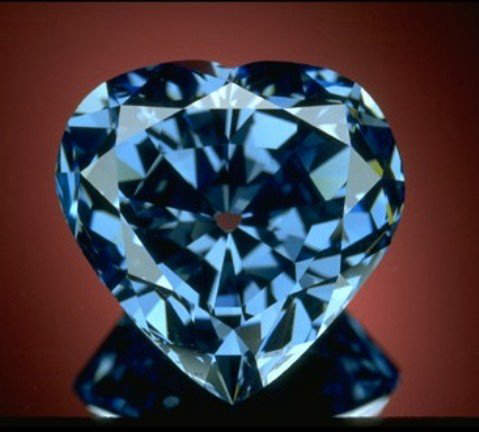
The 30.02-carat "Blue Heart" diamond, the largest heart-shaped blue diamond in the world
Photo Credit - Chip Clark
© Smithsonian Institution
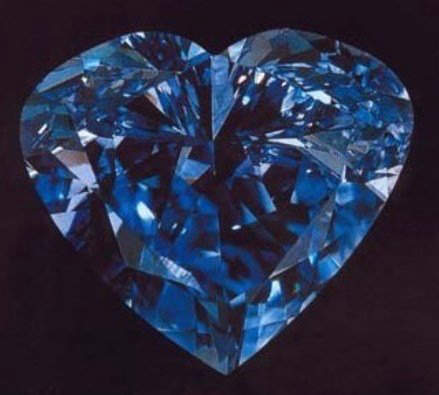
27.64-carat "Heart of Eternity" diamond, the second largest heart-shaped blue diamond in the world
© Smithsonian Institution
Four Cs of the diamond
The "Begum Blue" diamond is a 13.78-carat, fancy deep blue, heart-shaped diamond of unknown clarity grade. Under the GIA color grading scale the highest color grade is fancy vivid. The term fancy deep according to the GIA color grading scale, is the second highest color grading for fancy diamonds, both in terms of tone and saturation.
The "Begum Blue" diamond occupies the 12th position in the list of known blue diamonds in the world. See table below. It is the third largest heart-shaped blue diamond in the world, after the 30.02-carat "Blue Heart" diamond and the 27.64-carat "Heart of Eternity" diamond, both proud possessions of the Smithsonian's National Museum of Natural History.
List of known famous blue diamonds in the world arranged in descending order of carat weights
S/N |
Name |
Price realized at Auction/Value when last sold |
Country/Period of Origin |
Carat weight |
Cut/Shape |
Color/Clarity |
1 |
Hope diamond |
Over $300,000 in 1911. Current estimate $200-$250 mill. |
Golconda, India 1663-68 |
45.52 |
Antique-cushion brilliant |
fancy dark grayish blue/VS1 |
2 |
Tereschenko |
$4.6 mill. Christie's Genv. sale Nov.1984 |
Golconda, India |
42.92 |
Pear-shaped |
fancy blue |
3 |
Wittelsbach-Graff |
$24.3 mill. |
Gloconda, India |
35.56 /31.06 |
Cushion-shaped |
fancy deep blue/IF |
4 |
Sultan of Morocco |
$250,000 in 1972, Private sale |
Golconda,India |
35.27 |
Cushion-cut |
fancy grayish blue |
5 |
The Blue Heart or Eugenie Blue |
$300,000 in 1953. Sale by Van Cleef & Arpels after change of setting |
Premier Mine, S.A. |
30.82 |
Heart-shaped |
fancy vivid blue |
6 |
Blue Lili |
Premier Mine, S.A. |
30.06 |
Tapered cushion-cut |
fancy intense blue |
|
7 |
The Heart of Eternity |
Premier Mine, S.A. |
27.64 |
Heart-shaped |
fancy vivid blue/VS2 |
|
8 |
Transvaal Blue |
Premier Mine, S.A. |
25.00 |
Pear-shaped |
fancy blue |
|
9 |
Sam Abram Fancy Blue diamond |
$9.9 mill. Soth.NY. Oct 1994 |
Premier Mine, S.A. |
20.17 |
Emerald-cut |
fancy vivid blue/VS2 |
10 |
Graff Blue Ice Diamond |
Premier Mine, S.A. |
20.02 |
Pear-shaped |
fancy deep blue |
|
11 |
The Blue Empress |
Premier Mine, S.A. |
14.00 |
Pear-shaped |
fancy blue |
|
12 |
The Begum Blue |
$7.75 mill. Christie's Geneva. November 1994 |
Premier Mine, S.A. |
13.78 |
Heart-shaped |
fancy deep blue |
13 |
Brunswick Blue |
Golconda, India |
13.75 |
Pear-shaped |
fancy blue |
|
14 |
Cut-cornered rectangular mixed-cut blue diamond |
$8.87million Christie's Geneva, May 2008 |
Premier Mine, S.A. |
13.39 |
Cut-cornered rectangular mixed-cut |
fancy intense blue |
15 |
The Blue Magic |
Premier Mine, S.A. |
12.02 |
Modified pear-shaped |
fancy vivid blue/VVS2 |
|
16 |
Bulgari Blue |
$15.7 mill. Christ.NY Oct.2010 |
Premier Mine, S.A. |
10.95 |
Triangular-shaped |
fancy vivid blue |
17 |
Sotheby's HK. Oct. 2009 |
$5.7 mill.Soth.HK. |
Premier Mine, S.A. |
8.74 |
Emerald-cut |
fancy intense blue/VVS1 |
18 |
Christie' Geneva, Dec.1999 |
$3.2 million |
Premier Mine, S.A. |
7.96 |
Pear-shaped |
fancy vivid blue/VS1 |
19 |
Soth. Geneva May 2010 |
$8.03 mill. |
Premier Mine, S.A. |
7.64 |
Cushion-cut |
fancy intense blue/VVS2 |
20 |
Petra Blue/Star of Josephine |
$9.5 mill. Soth. Geneva. May 2009 |
Premier / Cullinan/Petra Mine.S.A. |
7.03 |
Cushion-cut |
fancy vivid blue/IF |
21 |
Christie's New York |
$3.6 mill |
Premier Mine, S.A. |
6.29 |
Pear-shaped |
fancy intense blue |
22 |
Moussaieff Jewelers unnamed blue diamond |
$7.98 mill Sotheby's HK, Oct.2007 |
Premier Mine, S.A. |
6.04 |
Emerald-cut |
fancy vivid blue |
23 |
Sotheby's HK, Oct.2011 |
$10.1 mill. Soth.HK. |
Premier Mine, S.A. . |
6.01 |
Cushion-cut |
fancy vivid blue |
24 |
Sotheby's Geneva, Nov.2009 |
$7.5 mill |
Premier Mine, S.A. . |
5.96 |
Pear-shaped modified brilliant |
fancy vivid blue |
25 |
Christie's Geneva, Dec.1999 |
$1.13 mill. |
Premier Mine, S.A. |
5.80 |
Pear-shaped |
fancy intense blue/IF |
26 |
De Beers Millennium Blue, Jewel II- Apr.2010 Sotheby's HK |
$6.4 mill. Soth.HK. |
Premier Mine, S.A. |
5.16 |
Pear-shaped |
fancy vivid blue/IF |
27 |
toi et moi ring - Soth. Geneva May 2010 |
$6.32 mill. |
Premier Mine, S.A. |
5.02 5.42 |
Pear-shaped Pear-shaped |
fancy vivid blue D-color |
28 |
Christie's Geneva, Dec.1999 |
$1.24 mill. |
Premier Mine, S.A. |
4.77 |
Circular-cut |
fancy deep blue/VS2 |
29 |
Soth. Geneva. Nov,2007 |
$4.7 mill |
Premier Mine, S.A. |
4.16 |
Pear-shaped |
fancy vivid blue/ |
30 |
Bulgari Blue |
$2.97 mill. Bonhams Lond. 2011 |
Premier Mine, S.A. |
3.78 |
Pear-shaped |
fancy vivid blue |
31 |
Soth. Geneva May 2008 |
$4.96 mill |
Premier Mine, S.A. |
3.73 |
Pear-shaped |
fancy vivid blue |
32 |
Aleks Paul of Essex Global Trading |
$3.6 mill Christie's NY Apr. 2011 |
Premier Mine, S.A. |
3.25 |
Square Emerald cut |
fancy vivid blue/IF |
33 |
Christie's NY Oct.2011 |
$2.7mill |
Premier Mine, S.A. |
3.21 |
Modified Pear-shape |
fancy vivid blue |
33 |
Sotheby's NY. Apr. 2011 |
$3.27 mill. |
Premier Mine, S.A. |
3.18 |
Marquise-cut |
fancy vivid blue /IF |
©Internet Stones.com
Blue diamonds are rare Type IIb diamonds constituting less than 0.1% of all naturally occurring diamonds
The "Begum Blue" diamond, being a blue diamond is a rare Type IIb diamond, which constitute less than 0.1 % of all naturally occurring diamonds. The diamond is Type II because of the absence of nitrogen impurities or presence of undetectable quantities of nitrogen impurities. Diamonds that contain detectable quantities of nitrogen impurities are known as Type I.
The diamond is Type IIb because instead of nitrogen impurities trace amounts of boron impurities are present, which impart the blue color to the diamonds. The diamonds also become semi-conducting as against other diamonds which are non-conducting. It is important to note that both boron and nitrogen have atomic sizes comparable to that of carbon, the atoms that constitute the diamond crystal, and as such can be easily accommodated in the crystal.
Type IIa diamonds are not only free of nitrogen impurities but also free of all other chemical impurities. They are said to be chemically pure diamonds.
History
Early history of the diamond is obscure but the diamond most probably originated in the Premier Diamond Mines of South Africa
The early history of the diamond such as the country of origin, mine of origin, date of discovery, original owners of the diamond, the persons or company involved in the cutting of the diamond, etc are all unknown. But given the fact that the diamond was not part of the jewels and jewelry that had remained in the Aga Khan's family for a long period, but was a recent gift by the Aga Khan to Pricess Salima Aga Khan after their marriage in 1969, shows that the diamond is of recent origin, and in all probability had originated in the Premier Diamond Mines of South Africa, the main source of high quality blue diamonds in the world in the 20th century.
The Begum Blue diamond is the centerpiece of an exquisitely designed diamond pendant necklace
Most of the jewelry gifted by Prince Karim Aga Khan to his wife Princess Salima Aga Khan, was specially designed for her by the greatest designers of the world, who had a track record of designing exquisite jewelry for the famous royal families around the world, such as Harry Winston, Cartier, Van Cleef & Arpels, Bulgari, Tiffany-Schlumberger, Boucheron, Buccellati and Marina B. The "Begum Blue" diamond is the centerpiece of an exquisitely designed diamond pendant necklace, that also includes 41 other heart-shaped smaller diamonds. A second 16.04-carat, internally flawless, D-color, heart-shaped diamond is suspended from the "Begum Blue." The exact designers of this magnificent piece of jewelry have not been identified, but believed to be one of the above designers.
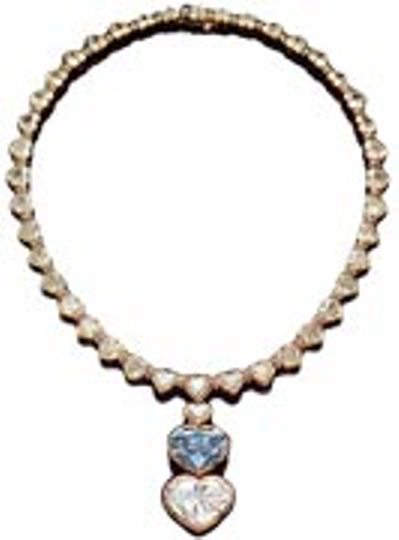
The Begum Blue Diamond Necklace made of 41 heart-shaped colorless diamonds, and a pendant whose centerpiece is the heart-shaped Begum Blue Diamond, with a second D-color heart-shaped diamond suspended from below
© Christie's
Princess Salima Aga Khan's jewelry collection was one of the most extravagant collections ever assembled
The collection of jewelry put together by Princess Salima Aga Khan during her 25 years of marriage to Prince Karim Aga Khan, that lasted from 1969 to 1994, was said to be one of the most extravagant collections of jewelry ever assembled. Judging by the value of the gifts showered on the princess by Prince Karim Aga Khan, the marriage indeed must have been a happy one, producing three children, Princess Zahra, Prince Rahim, and Prince Hussain. But, unfortunately the marriage ended up in divorce in 1995.
Prince Karim Aga Khan IV
The Prince was an alumnus of the Harvard University where he earned a Bachelors Degree with honors in 1959
Aga Khan IV, whose personal name is Prince Karim al-Husayn Shah, was the eldest son of Prince Ali Khan by his first first wife Joan Yarde-Buller, the daughter of the 3rd Baron Churston. Born on December 13, 1936, in Geneva, Switzerland, Prince Karim spent his early years in Kenya until the end of world war II. Subsequently he received his education at Le Rosey private school in Switzerland, and later read Islamic history at Harvard University, where he earned a Bachelor's Degree with honors, in 1959. Even before he completed his education at Harvard, he was chosen as successor to the Imamate of the Nizari Ismaili sect of Shi'ite Muslims, by his grandfather Aga Khan III, whom he succeeded after his death in 1957.
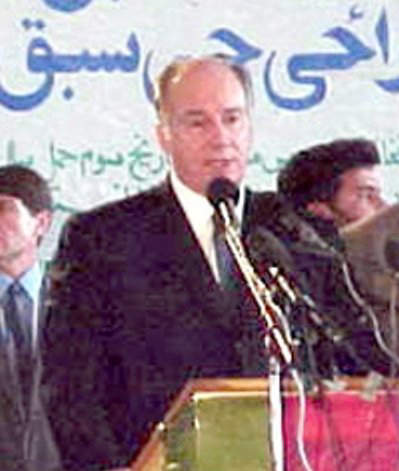
Prince Karim Agha Khan IV - 49th Imam of the Nizari Ismaili Sect of Shi'ite Muslims
The Prince was the head of a business empire that included hotels, airlines, newspapers and banks
During the early period of his reign he visited his followers scattered in many parts of the world such as Europe. America, South Asia and Eastern Africa. He advised his followers to acquire citizenship of the country in which they resided, and to migrate to other countries wherever they were persecuted. Besides being a spiritual leader Prince Karim Aga Khan IV is well known for his business acumen. The Aga Khan is the head of a business empire that includes hotels, airlines, newspapers, banks etc. The Aga Khan's companies had total sales of $ 1.36 billion in the year 2004. Some of the Aga Khan's companies include Pakistan's leading bank, Habib Bank Ltd., the Serena chain of hotels, which includes the newly built $ 36 million Serena Hotel in Kabul, Afghanistan, the newspaper publishing company Nation Media Group Ltd. in Kenya. Besides the Nation Media the Aga Khan owns stakes in 15 other Kenyan Companies.
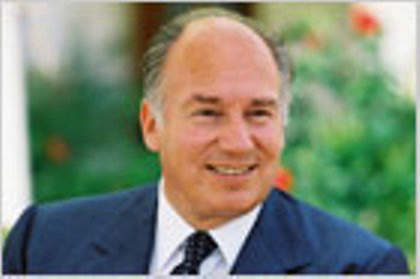
His Highness Prince Karim Aga Khan IV
© Aga Khan Development Network
The Agha Khan Development Network one of the largest private development networks in the world
Another source of income for the imamate include the tithe of 12.5 % of the annual income, which most of the followers pay unfailingly each year. Besides, the Aga Khan obtains bank loans, and grants from Western Governments and aid organizations to finance his international commitments. In the year 2004, the Aga Khan Fund for Economic Development (AKFED), invested $ 325 million on various development projects around the world, mainly in developing countries.
The Aga Khan Fund for Economic Development, is the economic arm of the Aga Khan Development Network, which also includes units dealing in cultural and social development projects, such as schools and hospitals. Through this network the Aga Khan supports 325 non-denominational schools, two universities, 11 hospitals, and 195 health clinics in 30 countries. In recognition of his philanthropy the New York based Carnegie Corp. awarded the Andrew Carnegie Medal of Philanthropy to the Aga Khan in October 2005.
Princess Salima Aga Khan
Her life as Sarah Croker Poole before her marriage to the Aga Khan
Princess Salima was born as Sarah Croker Poole in Delhi, India, in 1940, where her father was a serving officer in the sixth lancers, formerly an Indian Cavalry. Having returned to England in 1946, the family settled in Berkshire, where they purchased a farm, before moving to London. In 1958, at the age of 18, Sarah who was also known as Sally was presented to the Queen of England as a Debutante. One year later at the age of 19 she married Lord James Crichton Stuart, but separated from him after two years. Later in the 1960s Sarah took to fashion modeling as a career, a field in which she proved to be enormously successful, and became one of England's top fashion models and a celebrity. During the height of her carrier as a celebrated beauty and successful model she had the privilege of being photographed by renowned photographers such as Norman Parkinson, Cecil Beaton and Richard Avedon. She was much sought after for television commercials and became best known for her Pond's Cold Cream ads.
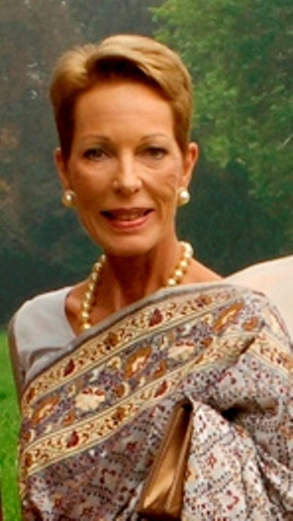
Princess Begum Salima Aga Khan
© Aga Khan Development Network
Her life as Her Highness Begum Salima Aga Khan after her conversion to Islam and marriage to His Highness Prince Karim Aga Khan IV
In the year 1968 her destiny completely changed when she met for the first time Prince Karim Aga Khan, the fourth Aga Khan and one of the richest men in the world, at a New Year's eve party at the Palace Hotel in St. Mortiz. An year later they were married. At the time of her marriage to the Aga Khan she was 29 and the prince was 33 years of age. She converted to Islam before her marriage and after the marriage was known as Her Highness Begum Salima Aga Khan. Begum Salima, adapted herself very well to her new role as the wife of the Aga Khan, the spiritual leader of 15 million followers of the Nizari Ismaili Sect of Shi'ite Muslims around the world. She was accorded the same respect and regard that was granted to her husband by his followers and was held in great esteem by all Ismailis. The marriage was indeed a happy one and produced many issues. During the 25 years of her married life with the Aga Khan, the Prince showered her with the most expensive of gifts, and Princess Salima became the owner of one of the most extravagant collections of jewels and jewelry ever put together.
Divorce and sale of Princess Salima's collection of jewelry
Unfortunately after 25 years of marriage, Princess Salima separated from the Aga Khan in the year 1995. After the divorce agreement was finalized the Princess decided to sell her collection of jewelry. Her intentions in deciding to dispose of the extravagant collection appeared to be motivated by her desire to set up a charitable foundation, to help the less fortunate children of the world. Her line of thinking seemed to be that jewelry just stacked up in a safe vault would not serve any purpose, but instead if converted into cash could be better utilized to relieve the suffering of many unfortunate people around the world, especially the children. The comments she made to the Hello Magazine in 2002, gives credence to this statement. "I have only got one pair of ears and one neck, and the sale has enabled me to live a more balanced life."
In the summer of 1995, Princess Salima consigned her collection of jewelry to Christie's of Geneva, and the jewelry had a pre-sale estimate of $15 million. The date of the auction was fixed for November 13th, 1995, and wide publicity was given to the sale of the extravagant collection. However, lawyers representing the Aga Khan filed a suit in the courts in Switzerland, to stop the sales from going ahead. In a two week court battle, lawyers of the Aga Khan argued that under the terms of their clients divorce agreement finalized in March 1995, the bulk of the Princess' jewelry, had to remain within the Aga Khan's family, unless she needed to sell them for financial reasons. They argued that the Princess' financial situation was quite sound as the court had awarded her $32 million in cash at the time of her divorce settlement. Besides, they argued that most of the jewels owned by the Princess were actually family jewelry that had remained in the Aga Khan's family for generations. The Aga Khan's lawyers got a provisional ruling in October, 2005, suspending the auctions, until the final determination of the case.
At subsequent hearings more arguments followed both in favor of the Princess's claims and that of the Aga Khan. The lawyers of the Aga Khan argued that under the divorce agreement the Aga Khan was given the first option to buy certain items. The court gave the final ruling on Thursday, November 10th, 2005, just two days before the auction was due to take place. According to the court ruling out of more than 250 pieces of jewelry that were to be put up for sale on November 13th, 2007, 23 lots were to be withdrawn from the auction, and sold to the Aga Khan. The court determined that the remaining pieces of jewelry were actually gifts given to the Princess by the Aga Khan, and as such she was free to dispose of them as she pleased.
The order of the court had a minimal bearing on the sale as most of the valuable pieces of jewelry still remained as the Princess' legal property. Francois Curiel, the Director of Christie's International Jewelry Department, said that this was the first time in his 25 years as a jewelry specialist at Christie's, that they were offering such a complete and magnificent jewelry collection for sale. The jewels were reported to be the most extravagant and lavish collection to hit the international auction market since the Duchess of Windsor's jewels were auctioned in Geneva in 1987. The sale of the diamond took place at the Richmond Hotel in Geneva, on November 13th, 1995.
Sale of the Begum Blue diamond
The highlight of the sale was the 13.78-carat, heart-shaped, fancy deep blue, Begum Blue diamond, the centerpiece of an extraordinary necklace that comprised of only heart-shaped diamonds that numbered up to 41, plus another 16.04-carat, heart-shaped, D-color diamond suspended from the Begum Blue. The pre-sale estimate of this unique necklace was $7 million, and intense interest was shown on the necklace by buyers from all parts of the world. However, the successful bidder for this necklace was Laurence Graff, the Chairman of the London-based Graff Diamonds, who purchased the necklace for $7.8 million.
Other highlights of the sale included a 4.37-carat blue diamond ring by Boucheron, which was purchased by the SIBA Corporation of Hong Kong for $ 2.5 million, setting a world record per carat price for a blue diamond. Another Van Cleef diamond ring was purchased by a U.S. buyer for $ 1.75 million, which was more than four times the pre-sale estimate. An aquamarine torsade necklace that was only estimated at around $ 2,600, sold for over $ 13,000, which was more than five times the estimated value. Some of the pieces sold at prices up to eight times their original estimate. The total amount realized by the sale of the magnificent jewels was $ 27.68 million, almost $ 12 million more than the pre-sale estimate.
Princess Salima is now a child welfare activist, and a prominent supporter of the charity SOS children.
History of the Nizari Ismaili sect of Shi'ite Islam
The Aga Khan is the spiritual head of over 15 million Muslims of the Ismaili Sect found mainly in East Africa, Pakistan, India, and the Yemen. The Ismailis are a sect of the Shia Branch of Islam that originated in the 8th century A.D. The sixth Imam or spiritual successor to the Prophet, recognized by the followers of Shia Islam, was Imam Ja'far Ibn Muhammad, who lived in the 8th century. When Imam Ja'far Ibn Muhammad died in 765 A.D. only a minority of his followers accepted his eldest son Ismail as his successor, and these followers came to be known as Ismailis. A majority of Shiite Muslims accepted the younger son of Imam Ja'far, Musa al Kazim as the seventh Imam or spiritual successor to the Prophet Muhammad, and the succession was believed to continue through him up to the 12th and final Imam. This is the largest sect of Shia Islam and they came to be known as the Ithna Ashariya or Twelvers. The Ismailis on the other hand believed that the Imamate continued in the line of Fatimid Caliphs.
The first caliph of the Fatimid Dynasty, who claimed their descent from the Prophet through his daughter Fatima, was Ubayd Allah, who established himself in Tunis in year 909 A.D. The Fatimids conquered Egypt in the year 969 A.D. and set up their capital in Cairo, from where their dynasty ruled their vast empire that included north Africa, Sicily, the Red Sea coast of Africa, Syria, Palestine, the Yemen and the Hejaz, which also included the Holy Cities of Mecca and Medina. During their brilliant rule of 200 years they are credited with the founding of the city of Cairo with its citadels and mosques of great architectural value, and the setting up of a mosque and seminary complex known as the Al-Azhar which eventually turned out to become the Al-Azhar University. Even though the Fatimids were Ismaili Shiites, the bulk of the population they ruled for over 200 years remained Sunni Muslims.
The Ismaili Sect split into two factions in 1094, again over the issue of succession, after the death of the Fatimid Caliph al-Mustansir in 1094. The Egyptian Ismailis recognized his younger son al-Musta'li as the successor, but the Ismailis of Iran and Syria upheld the claims of his older son Nizar as his successor. Thus the Ismaili sect broke into two sub-sects known as the Nizari sub-sect and the Musta'li sub-sect. The Nizari Ismaili sect of Iran and Syria became a powerful force in 1094 under the leadership of Hassan-e Sabbah with their headquarters at the great fortress of Alamut. Hassan-e Sabbah is believed to be the founder of the order known as Hashhashin from which the English term Assassin was derived to refer to a person who murders a politically important person. The assassins adopted the policy of eliminating important political leaders of their enemies the Abbasids, to achieve their political ends. The Assassins power lasted until the 13th century, when in 1256 Alamut was captured by the Mongols.
History of the Agha Khan family
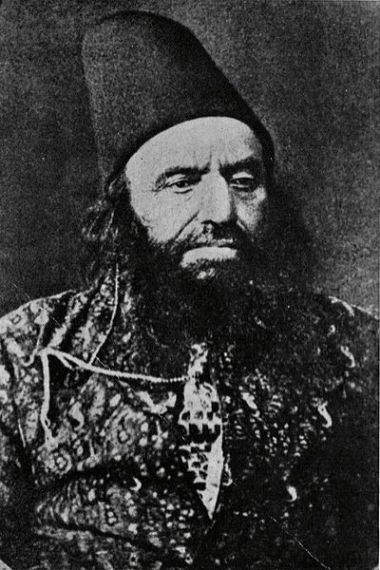
Hassan Ali Shah Aga Khan I (1818-1881) - 46th Imam of the Nizari Ismaili Sect of Shi'ite Muslims
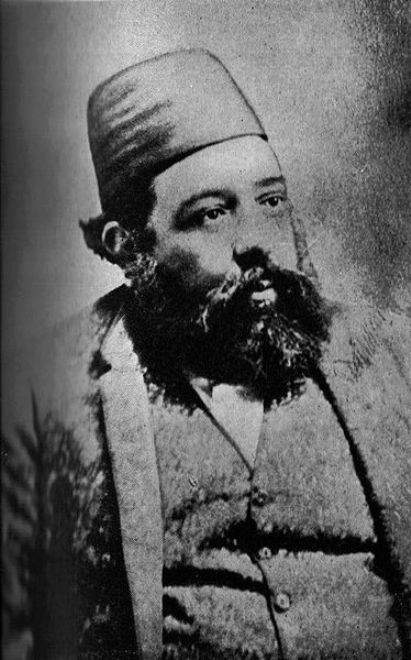
Ali Shah Aga Khan II (1881-85) - 47th Imam of the Nizari Ismaili Sect of Shi'ite Muslims
The Nizari Ismaili sect survived in Iran, and in the early 19th century Hasan Ali Shah became the Imam or spiritual leader of the sect. The Imam was held in high esteem by the Qajar ruler of Iran Fath Ali Shah, who appointed him as the Governor of the province of Kerman. Fath Ali Shah later conferred on him the title of "Aga Khan", meaning the "Chief Commander" in the year 1818. After the death of Fath Ali Shah in 1834, Muhammad Shah ascended the throne as the new Shah of Iran. Under Muhammad Shah's rule misunderstandings developed between the Aga Khan and the Shah. In 1838, the Aga Khan felt that his family honor was slighted and rose in revolt against the Shah but was defeated and fled to India, where he settled in Bombay. The Aga Khan I died in 1881 at the age of 81 years, and was succeeded by his eldest son Ali Shah as Aga Khan II, the Imam or spiritual leader of the Nizari Ismaili sect of Shi'ite Muslims. However his Imamate was short as he died in 1885 just four years after succeeding to the exalted office. During this short period he sought to improve the conditions of his community.
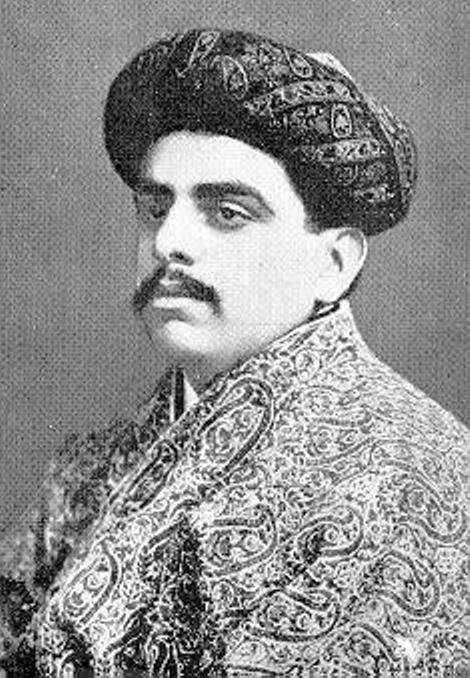
Young Prince Sultan Muhammad Shah in the traditional robes of an oriental monarch
Photo - Courtesy Ismaili.net
After the death of Aga Khan II, his only son Sultan Muhammad Shah succeeded him as the Imam of the Nizari Ismaili sect at the age of eight years. The young Aga Khan, under the care of his mother,who hailed from the ruling family of Iran, was given a broad based education that combined both Islamic and Western traditions, that laid the foundation for his great achievements in the future as an international statesman and diplomat. The young Aga Khan matured into an energetic leader who guided the destinies of his community with great distinction. But the scope of his mission widened and eventually he became a leader of the entire Muslim community of India. In 1906, he was the leader of the Muslim deputation, that made representations to the British Viceroy on matters affecting the community, that eventually led to the creation of separate Muslim electorates. Later he was unanimously elected as president of the All India Muslim League, during its early years, and is credited with initiating the process that led to the elevation of the Muslim College at Aligarh to University Status in 1920. Between the years 1930 and 1932, the Aga Khan played an active part in the Round Table Conference held in London on Indian Constitutional Reforms. His other international diplomatic assignments included the representation of the Indian Government at the World Disarmament Conference held in Geneva in 1932, and at the League of Nations Assembly from 1932 to 1937. The climax of his diplomatic career came in 1937, when he was appointed the President of the League of Nations. After world war II he withdrew from political activity, and concentrated only on the affairs of his community as their spiritual leader.
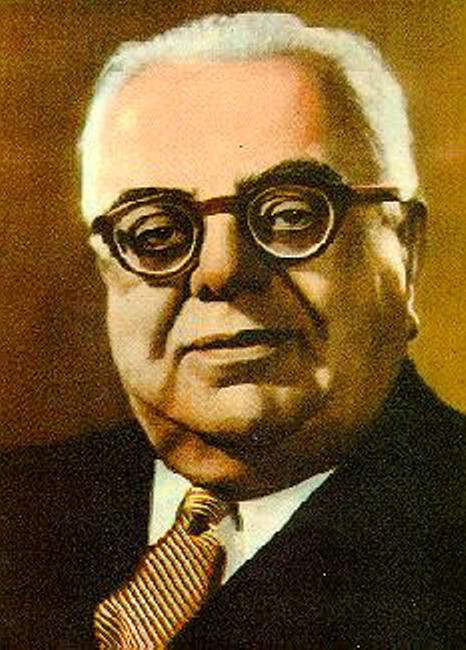
Portrait of His Royal Highness Sir Sultan Muhammad Shah Aga Khan III - 48th Imam of of the Nizari Ismaili Sect of Shi'ite Muslims, Permanent Indian representative at the League of Nations from 1932 and President of the League of Nations from 1937-38
Photo - Courtesy Ismaili.net
The climax of Sultan Sir Muhammad Shah Aga Khan IIIs imamate came in March 1946, when the members of his community organized a reception for him at the Brabourne Stadium in Bombay attended by more than 100,000 thousand of his followers, in order to show their appreciation for his spiritual guidance, and to express their allegiance to his leadership. At this grand and magnificent ceremony the Aga Khan wearing a silk coat and blue turban sat on a brocade chair that was connected to a scale which was subsequently loaded with boxes full of diamonds, until the scale tipped, when the diamonds were equivalent in weight to 243.5 pounds the Aga Khan's weight. The boxes of diamonds were later presented to the Aga Khan, as a gift by his followers in India, to mark the 60th anniversary of his role as spiritual leader. The Aga Khan was gracious enough to accept this novel and priceless gift, but returned it to the organizers with his blessings, advising them to use the money realized from the sale of the diamonds for the betterment of his followers.
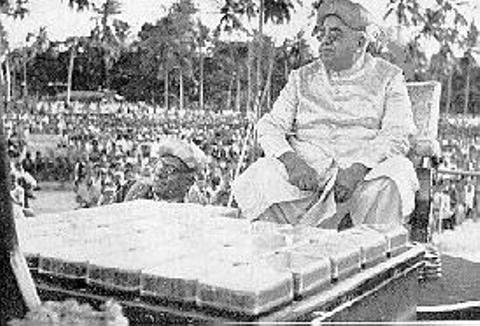
His Royal Highness Sultan Sir Muhammad Shah, Aga Khan III being weighed against boxes of diamonds at the Brabourne Stadium in Bombay in March 1946
Photo - Courtesy Ismaili.net
Sultan Sir Muhammad Shah Aga Khan III died at the age of 80 years in 1957, and was succeeded by his grandson Prince Karim Aga Khan IV, the present spiritual leader.
We do not have photographs of the Begum Blue diamond necklace. Please let us know if you have photographs of this necklace. Alternatively you can upload it to our forums.
You are welcome to discuss this post/related topics with Dr Shihaan and other experts from around the world in our FORUMS (forums.internetstones.com)
Related :-
References :-
1) Princess Salima Agha Khan - Mitra Encyclopedia, www.encyclopedia.mitrasites.com
2) Aga Khan Development Network - www.akdn.org
3) Princess Salima Aga Khan - From Wikipedia, the free encyclopedia
4) Aga Khan IV - From Wikipedia, the free encyclopedia.
5) Aga Khan III - From Wikipedia, the free encyclopedia.
6)Aga Khan II - From Wikipedia, the free encyclopedia
7) Aga Khan I - From Wilipedia, the free encyclopedia.
8) FALL SEASON CALLED 'SPECTACULAR' FOR MAJOR JEWELRY AUCTIONS - JCK Magazine, January 19969) Aga Khan fails to stop former wife's jewelry sale - The Independent, Saturday 11th November, 1995. www.independent.co.uk
10) Jewels from the Personel Collection of Princess Salima Aga Khan at Christie's in Geneva - The free library. www.freelibrary.com
 Home
Security & Guarantee
How it Works
Technology Partners
Updated Tables
Famous Diamonds
More Famous Diamonds
Famous Pearls
Famous Gemstones
Contact Dr Shihaan Larif
Contact Senior Editor
Famous Jewelry
Reference Database
Forums
Learning Center
Gemstone Gallery
e-mail Notifications
Advertise
Press Release
About Us
Privacy Policy
Contact Us
FAQ'S
Site Map
Staff Mail Login
Staff Documents
Birthstones
History
Minerals
Shows
Live Metal Prices
Jewellery Gallery
News
Marketplace
Marketplace Support
Open Store
Online Auctions
Join Us & Contribute
Directory
Classifieds
List your products
Wholesale Trading
Post Buy Request
Go Green Policy
Site Updates
Upcoming-ToDo List
Latest News
Latest Articles
Latest Blog Updates
Chat Rooms
Job Board
User Gallery
Videos
New Newsletter Archive
Old Newsletter Archive
Jewelry & Mineral Blog
User Blogs & Social Network
Search
Answers (Q & A)
Valuation
Help me find a diamond/jewelry
pin.internetstones.com- Social Pinboard- Sart yours & connect with millions
Invite Friends From Yahoo, Gmail etc-One Click
Home
Security & Guarantee
How it Works
Technology Partners
Updated Tables
Famous Diamonds
More Famous Diamonds
Famous Pearls
Famous Gemstones
Contact Dr Shihaan Larif
Contact Senior Editor
Famous Jewelry
Reference Database
Forums
Learning Center
Gemstone Gallery
e-mail Notifications
Advertise
Press Release
About Us
Privacy Policy
Contact Us
FAQ'S
Site Map
Staff Mail Login
Staff Documents
Birthstones
History
Minerals
Shows
Live Metal Prices
Jewellery Gallery
News
Marketplace
Marketplace Support
Open Store
Online Auctions
Join Us & Contribute
Directory
Classifieds
List your products
Wholesale Trading
Post Buy Request
Go Green Policy
Site Updates
Upcoming-ToDo List
Latest News
Latest Articles
Latest Blog Updates
Chat Rooms
Job Board
User Gallery
Videos
New Newsletter Archive
Old Newsletter Archive
Jewelry & Mineral Blog
User Blogs & Social Network
Search
Answers (Q & A)
Valuation
Help me find a diamond/jewelry
pin.internetstones.com- Social Pinboard- Sart yours & connect with millions
Invite Friends From Yahoo, Gmail etc-One Click




Our Global Jewelry Industry Job Network


Buy & Sell in our Marketplace

Subscribe to our Newsletter

List in our Classifieds

List in our Directory

User Uploaded Gallery

Powered by Ultra Secure
Amazon (USA) Cloud Network

Founder Internet Stones.COM
Register in our Forums

| Featured In
|
|
|
|
|
|
|
|







Blog & Education Feed
Articles Feed
 |
 |
 |

Copyright © .Internet Stones.COM. All rights reserved.