Birks Black Tahitian Double Row Cultured Pearl Necklace
Open FREE Unlimited Store Join Our Newsletter
Lareef A. Samad B.Sc.(Hons)
Origin of Name
The name refers to a black Tahitian double-row cultured pearl necklace that came into prominence when the popular travel exhibition known as "Pearls : A Natural History" organized by the American Museum of Natural History, New York, in collaboration with the Field Museum, Chicago, was hosted by the Royal Ontario Museum of Canada, from September 18, 2004 to January 9, 2005, at the Garfield Weston Exhibition Hall of the Museum. The exquisitely crafted black cultured pearl necklace designed by the expert craftsmen of Henry Birks & Sons, Canada, was an addition to the traveling exhibition only at the Canada venue, and was loaned by Birks Canada, who were also co-sponsors of the exhibition. Thus the name used above to refer to the necklace, not only indicates the type of pearls used and the nature of the necklace but also its designers and owners.

Characteristics of the Necklace
The double-row necklace designed by experts of Birks design studio consists of 74 black Tahitian cultured pearls, with 39 pearls in the outer row and 35 pearls in the inner row. The pearls are all round or near-round in shape. Unlike other pearl necklaces the design of this necklace is unique, as the clasp usually situated behind the necklace, is placed in the front. The elaborate clasp in the front serves a dual purpose, serving both as a clasp and as an elaborate centerpiece for the necklace. The clasp-cum-centerpiece is made up of 18 ct. yellow gold and platinum and is set with 205 round brilliant-cut white diamonds surrounding a central, full, button, black Tahitian, cultured pearl. The central black pearl of the clasp can be removed, while unlocking the end pieces of the necklace, or fixed again after locking the end pieces. The two rows of the necklace are attached to the clasp on either side, by a flower-like arrangement, also made up of platinum and gold and set with small diamonds. Pearls of matching size are placed almost symmetrically on either side of the necklace, gradually decreasing in size towards the rear.
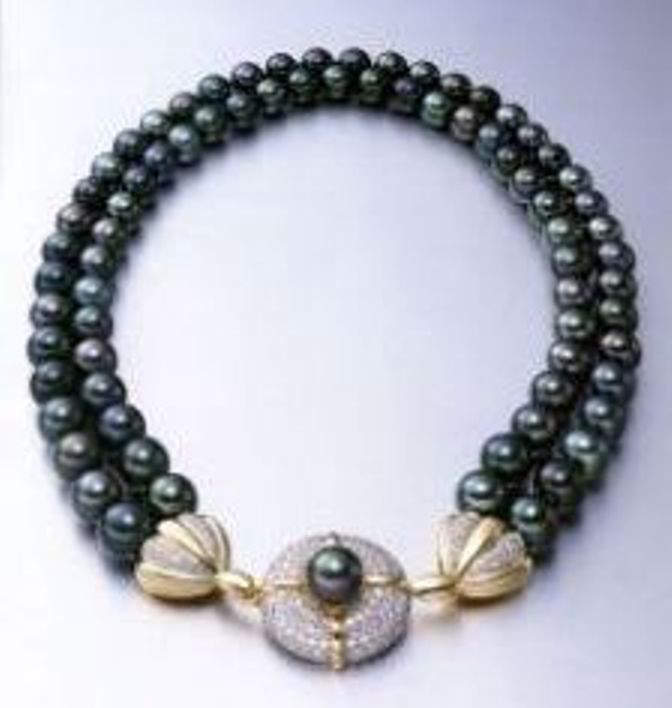
Birks Black Tahitian Double Row Cultured Pearl Necklace
©Royal Ontario Museum
The body color of the pearls in the necklace are undoubtedly the same shade of black, but overtones if any in these pearls are not known. Overtones of the black pearls cannot be judged from a photograph alone and may need closer examination. The variety of overtones found in black cultured Tahitian pearls, and the resultant colors formed when the overtones combine with the body color are summarized in the following table.
Combination of body color and overtones in black Tahitian pearls
S/N |
Basic body color | Overtone | Combination | Special name |
| 1 | gray | yellow | yellowish-gray | Champagne |
| 2 | black | purple | purplish-black | Cherry |
| 3 | black | blue | bluish-black | Lavender |
| 4 | pale gray | - | pale gray | Moon Gray |
| 5 | black | green | greenish-black | Peacock-green or black-green |
| 6 | black | rainbow of colors | - |
Peacock or Rainbow |
| 7 | black | reddish-purple | - | Aubergine or Egg plant |
| 8 | gray | purple | purple-gray | Pigeon Gray |
| 9 | gray | green | greenish-gray | Pistachio |
| 10 | gray | - | gray | Silver |
| 11 | black | gold | golden-black | Tahitian Gold |
The most sought-after colors in black Tahitian pearls are the combinations of black and rainbow, known as peacock or rainbow, and black and green, known as peacock-green. A combination of gray and green known as "Pistachio" is also quite valuable. In fact it is the overtones that actually determine the value of a black or gray pearl. A black or gray pearl without any overtones is about 50% less valuable than one with overtones.
What causes the black body color of Tahitian pearls ?
The black body color of Tahitian pearls is caused by melanin pigments secreted by special glandular cells in the mantle, at the time of nacre formation. The pigments combine with the protein part of the nacre, known as conchiolin, while the non-protein part, the aragonite platelets remain colorless and transparent, through which the black color of the conchiolin shows through. Apart from black and gray body colors, Tahitian pearls can also have other body colors such as blue, green and brown, caused by other pigments.
What causes the overtones of Tahitian pearls ?
The variety of overtones listed in the table above, such as yellow, purple, blue, green, rainbow, reddish-purple, gold, silver etc. are not caused by pigments, but are optical effects, caused by the interference of light, as it passes through alternative layers of aragonite and conchiolin. Overtones are directly associated with the thickness and number of layers of nacre. Overtones are translucent colors, that appear on top of the pearl's main body color, that tend to modify the body color, and add depth and glow to a pearl.
History of the necklace
The pearl oyster species that produced the black Tahitian pearls
The pearl oyster species that produced the black Tahitian pearls is the bivalve mollusk, the black-lip pearl oyster, known as Pinctada margaritifera, whose range is the tropical and sub-tropical Indo-Pacific waters from the Persian Gulf to the Gulf of California in Mexico, and from Japan to the Southern Pacific Islands of French Polynesia. The species reaches its greatest abundance in the atoll lagoons of Eastern Polynesia, from the Tuamotu-Gambier archipelago of French Polynesia to the northern group of the Cook Islands. In this wide geographical range at least seven different varieties of the species Pinctada margaritifera have been identified, each with its own discrete range. Out of these seven varieties of Pinctada margaritifera, the variety that is found in the atoll lagoons of Eastern Polynesia, the source of the black Tahitian pearls, is Cumingi, the name of the naturalist who first identified the variety. Pinctada margaritifera cumingi is also the largest of the seven varieties, growing up to a maximum size of 30 cm (12 ins) in diameter and weighing up to 5kg, with a life span of about 30 years. However, the oysters optimum pearl productive period is between 3 to 7 years, when the diameter is between 15 to 20 cm (6 to 8 ins).
The source of natural black Tahitian pearls
Out of the five island groups of the French Polynesia, the islands where the black-lip pearl oyster was exploited since very ancient times was the Tuamotu archipelago. This island group is situated about 300 km northeast of Tahiti, the largest and most densely populated island in the French Polynesia, which is part of the Society islands group. The islanders of the Tuamotu archipelago were aware of the decorative and commercial value of pearls, but they themselves did not make use of the pearls produced as ornaments. Instead they used pearls as a medium of exchange, a sort of currency to acquire goods such as basalt axes and adzes brought in by canoes from Tahiti. Thus, most of the pearls produced in the Tuamotu archipelago eventually reached the royal treasury of Tahiti, from where it was sold to traders and foreign explorers who visited Tahiti. A pound of pearls was sold for about 100 gold louis. These pearls eventually reached the capital cities of the west, where they were sold as Tahitian pearls, even though they actually originated in the Tuamotu archipelago.
The European explorers who visited the different island groups of Polynesia, found that the people used pearls as ornaments, especially as earrings, in almost all the islands, except the Tuamotu islands, the main producer of these pearls. The Europeans who were puzzled by this finding, were eventually able to find the answer for this apparent contradiction. It appeared that the Tuamotu islanders did nor have the technical know-how to pierce the pearls, in order to convert them to beads, before using them in ornaments. Thus they were compelled to sell their produce to the neighboring islanders, who apparently did not want to reveal their secrets to the Tuamotuans. Eventually, the Tuamotu islanders acquire the knowledge of piercing pearls only after the arrival of Europeans and other foreigners.
Over exploitation of the Tuamotu pearl resources by Europeans leading to their depletion
For the European explorers the black-lip pearl oyster was more important as a source of mother-of-pearl for the shell button industry than as a source of black pearls. Pearl shell traders from England, America and Belgium, began the exploitation of the rich pearl oyster resources of the lagoon reefs of the Tuamotu atolls in 1802. The exploitation took place continuously for almost 60 years until the year 1880, when it was totally abandoned due poor harvests caused by over-exploitation. The peak production of oyster shells took place between the years 1845 to 1879, only after the islands came under the control of the French in 1842. The shells collected were exported back to factories in Europe, and occasional black pearls that were a by product of this industry, eventually found their way to the pearl trading centers of the world, where they were sold as natural black Tahitian pearls, and fetched very attractive prices. It was during this period that Empress Eugenie (1853-1870), the Empress Consort of Napoleon III (1848-1870) acquired her famous Tahitian black pearl necklace, that gave a boost to the popularity of black pearls.
Kokichi Mikimoto, the father of the modern cultured pearl industry, was also the first person to culture black pearls using the black-lip pearl oyster
Kokichi Mikimoto, the father of the modern cultured pearl industry was not only the first person to successfully culture the spherical Akoya pearls but also the first person to culture spherical black pearls, using the black-lip pearl oyster. The first spherical cultured pearl using the pearl oyster Pinctada martensii (Akoya pearl oyster) was produced by Kokichi Mikimoto in 1905, but the technique employed was not commercially viable. Thus in 1916, Mikimoto adopted a different technique developed by two other Japanese, known as the Mise-Nishikawa method, and successfully cultured spherical pearls. The technique also proved to be commercially viable. This was the greatest breakthrough in the history of the Japanese cultured pearl industry, that established Japan as the undisputed leader of the cultured pearl industry in the world. By the year 1935, it was reported that Japan had 350 pearl farms producing over 10 million cultured pearls annually. The success of the Japanese cultured pearl industry in the 1920s and the 1930s, spelt the doom of the world's ancient natural pearl industry, whose hub was the Persian Gulf, the Red Sea and the Gulf of Mannar.
After Kokichi Mikimoto successfully cultured Akoya pearls in 1916, using the oyster species Pinctada martensii, his attention was diverted towards another oyster species Pinctada margaritifera, the black-lip pearl oyster, that produced black pearls whose beauty and mysterious glow always enchanted Mikimoto. He opened a farm for the black-lip pearl oyster, on Ishigaki Island in Okinawa. He applied the same techniques developed for the Akoya pearl oysters, but it was not until 1931 that he was first able to produce a large black pearl 10 mm in diameter. Thus Kokichi Mikimoto also became the first person in the world to successfully culture black pearls, and the first cultured black pearls from Okinawa was introduced to the world pearl markets in the 1930s.
Culturing of black pearls begin in Tahiti in the 1960s using Pinctada margaritifera cumingi
Cultured pearl farming in Tahiti, based on the pearl oyster species Pinctada margaritifera cumingi, the black-lip pearl oyster, that was once found in the Tuamotu-Gambier archipelago in great abundance, was started in the early 1960s on an experimental basis by the French scientist Jean-Marie Dornard, who began experimenting with the oyster using Japanese cultural techniques, hoping to replicate the success achieved by Kokichi Mikimoto in the early 1930s. Dormand started two experimental farms for the black-lip pearl oyster one at Hikueru, in the Tuamotu archipelago and the other at Bora Bora in the Society islands group. In 1962, he successfully nucleated 5,000 oysters in both farms, and after 3 years of tending the oysters, harvested more than 1,000 high-quality Tahitian black cultured pearls.
Following the success of Dormand's experimental farms, several commercial farms were opened in both the Tuamotu archipelago and the Society Islands group. The Tuamotu archipelago is a chain of islands consisting of 78 circular reef lagoons or atolls, situated around 300 km northeast of Tahiti. Apart from Hikueru, other atolls where pearl farms are situated are Fakarava, Rangiroa, Manihi and Tikehau. The first privately owned pearl farm was established in the Tuamotu archipelago on the Manihi atoll in 1966.
In the Society Islands group, apart from the Bora Bora island pearl farms are also situated in the Tahaa, Huahine, and Raiatea islands, situated around 200 km northwest of Tahiti. There are many shallow lagoons surrounding the islands, interspersed with vanilla plantations. The pearl farms are scattered in these lagoons. Some of the pearl farms in the Tahaa islands, such as Motu, Vaipoe and Poerani , have also been opened up for tourists.
Tahitian black cultured pearls attain popularity only after 1975
Even though Tahitian black cultured pearls were produced beginning from the 1960s, they were rarely heard of in the western markets, until after 1975. In the year 1975, the French businessman Jean-Claude Brouillet purchased an atoll in South Marutea, where he started a pearl farm for the culturing of black Tahitian pearls. Brouillet, worked in collaboration with the well known pearl dealer of New York, Salvador Assael, who engaged the services of expert Japanese pearl technicians, with a view of introducing precise Japanese skill and technology into the culturing process. The strategy was successful, and soon Brouillet's farm was producing large quantities of high-quality Tahitian black cultured pearls, which entered the western pearl markets where they were well received, thus creating a branding for the product. Brouillet continued production of black cultured pearls until 1984, when he sold his South Marutea pearl farm to another well-known pearl farmer Robert Wan, who worked in collaboration with the Tahitian Government, and was committed in not only popularizing the Tahitian black cultured pearl in the World's pearl markets, but also in making them the French Polynesia's biggest export. Robert Wan embarked on a program of expanding production, by starting new farms, and by the year 1996 it was reported that Wan's production had exceeded 5,000,000 grams (25 million carats or 100 million grains).
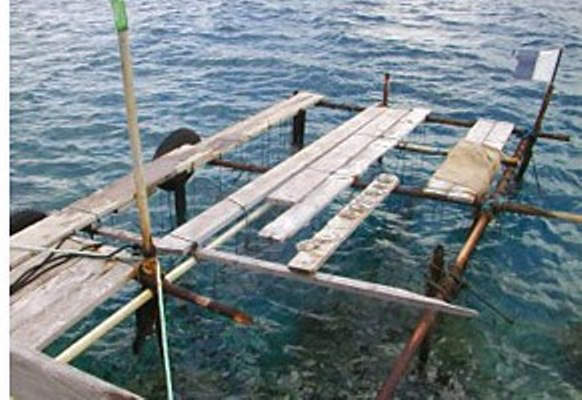
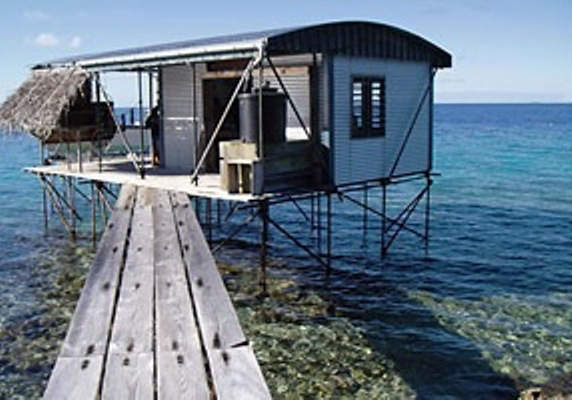
Tahitian Pearl Farms
The near collapse of the Tahitian black cultured pearl industry due to over production and poor quality of the pearls
With the increase in popularity of the Tahitian black cultured pearls which commanded prices higher than their South Sea counterparts produced from the gold-lip and silver-lip pearl oysters (Pinctada maxima), their was a rapid expansion in the production of Tahitian pearls, not only due to the increase in the number of entrepreneurs starting new pearl farms, but also due to a deliberate shortening of the production period in order to achieve a quick turnover. This resulted in overproduction and a dramatic decrease in the quality of the pearls, causing a downward trend in demand and severe lowering of prices. Farms were closed down one after another and the future of the whole industry appeared to be very bleak.
Tahitian Government's intervention in rescuing the pearl industry
To rescue the industry from total collapse, the Tahitian Government was forced to intervene, and working together with Robert Wan who served as advisor to the Government, new regulations were introduced not only to control the number of new pearl farms, but also the quality of production. The new regulations stipulated that all pearls exported from Tahiti should have a minimum nacre depth of 0.8 mm. The regulations were strictly enforced and resulted in restoring consumer confidence, thus preventing the industry from total collapse.
Robert Wan's contribution to the Tahitian pearl industry
Robert Wan's contribution in restoring the Tahitian pearl industry to its former glory, and expanding its popularity and worldwide market reach, is universally recognized, so much so that he is popularly referred to as the "father of the Tahitian pearl." His contribution to the marketing of Tahitian pearls has been equated to that of Kokichi Mikimoto's contribution to the marketing of Japanese akoya pearls. He is still in overall control of the Tahitian pearl industry, working with farm owners, government agencies and other stakeholders in maintaining the high standards achieved, and further enhancing the worldwide reputation of the Tahitian black cultured pearls.
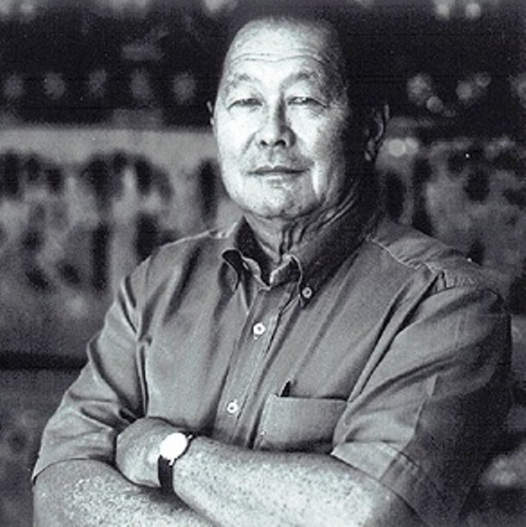
Robert Wan, father of the Tahitian Pearl
Cultivation of Tahitian pearls
The Tahitian black cultured pearl production cycle consists of four main steps :- 1) Collection of spats and their growth until they become pearl productive. 2) Seeding of the oysters 3) Husbandry or grow out period 4) Harvesting of cultured pearls and re-seeding.
1) Collection of spats and their growth inside protective nets
Pinctada margaritifera pearl oysters start life as males, and change into females after 2-3 years. The mature female oysters that are more than 2-3 years old release millions of eggs into the surrounding water. Around the same time mature male oysters, that are less than 2-3 years in age, release millions of sperms into the same environment. Fertilization is external, eggs meeting sperms in the surrounding water and getting fertilized. The male and female oysters live together in the same environment, and in a given population of oysters the ratio of male to female is roughly equal. The gonads of the oysters whether male or female are functional only for a short period of about 5 months every year, from October to February. Thus fertilization takes place only during this period.
The fertilized eggs undergo development by a series of cell divisions forming free-swimming larvae that hatch out of the eggs. The larvae remain free-swimming in the water, while undergoing further development, and after 24 days become a D-shaped larva known as a spat. The spats settle at the bottom of the reef, metamorphosing into a juvenile oysters that begins to develop a shell. The young oysters are filter feeders trapping plankton and other digestible material in the water, as it passes through their gills. The young oysters grow as males until they are 2-3 years old, and become females after this period.
In the culturing of pearls, the first step is the collection of spats that are ready to attach to a surface such as the coral reef and begin growth. The pearl farmers do this by laying out spat collectors at the bottom of the lagoon during the reproductive period from October to February. The collectors offer ideal places for the young and vulnerable oysters to seek refuge and mature. When the oysters reach a certain size they are transferred to protective baskets, and secured by nylon attachment to the mesh. The baskets are then transferred to deep water areas of the lagoon, where they are left for 2-3 years, until they become pearl productive. The pearl productive period of Pinctada margaritifera is 2.5 years to 7 years, when the diameter of the shells is between 15 to 20 cm (6 to 8 ins).
2) Seeding of the pearl productive oysters
After about 2 ½ years the oysters are mature enough for pearl production, and the protective nets holding them are brought out of the deep water, and transferred to temporary holding platforms, near the seeding laboratories of the farm. The laboratories should be surgically clean, and all equipment used sterilized before use. Any cutting instruments used should be razor sharp to reduce the trauma on the animals. Antibiotics are used to minimize the chance of infection.
After the oysters are removed from their protective baskets, the shells are scraped and cleaned, before opening. The two halves of the shells, known as valves, are opened gently using the appropriate surgical instrument, and a plastic peg obtained from clothes pins inserted between the open valves, in order to keep it open for the grafters to perform the seeding operation.
The nucleus used for any type of saltwater pearl farming is a mother-of-pearl bead obtained from a freshwater mussel living in the Mississippi River basin in the United States. This was the important discovery made by Mikimoto, who experimented with many different materials to be used as nuclei. In recent years other materials have also been tried out with success such as nuclei carved out from the shells of pearl producing oysters such as Pinctada margaritifera and Pinctada maxima. The freshwater mussel bead that is rounded and polished has a diameter of 6-8 mm. A high quality nucleus should be white, without calcium carbonate streaks, that may show through the pearls nacre. The grafter now executes the first step in the nucleation by making a small incision on the gonad with his razor sharp scalpel. The sterilized mother-of-pearl nucleus is now inserted into this incision, followed by a small piece of mantle tissue from a sacrificial oyster. The mantle tissue is placed between the bead and the gonad, with the side containing epithelial cells facing the nucleus. The epithelial cells act as a catalyst of the pearl sac, which grows around the nucleus, and begins to deposit nacre. After the grafting is over, the valves of the shell are closed, and the grafted oysters transferred back to the protective baskets, and secured to the mesh.
3) The husbandry process or growing out period
The protective baskets containing the seeded oysters are suspended on long lines in the clear deep waters of the lagoon, where they remain for the next two years as nacre builds up around the nucleus and the pearl is fully grown. However, the baskets are retrieved from the water at regular intervals and the external surface of the seeded oysters cleaned to remove any marine growths that can harbor parasites and diseases. Maintaining the health conditions of the seeded oysters at optimum level is very important to ensure the production of quality pearls.
4) Harvesting of cultured pearls and re-seeding
After two years of nurturing the seeded oysters in the deep waters of the lagoon, where the conditions are almost the same as the natural conditions in which black-lip pearl oysters usually grow, the protective baskets are brought out from the deep waters and transferred to temporary holding platforms in shallow waters, before the second surgical procedure of extracting the pearl, and re-seeding if feasible. The oysters are retrieved from the protective baskets and cleaned by scraping. The valves are opened again gently and a peg introduced to prevent closing, before the cultured pearl is extracted. The pearl is gently extracted from the gonad, and if the pearl is of good quality, the oyster is selected for a second seeding. A nucleus whose diameter is as large as the diameter of the extracted pearl is quickly inserted into the gonad followed by the small piece of mantle tissue from a sacrificial oyster, and the valves are closed again, before transferring them to protective baskets for the second grow out period. The oysters that are apparently sick or have rejected the previous graft, are not chosen for a second graft, but are processed for their shells to make pearl nuclei.
After harvesting of the second pearl, which may not be of the same quality as the pearl from the first harvest, if the oyster is still robust and healthy, a third graft may be attempted, whose diameter may be even larger than the second nucleus. Rarely, even nuclei up to 18 mm diameter has been used, but usually as the number of grafts increase the quality of the pearl decreases, which is attributed to the increasing age of the oyster. Thus in Pinctada margaritifera several graftings are possible during the pearl-productive period (2.5 to 7 years), but the oyster can take only one graft at a time.
Display of the Birk's Black Tahitian Double Row Pearl Necklace at the traveling exhibition held at Royal Ontario Museum
The Black Tahitian Double Row Pearl Necklace, designed by Henry Birks & Sons of Canada, was displayed at the traveling exhibition, Pearls : A Natural History, held at the Royal Ontario Museum, between September 18, 2004 and January 9, 2005. Henry Birks & Sons was a co-sponsor of the event held at the ROM, and Tom Andruskevich, the President of Birks and CEO, was reported to have made the following comments : "To be associated with an exhibition of such historic, academic and cultural depth is truly a once in a life time opportunity. As someone who has been intimately involved with the gem business for most of my career, I can say that Pearls : A Natural History, is without doubt the most comprehensive presentation ever mounted on a subject that is fascinating from from every vantage point."
The sponsorship of the exhibition at ROM by Birks, seemed to coincide with its 125th anniversary, as the company was founded in the year 1879, an appropriate tribute to the founders of the company, which has become a household name in both Canada and the United States.
Birks President and CEO, further expanding on the company's decision to sponsor the extraordinary event was reported to have stated as follows :-
"Birks is delighted to have the opportunity to sponsor this extraordinary, award-winning exhibition. "Pearls : A Natural History" promises to deliver what Birks had always believed in : exceptional quality, impeccable presentation and an openness to innovation. We are excited to be entering a relationship with the ROM as part of our growing participation with and support of, the communities of Greater Toronto and Ontario."
History of Henry Birks & Sons
Henry Birks, the founder of the chain of high-end jewelry stores in Canada, Henry Birks & Sons was born on November 30, 1840. He was the son of a British immigrant family, who migrated to Canada in the early 19th century. His education was primarily focused on commercial subjects, and in 1857 he was hired by one of the most reputed jewelry and watch making companies in the Province of Canada, Savage and Lyman of Montreal, as a clerk. He worked for the company for 20 years, during which period he also became a partner, but was compelled to leave it in 1877, due to financial difficulties faced by the company. His 20 year service with Savage and Lyman, provided him with enough experience on all aspects of the jewelry trade, that he was now confident enough to start his own small jewelry business. This is what he did in 1879, when with an investment of 3,000 Canadian dollars, he opened his own small jewelry shop, on Saint Jacques Street, in the heart of Montreal's financial and commercial district. The business prospered and in the year 1893 he went into partnership with his three sons, the name of the firm changing to Henry Birks & Sons. As the commercial center of Montreal shifted northwards towards Saint Catherine Street, Birks also moved their store to the new premises on Philip Square, in 1894. The company still maintains a store at this premises. With the turn of the century the company's business activities expanded rapidly, and a chain of jewelry stores were opened in all the largest cities in Canada.
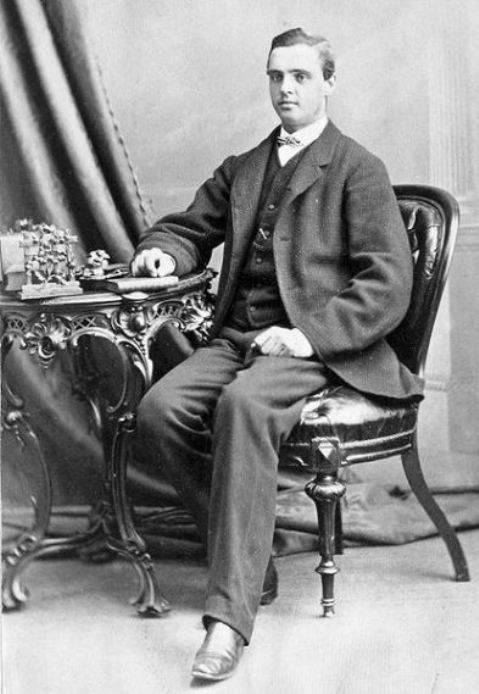
Henry Birks, the founder of Birks and Sons
Since the company's founding in 1879, five successive generations of the Birks family have been involved in the business activities of Henry Birks & Sons. The William and Henry Birks Building, is a philanthropic contribution of the Birks family to the Montreal's McGill University, and is named in honor of Henry Birks and one of his sons, William. Gerald Birks, another son of Henry Birks gained prominence, as a proponent of an educational system for Canadian soldiers, known as the Khaki University, which eventually was implemented for all soldiers in 1917.
Henry Birks & Sons is acquired by Regaluxe Investment, and Count Lorenzo Rossi di Montelera becomes the chairman of the board
When Henry Birks started his own jewelry store in 1879, he was guided by a set of core values, that included quality, exclusivity, excellent service, and design innovation; values that helped to build customer confidence, and imparted a branding for Birks high-end jewelry, resulting in their domination of the Canadian jewelry market throughout the 20th century. During this period the company's clientele expanded, to include members of the royalty of different kingdoms across the world, and also heads of state of several countries. The company also earned many international jewelry design awards that incorporated diamonds.
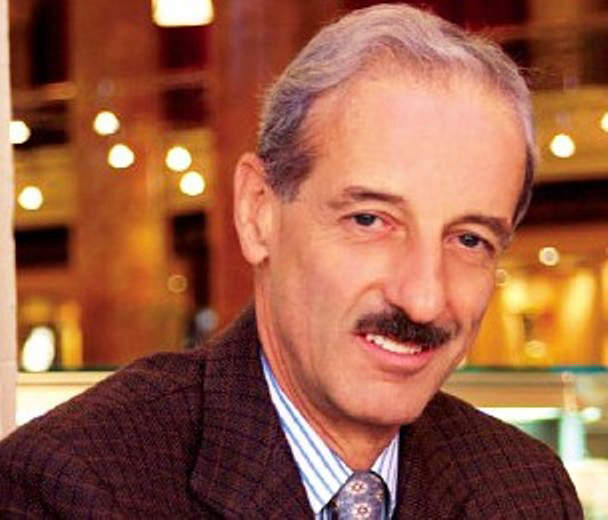
Count Lorenzo Rossi di Montelera, Chairman of the Board- Birks & Mayor
© Birks & Mayor
In 1993, Henry Birks & Sons was acquired by Regaluxe Investment, a company that shared the values of excellence for which Birks was famous for. Count Lorenzo Rossi di Montelera, from Turin, Italy, with a controlling interest in Regaluxe Investment, is the current chairman of the Board of Directors of the Company. The Chairman of the company, who recognizes the great potential in the Birks luxury brand name, is reported to have made the following comments :- "A brand is special. It's not something that comes up and goes away - it's a long-term prospect. Birks as a brand, is a national icon, It is irreplaceable. I know how important that is to the success of a brand. It was that same focus on brand identity that contributed to our success at Martini & Rossi."
Thomas A. Andruskevich becomes President and CEO of the company. Birks acquires a controlling interest in Mayors Jewelers Inc.
The year 1996 was another milestone in the history of the company, when Thomas A. Andruskevich, former executive Vice President of Tiffany & Co. a person with a wealth of experience in the gem and jewelry trade, joined Birks, as President and Chief Executive Officer. In 1998, under the guidance of its new President and CEO, the company embarked on a new strategy in transforming Birks into a world class luxury brand. In this connection plans were drawn up for extensive capital investments to transform the profile of the company, by remodeling their chain of jewelry stores, the design and creation of exclusive high-quality jewelry and timepieces in keeping with modern trends and styles, and a modern advertising campaign. As a part of this strategy, Birks acquired a controlling interest in 2002, in another renowned high-end jewelry company based in southeastern United States, Mayors Jewelers Inc.

Thomas A. Andruskevich, President and CEO- Birks and Mayors
Birks merges with Mayors to form Birks & Mayors Inc.
Like Birks, Mayors too has a treasured history of over a 100 years, and holds the prestigious position as the leader in fine jewelry and timepieces in southeastern United States, equivalent to Birks own position as the leader of high-end jewelry in Canada. Like Birks, Mayors too was guided by a set of core values, such as quality, excellent service, exclusive luxury brands etc. Thus the next logical step was a merger of the two companies, which came about in 2005, and the newly formed company was known as Birks & Mayors Inc.
Today Birks & Mayors has become a leading North American luxury brand, designer, manufacturer of fine jewelry, timepieces, sterling silverware and gifts. The company owns 70 retail stores, 37 operating under the Birks brand name, 2 under Brinkhaus brand name, across Canada, and 31 operating under, the Mayors brand name, in Florida and Atlanta, Georgia.
You are welcome to discuss this post/related topics with Dr Shihaan and other experts from around the world in our FORUMS (forums.internetstones.com)
Related :-
1) Drexel Pearl
3) Marilyn Monroe Pearl Necklace
External Links :-
1) Birks & Mayors Inc. - About us - A Journey of Milestones, www.birksandmayors.com
References:-
1) Pearls : A Natural History - International Art Treasures Web Magazine, August 2004.
2) Royal Ontario Museum - About Us - Newsroom - Pearls : A Natural History opens September 18, 2004.
3) Tahitian Pearls - www.pearl-guide.com
4) Today's market for Tahitian pearls - www.pearl-guide.com
5) Tahitian Pearl Farming - www.pearl-guide.com
6) Birks & Mayors Inc. - About us. www.birksandmayors.com
7) Henry Birks - From Wikipedia, the free encyclopedia.
 Home
Security & Guarantee
How it Works
Technology Partners
Updated Tables
Famous Diamonds
More Famous Diamonds
Famous Pearls
Famous Gemstones
Contact Dr Shihaan Larif
Contact Senior Editor
Famous Jewelry
Reference Database
Forums
Learning Center
Gemstone Gallery
e-mail Notifications
Advertise
Press Release
About Us
Privacy Policy
Contact Us
FAQ'S
Site Map
Staff Mail Login
Staff Documents
Birthstones
History
Minerals
Shows
Live Metal Prices
Jewellery Gallery
News
Marketplace
Marketplace Support
Open Store
Online Auctions
Join Us & Contribute
Directory
Classifieds
List your products
Wholesale Trading
Post Buy Request
Go Green Policy
Site Updates
Upcoming-ToDo List
Latest News
Latest Articles
Latest Blog Updates
Chat Rooms
Job Board
User Gallery
Videos
New Newsletter Archive
Old Newsletter Archive
Jewelry & Mineral Blog
User Blogs & Social Network
Search
Answers (Q & A)
Valuation
Help me find a diamond/jewelry
pin.internetstones.com- Social Pinboard- Sart yours & connect with millions
Invite Friends From Yahoo, Gmail etc-One Click
Home
Security & Guarantee
How it Works
Technology Partners
Updated Tables
Famous Diamonds
More Famous Diamonds
Famous Pearls
Famous Gemstones
Contact Dr Shihaan Larif
Contact Senior Editor
Famous Jewelry
Reference Database
Forums
Learning Center
Gemstone Gallery
e-mail Notifications
Advertise
Press Release
About Us
Privacy Policy
Contact Us
FAQ'S
Site Map
Staff Mail Login
Staff Documents
Birthstones
History
Minerals
Shows
Live Metal Prices
Jewellery Gallery
News
Marketplace
Marketplace Support
Open Store
Online Auctions
Join Us & Contribute
Directory
Classifieds
List your products
Wholesale Trading
Post Buy Request
Go Green Policy
Site Updates
Upcoming-ToDo List
Latest News
Latest Articles
Latest Blog Updates
Chat Rooms
Job Board
User Gallery
Videos
New Newsletter Archive
Old Newsletter Archive
Jewelry & Mineral Blog
User Blogs & Social Network
Search
Answers (Q & A)
Valuation
Help me find a diamond/jewelry
pin.internetstones.com- Social Pinboard- Sart yours & connect with millions
Invite Friends From Yahoo, Gmail etc-One Click




Our Global Jewelry Industry Job Network


Buy & Sell in our Marketplace

Subscribe to our Newsletter

List in our Classifieds

List in our Directory

User Uploaded Gallery

Powered by Ultra Secure
Amazon (USA) Cloud Network

Founder Internet Stones.COM
Register in our Forums

| Featured In
|
|
|
|
|
|
|
|







Blog & Education Feed
Articles Feed
 |
 |
 |

Copyright © .Internet Stones.COM. All rights reserved.