Cambridge Lovers Knot Tiara
Open FREE Unlimited Store Join Our Newsletter
Lareef A. Samad B.Sc. (Hons)
Origin of Name
The Cambridge Lovers Knot Tiara was designed and executed in 1913 by E. Wolff & Co. for the royal jewelers Garrards, who were commissioned by Queen Mary, the Queen consort of King George V, to create a tiara based on the design of one owned by her maternal grandmother Princess Augusta of Hesse, the Duchess of Cambridge, wife of Prince Adolphus, the Duke of Cambridge, who was the seventh son of King George III. The Cambridge Lovers Knot Tiara gets its name from the original Lovers Knot Tiara owned by Princess Augusta of Hesse, the Duchess of Cambridge, which was given to her by her family at the time of her marriage to Prince Adolphus in 1818. The original Lovers Knot Tiara was subsequently given as a gift by Princess Augusta to her eldest daughter Augusta Caroline at the time of her marriage to Grand Duke Friedrich Wilhelm of Mecklenburg-Strelitz. Lovers Knot bows were part of the design of the tiara, which was repeated along the entire length of the tiara, and from which originated two drop-shaped pearls, one hanging down and the other rising up like a spike. Thus the name Lovers Knot is derived from the repeated theme of this Gothic revival tiara.

Characteristics of the Tiara
The Cambridge Lovers Knot Tiara originated in the mid-Georgian period and shows features of Gothic Revival style
The Cambridge Lovers Knot Tiara of 1913, is based on the design of the original Lovers Knot Tiara of 1818, which undoubtedly has Gothic Revival features. The Georgian era in the history of jewelry extends from the period of rule of King George I, beginning in 1714 to the end of the period of rule of King George IV in 1830. This period can be divided into three sub-periods, early-Georgian, mid-Georgian and late-Georgian, each with its own style of jewelry. The early-Georgian period from 1714 to around 1790s was characterized by Rococo styles, the mid-Georgina from around 1790s to 1820s by the Gothic Revival and the Late-Georgian 1820s to 1830s by the Neo-Classical styles. However there had been considerable overlapping of styles from one period to another. The mid-Georgian and Napoleonic era in France coincide with one another, and while in England the style adopted was Gothic Revival, in France it was Neo-Classical. The Cambridge Lovers Knot Tiara, which originated in 1818 in England, thus shows features of Gothic Revival jewelry.
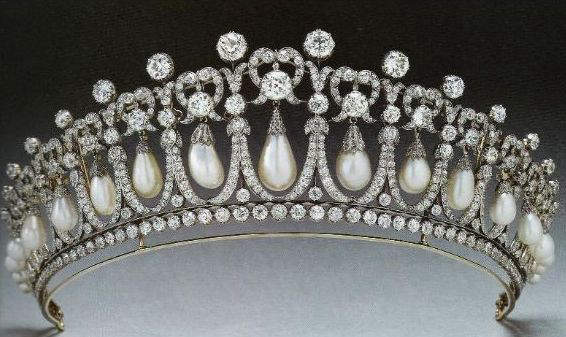
The 1913 version of the Cambridge Lovers Knot Tiara with the spikes removed
The Romantic movement in the early 19th century inspired artists of the period to look to the past for purity of artistic expression. This led to the revival of Gothic style of the Medieval period in literature, architecture and the decorative arts. In the area of jewelry crafting, jewelry craftsmen had just a few examples of Medieval jewelry from which they could draw inspiration. Thus the jewelry craftsmen turned to Gothic architecture for inspiration. Pointed arches, trefoils and gargoyles copied from Gothic cathedrals provided motifs for jewelry. Features of Gothic jewelry included quatrefoils, trefoils, vesica piscis, pinnacles, scrolls etc.
Gothic Revival features in the Cambridge Lovers Knot Tiara
The circlet of the Cambridge Lovers Knot Tiara is made up of a lower semi-circular band, set with a row of round brilliant-cut diamonds. Nineteen inverted arches arise from the lower band, also set with round brilliant cut diamonds. Where two adjacent arches meet a pillar-like structure is formed that rises up and ends in a large round brilliant-cut diamond, forming a diamond spike. There are nineteen diamond spikes of this nature, and the size of these diamonds decrease gradually from the center towards both ends. A combination of lovers knots and scroll motifs is placed at the upper end of each inverted arch. The center of each lovers knot is occupied by a large round brilliant-cut diamond, from which arises two large drop-shaped pearls, one suspended in the space inside the inverted arch, and the other rising above the surface of the tiara as a spike. There are nineteen arches and nineteen drop-shaped pearls inside the arches, and nineteen drop-shaped pearls rising as spikes, making a total of 38 drop-shaped pearls. The largest drop-shaped pearl is exactly in the central arch of the tiara, with nine drop-shaped pearls gradually decreasing in size occupying the nine arches on either side. The pearl spikes that rise up above the surface of the tiara also follow a similar trend in size and arrangement. Thus the Lovers Knot Tiara is perfectly symmetrical about its median line. The tiara is essentially made of repeated units of the same motif, consisting of the inverted arch, with the lovers knot and the scrolls and the two pearls, the pendant and the spike situated inside the arch.
The predominant neo-Gothic or Gothic-revival features in the Cambridge Lovers Knot Tiara are the 19 arches and the incorporation of 19 pearl spikes and 19 diamond spikes rising above the surface of the tiara. The shape of the drop-shaped emeralds, somewhat resembling the Vesica Piscis, a symbol of Christian art in the Medieval period, may also be considered as a Gothic-revival feature in the tiara.
History of the Cambridge Lovers Knot Tiaras
History of the original Cambridge Lovers Knot Tiara
The tiara is given as a gift to Princess Augusta of Hesse-Cassel in 1818
The original Lovers Knot Tiara designed in the mid-Georgian period in 1818, was given as a gift to Princess Augusta of Hesse-Cassel by her parents, Prince Frederick of Hesse and Princess Caroline of Nassau at the time of her marriage to Prince Adolphus, the Ist Duke of Cambridge, the 10th born child and the seventh son of King George III. of the United Kingdom and Queen Charlotte of Mecklenburg-Stretlitz. The Duke and Duchess of Cambridge had three children; the eldest being a son Prince George, and the other two daughter, Princess Augusta and Princess Mary Adelaide. In 1838, the Duchess of Cambridge wore the original Cambridge Lovers Knot Tiara for the coronation of Queen Victoria in Westminster Abbey.
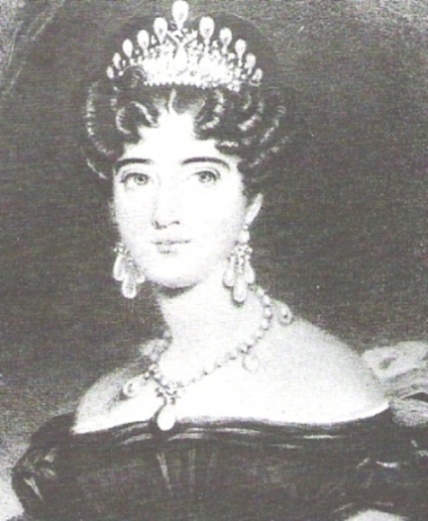
Princess Augusta of Hesse-Cassel wearing the Cambridge Lovers Knot Tiara
The tiara is given as a gift to Princess Augusta of Cambridge in 1843
When Princess Augusta, the eldest daughter of the Duke and Duchess of Cambridge, married Prince Friedrich Wilhelm, the Grand Duke of Mecklenburg-Stretlitz in 1843, the Duchess of Cambridge, gave the original Cambridge Lovers Knot Tiara as a gift to her daughter. Grand Duke Friedrich Wilhelm and Grand Duchess Augusta, had only one surviving son, Adolf Friedrich, who succeeded his father as Grand Duke in May 1904. Grand Duke Adolf Friedrich who married Princess Elizabeth of Anhalt in 1877, had four children by this marriage, two daughters and two sons.
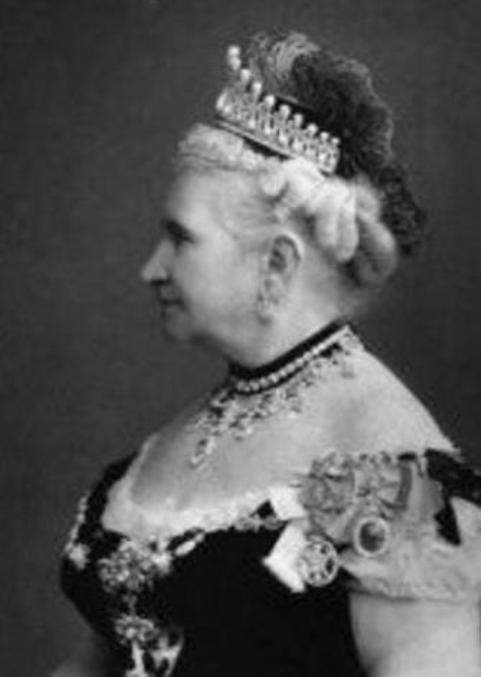
Princess Augusta of Cambridge wearing the Cambridge Lovers Knot Tiara
The tiara is given as a gift to Duchess Jutta in 1899 ?
Their second daughter Duchess Jutta, married Danilo, the Crown Prince of Montenegro, and it appears that the Grand Duchess Augusta, who lived up to the ripe old age of 94 years until 1916, gave the Cambridge Lovers Knot Tiara to her granddaughter Jutta at the time of her marriage in 1899. After world war I, when Montenegro was incorporated into the new kingdom of Serbs, Croats, and Slovenes, the royal family of Montenegro established a government in exile. Duchess Jutta's father-in-law King Nicholas I died in 1921, and her husband Danilo Aleksandar (Daniel Alexander), succeeded as the titular King of Montenegro. However, he only held the position for a week before abdicating in favor of his nephew Michael. Jutta and her husband Danilo lived in exile in France, where Danilo died in 1939. Jutta then moved to Rome, where her brother-in-law King Victor Emmanuel III reigned, and died in 1946, at the age of 66 years
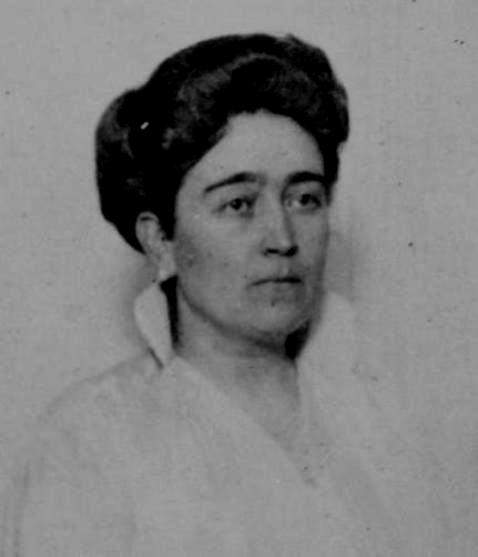
Duchess Jutta of Montenegro
The original Cambridge Lovers Knot Tiara appears at a Christie's auction in Geneva in 1981
The fate of the Cambridge Lovers Knot Tiara after it came into the possession of Duchess Jutta is not known. The tiara was probably sold in Paris to an anonymous collector while the Duchess was living in exile with her husband in France. The whereabouts of the tiara was unknown until in May 1981, when it appeared at a Christie's auction in Geneva, where it was sold to another anonymous buyer for 280,000 Swiss Francs. The present whereabouts of the original Cambridge Lovers Knot Tiara is unknown
History of the Cambridge Lovers Knot Tiara of 1913
King George V ascends the British Throne and Princess Mary becomes the Queen Consort
Princess Mary Adelaide, the second daughter of Prince Adolphus and Princess Augusta of Hesse-Cassel, the Duke and Duchess of Cambridge, married Francis, the Duke of Teck in 1866, and this marriage produced four children, a daughter who was the eldest followed by three sons. The daughter who was born in 1867, was Princess Victoria Mary of Teck, who married Prince George, the Duke of York, and second in line to the British Throne in 1893, a marriage that received the blessings of Queen Victoria, who was her godmother. In 1901, when Queen Victoria died she was succeeded by the Prince of Wales and heir to the British Throne, Prince Albert Edward, who ascended the throne as King Edward VII. Prince George now became the new Prince of Wales and the heir to the British Throne. With the death of King Edward VII in May 1910, Prince George ascended the throne as George V, and Princess Victoria Mary of Teck, became the Queen Consort of the United Kingdom.
The Cambridge and Delhi Dunbar Parure is created for the coronation of Queen Mary
The famous Cambridge and Delhi Dunbar Parure was created by the artisans of Garrard & Co. the Crown Jewelers, using the family emeralds that once belonged to her mother Princess Mary Adelaide and diamonds, some of which came from the original Cullinan diamond weighing 3,106 carats, that was presented to King Edward VII, by the Transvaal Government. The parure was created in anticipation of the coronation of King George V and Queen Mary, that took place on June 22, 1911, and for their subsequent proclamation as the Emperor and Empress of India, at a Durbar that was to be held on December 12, 1911.
Queen Mary commissions the new Cambridge Lovers Knot Tiara in 1913
In 1913, Queen Mary commissioned the Crown Jewelers Messrs. Garrard & Co. to construct a tiara based on the design of the Cambridge Lovers Knot Tiara, that was once owned by her maternal grandmother Princess Augusta of Hesse-Cassel, the Duchess of Cambridge, and subsequently owned by her aunt, Princess Augusta of Cambridge, the Grand Duchess of Mecklenburg-Strelitz. This new lovers knot tiara, also came to be known as the Cambridge Lovers Knot Tiara, because of the resemblance of its design to the original Cambridge Lovers Knot Tiara, and consisted of 19 arches, and 38 drop-shaped pearls, 19 hanging as pendants and 19 rising up as spikes. The 19 pearls that rose up as spikes could also be dismantled. Queen Mary wore the new Cambridge Lovers Knot Tiara, both with and without the pearl spikes, removing and adding the upright pearls, as and when she deemed it fit.
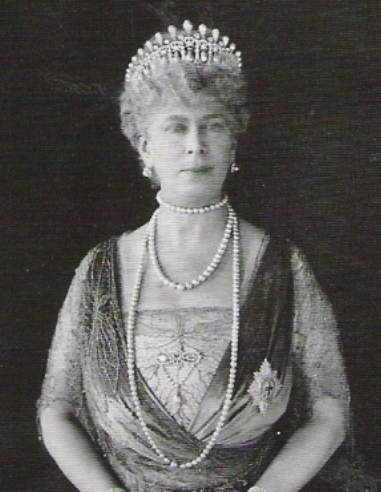
Queen Mary wearing the 1913 version of the Cambridge Lovers Knot Tiara, with the pearl spikes intact.
Queen Mary enriches the royal collection by purchasing notable pieces of jewelry
Queen Mary was a notable collector of objects of art, jewels and jewelry, that enriched the royal collection, and took pride in superbly bejeweling herself for formal occasions. She is reported to have paid above market estimates when acquiring jewels with a historic and royal provenance. In 1921, she purchased a diamond and pearl tiara, known as the "Vladimir Tiara" that once belonged to Grand Duchess Maria Vladimir Alexandrovich of Russia, which was smuggled out of Russia together with other jewels, by a British diplomat, during the October 1917 Bolshevik revolution. Other purchases include the jewels from the estate of Dowager Empress Marie Feodorovna of Russia (the widow of Czar Alexander III and mother of Czar Nicholas II of Russia) who escaped from Russia in 1919, aboard the British ship HMS Marlborough, and settled in London for sometime as the guest of her sister Queen Alexandra and her nephew King George V.
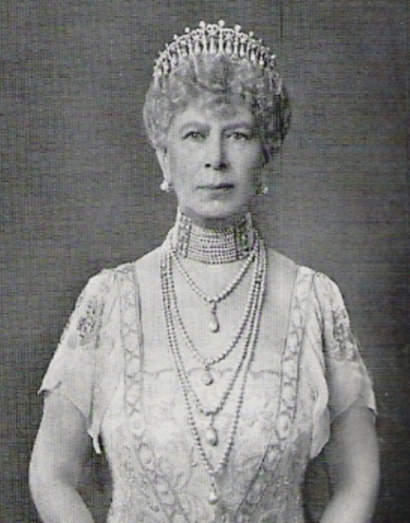
Queen Mary wearing the 1913 version of the Cambridge Lovers Knot Tiara, with the pearl spikes removed and 4 of these pearls are used as pendants on the 4-stranded pearl necklace.
Modern history of the Cambridge Lovers Knot Tiara
Queen Elizabeth II inherits the Cambridge Lover's Knot Tiara from Queen Mary after her death in 1953
Queen Mary died in 1953 at the age of 85 years, just one year after the death of her son, King George V. In her will, she left the Cambridge Lovers Knot Tiara to her granddaughter Queen Elizabeth II, and thus the renowned tiara entered the personal jewel collection of Queen Elizabeth II. The tiara became a favorite piece of Queen Elizabeth II, who wore it for many formal occasions.
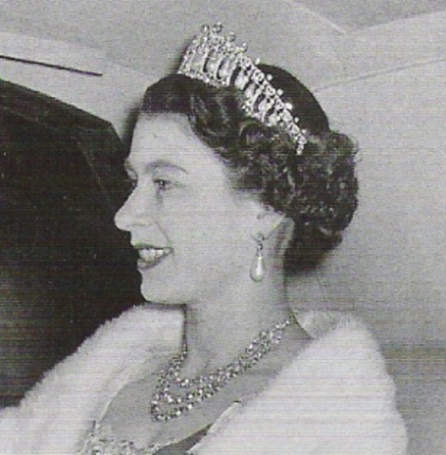
Queen Elizabeth II wearing the 1913 version of the Cambridge Lovers Knot Tiara.
Queen Elizabeth II gives the Cambridge Lovers Knot Tiara as a wedding gift to Princess Diana at the time she married the Prince of Wales
Queen Elizabeth II later gave the Cambridge Lovers Knot Tiara as a wedding gift to Princess Diana, at the time she married Prince Charles, the Price of Wales. Diana however, did not wear the Cambridge Lover's Knot Tiara on the day of the wedding, but instead chose to wear the Spencer Tiara, a family heirloom from the 18th-century, modified subsequently on different occasions. The first official function for which Princess Diana wore the Cambridge Lover's Knot Tiara was the opening of the British Parliament in November 1981. Subsequently, the Cambridge Lovers Knot Tiara reached the height of its popularity, as Princess Diana wore it on many occasions at home and abroad, and the piece came to be associated with the image of the popular princess. However, after her divorce from the Prince of Wales the tiara was returned to Her Majesty the Queen.
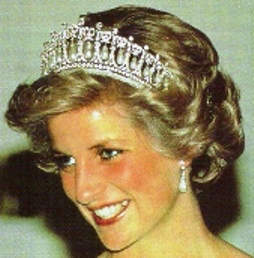
Princess Diana wearing the Cambridge Lovers Knot Tiara, a piece of royal jewelry that came to be associated with the image of the popular princess
Cambridge Lover's Knot Tiara again in the spotlight before the Royal wedding of the century, the wedding of Prince William, the second-in-line of succession to the British throne, to Kate Middleton, solemnized on April 29, 2011
The Cambridge Lover's Knot Tiara was once again in the spotlight in early 2011, as preparations were taking place for the royal wedding of the century, the solemnization of the marriage of Prince William, the second-in-line of succession to the British throne, to Kate Middleton, which was to take place on April 29, 2011. In a nation where the royal family is still held in great esteem, there was great speculation by royal family watchers and enthusiasts, as well as fashion designers, magazines, newspapers, jewelry websites, royal family blogs and even bookmakers, as to what tiara, Kate Middleton, the Duchess of Cambridge would wear as she walks the aisle with her husband, the Duke of Cambridge, Prince William. Most of them were of the opinion that she would undoutedly wear the Cambridge Lovers Knot Tiara, which was commisioned by Queen Mary in 1913, and subsequently inherited by Queen Elizabeth II after Queen Mary's death in 1953.
Possible reasons that fuelled speculation that the Cambridge Lovers Knot Tiara would be selected for Kate Middleton on the day of her wedding on April 29, 2011.
The reason for this optimism was perhaps the comments made by Prince William himself at the time of announcement of their engagement in November 2010, in respect of the blue-sapphire and diamond engagement ring given to Kate Middleton, the same ring used by Prince Charles, the Prince of Wales, to propose to Lady Diana Spencer, in February 1981. Obviously, she is not going to be around to share in any of the fun and excitement of it all, so this is my way of keeping her sort of close to it all, William said of his late mother, and the decision to use the same engagement ring, in a joint interview with Middleton. It was anticipated that the same reasoning would be applied in the choice of a Tiara for Kate, and the most favored piece obviously would have been the Cambridge Lovers Knot Tiara, a piece closely identified with the popular image of Princess Diana. Moreover, the fact that Prince William and his wife were to be conferred the royal title of Duke and Duchess of Cambridge, was seen as an additional reason why the Cambridge Lovers Knot would be chosen, as the original Cambridge Lovers Knot Tiara designed in 1818, was first given as a gift to the first Duchess of Cambridge, Princess Augusta of Hesse-Cassel by her parents, when she married the Ist Duke of Cambridge, Prince Adolphus, the 7th son of King George III of the United Kingdom. Hence the original Cambridge Lovers Knot Tiara, was closely associated with the Dukes and Duchesses of Cambridge, which lent support to the speculation that the 1913 version of the Cambridge Lovers Knot Tiara would be selected as tiara for Kate Middleton. It was even speculated by some newspapers, that Her Majesty Queen Elizabeth II would give the Cambridge Lovers Knot Tiara as a wedding gift to Kate Middleton, just as much as the same tiara was given as a gift to Princess Diana at the time of her wedding to Prince Charles.
The Duchess of Cambridge wears the little-known 1936 Cartier "Halo" Tiara for the wedding, loaned by Her Magesty the Queen, and laying to rest all rumours and speculation
Finally all rumours and speculation were laid to rest, when the bride dressed in her elaborate wedding attire and wearing her own make-up appeared in public on the 29th of April, 2011. Kate's bridal veil was held in place by the little known 1936 Cartier "Halo" tiara, loaned to her by her grandmother-in-law, Her Majesty Queen Elizbeth II. The Cartier Halo tiara designed in 1936, was purchased by the Duke of York, Albert Frederick Arthur George, for his wife the Duchess of York, Lady Elizabeth Bowes-Lyon, at least three weeks before he was reluctantly compelled to ascend the British Throne as King George V, after the abdication of his brother King Edward VIII. Queen Elizabeth Bowes-Lyon subsequently presented the Cartier "Halo" tiara to her eldest daughter Princess Elizabeth (now Queen Elizaebeth II) on the occasion of her 18th birthday on April 21, 1944.
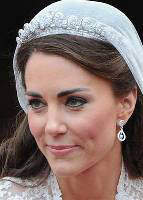
Kate Middleton wearing the Cartier "Halo" Tiara and Pelham designed diamond drop earrings
The pair of earrings worn by the bride, was a wedding day gift from her parents Carole and Michael Middleton. The rings designed by Robinson Pelham consisted of a diamond-set stylized oak leaves, with a pear-shaped diamond-set drop, and a pave-set diamond acorn suspended in the center. The design of the ring was inspired by the Middleton family's new coat-of-arms, which includes both acorns and oak leaves, and were created to match and complement the Cartier "Halo" tiara. Hence the decision to use the Cartier "Halo" tiara must have been taken several weeks before the wedding, and was kept a closely guarded secret until the day of the wedding. Kate's wedding ring was a band of Welsh gold by Wartski, which also crafted Welsh-gold wedding bands for Prince Charles and Camilla.
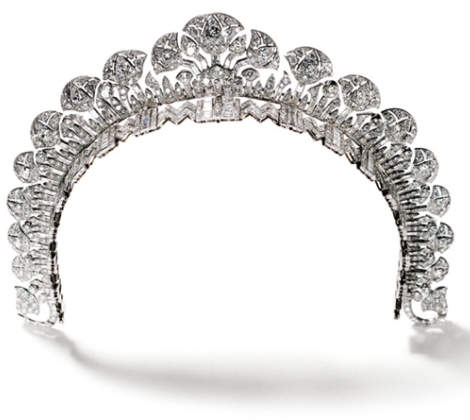
The Cartier Halo Tiara worn by the Duchess of Cambridge Kate Middleton on her wedding day
Other lovers knot tiaras known to have existed in history
Apart from the two versions of the Cambridge Lovers Knot Tiaras considered in detail on this webpage, other lovers knot tiaras belonging to royal families in Europe and India are also known to have existed. Most of these tiaras were of 19th century origin, as the lovers knot design was popular during this period. Among some of the well known lovers knot tiaras are the following :-
1) The Yussupov Lovers Knot Tiara
The Yussupov Lovers Knot Tiara that belonged to Princess Tatiana Alexandrovna Yussupova (1828-1875), wife of Prince Nikolai Borisovich Yussupov (1827-1891) of the prominent Yussupov aristocratic family of Russia, was one of the most perfectly designed Lovers Knot Tiaras, with 19 arches, and pearl drops hanging as pendants from lovers knot bows inside the arches, and an equal number of pearl drops rising up as spikes. The striking feature of this tiara is its perfect symmetry, with pearl drops similar in size and shape being placed at symmetrical positions on either side of the median line of the tiara, that holds the largest pearl drops. The pearl drops also gradually decrease in size from the center towards both ends of the tiara. A portrait of the princess painted by Winterhalter in 1858 show her wearing the Yussupov Lovers Knot Tiara.
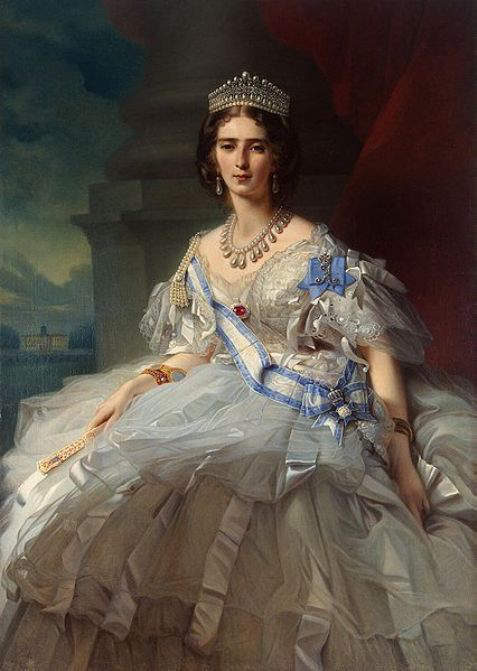
Princess Tatiana Alexandrovna Yussupova wearing the Yussupov Lovers Knot Tiara
2) The Bavarian Lovers Knot Tiara
The Bavarian Lovers Knot Tiara was worn by Queen Therese of Bavaria (1792-1854), the queen consort of Ludwig I of Bavaria (1786-1868) who ruled between 1825 and 1848. This tiara had 16 arches, with 16 pairs of drop-shaped pearls arising from lovers knot bows, as pendants from below the knots and spikes from above the knots.
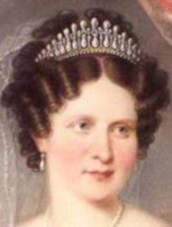
Queen Therese of Bavaria, wearing the Bavarian Lovers Knot Tiara
3) The Saxony Lovers Knot Tiara
The Saxony Lovers Knot Tiara, was worn by Princess Maria Immaculata of Saxony and Bourbon-Two Sicilies (1874-1947). Princess Maria Immaculata was the eldest daughter of Prince Alfonso of Bourbon-Two Sicilies, and married Prince Johann Georg of Saxony (1869-1938). However, pictures of the Princess wearing the tiara, show only 19 pendant pearls, and the pearl spikes are missing. This is similar to Queen Mary's Lovers Knot Tiara after the removal of the spikes.
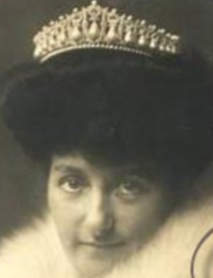
Princess Maria Immaculata of Saxony, wearing the Saxony Lovers Knot Tiara.
4) The Patiala Lovers Knot Tiara
The Patiala Lovers Knot Tiara, was worn by Maharani Mahindar Kaur of Patiala, the second wife of Maharajah Yadavindra Singh of Patiala (1913-1974), the last of the Maharajahs of Patiala, at the time the state joined the Indian republic in 1948. Maharajah Yadavindra Singh, succeeded his father Bhupinder Singh, as Maharajah of Patiala in 1938. He was a famous cricketer and sports enthusiast and served as the president of the British Indian Olympic Committee from 1938-47, and after Indian independence, president of the Indian Olympic Committee from 1947-1960. He was also the chief organizer of the first Asian Games held in New Delhi in 1951. He served as the Chancellor of the Chamber of Princes from 1943 to 1944. After independence he served as the Chief Indian delegate to the UN General Assembly from 1956 to 1957, and as the delegate to the UNESCO in 1958. He also served as Indian ambassador to Italy from 1965-66 and Netherlands from 1971-74, when he died suddenly in office at the Hague, on June 17, 1974, of heart failure at the age of 61 years. The Patiala Royal Family became internationally renowned for the 5-stranded Patiala Diamond Necklace incorporating the De Beers Diamond, one of the most expensive necklaces ever made, that was designed and executed by Cartier of Paris in 1928.
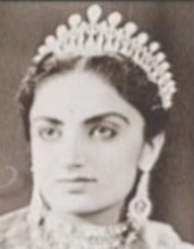
Maharani Mahindar Kaur of Patiala, wearing the Patiala Lovers Knot Tiara
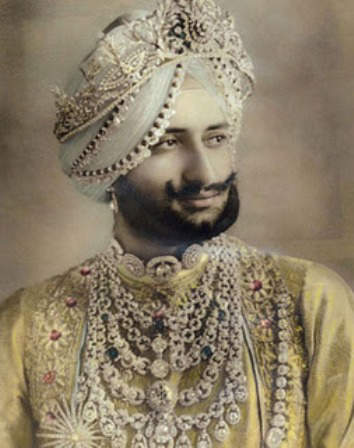
Yadavindra Singh, Maharajah of Patiala from 1938-1947. The Maharajah appears to be wearing a necklace similar to the renowned Patiala Diamond Necklace
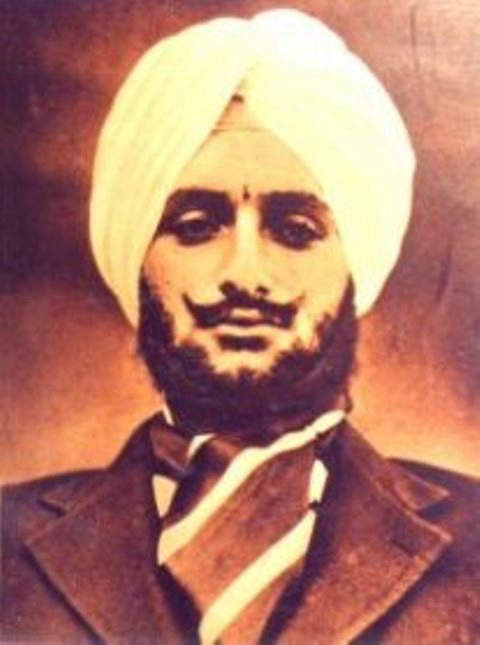
Maharajah Yadavindra Singh of Patiala - Cricketer, Sports Enthusiast, President of the Indian Olympic Committee from 1938 -1960, Chief Indian delegate at the U.N. and UNESCO and Diplomat
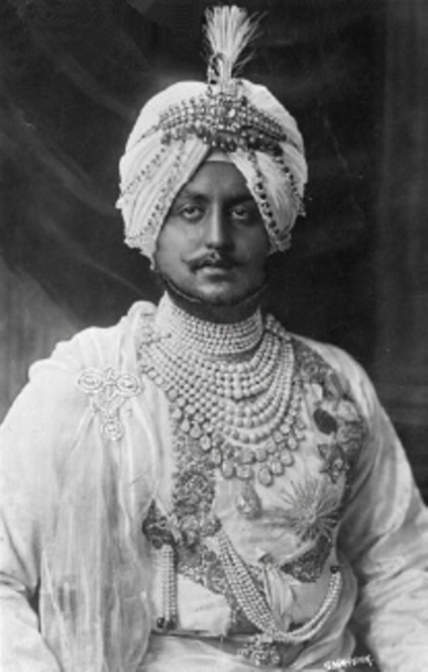
Bhupinder Singh, Maharajah of Patiala from 1900-1938. The famous Patiala Diamond Necklace was designed during his period of rule.
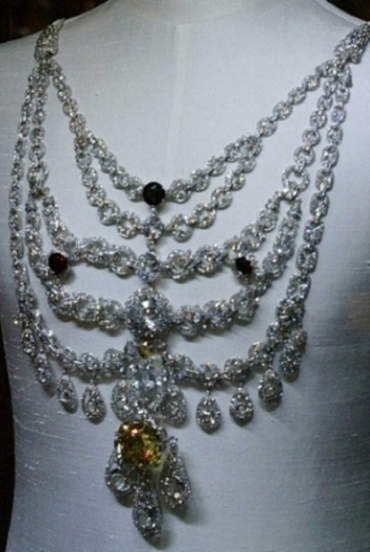
Replica of the Patiala Diamond Necklace created by Cartier
You are welcome to discuss this post/related topics with Dr Shihaan and other experts from around the world in our FORUMS (forums.internetstones.com)
Related :-
Cambridge and Delhi Dunbar Parure
Queen Victorias Emerald and Diamond Tiara
Grand Duchess of Vladimir Tiara
References :-
1) The Personal Jewelry Collection of Elizabeth II - From Wikipedia, the free encyclopedia
2) Jewelry making through History - Rayner W. Hesse
3) Mary of Teck - From Wikipedia, the free encyclopedia
4) Gothic Revival - PJM Article Archives, June 1998
5) Georgian Jewelry 101 - Antique Jewelry Investor, www.antique-jewelry-investor.com
6) Gothic - From the Antique Jewelry University
 Home
Security & Guarantee
How it Works
Technology Partners
Updated Tables
Famous Diamonds
More Famous Diamonds
Famous Pearls
Famous Gemstones
Contact Dr Shihaan Larif
Contact Senior Editor
Famous Jewelry
Reference Database
Forums
Learning Center
Gemstone Gallery
e-mail Notifications
Advertise
Press Release
About Us
Privacy Policy
Contact Us
FAQ'S
Site Map
Staff Mail Login
Staff Documents
Birthstones
History
Minerals
Shows
Live Metal Prices
Jewellery Gallery
News
Marketplace
Marketplace Support
Open Store
Online Auctions
Join Us & Contribute
Directory
Classifieds
List your products
Wholesale Trading
Post Buy Request
Go Green Policy
Site Updates
Upcoming-ToDo List
Latest News
Latest Articles
Latest Blog Updates
Chat Rooms
Job Board
User Gallery
Videos
New Newsletter Archive
Old Newsletter Archive
Jewelry & Mineral Blog
User Blogs & Social Network
Search
Answers (Q & A)
Valuation
Help me find a diamond/jewelry
pin.internetstones.com- Social Pinboard- Sart yours & connect with millions
Invite Friends From Yahoo, Gmail etc-One Click
Home
Security & Guarantee
How it Works
Technology Partners
Updated Tables
Famous Diamonds
More Famous Diamonds
Famous Pearls
Famous Gemstones
Contact Dr Shihaan Larif
Contact Senior Editor
Famous Jewelry
Reference Database
Forums
Learning Center
Gemstone Gallery
e-mail Notifications
Advertise
Press Release
About Us
Privacy Policy
Contact Us
FAQ'S
Site Map
Staff Mail Login
Staff Documents
Birthstones
History
Minerals
Shows
Live Metal Prices
Jewellery Gallery
News
Marketplace
Marketplace Support
Open Store
Online Auctions
Join Us & Contribute
Directory
Classifieds
List your products
Wholesale Trading
Post Buy Request
Go Green Policy
Site Updates
Upcoming-ToDo List
Latest News
Latest Articles
Latest Blog Updates
Chat Rooms
Job Board
User Gallery
Videos
New Newsletter Archive
Old Newsletter Archive
Jewelry & Mineral Blog
User Blogs & Social Network
Search
Answers (Q & A)
Valuation
Help me find a diamond/jewelry
pin.internetstones.com- Social Pinboard- Sart yours & connect with millions
Invite Friends From Yahoo, Gmail etc-One Click




Our Global Jewelry Industry Job Network


Buy & Sell in our Marketplace

Subscribe to our Newsletter

List in our Classifieds

List in our Directory

User Uploaded Gallery

Powered by Ultra Secure
Amazon (USA) Cloud Network

Founder Internet Stones.COM
Register in our Forums

| Featured In
|
|
|
|
|
|
|
|







Blog & Education Feed
Articles Feed
 |
 |
 |

Copyright © .Internet Stones.COM. All rights reserved.