The Carolina Queen Emerald
Open FREE Unlimited Store Join Our Newsletter
Origin of name
The 18.88-carat pear-shaped "Carolina Queen Emerald" is said to be the largest, finest and most significant emerald ever found in North America, which can rival the finest of the fine emeralds of Muzo and Chivor mines of Colombia, the international standard for quality in emeralds. The emerald discovered by James K. Hill, president and CEO of North American Emerald Mines, in his 94-acre family estate in Hiddenite, North Carolina, in 1998, was named "Carolina Queen" to reflect the state of origin of the emerald as well his intention to start a series with royal names. Thus another 7.85-carat cushion-cut emerald, cut from the same rough stone as the "Carolina Queen Emerald" was named as the "Carolina Prince," and a 3.37-carat oval-cut was known as the Carolina Princess. A larger 858-carat rough emerald crystal uncovered at the same time was christened the "Empress Caroline."

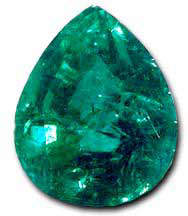
The Carolina Queen Emerald (Above)
Photos from North Carolina Emeralds.info
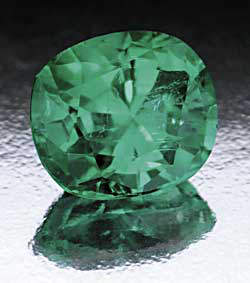
The Carolina Prince Emerald (Above)
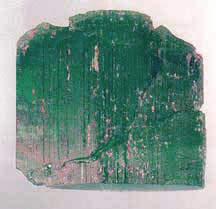
The Rough Emerald that produced the Carolina Prince and the Carolina Queen Emerald's
Characteristics of the gemstone
The 18.8-carat "Carolina Queen Emerald" was cut from an 71-carat rough emerald crystal, that was one of a pocket of emerald crystals totaling 3,300 carats that was discovered by James K. Hill in Hiddenite in 1998. The color of the stone as seen from the photographs is deep bluish-green, characteristic of the emeralds produced in the historic Chivor mines of Colombia or the Zambian emeralds, whose discovery changed the perception of the accepted qualities of emeralds.
The clarity of the emerald is also exceptional with the minimum of inclusions (jardin). Inclusions are commonly seen in most emeralds and accepted as normal, until the discovery of the inclusion-free Zambian emeralds. The diaphaneity of the stone which is a function of its clarity is also exceptional, being exceptionally transparent with the interior of the stone clearly visible.
Closely related to an emeralds clarity is its brittleness. When a stone is heavily included with faults such as cracks and fissures, the clarity of the stone will be poor and so also will be its tendency to break and chip easily due to its increased brittleness. The emerald-cut which places less strain on the crystal during the cutting and polishing process was specially developed for the emeralds of Colombian origin, which are normally brittle. But the Zambian emeralds which are relatively inclusion-free are less brittle than the Colombian emeralds, and are cut in multifarious shapes as any other gemstone, such as pear-shape, heart-shape, cushion-shape etc. Likewise Colombian emeralds are normally treated with oils and epoxy resins to hide the cracks and fissures, and this is normally accepted in the trade. Such treatment is not normally necessary for Zambian emeralds as these are generally free of such faults. Thus Zambian emeralds are bluish-green in color, and are usually untreated, less brittle and cut in a variety of shapes unlike other emeralds.
The "Carolina Queen Emerald" also has characteristics closely resembling the Zambian Emeralds. It is bluish-green in color, with perfect clarity and transparency, untreated, less brittle and cut as a perfect pear-shape, which is unconventional for emeralds.
Schwarz and Schmetzer's definition of an emerald
The modern definition of an emerald that has gained broad acceptance is that put forward by Schwarz and Schmetzer in 2002. According to this definition, "emeralds are yellowish-green, green or bluish-green, natural or synthetic beryls, which reveal distinct chromium and/or vanadium absorption bands in the red and blue-violet ranges of their absorption spectra."
Previously the term emerald was applied to only chromium-based green beryl, the type of beryl that commonly originated in Colombia. But, in the early 1960s when emeralds were discovered in Brazil, the green crystals were shown to be beryl colored by a trace of the element vanadium. Gemologists and the gem trade refused to recognize the Brazilian beryl as emerald just because they were not chromium-based. The miners and dealers of Brazil fought for the acceptance of their green beryl as emeralds, and representations were made to the GIA and the ICA. In the year 1963, the GIA began issuing lab reports certifying vanadium-colored gemstones as natural emeralds. Now it is agreed internationally as the above definition suggests, that either chromium or vanadium or both, may give emeralds their rich green color.
When vanadium predominates in the crystal, as in the case of the Brazilian and Zambian emeralds, the green color of the crystals have a bluish cast. On the other hand if chromium is predominant the color of the crystal is dark herbal green as in the case of the Muzo emeralds. Vanadium-based emeralds have less inclusions than chromium-based emeralds. In terms of atomic sizes the vanadium atom has a slightly lower atomic size than the chromium atom, the two elements occupying adjacent positions on the periodic table having atomic numbers 23 (V) and 24 (Cr). Whether the inclusions in the crystals is related to the atomic sizes of vanadium and chromium, the larger chromium atoms causing greater stress on the crystal structure forming fissures as in the case of the corundum ruby, is not exactly known.
The fact that the "Carolina Queen Emerald" is bluish-green in color, with good clarity and less inclusions, seem to suggest that it is also a vanadium-based emerald. However, only a study of the absorption spectrum of the emerald can actually confirm the nature of the emerald.
History of the emerald
The source of the emerald
The source of the "Carolina Queen Emerald" is the 94-acre family estate of James K. Hill situated in the small town of Hiddenite in North Carolina, located in the rolling foothills of the Appalachians. The area which was known as the "most complex geological zone in the world" by renowned geologists Kunz and William Hidden, had yielded 63 different gems and minerals. Among the different gemstones found in this area are emeralds, aquamarines, rubies, sapphires, garnets, topaz, amethysts, citrine, rutile, tourmaline, smoky and clear quartz. Hiddenite, a pale to emerald-green variety of spodumene, was also discovered for the first time in this area, by the geologist William Earl Hidden in whose honor the mineral has been named. Subsequently, the town where the new mineral was discovered also came to be known as Hiddenite. In fact it is said that in the late 19th century, it was the master inventor, Thomas Alva Edison, who sent Kunz and William Hidden to North Carolina to look for platinum for his new invention, the incandescent bulb. The two geologists did not find platinum in the area, but instead found a treasure trove of gems and minerals in the area, and the rare mineral which later came to be known as Hiddenite.
Discovery of the first emerald deposits in North Carolina by William E. Hidden
Emeralds were first discovered in North Carolina in the Alexander and Mitchell counties. The first emerald deposits at Stony Point in Alexander county was discovered by William E. Hidden in 1880, and the emeralds were found to be associated with the new mineral Hiddenite (green spodumene). In 1881, a corporation known as the Emerald and Hiddenite Mining Company was formed to exploit the deposits of Stony Point. Work started in earnest at this mine but in 1885 almost came to a standstill due to legal disputes pertaining to the ownership of the property. During this short period of mining activity nine emerald crystals were discovered in a single pocket, excellent in color and partially transparent, but somewhat flawed. The largest crystal discovered in 1882 was 8.5 ins. (21.59 cm) long and weighed nearly 9 ounces (1,276 carats). The crystal became the largest emerald crystal ever discovered in North America at that time. The crystal became part of the collection of Bement-Morgan in New York, and came to be known as the "Hidden Emerald." Two other crystals from this collection had a length of 5 ins (12.7 cm) and 3 ins (7.62 cm). The two largest and several smaller crystals went into the Bement-Morgan collection, which was acquired by the American Museum of Natural History of New York. However, according to the website www.northcarolinaemeralds.info the 1,276-carat "Hidden Emerald" was unfortunately stolen from the American Museum of Natural History in 1950, and is still reported to be missing.
Some of the crystals recovered from this mine were cut and polished and yielded pleasing light-green gems, but were too light in color to rank as emeralds, and could have been more appropriately referred to as green beryl. Moreover the green color of the crystals seemed to be confined to a border on the surface, 5-7 mm in thickness around the edges and near the termination of the crystals. Over the years several emeralds were discovered in the Hiddenite area, but most of them were either too pale or opaque to have any jewelry value.
Exploitation of the Alexander county emerald deposits in the 20th century
The emerald deposits at Stony Point in Alexander County was exploited throughout the 20th century by different companies such as the American Gem Mining Syndicate, Hiddenite Mining Company, etc. the mine itself undergoing different name changes, such as the Warren Mine, the Emerald and Hiddenite Mine, the Turner Mine, the Hiddenite Mine and finally the Adams Mine. In 1954, the Adams mine and farm were open to prospectors. Significant quantities of emeralds of different sizes were discovered during this period. In the early 1970s, some of the most significant emeralds were discovered from the Adams mine. These incude the 1,493-carat Reitzler/William/Hartwell twin emeralds, discovered in 1971, the 1,377-carat Bolick/Arnold cluster emeralds discovered in 1971, the 1,215-carat Baltzley Twin emeralds discovered in 1970, 934.9-carat Bolick Twin emeralds discovered in 1971 etc. In spite of these significant discoveries, the emeralds produced in Hiddenite were still considered to be too pale, when compared to the deep vivid green Colombian emeralds.
Discovery of the first gem-quality emerald by Wayne Anthony in 1969
The first quality emerald that could compare well with the finest Colombian emeralds was discovered in 1969, by Wayne Anthony. The rough crystal weighed 59 carats, and was cut into a 13.14-carat emerald-cut gemstone, known as the "Carolina Emerald," considered to be one of the finest cut emeralds ever to be produced in North America. The stone was later purchased by Tiffany's of New York, and came to be known as the "Tiffany Emerald. Tiffany's set the value of the stone at $100,000 in 1970.
Discovery of gem-quality emeralds by James K. Hill in 1998
The greatest breakthrough in the discovery of quality emeralds in North America came in 1998, when James K. Hill, president and CEO of the North American Emerald Mines, announced his discovery of an emerald vein, that yielded large gem-quality emeralds, in the 94-acre parcel of land owned by the Hill family at Hiddenite. The mine he dug was an open pit-mine gradually descending to a depth of about 12 feet. Hill, who worked without any sophisticated equipment, followed the emerald vein that led to a pocket of emeralds, from which he was able to mine about 3,300 carats of gem-quality emeralds. The 71-carat rough emerald crystal that yielded the "Carolina Queen Emerald" and the 7.85-carat "Carolina Prince Emerald" was part of this pocket of emeralds.
Purchase of the 88-carat rough emerald by a syndicate of 12 investors headed by Rick Gregory
Rick Gregory, the president of R. Gregory Jewelers organized a syndicate of 12 investors including himself, to purchase the 88-carat gem-quality rough emerald, one of the 3,300 carat pocket of emeralds discovered at the Hill's mine in 1998. The syndicate purchased the rough, and then hired a renowned master gemstone cutter, Allan Koo, a native of Vietnam, based in New York City, with an experience of over 26 years in cutting gemstones. He is the sole proprietor of A. Koo & Company, gem cutters to some of New York's finest Fifth Avenue jewelers. Before the stone was actually cut, the rough stone was sent to C. R. Beasley of the American Gemological Laboratories (AGL), an accredited gemologist and appraiser of international standing, in order to verify the credentials of the stone particularly in regard to its origin - North Carolina. Mr. Beasley confirmed that the rough stone indeed originated in North Carolina, which only an experienced gemologist of his caliber could detrmine.
The Carolina Emerald is the largest and finest processed emerald ever produced in North America
Mr. Allan Koo cut the 71-carat rough stone into two exceptional quality emeralds, the 18.88-carat, pear-shaped "Carolina Queen Emerald" and the 7.85-carat, cushion-cut "Carolina Prince Emerald." initiating what is known as the Royal Family collection. The "Carolina Queen Emerald" surpassed the "Tiffany Emerald" both in weight as well as quality. After cutting and polishing the AGL certified the "Carolina Queen Emerald" as the largest and finest emerald of North American origin to ever pass through its laboratory. Mr. C. R. Beasley the internationally renowned gem appraiser has placed a value of over $1,000,000 for the "Carolina Queen Emerald." which works out to approximately $53,000 per carat. This is not surprising given the purity and rarity of the gemstone with exceptional characteristics worthy of its royal name. Such extremely rare emeralds have indeed fetched per-carat prices much higher than diamonds of corresponding weight and quality. In fact some of the Hiddenite emeralds had fetched more than twice the per-carat price for comparable stones at auctions.
James K. Hill
James K. Hill, the president and CEO of North American Emerald Mines, is an indigene of North Carolina, who had devoted much of his life for the search of natural and man-made hidden treasures. Is is said that James K. Hill has been gifted with a sixth sense that enables to pinpoint and locate a hidden treasure. Putting to test his treasure hunting abilities in 1990, he uncovered a massive 298-pound mineral crystal, known as the "Carolina Crystal" from a pasture in Hiddenite, using only a screw driver. He made a detailed study of the mineral history of the Hiddenite area with a view of locating potential emerald-producing areas. In 1992, he formed the North American Emerald Mines Company and began small scale mining operations on the 94-acre land belonging to his family. In 1995, the use of his instincts bore fruit when he struck a pocket of emeralds that yielded an exquisite 10.42-carat emerald that was known as the "Hill's Emerald" after him. But, the real breakthrough came in 1998, on Thanksgiving Day, when he discovered an emerald vein in his shallow open pit mine, that gradually descended to a depth of only 12 feet. Again, his decision to sink the mine at the chosen spot was also dictated by his instinct. Hill followed the vein that led to a pocket full of surprises - 3,300 carats of superb gem-quality emeralds, that included the gem-quality 71-carat rough emerald crystal and the 858-carat broken emerald crystal that came to be known as the "Empress Caroline."
After the discovery in 1998, Hill continued the exploration and more discoveries were made within two years of the first discovery. The US government stepped in and suspended his mining activities for two years, until his mining site met all ecological requirements, obtained all licenses required by the law, and improved security for the site. During this lull period Hill sought the service of experts to carryout subterranean radar imaging of what lies beneath a gneiss dome on the site. Using this technique, experts were able to identify more than 40 potential emerald-bearing pockets beneath the dome. Hill resumed mining activities after two years, and so far has discovered eight pockets, all of which yielded emeralds. It is important to note that not all pockets yield emeralds, and invariably most of the pockets are empty of emeralds. Hill is happy about the outcome so far, and is optimistic that America has finally struck gem-quality emeralds, free of conflicts, free of association with drugs and terrorism, and free of treatment. According to Hill, several investors have expressed willingness to finance future exploration to expand mining activities, from the present one acre that is being worked, to cover a substantial area of the 94 acres owned by his family.
Rick Gregory, proprietor of R. Gregory Jewelers Inc.
R. Gregory Jewelers who was the exclusive retailer for the first Hiddenite emeralds, is owned by Rick Gregory, a native of Statesville, North Carolina, who has over 20 years experience in the gem and jewelry trade. R. Gregory Jewelers rank among the finest of jewelers in North Carolina, and specializes in the creation of unique and exquisite pieces of jewelry, based on designs by some of the country's top designers and using quality gemstones. The GIA has certified Rick Gregory as an expert in detecting synthetic diamonds, and treated gemstones, and he is also proficient in diamond and pearl grading. He is a member of the Belgian Diamond Cutters High Council, based in Antwerp and had been a diamond master for 12 years with the Independent Jewelers Organization. R. Gregory Jewelers was selected to host the first sale of the famous Hiddenite emeralds found by James K. Hill in 1998. The 71-carat dark green, gem-quality, Hiddenite emerald crystal was later sold to a syndicate of investors known as the C. Q. Marketing Syndicate, of which Rick Gregory was also a member. This emerald was subsequently cut and processed to produce the "Carolina Queen Emerald" and the "Carolina Prince Emerald" part of the so-called Royal Collection of emeralds.
You are welcome to discuss this post/related topics with Dr Shihaan and other experts from around the world in our FORUMS (forums.internetstones.com)
Related :-
4) The Duke of Devonshire Emerald
8) Spanish Inquisition Necklace
10) The Carolina Queen Emerald
11) Naem Emerald
References
1.Hiddenite Treasures - Professional Jewelers Magazine, October 1999.
2.North Carolina Emeralds - www.northcarolinaemeralds.info
3.North Carolina Emeralds - NAEM Emerald Mine -www.northcarolinaemeralds.info
4.History of the Carolina Queen - www.carolinaqueen.com
5.The Hiddenite Emeralds - www.rgregoryjewelers.com
6.North Carolina Emeralds - Adams Emerald Mine - northcarolinaemeralds.com
7.Gems in North Carolina - Chapter VI - Kunz
8.Emerald City North Carolina - Professional Jewelers Magazine, April 2002
 Home
Security & Guarantee
How it Works
Technology Partners
Updated Tables
Famous Diamonds
More Famous Diamonds
Famous Pearls
Famous Gemstones
Contact Dr Shihaan Larif
Contact Senior Editor
Famous Jewelry
Reference Database
Forums
Learning Center
Gemstone Gallery
e-mail Notifications
Advertise
Press Release
About Us
Privacy Policy
Contact Us
FAQ'S
Site Map
Staff Mail Login
Staff Documents
Birthstones
History
Minerals
Shows
Live Metal Prices
Jewellery Gallery
News
Marketplace
Marketplace Support
Open Store
Online Auctions
Join Us & Contribute
Directory
Classifieds
List your products
Wholesale Trading
Post Buy Request
Go Green Policy
Site Updates
Upcoming-ToDo List
Latest News
Latest Articles
Latest Blog Updates
Chat Rooms
Job Board
User Gallery
Videos
New Newsletter Archive
Old Newsletter Archive
Jewelry & Mineral Blog
User Blogs & Social Network
Search
Answers (Q & A)
Valuation
Help me find a diamond/jewelry
pin.internetstones.com- Social Pinboard- Sart yours & connect with millions
Invite Friends From Yahoo, Gmail etc-One Click
Home
Security & Guarantee
How it Works
Technology Partners
Updated Tables
Famous Diamonds
More Famous Diamonds
Famous Pearls
Famous Gemstones
Contact Dr Shihaan Larif
Contact Senior Editor
Famous Jewelry
Reference Database
Forums
Learning Center
Gemstone Gallery
e-mail Notifications
Advertise
Press Release
About Us
Privacy Policy
Contact Us
FAQ'S
Site Map
Staff Mail Login
Staff Documents
Birthstones
History
Minerals
Shows
Live Metal Prices
Jewellery Gallery
News
Marketplace
Marketplace Support
Open Store
Online Auctions
Join Us & Contribute
Directory
Classifieds
List your products
Wholesale Trading
Post Buy Request
Go Green Policy
Site Updates
Upcoming-ToDo List
Latest News
Latest Articles
Latest Blog Updates
Chat Rooms
Job Board
User Gallery
Videos
New Newsletter Archive
Old Newsletter Archive
Jewelry & Mineral Blog
User Blogs & Social Network
Search
Answers (Q & A)
Valuation
Help me find a diamond/jewelry
pin.internetstones.com- Social Pinboard- Sart yours & connect with millions
Invite Friends From Yahoo, Gmail etc-One Click




Our Global Jewelry Industry Job Network


Buy & Sell in our Marketplace

Subscribe to our Newsletter

List in our Classifieds

List in our Directory

User Uploaded Gallery

Powered by Ultra Secure
Amazon (USA) Cloud Network

Founder Internet Stones.COM
Register in our Forums

| Featured In
|
|
|
|
|
|
|
|







Blog & Education Feed
Articles Feed
 |
 |
 |

Copyright © .Internet Stones.COM. All rights reserved.