Conde Pink Diamond
Open FREE Unlimited Store Join Our Newsletter
Dr. Shihaan M. Lariff
Origin of Name
The Conde Pink Diamond also known as the Conde Diamond or Le Grand Conde gets its name from Louis II de Bourbon, the Prince of Conde, and the Commander of the French Army, who was presented the diamond as a token of appreciation by King Louis XIII of France in 1643, for the several successful military victories that were achieved on his behalf.
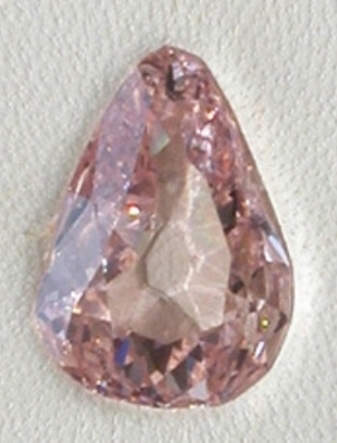
9.01-carat, light pink, pear-shaped Conde Diamond displayed at the Conde Museum in Chantilly, France
© Musée Condé

Characteristics of the diamond
The 4Cs of the diamond
The Conde Pink diamond is a light pink, pear-shaped diamond weighing 9.01 carats. The clarity of the diamond is not known, but without any doubt must be exceptional, given the origin of the stone from the historic Kollur mines of Southern India.
The diamond is a plastically deformed Type IIa diamond
The diamond is most probably a Type IIa diamond, which are nitrogen free, and free of all chemical impurities. However, the pink color is caused by the structural distortion of the crystals, due to the twisting and bending of the tetrahedral crystal units as the diamonds rose up from the earth's mantel to the surface. The distorted areas in the crystal changes the absorption spectrum of the diamond, causing the pink color. Thus the Conde Pink diamond is a plastically deformed Type IIa diamond.
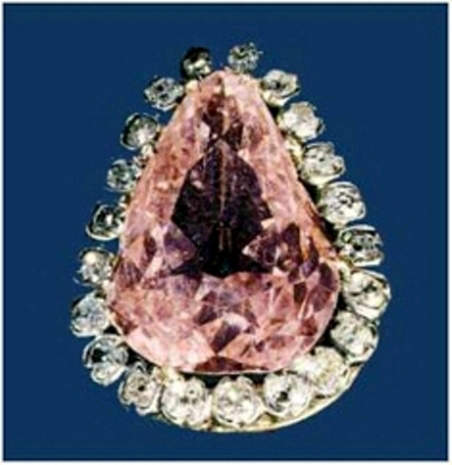
Pear-shaped Conde Pink diamond in a setting surrounded by a row of smaller diamonds
© Giraudon, Paris
Though the Conde Pink Diamond occupies only the 20th position in the List of Famous Pink Diamonds as at year 2011, yet its historic significance surpasses most other diamonds in the list
In the list of Famous Pink Diamonds as at year 2011, the Conde Pink Diamond occupies the 20th position, being only 9.01 carats in weight, but in terms of historical significance the diamond surpasses most other pink diamonds, as it has a history dating back to the mid-17th century.
List of Famous Pink Diamonds as at year 2011
| S/No | Name | Carat Weight |
Value / Price realized at Auctions (USD) | Color |
| 1 | Darya-i-Nur | 186 | Part of the Iranian Crown Jewels | light pink |
| 2 | Nur-ul-Ain | 60 | Part of the Iranian Crown Jewels | light pink |
| 3 | Steinmetz pink | 59.60 | Estimated 100 million | fancy vivid pink |
| 4 | Shah Jahaan | 56.71 | light pink | |
| 5 | Agra | 32.34 | 4 million sterling pounds in 1990 (about 6 milion USD) | fancy light pink |
| 6 | Pink Sunrise | 29.79 | fancy pink | |
| 7 | Rose of Dubai | 25.02 | 6 million in 2005 | fancy pink |
| 8 | Graff Pink before and after recutting | 24.78 23.88 | 45.6 million 2010 | fancy intense pink, after recutting fancy vivid pink |
| 9 | Mouawad Lilac | 24.44 | 1.1 million in 1976 Estimated 20 million in 2007 | fancy purplish pink |
| 10 | Williamson | 23.56 | Wedding Gift to Queen Elizabeth | fancy pink |
| 11 | Graff Pink Orchid | 22.84 | fancy purplish pink | |
| 12 | Mouawad Pink | 21.06 | fancy pink | |
| 13 | Hortensia | 20.00 | light orange pink | |
| 14 | 1994 Christie's Geneva Auction | 19.66 | 7.4 million in 1994 | fancy pink |
| 15 | Perfect Pink | 14.23 | 23.2 million in 2010 | fancy intense pink |
| 16 | May 2011, Sotheby's Geneva Auction | 10.99 | 10.8 million in 2011 | fancy intense pink |
| 17 | Graff Pink Supreme | 10.83 | fancy pink | |
| 18 | Argyle Pink Diamond | 10.11 | Canadian Dollar 8-12 million | fancy intense orangish-pink |
| 19 | April 2011 Christie's New York Auction | 10.09 | Unsold - Estimated 12-15 million | fancy vivid purplish-pink |
| 20 | Conde Pink Diamond/Le Grand Conde Diamond | 9.01 | Displayed at the Conde Museum, Chantilly, France | light pink |
| 21 | 1995 Sotheby's Auction | 7.37 | 6.0 million in 1995 | fancy intense purplish-pink |
| 22 | Christie's New York, Dec.2010 | 6.89 | 6.9 million in 2010 | fancy vivid purplish-pink |
| 23 | The Vivid Pink | 5.00 | 10.8 million 2009 | fancy vivid pink |
©internetstones.com
Please do not copy our tables without our permission. We may be compelled to inform the search engines if our content and tables are plagiarised.
History
The Conde Pink diamond originated in the famous Kollur mines, near Golconda in Southern India
The Conde Pink diamond being a mid-17th century diamond, most probably originated in the famous Kollur mines, near Golconda, in Andhra Pradesh in Southern India, the only source of pink diamonds in the world during this period. The Darya-i-Nur, the Nur-ul-Ain, Shah Jahaan and Agra are the other famous pink diamonds that are believed to have originated in the same mines.
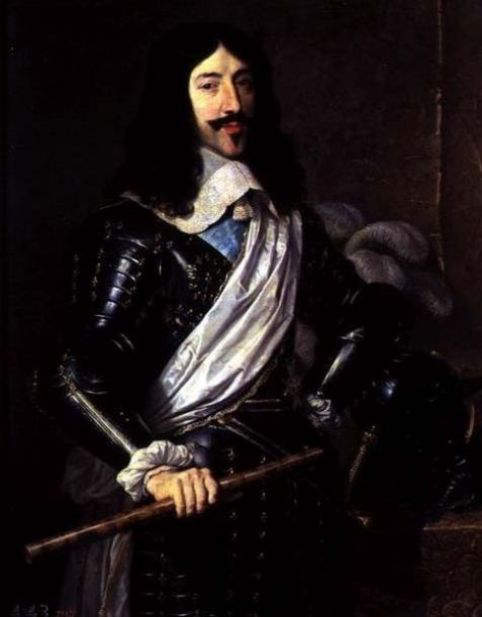
King Louis XIII of France (1610-1643)
The possible period during which the Conde Pink diamond entered the French court?
The diamond most probably entered the French court, either through Jean Baptiste Tavernier, the famous 17th-century traveler and diamond dealer or any one of several other French travelers before him, such as Monsieur de Chapes and Monsieur de St Liebau. Jean Baptiste Tavernier made six voyages to the East between 1631 to 1668, reaching and travelling extensively in India during five voyages, except for the first voyage; and reaching Golconda to purchase diamonds on four occasions, during the 2nd (1638-43), 3rd (1643-49), 4th (1651-55) and 5th (1657-1662) voyages. Jean Baptiste Tavernier had dealings with King Louis XIV (1651-1715) and probably with his predecessor King Louis XIII (1610-43). Tavernier reached Paris in late 1643, after his 2nd voyage between 1638 and 1643, during which he visited Golconda for the first time. By the time he reached Paris in late 1643, King Louis XIII had already passed away. Hence the chances of the Conde Pink diamond entering the French court through Jean Baptiste Tavernier during the reign of King Louis XIII are very remote. If the diamond had entered the French court during the reign of King Louis XIII, that lasted from 1610 to 1643, it must have been through some other European traveller before Jean Baptiste Tavernier. However, if the diamond had entered between 1651 and 1662, the period of the 4th and 5th voyages of Tavernier, during the reign of King Louis XIV (1651-1715), in all probability it entered through Jean Baptiste Tavernier, who sold many Golconda diamonds to the king, including the famous French Blue diamond, from which the infamous Hope diamond originated.
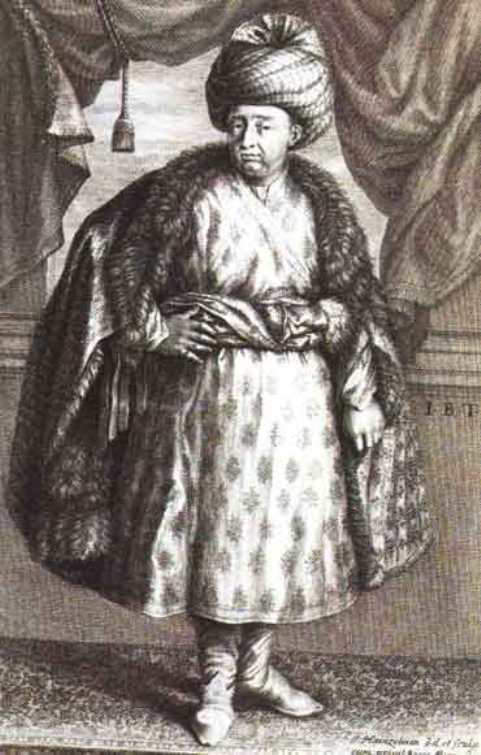
Jean Baptiste Tavernier wearing a Mughal dress
Who gifted the Conde Pink diamond to Louis II de Bourbon, the Prince of Conde? Was it King Louis XIII or King Louis XIV?
Chronology of events during early 17th-century favors King Louis XIV, the successor to King Louis XIII as the French monarch who gifted the Pink diamond to the Prince of Conde
The Conde Pink diamond, also known as the Conde diamond or the Grand Conde diamond (Le Grande Conde), was purported to have been presented to Louis II de Bourbon, the Prince of Conde, and the Commander of the French Army, as a token of appreciation for several successive military victories associated with the 30-year war. But, the chronology of events during this period do not seem to support this contention, but instead favors King Louis XIV, the successor of King Louis XIII as the French Monarch who made this gesture of appreciation.
His birth, education and presentation to King Louis XIII in 1636 at the age of 15 years
Louis II de Bourbon, the Great Conde previously known as Duc d' Enghien was born in 8th September 1621 in Paris, to parents who descended from the House of Bourbon. He was the eldest son of Henry II de Bourbon. the 3rd Prince of Conde. Having completed his education at the age of 15 years, studying under the Jesuit priests for six years, and later studying mathematics and horsemanship at the Royal Academy at Paris, he was presented to King Louis XIII, by his father, in January 1636.
His first great victory as Head of the Royal Army against the Spaniards at Rocroi on May 19, 1643, the greatest French victory for a century, which King Louis XIII did not to see, as he died on May 14, 1643
He later joined the army and had his first experience of combat in July 1640. As head of the Royal Army, Louis II de Bourbon won his first great victory over the Spaniards at Rocroi on May 19, 1643, that made him a great General and popular hero in France at the age of 22. This was the greatest French victory for a century, and without any doubt due mainly to his capabilities as a great commander. King Louis XIII, did not live to see the great victory of Louis II de Bourbon, as he died of tuberculosis just 5 days before the great victory on May 14, 1643. Therefore the above version of King Louis XIII presenting the Conde pink diamond to Louis II de Bourbon, the Prince of Conde, for his great victories does not hold any ground. In fact most of the greatest victories achieved by the great Conde, came after the death of King Louis XIII.
Other victories that followed the success at Rocroi
The victory at Rocroi was followed by other successes, in the area of the Rhine, at Thionville and Sierck, at Freiburg, Philippsburg, Mainz, and Nordlingen. He also conducted a brilliant campaign in Flanders.
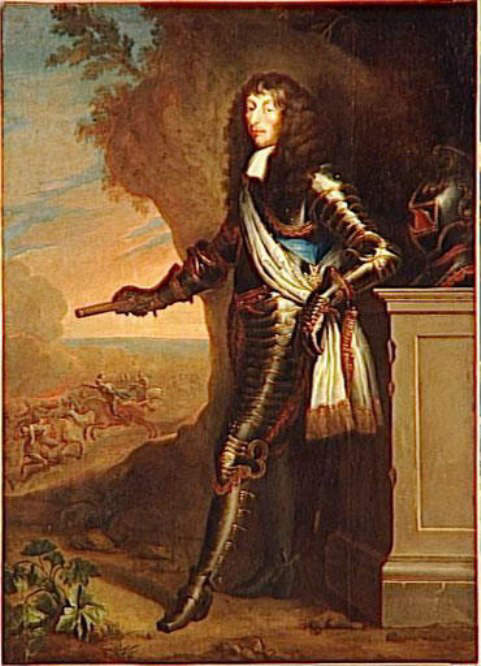
Portrait of Louis II de Bourbon - the Prince of Conde
Outbreak of the Fronde during the regency of Louis XIV and the imprisonment of the Prince of Conde by Cardinal Jules Mazarin
King Louis XIII was succeeded by his son Louis XIV, who was barely 5 years old at the time. The Queen mother acted as Regent until the King came of age. Louis XIV was just 9 years old, when the nobles and the parliament rose against the Crown in 1648, due to the unpopularity of the Prime Minister Cardinal Jules Mazarin. During the period of instability, that was associated with the long civil war that followed, known as the Fronde, Conde was imprisoned by Jules Mazarin and released after 13 months by his friends who launched the second war of the Fronde, which led to Mazarin's voluntary exile.
Prince of Conde's defection to the Spanish who appointed him as Generalissimo
Conde eventually defected to the enemies, the Spaniards, who appointed him as Generalissimo. He conducted several campaigns against the French army for 4 years, but was finally defeated at the Battle of Dunes on June 14, 1658.
His return to Paris in 1660 after the signing of the Peace of Pyrennes in 1659. The Prince is given a warm welcome by King Louis XIV
Conde returned to Paris, after the Peace of the Pyrennes was signed in 1659, and was received by King Louis XIV, on January 27, 1660. Since then he became a loyal and humble subject of the King.
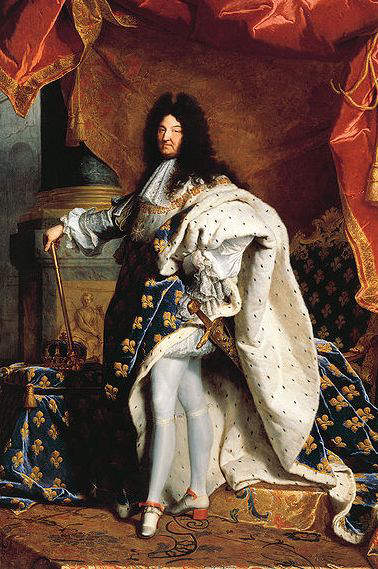
King Louis XIV of France - 1651-1715
Re-appointment as the Commander of the French army in 1668, and his brilliant military successes until 1675
Eventually in 1668, Conde was again appointed the Commander of the Army, that attacked the Spanish-held Franche-Comte, and Conde took Artois, Besancon, Dole, and Gray in 15 days. His brilliant military successes continued until 1675. Most of the military successes achieved by King Louis XIV, between 1660 and 1675, could be attributed to the Great Conde's successes as a brilliant military commander. Thus in all probability it was King Louis XIV, who presented the Conde Pink diamond to the Grand Conde. After his last campaign in 1675, Conde returned to Chateau de Chantilly, where he spent the remaining 11 years of his life in retirement, and died on November 11, 1686 at the age of 65.
The Prince of Conde had the Pink diamond mounted on the pommel of his walking stick
Louis II de Bourbon, the Great Conde, had the diamond mounted on the pommel of his walking stick. The diamond remained the property of the Conde family until 1892, when Duc d' Aumale bequeathed it to the French Government. Today it is on display in the Musee de Conde in Chantilly, in France, where it will continue to remain according to the Duke's will. The diamond was stolen from the museum on October 11th, 1926, but later recovered and restored. However, as a security precaution, the diamond that is on display now, is not the original diamond, but only a perfect replica of the original.

Picture of Chateau de Chantilly taken by Craig Patik in March 2005
An interesting account in French of the stealing and recovery of the Conde Pink diamond by the Musee de Conde
The Chateau de Chantilly website gives an interesting account in French of how the Pink Diamond was stolen in 1926, with the weapons of Abd el-Kader, and was accidentally recovered by the maid of a small hotel, near the Eastern Railway Station in Paris, while crunching an apple found in the room of a customer. It appears that the Pink Diamond was hidden inside the apple by the thief, before it was smuggled out of Paris. The diamond was restored to the Musee de Conde with great pomp and pageantry.
Il fut volé en 1926 avec les armes d'Abd el-Kader et retrouvé quelques mois plus tard dans des conditions rocambolesques par la femme de chambre d'un petit hôtel près de la gare de l'Est à Paris : en croquant une pomme trouvée dans la chambre d'un client, elle découvrit la pierre, qui fut alors rendue en grande pompe au musée Condé.
Using Google Translate from French to English
It was stolen in 1926 with the weapons of Abd el-Kader and found a few months later through the extraordinary by the maid of a small hotel near the Gare de l'Est in Paris: in eating an apple found in the room of a client, she discovered the stone, which was then made with great fanfare at the Condé Museum.
You are welcome to discuss this post/related topics with Dr Shihaan and other experts from around the world in our FORUMS (forums.internetstones.com)
Related :-
External Links :-
The Conde Pink Diamond - www.chateaudechantilly.com
References :-
1) Conde Pink diamond - www.chateaudechantilly.com
2) Louis XIII of France - From Wikipedia, the free encuclopedia
3) Louis XIV of France - From Wikipedia, the free encyclopedia
4) Thirty Years War - From Wikipedia, the free encyclopedia
5) Louis, Grand Conde - From Wikipedia, the free encyclopedia
 Home
Security & Guarantee
How it Works
Technology Partners
Updated Tables
Famous Diamonds
More Famous Diamonds
Famous Pearls
Famous Gemstones
Contact Dr Shihaan Larif
Contact Senior Editor
Famous Jewelry
Reference Database
Forums
Learning Center
Gemstone Gallery
e-mail Notifications
Advertise
Press Release
About Us
Privacy Policy
Contact Us
FAQ'S
Site Map
Staff Mail Login
Staff Documents
Birthstones
History
Minerals
Shows
Live Metal Prices
Jewellery Gallery
News
Marketplace
Marketplace Support
Open Store
Online Auctions
Join Us & Contribute
Directory
Classifieds
List your products
Wholesale Trading
Post Buy Request
Go Green Policy
Site Updates
Upcoming-ToDo List
Latest News
Latest Articles
Latest Blog Updates
Chat Rooms
Job Board
User Gallery
Videos
New Newsletter Archive
Old Newsletter Archive
Jewelry & Mineral Blog
User Blogs & Social Network
Search
Answers (Q & A)
Valuation
Help me find a diamond/jewelry
pin.internetstones.com- Social Pinboard- Sart yours & connect with millions
Invite Friends From Yahoo, Gmail etc-One Click
Home
Security & Guarantee
How it Works
Technology Partners
Updated Tables
Famous Diamonds
More Famous Diamonds
Famous Pearls
Famous Gemstones
Contact Dr Shihaan Larif
Contact Senior Editor
Famous Jewelry
Reference Database
Forums
Learning Center
Gemstone Gallery
e-mail Notifications
Advertise
Press Release
About Us
Privacy Policy
Contact Us
FAQ'S
Site Map
Staff Mail Login
Staff Documents
Birthstones
History
Minerals
Shows
Live Metal Prices
Jewellery Gallery
News
Marketplace
Marketplace Support
Open Store
Online Auctions
Join Us & Contribute
Directory
Classifieds
List your products
Wholesale Trading
Post Buy Request
Go Green Policy
Site Updates
Upcoming-ToDo List
Latest News
Latest Articles
Latest Blog Updates
Chat Rooms
Job Board
User Gallery
Videos
New Newsletter Archive
Old Newsletter Archive
Jewelry & Mineral Blog
User Blogs & Social Network
Search
Answers (Q & A)
Valuation
Help me find a diamond/jewelry
pin.internetstones.com- Social Pinboard- Sart yours & connect with millions
Invite Friends From Yahoo, Gmail etc-One Click




Our Global Jewelry Industry Job Network


Buy & Sell in our Marketplace

Subscribe to our Newsletter

List in our Classifieds

List in our Directory

User Uploaded Gallery

Powered by Ultra Secure
Amazon (USA) Cloud Network

Founder Internet Stones.COM
Register in our Forums

| Featured In
|
|
|
|
|
|
|
|







Blog & Education Feed
Articles Feed
 |
 |
 |

Copyright © .Internet Stones.COM. All rights reserved.