Duke of Devonshire Emerald
Open FREE Unlimited Store Join Our Newsletter
Origin of name
The Duke of Devonshire Emerald gets its name from the 6th Duke of Devonshire, William Cavendish, who according to one version, received the enormous gemstone as a gift from the first emperor of Brazil, Don Pedro I, the son of King John VI of Portugal, but according to a second version purchased the gemstone from the emperor. John VI of Portugal held court in exile in Brazil for a period of 14 years, from 1807 t0 1821, during the period of upheaval in Portugal caused by the invasion of Napoleon's forces.

During this period British forces led by the Duke of Wellington helped defeat the French forces in many battles, and the French were forced to withdraw from Portugal. In the absence of the royal family, Portugal was administered by the commander of the Portuguese army, a British officer by the name of Viscount Beresford. Eventually in 1821, King John VI agreed to return to Portugal, and continue his rule, but only as head of a constitutional monarchy, with his powers severely curtailed. When John VI left Brazil, he appointed his eldest son Don Pedro as the governor of Brazil. However, when the constitutionalists of Portugal tried to force Don Pedro to toe the line adopted by his father, he declared Brazil independent of Portugal, on September 7, 1822, and became the first Emperor of Brazil, as Pedro I. He also installed Brazil's most celebrated politician, Jose Bonifacio de Andrarda e Silva, a renowned naturalist and geologist after whom the mineral andradite is named, as Prime Minister of Brazil.
Initially, Emperor Pedro had a lot of popular support but gradually this support began to wane, resulting in the disastrous civil war in 1828, which resulted in the separation of Uruguay from Brazil. Emperor Pedro I ruled Brazil only for about 9 years, until 1831, when he decided to abdicate the throne, in order to return to Portugal to lead a fight against his brother Don Miguel, who had ascended the throne of Portugal illegally, after his father's death, with the help of the absolutists. Don Pedro succeeded in defeating his brother in May 1834 and reclaiming the Portuguese throne, but died soon afterwards in September 1834, leaving the throne to his daughter Maria da Gloria, who became queen as Maria II, at the age of 15 years. Thus, if the Duke of Devonshire Emerald, was gifted by Don Pedro to the Duke, it must have taken place somewhere between 1822 and 1831.
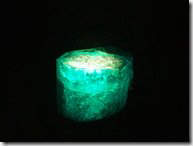
Characteristics of the gemstone
The Duke of Devonshire Emerald is a terminated hexagonal-shaped crystal discovered from the mines of Muzo, Santa Fe de Bogota, in Colombia, reputed to be the premier source of the world's finest emeralds. It is an exceptional deep-green emerald, with perfect transparency in certain areas, but heavily flawed in other areas. The emerald that measures 5 cm across the pinacoid also has a height of about 5 cm, and weighs 1,383.95 carats. The emerald had a reputation as the largest and finest uncut emerald in existence.
History of the Duke of Devonshire Emerald
The source of the Devonshire Emerald
The Devonshire Emerald was discovered in the emerald mines of Muzo, in Colombia, probably in the early 19th century, and eventually found its way to Brazil, where it entered the court of the Emperor Don Pedro I. Muzo is situated in the north-western end of the Colombian emerald-belt, where the other two mining districts of Coscuez and Quipama are also situated. The emerald mines in this region are under the control of Sociedad de Mineros Boyancences (Society of Mining, Boyancences). However, most of the mines are worked by unauthorized miners known as guaqueros. The Muzo emeralds are renowned world wide for their characteristic leaf-green or grass-green color, with yellow being the secondary color. Important mines in this region are the Yacopi mines and the Penas Blanca deposits.
The Dukes of Devonshire
Creation of the title of Earl of Devonshire in 1618
The Duke of Devonshire is a title in the Peerage of England, granted to members of the aristocratic Cavendish family, which has been one of the richest and most influential aristocratic families in England, since the early 17th century, when William Cavendish (1552-1626), a great-great-grandson of Sir John Cavendish from whom the family gets its name, was elevated to the status of the First Earl of Devonshire in 1618, by King James I, for distinguished services to the British Crown. William Cavendish was a politician and supported the colonization of Virginia. Almost ten years later in 1628, a nephew of William Cavendish (son of Sir Charles Cavendish), who was also known as William Cavendish (1593-1676), was elevated to the status of the First Earl of Newcastle, by King Charles I. William Cavendish was a prominent royalist commander in the English civil war, and after restoration of the Monarchy was bestowed the title of Duke of Newcastle in 1664, by Charles II. Thus the Cavendish family laid claim to two important dukedoms in the United kingdom, the Duke of Devonshire and the Duke of Newcastle.
Creation of the title of Duke of Devonshire in 1694
The Cavendish family descends from Sir John Cavendish, who served as the Chief Justice of the King's Bench from 1372 to 1381, and took his name from the village of Cavendish in Suffolk. The title of Earl of Devonshire passed down from father to son starting from William Cavendish in 1618. All the Earls of Devonshire took the name William Cavendish, and the 4th Earl of Devonshire (1640-1707) who supported the glorious revolution and served as the Lord Steward of the Household under William II and Queen Mary, was bestowed the title The First Duke of Devonshire in 1694. The successors of the Duke of Devonshire also took the name William Cavendish and the 4th Duke of Devonshire (1720-1764), who was a prominent politician became the First Lord of the Treasury and the titular Prime Minister of Great Britain from 1756-1757. The 4th Duke of Devonshire was succeeded by his eldest son, the 5h Duke of Devonshire (1748-1811), who married Lady Georgiana Spencer, the celebrated beauty and society hostess. The 5th Duke of Devonshire also had two mistresses, lady Elizabeth Foster and Charlotte Spencer by whom he had several issues, but not legitimate. His legitimate children by Lady Georgiana Spencer was a son, who succeeded the father as the 6th Duke of Devonshire, and two daughters. The 6th Duke of Devonshire was popularly known as the "Bachelor Duke" as he never got married, and was succeeded by a cousin. The present Duke of Devonshire, born in 1944, Peregrine Andrew Mornay Cavendish is 12th in the line of succession to the dukedom, and his heir apparent, is William Cavendish, the Earl of Burlington. Among the Dukes of Devonshire were several prominent politicians, which included a prime minister, a leader of the Liberal Party, and a Governor General of Canada. The prominent physicist and chemist Henry Cavendish, who discovered the composition of air and water, the nature and properties of hydrogen, the specific heats of substances, properties of electricity, etc. was also a descendant of the family.
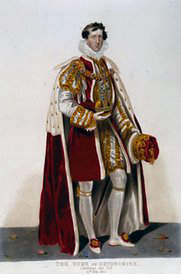
The 6th Duke of Devonshire (1790-1858)
It was during the time of the 6th Duke of Devonshire, the famous "Duke of Devonshire Emerald" entered the collection of minerals of the Devonshire family, started by one of English Society's most remarkable women, Georgiana Spencer, the wife of William Cavendish, the 5th Duke of Devonshire, and the mother of the 6th Duke of Devonshire, who was also known as the "Bachelor Duke." The 6th Duke of Devonshire, was known by the name William George Spencer Cavendish, the name George Spencer taken from his mother's surname. This was a clear indication to show that he was the legitimate son of his father's legitimate wife, Georgiana Spencer, as his father also had several other illegitimate children by his mistresses. He became the Duke of Devonshire at the age of 21, when his father died in 1811. He inherited an enormous estate from his father, which included eight stately homes and 200,000 acres of land.
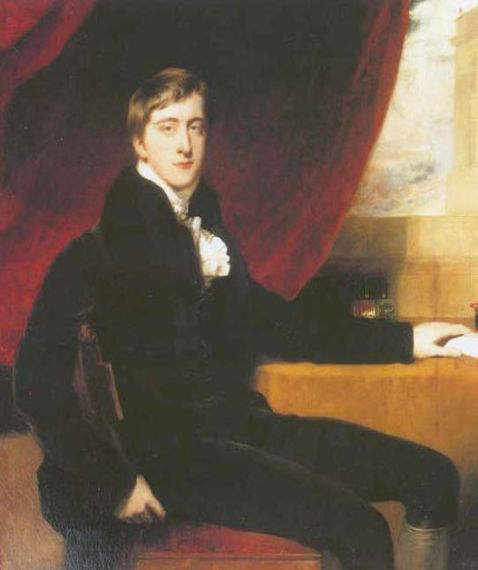
William George Spencer Cavendish, the VI Duke of Devonshire
He served as the Lord Chamberlain of the Household to King William IV. He traveled extensively, and among his friends were the Czar Nicholas I of Russia, Charles Dickens and Antonio Canova. The 6th Duke, remained unmarried until his death in 1858 at the age of 67. It is said that his decision to remain a bachelor was prompted by his failure to secure the hand of Princess Mary, daughter of King George III, who rather preferred to marry her royal cousin, the 2nd Duke of Gloucester. However the Duke had two sisters who were both married and left descendants. When the 6th Duke of Devonshire died, he was succeeded by a cousin, a son of the younger brother of the 5th Duke, who married the daughter of one of the sisters of the 6th Duke, Lady Georgiana Cavendish, wife of the 6th Earl of Carlisle.
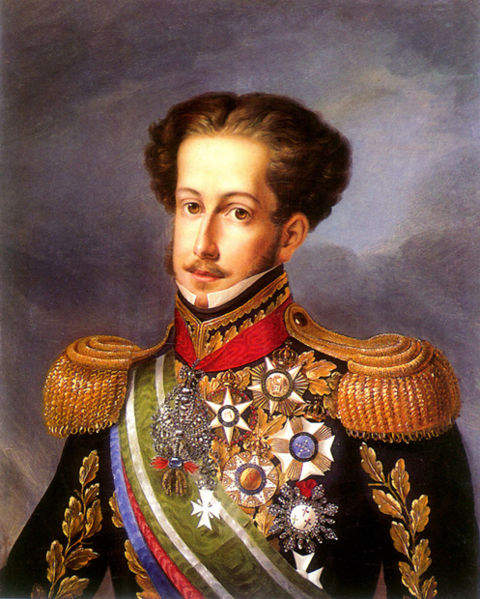
Emperor Don Pedro I of Brazil
Was the "Duke of Devonshire Emerald" gifted or sold to the 6th Duke of Devonshire ?
In 1831, after the abdication of his throne in Brazil, Don Pedro I, traveled to Europe, looking for political and military support, to reclaim the throne of Portugal from his brother Don Miguel. It was during this trip that he came to England, and met the 6th Duke of Devonshire. It is believed that Emperor Don Pedro gave the "Duke of Devonshire Emerald" as a gift to the 6th Duke of Devonshire, but there is no original documentary evidence to support this belief, in the documents available at the Chatsworth House, the ancestral seat of the Dukes of Devonshire. According to another belief the Duke of Devonshire Emerald was sold to the 6th Duke of Devonshire, by Don Pedro I, but details of the transaction are not available. But, the second version seem to be quite plausible, as the trip to Europe undertaken by Don Pedro I, was mainly for the purpose of raising funds for the purchase of arms, and recruiting men for the conquest of Portugal. It is possible that Don Pedro carried not only the "Duke of Devonshire Emerald" but also several other emeralds, diamonds and gemstones, to Europe in order to raise money for his cause.
The Devonshire Mineral Collection of Chatsworth House
Lady Georgiana Spencer's contribution to the collection
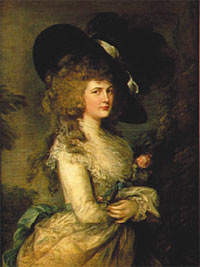
The Devonshire Mineral Collection which includes an impressive variety of classic 18th and 19th century specimens was initiated around 200 years ago by the Duchess of Devonshire, Lady Georgiana Spencer, wife of the 5th Duke of Devonshire, William Cavendish, when she was living in exile in Europe, banished from her husband's house, due to the heavy gambling debts accumulated by her, as a result of her addiction to gambling, a costly pastime of the high society life style she led, as a socialite, having gathered around her a large circle of literary and political friends. Another more serious reason for her banishment from her family was the discovery of her affair with the politician Charles Grey, by whom she became pregnant, and subsequently gave birth to Grey's daughter, in Montpelier.
As a result of the mental agony caused by her separation from her family and children she decided to study natural science with particular reference to mineralogy, a subject that had fascinated her for sometime, as an escape from her mental worries, and to keep herself occupied during this long period of isolation. What lady Georgiana Spencer achieved during this period of forced isolation from family and friends, is a great testimony to what the human spirit can achieve given the interest and determination to keep oneself going, overcoming all barriers on the way. She took her first lessons in natural history and mineralogy while at Nice, from one Dr. Dreux, and later when she reached Lausanne in May 1792, she and her sister Harriet, took private lessons in chemistry and mineralogy, with Henri Struve, a professor of chemistry. During this period she made new acquaintances mostly intellectuals and scientists such as Edward Gibbon, the historian, Henry Pelham, Lord and Lady Palmerston, and scientist Sir Charles Blagden, all of whom encouraged Georgiana in the pursuance of her studies. With Charles Bladgen she developed a lifelong friendship, and Bladgen was responsible to a great extent in maintaining her interests in chemistry and mineralogy. Simultaneous to the theoretical lessons she was having in mineralogy, she began putting together her own collection of minerals by undertaking field trips, and assisted by her colleagues. Within a short period she was able to send to England, two cases full of mineral specimens catalogued by a professor of mineralogy, in Lausanne, to her banker Thomas Coutts, for safe keeping.
From Lausanne she reached Rome and Naples, where she continued with her studies in mineralogy and her quest for mineral specimens. With her knowledge of mineralogy and geology expanding, she received recognition from the company of intellectuals she was moving with, and was invited for the meeting of scientists held to study the Vesuvius, that included Sir Charles Blagden, Sir Joseph Banks, Sir William Hamilton, a renowned vulcanologist and ambassador to Naples, and other scientists. She then had the opportunity of climbing the Vesuvius to watch the vapors rising from the crater, and possibly to collect some mineral specimens. Georgiana returned to England with her collection of mineral specimens in August 1793, a completely reformed woman with a humble personality, characteristics acquired by her education and contacts with the intellectuals of Society. She was devoted to her children and reconciled somewhat to the Duke, but spent long hours in a backroom of Devonshire House, studying chemistry and mineralogy. Sir Charles Blagden was a frequent visitor to the house, and she attended Dr.Bryan Higgins lectures at his school of Chemistry. The chemist and physician Thomas Beddoes and the chemist and physicist Henry Cavendish (a second cousin of the duke), were impressed by her knowledge in chemistry and mineralogy. In 1796, she fell seriously sick, but recovered after surgery, loosing an eye and disfigured, but her resolve and fortitude increased. Her passion for mineralogy continued, and she employed White Watson in 1799, to catalogue her substantial mineral collection at Chiswick and later in 1804, the mineral collection at Chatsworth.
Georgiana died in 1806, at the age of 49, leaving behind her legacy, a comprehensive and systematic mineral collection, representative of all classes of minerals, unlike other collections noted for their rarity and exceptional aesthetic qualities. The 5th Duke of Devonshire died five years later in 1811 and was succeeded by his only legitimate son the 6th Duke of Devonshire, William George Spencer Cavendish, at the age of 21.
The 6th Duke of Devonshire's contribution to the collection
The 6th duke of Devonshire inherited a vast fortune from his father at a very young age, but in spite of this he acted responsibly, in order to save the good name of the family. One of the first things he did was to pay off his stepmother, the 5th Duke's mistress, whom his father married after Georgiana Spencer's death, in order to remove her from the household. However he arranged for the payment of an annuity to his stepmother and her children and continued to support them as long as it was necessary. The Duke also arranged for the settlement of his mother's remaining gambling debts, a major portion of which was already settled by his father. The Duke made his first speech in the House of Lords in January 1812.
He then embarked on a project to refurbish some of the stately homes which he inherited. This included Chatsworth and Lismore. Like his father and mother, both of whom were readers and great lovers of books, the 6th Duke also developed a love for books, and made big purchases at some of the greatest book sales of the 19th century. He made so many purchases that soon the existing library built by the first Duke of Devonshire, was hardly enough to contain all of them, and needed modification and further expansion. The Chatsworth Library today contains over 50,000 volumes. Later with the help of the architect Jeffrey Wyatt he planned and carried out a major extension to Chatsworth House, in order to accommodate his collections, and to create sufficient room for grand entertainments.
In 1817, the Duke traveled to St. Petersburg, Russia, on the invitation of Grand Duke Nicholas of Russia, with whom he built up a close relationship during his stay in London in 1816. The Duke was also expected to attend the wedding of Grand Duke Nicholas. While in Russia, the Duke dined with Emperor Alexander I, and was also feted by the Russian nobility. After his successful trip to Russia, the Duke developed an interest for more foreign travel, and traveled to Italy in search of Italian artworks, especially marble sculpture, and he spent a fortune acquiring these creations, which eventually adorned his newly set-up sculpture gallery. Francis Chantrey a renowned sculptor became a friend and frequent visitor to Chatsworth. Chantrey besides being a sculptor, was also an enthusiastic collector of minerals, and owned one of the finest collection of minerals. It is believed that it was Chantrey who fired the Duke's enthusiasm for minerals, something which his mothers friend White Watson was not able to achieve by giving him lessons on minerals in his youth. In 1826, when Grand Duke Nicholas, ascended the Russian throne as Czar Nichoas I, the Duke of Devonshire, was appointed as Britain's Ambassador Extraordinary to Russia, a move that was expected to bring benefits to both countries.
The 6th Duke like his mother also acquired quite a lot of mineral specimens, but unlike his mother's collection there is no proper catalogue of this collection in Chatsworth House. However a few short lists of items acquired between 1817 to 1827 are available. Most of the mineral specimens believed to have been acquired by the Duke, were exceptional specimens of superior quality, because the Duke unlike his mother had unlimited funds at his disposal to make purchases of expensive specimens. Records in the Chatsworth archives show that purchases were made by the Duke from the following persons :- Henry Heuland, a leading mineral dealer of the day, in 1820, 1833, and again in 1834; Sir Alexander Crichton, a physician, surgeon, psychiatrist and geologist, who was the personal physician to Emperor Alexander of Russia from 1803 -1814, in whose memory the rare mineral crichtonite has been named. The Crichton Mineral Collection was said to be one of the finest collections in Russia. It appears that the Duke had exchanged some of Derbyshire and Cornish minerals for mineral specimens from Crichton. Dr Crichton had also helped the Duke in purchasing some mineral specimens when the two of them met in St. Petersburg. After Dr, Crichton retired from his post in Russia in 1819 and returned to London, his collection of minerals numbering up to 4,000 specimens were put up for auction in London, over a period of 16 days from April 20, 1827. Several famous collectors, organizations and societies, attended the sale. The Duke of Devonshire also attended the sale on the 4th and 7th of May, choosing the lots himself. Though the Duke was inclined towards purchasing specimens of Russian origin, not all the specimens purchased were Russian.
The 6th Duke of Devonshire died in his sleep in 1858, but as early as 1844, the Duke had made some comments in his handbook about the state of the Devonshire Mineral Collection. "All these minerals are in a disgraceful state of neglect and want of classification. Those collected by my mother ought to be replaced in their former order, as they were in the days of White Watson of Bakewell, who in vain endeavored to hammer mineralogy into our youthful heads."
Restoration of the Devonshire Mineral Collection to its former glory by members of the Russell Society
Unfortunately the state of neglect referred to by the 6th Duke continued for several generations of Dukes of Devonshire spanning 148 years, until in the year 1992 when the Russell Society, the premier Mineralogical Society of Britain, who were celebrating their 20th anniversary, decided to visit the mineral collection of the Duke of Devonshire, at Chatsworth House, with the permission of the Duke and Duchess of Devonshire, as none of the members of the society has ever had the opportunity of examining this extensive and historic collection. An advanced team of the Society's members who visited the Chataworth House were shocked to see so many rare and valuable mineral specimens, such as Russian aquamarine crystals both elongated and prismatic forms, old Cornish specimens, a suite of superb Derbyshire galenas, and so many other local and foreign specimens, still stored in piles of cardboard boxes in a basement cupboard, and another jumbled collection of specimens stored in two glass-fronted cupboards in the floor above, and lots of other specimens stored in a row of wall cases along the length of a nearby corridor. The specimens were in a poor state of preservation, covered with dust and dirt, the labels from most of the specimens having dropped off, and the boxes that contained them in a state of decay. Members of the advanced team picked out a fairly representative collection of specimens for display to the membership, and after cleaning laid them on a large table in a basement library. Some expensive specimens such as the "Duke of Devonshire Emerald," a rough emerald crystal from Brazil, and two silver specimens in small glass cases, were brought out from the strong room for the occasion. The 20th AGM of the Russell Society and their visit to Chatsworth House turned out to be a great success, and a lifetime experience for most its members. The glittering specimens laid out on the table were left for the inspection of the Duke and Duchess of Devonshire, as none of the dukes since the mid-19th century had ever seen the specimens cleaned and exhibited like this.
Everyone who attended the exhibition of the representative collection of mineral specimens at the Chatsworth House, including the Duke and Duchess of Devonshire, were agreed that immediate intervention was needed to save the valuable and historic collection. A plan of action was drawn up, to inventory, classify and restore the collection to its former glory, in accordance with the dream of the 6th Duke, and received the approval of the Duke and Duchess. Members of the Russell Society, started working on the collection and after a long period of over ten years have finally restored the collection to its original glory. The unduly long period taken for the restoration reflects the large numbers of specimens involved, the difficulties involved in identifying, classifying, labeling and cataloguing the collection, which was time consuming. Special drawers acquired from the Hunterian Museum in Glasgow were provided to house the re-organized collection. As far as possible the original cataloguing done by White Watson for Georgiana Spencer's collection was followed. The 6th duke's collection which were not previously catalogued, had to be identified, classified, labeled and catalogued according to a suitable system. The catalogues were divided into sub-catalogues that were labeled from A to Z.
Display of the Devonshire Emerald at the Great Exhibition of 1851
Prof. James Tennant, the lecturer, mineral dealer and collector, was a frequent visitor to Chatsworth House who spent long hours with the 6th Duke of Devonshire, and possibly did some work on the collection. The Professor earned the respect and confidence of the Duke, and when the Great Exhibition was held in the Crystal Palace in 1851, the Duke readily agreed to loan out the "Duke of Devonshire Emerald" and other specimens which included the Simplon Tunnel Quartz Crystals, to be exhibited in the Professor's stall at the Exhibition. The exhibits had a pride of place in one of the main avenues of the exhibition.
Display of the Devonshire Emerald at the mineral gallery of the British Museum of Natural History.
In the year 1911, the curator of the British Museum of Natural History G. F. Herbert Smith borrowed the Devonshire Emerald from Chatsworth House for display at the Coronation Exhibition organized at the Museum, in connection with the Coronation of King George V, on June 22, 1911. However, the museum decided to retain the emerald for a longer period after the exhibition, and finally returned it only with reluctance and regret in 1915. In a letter to J. P. Maine, the Librarian at Chatsworth, dated 25th March 1915, G. F. H. Smith stated, "Its interest is mainly mineralogical and it would be far more accessible to those who can appreciate such a specimen, in this museum than in a private collection." However, such remonstrations went unheeded until in July 1936 the emerald was again loaned for exhibition in the mineral gallery of the British Museum of Natural History, for an extended period, lasting until January 1950, except during the period of World War II. The renowned emerald was also exhibited in the Gemological Association's exhibition, held in London in 1949, and again in the City of Birmingham Museum in 1955. After that the stone was again returned to the safe vault of Chatsworth House.
Display of the Devonshire Emerald in the Vault the new permanent gallery at the Natural History Museum, London
The new permanent gallery known as the Vault, at the London's Natural History Museum, replaces the meteorite gallery that used to be at the far end of the systematic mineral gallery. The Vault that opened on November 28, 2007, had been specially designed to ensure maximum security for the invaluable gemstones and minerals that were to be exhibited there, some permanently, while others that were on loan on a temporary basis. The need for such a mineral gallery that would ensure the security of the exhibits, was greatly felt, about two years ago, in the year 2005, when an exhibition of famous diamonds held in the museum was closed abruptly on November 22, 2005, when the police flying squad detectives warned that a violent raid was about to take place.
To coincide with the opening of the vault, the authorities of the Natural History Museum had organized a display of some of the world's most expensive gems and jewels. Some of the famous gemstones and minerals that went on display at this event were as follows :-
1) The historic Devonshire emerald, one of the world's largest and best known uncut emeralds.
2) The "Star of South Africa" or the "Dudley Diamond" a pear-shaped, 3-sided stellar brilliant that once was the property of the Earl of Dudley, and whose discovery in 1869 in the region around the Orange and Vaal Rivers prompted a diamond rush to the region by prospectors.
3) The Aurora Collection, the most comprehensive collection of naturally colored diamonds in the world, consisting of 296 diamonds, weighing a total of 267.45 carats, put together by New York diamond collectors, Alan Bronstein and Harry Rodman.
4) Heron Allen's Cursed Amethyst, commonly known as the purple sapphire was brought to England, by an officer of the Bengal Cavalry, who looted it during the Indian mutiny of 1855. The notorious gemstone had an infamous history, bringing misfortune, to whoever who handled it.
5) The La trobe nugget of crystallized gold.
6) The Nakhla Rock, a meteorite from Mars that fell in Egypt in 1911, killing a dog, the only known fatality caused by an object from another planet.
7) The Siderite Box Epimorph, a perfect hollow cube with white quartz crystals growing inside, a mineral of British origin, discovered in the Virtuous Lady Mine, in Devon.
8) A South African Sperrylite Crystal
9) Hope's nose Devon gold, another mineral of British origin.
10) Rhodocrosites from Bryan Lees mineral collection.
11) A pinkish-orange Padparadscha Sapphire from Sri Lanka.
12) A pink Morganite Beryl from Madagascar.
Each of the exhibits were accompanied by a short description on its nature, origin, history and other relevant facts, that provided useful and interesting information for the visito.
You are welcome to discuss this post/related topics with Dr Shihaan and other experts from around the world in our FORUMS (forums.internetstones.com)
References
1.Top security protects vault of priceless gems - website of the Guardian Newspaper.
2.Natural History Museum Opens Gem Encrusted Gallery - Website of 24hours museum.
3.Devonshire Mineral Collection of Chatsworth House - An 18th Century Survivor and its restoration - The Mineralogical Record, May/June 2005, by Michael P. Cooper.
4.Dukes of Devonshire - Wikipedia, the free encyclopedia.
5.William Cavendish, 6th Duke of Devonshire - Wikipedia, the free encyclopedia.
 Home
Security & Guarantee
How it Works
Technology Partners
Updated Tables
Famous Diamonds
More Famous Diamonds
Famous Pearls
Famous Gemstones
Contact Dr Shihaan Larif
Contact Senior Editor
Famous Jewelry
Reference Database
Forums
Learning Center
Gemstone Gallery
e-mail Notifications
Advertise
Press Release
About Us
Privacy Policy
Contact Us
FAQ'S
Site Map
Staff Mail Login
Staff Documents
Birthstones
History
Minerals
Shows
Live Metal Prices
Jewellery Gallery
News
Marketplace
Marketplace Support
Open Store
Online Auctions
Join Us & Contribute
Directory
Classifieds
List your products
Wholesale Trading
Post Buy Request
Go Green Policy
Site Updates
Upcoming-ToDo List
Latest News
Latest Articles
Latest Blog Updates
Chat Rooms
Job Board
User Gallery
Videos
New Newsletter Archive
Old Newsletter Archive
Jewelry & Mineral Blog
User Blogs & Social Network
Search
Answers (Q & A)
Valuation
Help me find a diamond/jewelry
pin.internetstones.com- Social Pinboard- Sart yours & connect with millions
Invite Friends From Yahoo, Gmail etc-One Click
Home
Security & Guarantee
How it Works
Technology Partners
Updated Tables
Famous Diamonds
More Famous Diamonds
Famous Pearls
Famous Gemstones
Contact Dr Shihaan Larif
Contact Senior Editor
Famous Jewelry
Reference Database
Forums
Learning Center
Gemstone Gallery
e-mail Notifications
Advertise
Press Release
About Us
Privacy Policy
Contact Us
FAQ'S
Site Map
Staff Mail Login
Staff Documents
Birthstones
History
Minerals
Shows
Live Metal Prices
Jewellery Gallery
News
Marketplace
Marketplace Support
Open Store
Online Auctions
Join Us & Contribute
Directory
Classifieds
List your products
Wholesale Trading
Post Buy Request
Go Green Policy
Site Updates
Upcoming-ToDo List
Latest News
Latest Articles
Latest Blog Updates
Chat Rooms
Job Board
User Gallery
Videos
New Newsletter Archive
Old Newsletter Archive
Jewelry & Mineral Blog
User Blogs & Social Network
Search
Answers (Q & A)
Valuation
Help me find a diamond/jewelry
pin.internetstones.com- Social Pinboard- Sart yours & connect with millions
Invite Friends From Yahoo, Gmail etc-One Click




Our Global Jewelry Industry Job Network


Buy & Sell in our Marketplace

Subscribe to our Newsletter

List in our Classifieds

List in our Directory

User Uploaded Gallery

Powered by Ultra Secure
Amazon (USA) Cloud Network

Founder Internet Stones.COM
Register in our Forums

| Featured In
|
|
|
|
|
|
|
|







Blog & Education Feed
Articles Feed
 |
 |
 |

Copyright © .Internet Stones.COM. All rights reserved.