Emperor Aurangzeb's Collection of Pearls, which Tavernier had the Privilege of Examining on his Sixth and Final Voyage
Open FREE Unlimited Store Join Our Newsletter
Origin of Name :-
Jean-Baptiste Tavernier, the renowned French traveler and jeweler of the 17th-century, began traveling at the age of 15 years in 1620, and completed his travels in December 1668 after his sixth and final voyage to India. He was 63 years old when he completed all his travels, and began writing his travelogues after settling in Aubonne, Geneva. Thus he had traveled for 48 years, with periods of short breaks in-between voyages, during which period he disposed of the diamonds and other precious stones he purchased from the east, particularly India, and purchased gemstones and jewelry found in the west, for which there was a great demand in the east. However, even during these periods between voyages, he had hardly any time to rest, as he was constantly on the move in Europe, looking for prospective royal customers who would purchase his diamonds. Thus, it would not be incorrect to say that Tavernier was on the move for almost 48 years fro 1620 to 1668, when he finally decided to settle down in Geneva. Tavernier was indeed an indefatigable traveler, whose movements could not be halted until he was quite old and could not continue any further.

The success of his travels was mainly due to two reasons. One, was the combination of his business interests with his travels, that generated sufficient funds to sustain his travels. The second was the god-given natural immunity against diseases that he inherited, which enabled him to move from country to country, even through regions where there were disease outbreaks, without being seriously affected. While there were several instances when people who accompanied him from France, succumbed to infectious diseases, and died, and were buried in different countries, Tavernier continued regardless and was never affected or incapacitated by any serious illness. Some of the scourges that could have caused certain death at that time, were small pox, plague, cholera, typhoid and malaria, that were prevalent in the countries he visited. But, fortunately Tavernier was never affected by any one of these serious sicknesses, during his 48-year period of travel, and thus he lived long to relate his first hand experiences.
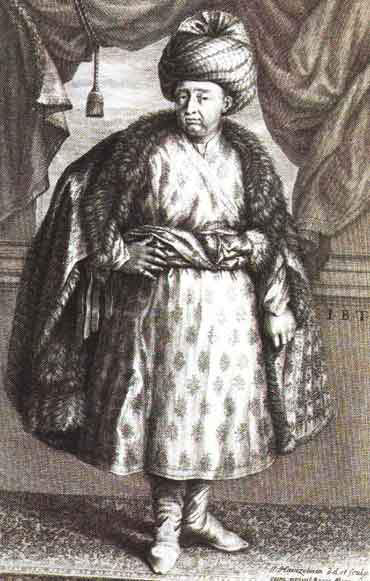
Tavernier, a traveller wearing a Moghul dress.The Six Voyages of Jean-Baptiste Tavernier, published in 1679.
During his sixth and final voyage to Persia and India, from 1663 to 1668, Tavernier had the rare privilege of not only being given a special audience by the mighty Mughal emperor, Aurangzeb, at the latter's own request, in order inspect whatever precious stones and other valuables, he had on offer for sale, with a view of purchasing them, but also the opportunity and honor to inspect the Emperor's own jewels, after the annual celebrations held to fete the Emperor on his birthday. The Emperor's valuable collection consisted of diamonds, including the "Great Moghul Diamond," emeralds, rubies and pearls, both unmounted as well as set in jewelry. Tavernier, gave a faithful account of the jewels he had inspected at the Mughal court, in his book Le Six Voyages de J. B. Tavernier- The Six Voyages of J. B. Tavernier, published in 1676, and translated into English by Dr. C. V. Ball in 1889. This webpage is especially dedicated to the pearls which Tavernier had the privilege of examining at Aurangzeb's court on November 10, 1665.
Tavernier's Sixth and Last Voyage to India
The first leg of his journey by ship from Marseilles to Izmir in Turkey, and then overland to Bandar Abbas via Yerevan, Tabriz, and Isfahan, and by ship again from Bandar Abbas to Surat in western India
Tavernier set out from Paris on his sixth voyage, on November 27, 1663, and unlike his previous voyages, was accompanied by a larger team of assistants, that included besides his young nephew, the son of Maurice Tavernier and a helper, three other specialists, a surgeon, a goldsmith and a horologist. On this last voyage, he carried precious stones and jewelry worth 400,000 livres. The route which he took for his onward journey to Surat in India, was the same as the fifth voyage. He embarked on a ship at Marseilles on January 10, 1664, and sailing through the Mediterranean reached the Anatolian port city of Izmir (Smyrna), on April 25, 1664. After resting for about two weeks in Smyrna, the team set off on June 9, 1664, with a caravan to Tabriz in northwest Persia, through Yerevan in Armenia. After the long overland journey, that lasted three months, they reached Yerevan on September 14, 1664, and then Tabriz on November 9, 1664. At Tabriz, the team suffered a set back, as two of their members, the goldsmith and the horologist, died probably due to sickness caused by fatigue. After, leaving his young nephew under the care of the Superior of the Capuchin Convent at Tabriz, Tavernier continued with his journey on November 22, 1664, with the remaining two members of his team, until they reached Isfahan, the capital of Persia, on December 14, 1664. Shah Abbas II, on hearing of his arrival in Isfahan, invited Tavernier to his court, as on his previous journey in 1657. The Shah who had previously purchased jewels from Tavernier, was interested in finding out what he had to offer this time. Shah Abbas finally purchased several pieces of jewelry and precious stones, valued at 3,900 tomans, equivalent to 13,455 British pounds. The transactions were carried out to the fullest satisfaction of the Shah, who awarded him with a robe of honor and a turban, and granted him special favors, such as exemption from duty for the sales conducted in Persia, special treatment for all Frenchmen arriving in Persia, and his nephew left behind in Tabriz to be brought under the Shah's mantle of protection. Tavernier, then left Isfahan for Bandar Abbas on February 24, 1665, reaching the port city in the first week of April, from where he boarded a Dutch ship bound for Surat in western India, which he reached on May 5, 1665.
Tavernier is invited to Emperor Aurangzeb's court at Jahanabad as soon as he lands in Surat, and proceeds immediately to keep his appointment with the emperor
Soon after Tavernier arrived in Surat, he was summoned to the office of the Mughal Governor to be given a special message from the mighty Mughal Emperor Aurangzeb, who had invited him to his court in Jahanabad with his jewels, so that he would be the first to inspect them, and make any purchases if he so desired. But, Tavernier had promised Shaista Khan, the Governor of Bengal, and the uncle of Emperor Aurangzeb, that he would bring the jewels first to him, before any others had a chance of seeing them. However, since this request had come directly from the mighty Emperor himself, Tavernier was left with little choice, but to comply with the request. Thus, he left immediately to Jahanabad via Agra, reaching his destination on September 12, 1665. He then visited the Emperor's court carrying with him presents for the Emperor and his nobles. Emperor Aurangzeb who was impressed by some of the jewels brought by Tavernier, purchased them at prices favorable to the latter. He was also able to sell some of the jewels to Ja'far Khan, the uncle of the Emperor. However, he declined to sell one large pearl in which Ja'far Khan was interested, as his offer was Rupees 10,000 less than what Tavernier had wanted.
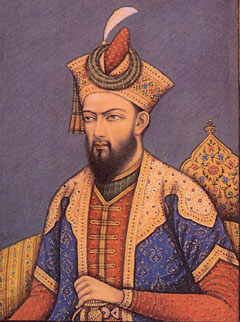
Aurangzeb, Last of the Great Mogul Emperors
Emperor Aurangzeb requests Tavernier to postpone his departure from Jahanabad until the end of his annual birthday celebrations, and promises to order his treasury officials to show him his valuable jewels after the event
Having remained in Jahanabad enjoying the hospitality of Emperor Aurangzeb, Tavernier again appeared in court on November 1, 1665, in order to take leave of the Emperor before departing from Jahanabad. Around this time intense preparations were taking place to celebrate the birthday of the Emperor, traditionally held every year. The five-day event was to be held from November 4th to 9th, 1665. The Emperor requested Tavernier to stay on for a few more days, so that he could witness this grand annual event. He further said that if Tavernier would postpone his departure, immediately after the festival, he would order his treasury officials to show him all his valuable jewels. Tavernier accepted the Emperor's suggestion without any hesitation, as he considered it a special honor conferred upon him, and also gave him a once-in-a-lifetime opportunity to inspect the royal jewels of the Mughal emperors.
The Emperor's birthday celebrations an important occasion in the annual calendar of events
The celebration of the Emperor's birthday is an important event traditionally held every year. On this day according to age-old traditions, the Emperor is weighed, in front of his nobles and other invited guests; and if the weight registered exceeds that of the previous year, the rejoicing by his subjects will be much greater, than if his weight remains stable or is less than the previous year. After the Emperor has been weighed he is conducted to the Peacock Throne, believed to be the most extravagant throne created in the history of mankind, where he seats himself, prior to receiving the greetings and salutations of his nobility, the governors, ladies of the court and other distinguished citizens. They also lavish expensive gifts on the Emperor, that include diamonds, rubies, emeralds, pearls, gold and silver, and other items such as rich carpets, brocades of gold and silver, and important animals used by the royalty, such as elephants, camels and horses. Tavernier, estimates the value of the presents received by the Emperor on this occasion to be more than 30,000,000 livres.
Preparations for the birthday celebrations commence at least two months before the event
Covering of the two large open courts of the palace with tents
The actual preparation for the annual event commenced about two months earlier, on September 7, 1665. The first step in the preparation was the covering of the two large open courts of the palace with tents, the awnings covering the great space being made of red velvet embroidered with gold, which was so heavy that the poles erected to support them were of the size of a ship's mast. Some of these poles were about 35 to 40 feet in height, and there were 38 such poles, supporting the canopy of the first court. The poles closer to the hall were covered with plates of gold with the thickness of a ducat (an old European gold coin). The other poles were covered with silver plates of the same thickness.
The seven gem-studded thrones in the palace of which the principal throne is the renowned Peacock throne
The principal throne known as the Peacock Throne with dimensions of 6 feet by 4 feet and a canopy, was placed in the hall of the first court, and the value of all the diamonds, rubies, emeralds, pearls, gold and silver incorporated on this throne, was estimated to be around 1070 lakhs of rupees (107,000,000 - 107 million rupees or 107 corores of rupees), equivalent to 160,500,000 livres at the rate of 2/3 of a rupee to the livre. Apart from the principal throne there are six other magnificent thrones in the emperor's court. Each of these thrones were wholly covered with a single type of precious stones; one with diamonds only, others with any one of the following precious stones, like emeralds, rubies, pearls etc. A smaller throne without a canopy, oval in shape and covered with diamonds and pearls, was placed behind the Peacock throne. The other five thrones were arranged in a superb hall in another court, four of them occupying the corners of a square and the fifth placed in the middle.
Special enclosures reserved for the commanders of the army, and principal officers of the emperor's body guard, and for singers and dances performing at the festival
A special tent on the right hand of the first court was to be used for the accommodation of the singers and dancers who would perform at the festival while the Emperor was seated on the throne. Another tent on the left hand of the court, was for the accommodation of the commanders of the army, and the principal officers of the Emperor's bodyguard and the Emperor's household. While the Emperor remains seated on his throne, 30 horses were to be kept bridled, fifteen on one side and fifteen on the other each held by two men. The narrow bridles were encrusted with diamonds, rubies, emeralds, pearls or gold coins. A bunch of beautiful feathers was placed on the head of each horse between the ears, and a small cushion on the back, embroidered with gold. A fine jewel such as a diamond, ruby, or emerald was suspended from the neck of every horse.
Inspection of elephants by the Emperor
Halfway through the program seven of the Emperor's best elephants, trained for war, were to be brought for his inspection, and one of these elephants was to have its howdah ready on its back, in case the emperor expressed a desire to mount one of them. The elephants were dressed with housings of brocade, with chains of gold and silver about their necks. Four of the elephants carried the royal standard upon their backs, carried by men mounted on them. The elephants were brought one after the other, to a distance of 40 to 50 paces in front of the Emperor, and when the elephant was directly opposite the throne, it saluted His Majesty, by touching the ground with its trunk, and then lifting it above its head three times, trumpeting aloud on each occasion. The leader of these elephants, a favorite of the Emperor, was a large and well-fed animal, that has been allocated a sum of rupees 500 per month for its expenses. The animal was fed with the best of foods, sugar and also spirits.
Greeting of the emperor, by his nobles and governors and the presentation of valuable gifts
After the inspection of the elephants, the Emperor rose from his throne and accompanied by three or four of his eunuchs, entered his harem by a small door, behind the oval-shaped throne. After spending about half-an-hour in his harem, the Emperor came out accompanied by the eunuchs, and proceeding towards the five smaller thrones described earlier, occupied the middle throne. While he is seated on this throne, the nobles, the governors, and other distinguished personalities, came to pay their respects, and gave their valuable gifts to the emperor.
Emperor Aurangzeb keeps his promise and orders all his valuable jewels to be shown to Tavernier
The Emperor invites Tavernier to his court on November 10, 1665 in order to show him his valuable jewels as promised earlier
The Emperor's birthday celebrations were completed on November 9, 1665, and as promised, the very next day in the morning, the Emperor sent some of his officials to bring Tavernier to his court. After Tavernier arrived at the court, the two custodians of the royal jewels accompanied him to see His Majesty the Emperor, who ordered the custodians to show the royal jewels to Tavernier. The two custodians conducted Tavernier to a small enclosure at one end of the hall, where the Emperor was seated on his throne, and from where he could see what went on at the other end. Ākil Khān, Chief of the jewel treasury, had been instructed by the Emperor to oversee this special exposition, and was seated inside the enclosure. He ordered four of the eunuchs to bring the jewels, which were brought in, placed inside two large wooden trays lacquered with gold leaf and covered with cloth, one made of red and other green brocaded velvet.
The first jewels to be shown to Tavernier was his collection of diamonds and diamond jewelry
After the trays were brought in and placed on the table in front of them, Ākil Khān took the pieces wrapped in cloth one by one, and after unveiling them placed it on the hands of Tavernier. When Tavernier had inspected the piece and made relevant records pertaining to it, he returned it to Ākil Khān, who again securely wrapped it back in the same cloth and placed it aside. He then unwrapped another piece and placed it on the hands of Tavernier. This was repeated until Tavernier had inspected all the pieces and made records of information on each piece. The first piece that Tavernier had the privilege of inspecting was the famous great Moghul diamond, a round rose-cut diamond with a steep pavilion, a common diamond cut of the 16th and 17th centuries. The diamond had a small notch at its basal margin and a minor flaw inside. Otherwise its water was beautiful and the diamond weighed 319½ ratis, which was equivalent to 280 carats. One rati = 7/8 carat = 0.875 carat. Thus 319.5 ratis = 319.5 x 0.875 = 279.56 = 280 carats (approx.). This stone was actually presented in its rough form by Mir Jumla, to Emperor Shah Jahan. The rough diamond was then the largest rough diamond ever discovered in the Golconda mines, and weighed 900 ratis equivalent to 787.5 carats (900 x 0.875 = 787.5). Emperor Aurangzeb entrusted the Venetian diamond cutter Hortensio Borgio, with the cutting of the rough diamond, and eventually when the task was completed the rough stone had been reduced to a rose-cut diamond weighing only 280 carats, with a loss of over 500 carats. The Emperor who saw the finished product was highly disappointed and reproached Hortensio Borgio for spoiling the stone, with a great loss of weight. The Emperor instead of paying Borgio for his work, fined him rupees ten thousand for his carelessness. Tavernier himself criticized Hortensio Borgio for his work, accusing him of not being an accomplished diamond cutter, wasting a lot of time and energy in grinding the stone, and eventually turning out a sub-standard product.
After Tavernier had examined the Great Moghul diamond and returned it to Ākil Khān, he brought out another diamond much smaller than the first, weighing only 62.5 ratis, equivalent to 55 carats. This stone had perfect pear-shape, and was of fine water, another way of expressing its ideal color and clarity. He then showed three table-cut diamonds, two of them very clear and of fine water, and the third with some little black spots, and weighing between 55 to 60 ratis (48 to 52 carats). The next piece brought out by Ākil Khān was a piece of jewelry set with 12 rose-cut diamonds, each stone weighing between 15 to 16 ratis (13 to 14 carats). The centerpiece of this jewel was a heart-shaped rose-cut diamond of good water, with three small flaws, and weighing about 35 to 40 ratis (31 to 35 carats). Following this was another piece of diamond jewelry set with 17 diamonds, almost half of them table-cut and the other half rose-cut diamonds, two of the common cuts of the 17th-century, weighing between 7 to 8 ratis (6 to 7 carats). The centerpiece of this piece of jewelry, was a larger diamond weighing 16 ratis (14 carats). Tavernier describes all these diamonds as having first-class water, clean and of good form, and the most beautiful ever found. This obviously refers to characteristics of diamonds origination from the several diamond mines in Golkonda, including the famous Kollur mines.
The collection of pearls shown to Tavernier
The collection of pearls that Ākil Khān, the Chief of the Mughal Jewel Treasury showed Tavernier, is the subject of this webpage, and can be listed as follows :-
1) Two grand pear-shaped pearls, each weighing about 70 ratis, equivalent to 61 carats or 244 grains, a little flattened on both sides, and of beautiful water and good form. The description beautiful water obviously refers to the excellent white color, luster and orient of the pearl, and also its blemish-free surface-quality.
2) A button-shaped pearl, with a weight of approximately 55 to 60 ratis, equivalent to 48 to 53 carats or 192 to 212 grains, of gold form and good water. The color of this pearl is a golden-yellow color, a rare color found in pearls originating from the Persian Gulf and the Gulf of Mannar, and the good water refers to the blemish-free surface quality, as well its luster and orient, that depend on reflection and refraction of light respectively.
3) A round pearl of great perfection, but a little flat on one side, weighing exactly 56 ratis, equivalent to 49 carats or 196 grains. This pearl was sent as a gift by Shah Abbas II, the King of Persia, to the great Mughal Emperor Aurangzeb. The qualification, little flat on one side, for the round pearl of great perfection, obviously means that the pearl was a near-spherical pearl
4) Three round pearls, each of 25 to 28 ratis (22 to 25 carats or 88 to 100 grains), their water tending towards yellow. This means the color of the pearl is most probably yellowish-white, where the main body color of the pearl is white and yellow is the overtone color.
5) A perfectly round pearl of 36.5 ratis (32 carats or 128 grains), with a lovely white color, and perfect in every respect. This pearl is without doubt a perfectly spherical pearl, going by Tavernier's description that it is a perfectly round pearl, and also perfect in every respect. The white color is the most sought after color in pearls. The luster, orient. surface quality and overtone if any of the pearls must also be excellent going by the description of the pearl. According to Tavernier, this pearl was the only jewel that Aurangzeb, the religious zealot, with no high regard for jewels, had purchased, which obviously means that the beauty of this pearl, was even able to capture the imagination of such a hard-hearted Emperor, who did not normally have an aesthetic sense to appreciate the beauty of jewels. Most of the jewels Aurangzeb owned was either appropriated from his elder brother Dārā Shikoh after he was killed, or were presents which he received from monarchs of neighboring nations, after he ascended the throne.
6) Two pearls, perfectly round and equal, each weighing 25.25 ratis (22 carats of 88 grains). One pearl had a very lively water and was among the most beautiful pearls that can be seen, but the other pearl had a slightly yellowish tinge. The description obvious refers to a matching pair of pearls, perfectly matched for shape and weight, both being perfectly spherical, and having exactly the same weight, 88 grains. The only difference was in the color of the pearls, one having the most desired white color, associated with excellent luster, orient and surface qualities, but the other with a slightly yellowish overtone.
7) A piece of jewelry, a chain or necklace made of pearls and rubies. The pearls are round or spherical, and of diverse waters, meaning of different shades of color, and a range of weight of 10 to 12 ratis (9 to 11 carats or 36 to 44 grains). The rubies were of different shapes and pierced like pearls. The centerpiece of this chain is a rectangular-cut large emerald, with a brilliant green color, but having many flaws, a characteristic feature of most emeralds. The weight of this emerald was approximately 30 ratis (26 carats).
8) A piece of jewelry, a chain or necklace made of pearls and emeralds. The pearls were round and spherical, as in the previous chain, with varying waters or shades of color, and the same range of weight of 10 to 12 ratis (9 to 11 carats). The emeralds were also round in shape and bored like the pearls. The centerpiece of this chain is an oriental amethyst, a long table-cut gem weighing 40 ratis (35 carats), described by Tavernier as the perfection of beauty.
9) A large olive-shaped pearl perfect in form and luster. This was one of the five pearls of which he gave sketches in the first English edition of his travels, published in 1678. In the book this pearl was represented as Figure 4. The weight of the pearl was not given, but from the sketch, George Frederick Kunz, estimated its weight to be around 125 grains. This pearl formed the central ornament of a chain of emeralds and rubies, which Aurangzeb sometimes wore about his neck.
10) Tavernier also listed a round pearl of perfect form whose sketch was indicated as Figure 5 in the book. The weight of this pearl was also not given, but estimated from the sketch, by G. F. Kunz to be around 110 grains. According to Tavernier, this pearl was the largest perfectly spherical pearl he had ever seen. He further stated that a matching pearl for it was never found, and for that reason it was kept with the unmounted jewels.
The two large balas rubies (spinels) that Tavernier was shown apart from the diamonds and pearls
After the pearls in Aurangzeb's collection, Tavernier was also shown two balas rubies, that without any doubt originated from the balas ruby mines in, Badakhshan, Afghanistan.
The first balas ruby shown to him was cut en cabochon and was of fine color, free of inclusions, and pierced at the apex, possibly for suspension as a jewel, and with a weight of 17 melscals (mishkal). 1 melscal = 30 3/16 ratis or 26 5/12 carats. Thus 17 melscals = 17 x 26.42 carats = 449 carats. This balas ruby is therefore a large stone in comparison to the famous Timur ruby, another balas ruby in the private collection of Her Majesty Queen Elizabeth II, that weighs 352.50 carats; the Samarian Spinel, the world's largest spinel weighing 500 carats, which is part of the Iranian Crown Jewels, and displayed at the Museum of the Treasury of National Iranian Jewels, at the Central Bank of Iran, in Teheran; and the 398.72-carat Catherine the Great's ruby, another pear-shaped spinel mounted on top of the Great Imperial Crown of Russia. In fact Aurangzeb's balas ruby weighing 449 carats, becomes the second largest balas ruby ever recorded after the 500 carat Samarian Spinel.
The second balas ruby shown to Tavernier, was another cabochon-cut ruby of perfect color, but slightly flawed, and pierced at the apex like the first balas ruby. The weight of this balas ruby was 12 melscals, equivalent to 12 x 26.42 carats = 317 carats. Thus, this balas ruby becomes the 4th largest balas ruby in the world, after the 1st, 2nd and 3rd largest balas rubies, the Samarian Spinel, the Catherine the Great Ruby, and the Timur Ruby, weighing respectively 500 carats, 398.72 carats and 352.50 carats.
Tavernier's closing remarks in Chapter X of his book, Travels in India, translated by Dr. Valentine Ball
Tavernier winds up his account of Aurangzeb's jewels, shown to him by Ākil Khān, the Chief of the Mughal Jewel Treasury, on the orders of the Emperor himself, on November 10, 1665, with the following remark, that clearly demonstrates his truthfulness, and the absence of any intention on his part to give misleading information.
"These, then, are the jewels of the Great Mogul, which he ordered to be shown to me as a special favor which he had never manifested to any other Frank; and I have held them all in my hand, and examined them with sufficient attention and leisure to be enabled to assure the reader that the description which I have just given is very exact and faithful, as is that of the thrones, which I have also had sufficient time to contemplate thoroughly."
You are welcome to discuss this post/related topics with Dr Shihaan and other experts from around the world in our FORUMS (forums.internetstones.com)
Related :-
1) Sara/Tavernier/Shaista Khan Pearl
References :-
1) The Great Mughal orders all his jewels to be shown to the Author - Chapter X - Travels in India by Jean-Baptiste Tavernier - Translated by Dr. Valentine Ball.
2) Pearls Described by Tavernier - Famous Pearls and Collections - Chapter 16, The Book of the Pearl - George Frederick Kunz
 Home
Security & Guarantee
How it Works
Technology Partners
Updated Tables
Famous Diamonds
More Famous Diamonds
Famous Pearls
Famous Gemstones
Contact Dr Shihaan Larif
Contact Senior Editor
Famous Jewelry
Reference Database
Forums
Learning Center
Gemstone Gallery
e-mail Notifications
Advertise
Press Release
About Us
Privacy Policy
Contact Us
FAQ'S
Site Map
Staff Mail Login
Staff Documents
Birthstones
History
Minerals
Shows
Live Metal Prices
Jewellery Gallery
News
Marketplace
Marketplace Support
Open Store
Online Auctions
Join Us & Contribute
Directory
Classifieds
List your products
Wholesale Trading
Post Buy Request
Go Green Policy
Site Updates
Upcoming-ToDo List
Latest News
Latest Articles
Latest Blog Updates
Chat Rooms
Job Board
User Gallery
Videos
New Newsletter Archive
Old Newsletter Archive
Jewelry & Mineral Blog
User Blogs & Social Network
Search
Answers (Q & A)
Valuation
Help me find a diamond/jewelry
pin.internetstones.com- Social Pinboard- Sart yours & connect with millions
Invite Friends From Yahoo, Gmail etc-One Click
Home
Security & Guarantee
How it Works
Technology Partners
Updated Tables
Famous Diamonds
More Famous Diamonds
Famous Pearls
Famous Gemstones
Contact Dr Shihaan Larif
Contact Senior Editor
Famous Jewelry
Reference Database
Forums
Learning Center
Gemstone Gallery
e-mail Notifications
Advertise
Press Release
About Us
Privacy Policy
Contact Us
FAQ'S
Site Map
Staff Mail Login
Staff Documents
Birthstones
History
Minerals
Shows
Live Metal Prices
Jewellery Gallery
News
Marketplace
Marketplace Support
Open Store
Online Auctions
Join Us & Contribute
Directory
Classifieds
List your products
Wholesale Trading
Post Buy Request
Go Green Policy
Site Updates
Upcoming-ToDo List
Latest News
Latest Articles
Latest Blog Updates
Chat Rooms
Job Board
User Gallery
Videos
New Newsletter Archive
Old Newsletter Archive
Jewelry & Mineral Blog
User Blogs & Social Network
Search
Answers (Q & A)
Valuation
Help me find a diamond/jewelry
pin.internetstones.com- Social Pinboard- Sart yours & connect with millions
Invite Friends From Yahoo, Gmail etc-One Click




Our Global Jewelry Industry Job Network


Buy & Sell in our Marketplace

Subscribe to our Newsletter

List in our Classifieds

List in our Directory

User Uploaded Gallery

Powered by Ultra Secure
Amazon (USA) Cloud Network

Founder Internet Stones.COM
Register in our Forums

| Featured In
|
|
|
|
|
|
|
|







Blog & Education Feed
Articles Feed
 |
 |
 |

Copyright © .Internet Stones.COM. All rights reserved.