January Birthstone-Garnet
Open FREE Unlimited Store Join Our Newsletter
Garnet is the January Birthstone. The name garnet is derived from the Latin word "Granatum", meaning seed, as the traditional shape in which the stone is cut, resembles a pomegranate seed. Garnets have been used by Ancient Egyptians in their jewelry, and their are references to this gemstone as far back as 3rd Millennium BC. Garnets signify eternal friendship and trust. Depending on their chemical composition garnets can have a variety of colors such as red, brown, yellow, orange, white, green or black.

Types of Garnets
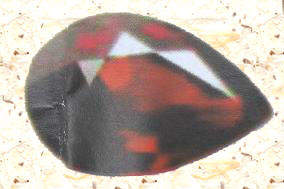
Pyrope: This is the commonest of all garnets, usually dark red to black in colour. Czechoslovakia was one of the main producers of this type of garnet. The smaller stones were drilled to produce beads.
Alamandite: These stones have a deep red to brownish red color. Some alamandites have a 4-rayed star produced by inclusions. Star garnets are found in India and the U.S. (Idaho).
Rhodolite: They have a rose red to purple color, and is a mixture of pyrope and alamandite in the ratio 2:1.Rhodolites may contain snowflake like inclusions.
Pyrope |
|
Spessartite: The name is derived from Spessart, a location in Germany where this type of garnet was first discovered. The color varies from brown to red and also orange
Hessonite: This is a grossular garnet with a color ranging from orange to yellow.
Tsavolite or Tsavorite: This is a grossular garnet having an emerald green color. This garnet was first found in Tanzania in 1970,at a site near to Tasvo National Park. The name is derived from the name of the Park.
Andradite: This garnet has colors such as yellow, green, black, and brown. Demantoid is a transparent andradite with a very high dispersion and may appear like diamonds.
Malaya or Malaia: These garnets have a light to dark pinkish orange, reddish orange or yellowish orange color, with a moderate hardness of 7.0 to 7.5 on the Mohr's scale. Malaya garnets are found in countries like Nigeria.
There are other garnets that may have slightly different shades than the ones classified above and are given different names such as Umba, Mint, Ant Hill, Maralambo, Imperial. These names may indicate the site where they were discovered, but they all fall into one of the above categories.
A new category of garnets called Color Change Garnets have been discovered recently from mines in Tanzania and Kenya. These garnets change color depending on the light source, eg from cherry red (incandescent lighting) to purple blue (daylight)
You are welcome to discuss this post/related topics with Dr Shihaan and other experts from around the world in our FORUMS (forums.internetstones.com)
 Home
Security & Guarantee
How it Works
Technology Partners
Updated Tables
Famous Diamonds
More Famous Diamonds
Famous Pearls
Famous Gemstones
Contact Dr Shihaan Larif
Contact Senior Editor
Famous Jewelry
Reference Database
Forums
Learning Center
Gemstone Gallery
e-mail Notifications
Advertise
Press Release
About Us
Privacy Policy
Contact Us
FAQ'S
Site Map
Staff Mail Login
Staff Documents
Birthstones
History
Minerals
Shows
Live Metal Prices
Jewellery Gallery
News
Marketplace
Marketplace Support
Open Store
Online Auctions
Join Us & Contribute
Directory
Classifieds
List your products
Wholesale Trading
Post Buy Request
Go Green Policy
Site Updates
Upcoming-ToDo List
Latest News
Latest Articles
Latest Blog Updates
Chat Rooms
Job Board
User Gallery
Videos
New Newsletter Archive
Old Newsletter Archive
Jewelry & Mineral Blog
User Blogs & Social Network
Search
Answers (Q & A)
Valuation
Help me find a diamond/jewelry
pin.internetstones.com- Social Pinboard- Sart yours & connect with millions
Invite Friends From Yahoo, Gmail etc-One Click
Home
Security & Guarantee
How it Works
Technology Partners
Updated Tables
Famous Diamonds
More Famous Diamonds
Famous Pearls
Famous Gemstones
Contact Dr Shihaan Larif
Contact Senior Editor
Famous Jewelry
Reference Database
Forums
Learning Center
Gemstone Gallery
e-mail Notifications
Advertise
Press Release
About Us
Privacy Policy
Contact Us
FAQ'S
Site Map
Staff Mail Login
Staff Documents
Birthstones
History
Minerals
Shows
Live Metal Prices
Jewellery Gallery
News
Marketplace
Marketplace Support
Open Store
Online Auctions
Join Us & Contribute
Directory
Classifieds
List your products
Wholesale Trading
Post Buy Request
Go Green Policy
Site Updates
Upcoming-ToDo List
Latest News
Latest Articles
Latest Blog Updates
Chat Rooms
Job Board
User Gallery
Videos
New Newsletter Archive
Old Newsletter Archive
Jewelry & Mineral Blog
User Blogs & Social Network
Search
Answers (Q & A)
Valuation
Help me find a diamond/jewelry
pin.internetstones.com- Social Pinboard- Sart yours & connect with millions
Invite Friends From Yahoo, Gmail etc-One Click




Our Global Jewelry Industry Job Network


Buy & Sell in our Marketplace

Subscribe to our Newsletter

List in our Classifieds

List in our Directory

User Uploaded Gallery

Powered by Ultra Secure
Amazon (USA) Cloud Network

Founder Internet Stones.COM
Register in our Forums

| Featured In
|
|
|
|
|
|
|
|







Blog & Education Feed
Articles Feed
 |
 |
 |

Copyright © .Internet Stones.COM. All rights reserved.