Pearl of Kuwait
Open FREE Unlimited Store Join Our Newsletter
Origin of name
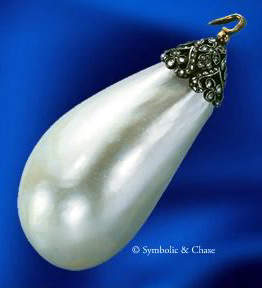
The 64.35-carat drop-shaped pearl believed to have been discovered in the Persian Gulf in the 19th century, and later incorporated as the centerpiece of a multi-rowed necklace by its first owner, re-surfaced at a Christie's auction in London, on November 24, 2004. The new owners of the pearl named it the "Pearl of Kuwait" a true reflection of the origin of the pearl, as Kuwait in the past was one of the main centers of the pearl industry in the Persian Gulf, with a history of pearling dating back to at least 4 millennia. The silky luster and white body color of the pearl is reminiscent of the classic appearance of natural pearls from the Persian Gulf.

The Persian Gulf, the Red Sea and the Gulf of Mannar in Sri Lanka, had been the hub of the international pearl trade for over 4,000 years. The region had produced some of the world's finest natural pearls, since ancient times, supplying the courts of the ancient kings and queens of Mesopotamia, Egypt, and later the Greek, Roman and Byzantine empires. The Greek Historian Pliny, referred to the quality of Persian Gulf pearls in glowing terms, when he said in his book Historia Naturalis "But the most perfect and exquisite pearls of all others, be they, that are gotten about Arabia, within the Persian Gulf."
Kuwait's ancient pearling traditions continued up to the 20th century, and was the main source of income to the country, until the large scale culturing of pearls by Japan in the 1930s and the subsequent discovery of crude oil, resulted in the demise of the pearl industry.
Characteristics of the Pearl
The "Pearl of Kuwait" reputed at one time to be the sixth largest natural pearl in the world, has an almost perfect drop-shape, and a weight of 64.35 carats, equivalent to 257.40 grains or 12.87 grams. The pearl has dimensions of 41.28 x 19.05 mm (4.128 x 1.905 cm) at its longest and widest points. The body color of the pearl is white, with a brilliant silky luster, characteristic of natural pearls from the Persian Gulf region.
What causes the white body color of the pearl ?
The body color of pearls is caused by pigments as opposed to the iridescence and orient of a pearl, caused by the interference of light. The body color of pearls are determined by three important factors :- 1) the species of mollusk 2) the thickness and number of layers of nacre 3) conditions of the aquatic environment, such as the presence of certain species of algae that serve as source of food for the mollusk, the presence of certain trace elements, etc. Pigments that can cause colors in pearls are the yellow carotenoids, the green porphyrins, black melanins and blue and red indigoids. The pigments are bonded with conchiolin, the protein part of the nacre. When the conchiolin is free of any bonded pigments as in certain species of mollusks, it becomes transparent, and the white or cream color of the aragonite platelets (calcium carbonate) show through. Thus the white body color of the "Pearl of Kuwait" is caused by the absence of colored pigments in the conchiolin layer of the nacre. The silky luster or the silvery white sheen is caused by iridescence, a slight play of color over the surface of the pearl, caused by interference of light, as it passes through alternating layers of aragonite and conchiolin.
The "Pearl of Kuwait" is an asymmetrical drop-shaped pearl
There are eight basic shapes in which pearls normally exist in nature :- round, semi-round, button, drop, pear, oval, baroque and ringed. Pearls that grow in the softer tissues of the oyster, end up as round or semi-round pearls, due to regular expansion of the pearl sac all round, as the softer tissues do not offer any resistance to the growth of the pearl. If however, the pearl sac is lodged in muscular tissues, the resistance offered by the tough muscle fibers prevents the regular all round expansion of the growing pearl, resulting in other shapes that are not regular, such as drop, pear, oval, baroque etc. The "Pearl of Kuwait" is considered as a drop-shaped pearl, even though it is not a perfect symmetrical drop-shape like the "Drexel Pearl." Thus the "Pearl of Kuwait" can be characterized as an asymmetrical drop-shaped pearl.
The setting of the "Pearl of Kuwait" when it appeared at the Christie's auction in 2004
When the "Pearl of Kuwait" re-surfaced in November 2004, at a Christie's auction in London, it was set in an intricate bell cap design with rose-cut diamonds, with provision being made in the form of a hook, for the pearl to be suspended as a pendant to a necklace. It is believed that the pearl was most likely suspended as the centerpiece of a multi-row necklace. The use of rose-cut diamonds in the design indicates the 19th century provenance of this setting.
History of the "Pearl of Kuwait"
The species of oyster in which the "Pearl of Kuwait" originated ?
The historical pearl banks of the Persian Gulf, mainly on the Arabian side of the Gulf, had been the natural home of two species of pearl oysters, since ancient times. These species are Pinctada radiata (Gulf-pearl oyster) and Pinctada margaritifera (Black-lip oyster). The Black-lip oyster can grow to a maximum size of 15-20 cm. and mainly produces black pearls. The species Pinctada radiata mainly produces seed pearls, and some pearls of medium size. Pinctada radiata can attain a maximum size of 7-8 cm. Thus, the "Pearl of Kuwait" with dimensions of 4.1 x 1.9 cm could well have originated in the oyster Pinctada radiata, one of the common species of oysters in the Persian Gulf.
Classification of Pinctada radiata
Kingdom : Animalia
Phylum : Mollusca
Class : Bivalvia
Order : Pterioida
Family : Pteriidae
Genus : Pinctada
Species : radiata
Crucial role played by Pinctada radiata in the natural pearl industry from time immemorial
Pinctada radiata played a crucial role in the natural pearl industry in the world from time immemorial, meeting the world's demand for both mother-of-pearls and pearls. This species of oyster was the greatest source of natural pearls in the world since ancient times, and was native to the calm waters of the Persian Gulf, the Red Sea and the Gulf of Mannar (between India and Sri Lanka), which became the hub of the natural pearl industry for over 4,000 years. The same species of oyster was subsequently discovered after the colonization of the New World, in Central America off the coast of Panama, Colombia and Venezuela; in the Southern Atlantic coast of the U.S.; in the northern coast of Brazil; and the coasts of the Antilles Islands. The intensive exploitation of the pearl resources of the Panama, Colombia and Venezuela in the 16th and 17th centuries by the Spanish colonialists, shifted the nerve center of the pearl industry from Asia to the Americas during this period. But, within a short period of less than two centuries the pearl resources of the Americas was exhausted, due to over exploitation, and the Asian region of the Persian Gulf, Red Sea and the Gulf of Mannar, once again regained its pre-eminence as the hub of the international pearl trade.
Different species of the Genus Pinctada
The Genus Pinctada, is a genus of pearl oysters, which are marine bivalve mollusks coming under the family Pteridae. All species in the genus Pinctada have the potential of producing large pearls of commercial value, and thus have been subjected to intensive studies, with a view of harnessing their great potential. However only around five species have been identified that are of significant commercial value. The maximum sizes and colors of the pearls produced by the different species, depend on the size of the species, and the natural color of the nacre inside the shell. These species are listed in the table below :-
Pinctada species of commercial value and their distribution
S/N |
Pinctada species | Common name | Distribution | Type of pearls produced |
| 1 | Pinctada radiata | Gulf-pearl oyster | Persian Gulf, Red Sea, Gulf of Mannar, Panama, Colombia, Venuzuela | Silvery white, cream, and light pink pearls; also occasionally yellow, brown, and violet |
| 2 | Pinctada margaritifera | Black-lip oyster | Persian Gulf, Australia, Fiji, Tahiti, Myanmar, Baja California | Black South Sea pearls or Tahitian pearls |
| 3 | Pinctada maxima | White-lip oyster, Gold-lip oyster | Myanmar, Philippines, Australia, Fiji, Tahiti | White and Golden South Sea pearls |
| 4 | Pinctada fucata martensii | Akoya pearl oyster | Japan, China | Akoya cultured pearls |
| 5 | Pinctada albina | Smaller Australian oyster or Shark Bay pearl oyster | Australia, Philippines, China, Vietnam, Korea, Micronesia | yellow and small pearls
Species used for culturing blister pearls |
Characteristic features of Pinctada radiata
Pinctada radiata is a bivalve mollusk that grows to a maximum size of 7 to 8 cm. and has a maximum life span of about 8 years. The shell of the mollusk is thin and pale yellow in color, and has a lip which is slightly pinkish in color. 7 -8 brownish radial bands are found on the shell, a distinguishing feature from which the specific name radiata has been derived. The Persian variety of Pinctada radiata, found on the Persian side of the Gulf, is larger and darker, with a reddish lip. The nacre of Pinctada radiata is usually white, producing mainly silvery white, cream or light pink colored pearls. The "Pearl of Kuwait" is also a silvery white pearl produced by Pinctada radiata. Besides these common colors, very rarely violet, brown and yellow colored pearls are also produced.
Historical use of the pearls produced by Pinctada radiata
Pearls produced by Pinctada radiata are mainly seed pearls, but pearls of medium sizes are also produced. Seed pearls are pearls that have a diameter of less than 2 mm or a weight of less than 0.25 grains. Pearls harvested from the Pinctada radiata from the Persain Gulf, the Red Sea, and the Gulf of Mannar, were historically used in ornamental jewelry, and to adorn the crowns, thrones, and other royal regalia of monarchs in the past. The Qajar King Fath Ali Shah's Kiani Crown, one of the most fabulous crowns ever made in the history of monarchies around the world, was set with 1,800 medium sized pearls, all harvested from the Persian Gulf. Shah Jahan's Peacock Throne, the most splendorous throne ever made in the history of mankind, in the period 1628 to 1658, had 12 columns that supported the canopy, that were decorated with rows of splendid pearls, all harvested from the Persian Gulf, the Red Sea and the Gulf of Mannar. Pearls harvested from these historic regions, were taken to the jewelry markets in Bombay in India, from where they eventually found their way to the capitals of the monarchies in the west.
History of the pearl industry in Kuwait
Ancient origins of the Kuwaiti pearl industry
Before the discovery of oil in Kuwait in the 1930s and its subsequent exploitation after World War II, the primary economic activity in Kuwait and the Persian Gulf region, was the exploitation of the pearl resources of the renowned pearl banks mainly on the Arabian side of the Persian Gulf. The history of pearling in the Persian Gulf extends to over four millennia, and references to this thriving industry had been made by early writers such as Pliny, the Greek Historian and Ptolemy, the 2nd century A.D. Roman geographer. Ptolemy refers to the island of Tylos, the Roman name for the island of Bahrain, around which pearl-bearing reefs were concentrated, and where a thriving pearl industry existed from time immemorial. Thus historically speaking people living around the Persian Gulf, the Red Sea and the Gulf of Mannar, were the first human beings to discover and appreciate the beauty and value of natural pearls produced in oysters, and use them as ornaments. The other ancient civilizations that discovered pearls and used them as ornaments were the ancient Indian civilizations of Meso-America, and North and South America.
Mesopotamia, the cradle of human civilization had a coastline on the Persian Gulf
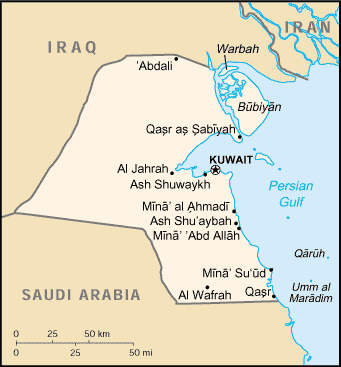
The Persian Gulf situated between Iran and the Arabian Peninsula, is an inland sea extending from the Indian Ocean, and connected to it by a narrow straits just 56 km wide, known as the Straits of Hormuz. The maximum length and width of the Gulf are 989 km and 160 km respectively. The maximum depth of the Gulf is 90 meters and the average depth 50 meters. A major river delta known as the Shatt-al-Arab, into which flows the rivers Eupharates and Tigris, of ancient Mesopotamia (modern Iraq), the cradle of human civilization, is situated at the western end of the Gulf. The countries that have a coastline on the Persian Gulf, starting from Iran and moving anti-clockwise are Iraq, Kuwait, Saudi Arabia, Bahrain, Qatar, United Arab Emirates and Oman. Iran occupies most of the northern coastline of the Gulf and likewise Saudi Arabia occupies most of the southern coastline.
Kuwait as the hub of international trade between the Indian Subcontinent and Europe
The State of Kuwait, a sovereign Arab Emirate, is situated on the northwest coastline of the Persian Gulf, sandwiched between Saudi Arabia in the south and Iraq in the north and the west. The country which has an area of 17,818 sq. km. has the world's fifth largest proven oil reserves, and in terms of per capita income, is the 9th richest country in the world. The country has a history dating back to the year 1613, when tribes from Central Arabia migrated to the region, after experiencing a serious drought in their native land. These tribes came to be known as the Utub of Qurain, Qurain being the Arabic name by which the region was called, which in the Arabic language meant, a "fortress built near water." The name "Kuwait" was derived from its original name "Qurain." Kuwait has an excellent natural deep-water harbor situated on the Kuwait Bay. This ancient and historic harbor made Kuwait the hub of the international trade between India, Europe and the Horn of Africa, with the countries of the middle east, such as Mesopotamia, the Nejd in Central Arabia and the Levant in the eastern Mediterranean. Kuwait became a major center of the spice trade between India, Srl Lanka and Europe. Prior to the discovery of the sea route around the cape between Europe and India towards the end of the 15th century, by Vasco da Gama, all goods from the Indian subcontinent and Sri Lanka bound for Europe passed through the Persian Gulf, and the port of Kuwait was a transit point for such trade, from where the goods were carried overland to Europe.
The pearl industry of Kuwait from the early 17th century to the 1930s
Besides being a hub of the international trade in the past, Kuwait also channeled its export products to the international markets. Kuwait had a flourishing pearl industry during this period, and pearls were the primary export product of the country. Other products that were exported included horses, dates, wood and spices. From the early 17th century until the 1930s, the country's economy was primarily dependant on pearl diving. The pearl fisherman harvested pearls from the pearl banks off the Arabian coastline of the Gulf, which were among the richest in the world. At the beginning of the 20th century, Kuwait had almost 700 boats engaged in pearl diving, employing around 15,000 men. Pearl diving was carried out during the pearl-diving season that extended for four months from mid-May to mid-September. During the remaining eight-months period, the Kuwaiti merchants used their ships for long distance trade and fishing. Thus a shipbuilding industry developed in Kuwait, and the Kuwaiti sea-going crafts became renowned for their quality and reliability, and became regular callers at ports in the middle east, the east coast of Africa, the Indian sub-continent and Sri Lanka. In fact recorded historical evidence shows that Kuwaiti pearl fisherman sailed as far as the Gulf of Mannar, between the Indian Subcontinent and Sri Lanka, during the pearling season of these historical pearl fishing grounds. Pease click here for article on "The Pearl Industry during the British period in Sri Lanka.
The decline of the pearl industry in Kuwait
Kuwait's economy between the 17th and mid-20th century based on the pearl industry, and the tradition of seafaring and trade, was prosperous by regional standards and created a thriving merchant class. But, the economy offered only a meager existence to a majority of the population including the pearl divers themselves who were exploited by the Nakhudas (Pearling Captains), who kept the divers under bondage in a virtual slavery system. The pearl industry in Kuwait began to decline in the 1920s, with the successful development of the process for making cultured pearls in Japan, followed by the Great Depression of the 1930s. This led to economic disaster to the people of the Gulf, including Kuwait, and the pearl divers and their families entered a period of great economic hardship and untold misery. Fortunately for the people of Kuwait, as the pearl industry declined, a new promising source of revenue emerged with the discovery of oil in 1938. However exploitation of the oil resources and export of oil began only after the end of World War II, and the majority of the population of Kuwait gradually emerged from economic depravation, and began enjoying the fruits of their new found wealth. The pearl divers found alternative work in the growing oil industry. This resulted in the virtual death of the ancient pearl industry for the lack of divers to keep the industry going.
Attempts to revive the pearl industry of Kuwait
Recently attempts have been made to revive the natural pearl industry of Kuwait. A research paper on the "Status of the pearl oyster fishery of Kuwait" by Sulaiman Alamtar of the Kuwait Institute of Scientific Research, Salmya, Kuwait, published in September 1992, reveals some interesting facts about the current status of the industry. According to this paper the natural pearl industry of Kuwait has been revived, based on the pearl oyster Pinctada radiata, which is native to the waters of Kuwait. The traditional dhows used in pearl fishing has been replaced by 25 fiberglass speed boats, 3 to 8 meters in length, and powered by 50 to140 HP gasoline outboard engines. The pearl oyster fishing grounds are located between latitude 20°N and 28°N, along longitude 48°E. Eleven major pearl oyster beds are scattered within this area, at depths varying from 10 to 20 meters. Pearl diving is carried out daily between 8 am and 12 noon. During this four-hour period about 6 dives each of 30 minutes duration are completed, with a 10 minute rest in-between each dive. A hookah diving system is used for air supply. During the winter period wet suits, hoods and gloves are worn by the divers. The diver who walks or swims over the pearl oyster bed, picks up the oysters and places them in a mesh bag. The collected pearl oysters are placed unsorted in bags, each bag weighing approximately 6 kg. and then transported to the pearl oyster market.
The only pearl oyster market operates in Kuwait City. The auction takes pace soon after the catch arrives in the market, usually between 1 pm and 3 pm. Around 30 permanent pearl oyster merchants, based in the market, usually participate in the daily auctions. However some irregular buyers also take part in the auctions each day. The quality and size of the pearl oyster shells determine the price of a bag of pearls. The price may also vary according to the pearl oyster beds where the pearls were caught. After purchasing the merchants open each pearl oyster with a special curved knife and search for pearls.
A pearl greater than 4 mm is considered a big pearl. When such a big pearl is discovered it is usually auctioned among the permanent merchants on the same day. Pearls less than 4 mm in size are collected and auctioned as a group of small pearls. Five pearl dealers operate in the pearl market in Kuwait, and most of the pearls discovered are eventually purchased by these dealers. The dealers resell the pearls to jewelers in Kuwait, or sometimes carry it to Bahrain seeking for higher prices. The pearl market that operates in Kuwait is exclusively for natural pearls. Therefore pearl dealers in the market usually conduct transactions only with regular and known people who frequent the market. Dealers may purchase pearls from strangers, but no money is exchanged until the pearl is confirmed a genuine natural pearl after testing.
The research that covered the period January 1982 to May 1990, collected data that included the number of bags reaching the market on a daily basis, the number of pearls found, and the prices realized. For the year 1989, the mean daily landing was 138 bags, ranging from 23.4 bags in January to 273.7 bags in July. The low production in winter was correlated to the low fishing activities, due to low water temperatures and inclement weather. The average number of pearl oysters found in a bag was about 132. For the year 1989, the total number of bags landed was 46,224 bags, equivalent to 287 tons. The research also computed the probability of finding a pearl either small or large, which was 1 in every 4,200 oysters. However tiny pearls less than 2 mm in size were found frequently at the rate of 6 pearls per bag or 132 oysters. The research also revealed that the majority of pearl oysters landed had a hinge length of 40 to 56 mm, and a dorso-ventral measurement of 44 to 76 mm. The above research statistics indicate that ancient natural pearl industry of Kuwait is well on its way to a full revival.
Kuwait's annual pearl diving festival
Every year in the month of June, Kuwait holds a month-long pearl diving festival. Such an annual festival while paying tribute to their ancestors who dedicated their lives to the pearling industry that formed the basis of Kuwait's wealth in the past, also helps the younger generation of Kuwaitis to appreciate the hardships undergone by their forefathers in keeping alive an ancient and fruitful industry that was fraught with dangers associated with the breath-holding techniques of diving. It also helps to keep alive pearl diving traditions that had become an integral part of the Kuwaiti culture. Pearl diving in Kuwait is known as "ghaus" and the people who participate in diving are known as the "ghawawis." There is lot of public enthusiasm in this annual festival, and a large number of Kuwaitis take part in the festival, depicting their desire to preserve their age-old traditions and culture. The festival has also become a popular tourist attraction, and sometimes tourists also take part in the diving having undergone an initial training. The divers use traditional equipment such as the "Dieng" (neck basket), the "hager" (toe anchor), and the "fotam" the nose clip. The end of the festival known as "qafal" is celebrated with traditional singing and dancing.
"Pearl of Kuwait" appears at a Christie's auction in London in November 2004
The "Pearl of Kuwait" appeared at a Christie's auction in London in November, 2004. The pearl was set in an intricate bell cap design, set with rose-cut diamonds. The pearl fetched a price of £150,000 equivalent to $270,000 at the auction, and was purchased by Symbolic & Chase who are the current owners of the pearl. The name "Pearl of Kuwait" was actually given to the previously unnamed pearl, by the new owners of the pearl, Symbolic & Chase.
Symbolic & Chase with their salon at Old Bond Street, London, deals with rare and unique objects of art, jewelry and watches, for investors and collectors. They have among their collection pieces previously owned by royal families of the world. They also have their own creations set with rare gemstones and designed by their expert craftsmen. They also offer the services of their expert craftsmen for the restoration and creation of collections.
"Pearl of Kuwait" is exhibited at the "Allure of Pearls" exhibition at the Smithsonian institution
The "Pearl of Kuwait" was one of the 12 rarest pearls in the world, that was exhibited at the "Allure of Pearls" exhibition in the second floor of the Hall of Geology, Gems and Minerals, of the National Museum of Natural History of the Smithsonian Institution, from March 18, to September 5, 2005. The exhibition was co-sponsored by Paspaley Pearls Pty. Ltd., Iridesse pearls, and the Gemological Institute of America. The "Pearl of Kuwait" was loaned by Symbolic & Chase, the present owners of the pearl, to the Smithsonian Institution, for the exhibition.
You are welcome to discuss this post/related topics with Dr Shihaan and other experts from around the world in our FORUMS (forums.internetstones.com)
Related :-
2) Hope Pearl
References
1.Famous Pearls - www.pearls.com/education/famouspearls.htm
2.The Allure of Pearls - website of the NMNH of Smithsonian Institution.
3.Famous Pearls of the World - www.touristcentre.org
4.Kuwait - From Wikipedia, the free encyclopedia
5.Pearling in the Arabian Gulf - by Saif Marzooq Al-Shamlan, translated by Peter Clark
6.The Status of the Pearl Oyster Fishery of Kuwait - SPC Pearl Oyster Information Bulletin, September 1992.
7.The Economy - Persian Gulf States - www.countrystudies.us/persian-gulf-states
8.Pearl Diving in Kuwait - www.odyssei.com
9.Pearl Oyster - From Wikipedia, the free encyclopedia
10.Species with Hinged Teeth - www.pearl-guide.com
 Home
Security & Guarantee
How it Works
Technology Partners
Updated Tables
Famous Diamonds
More Famous Diamonds
Famous Pearls
Famous Gemstones
Contact Dr Shihaan Larif
Contact Senior Editor
Famous Jewelry
Reference Database
Forums
Learning Center
Gemstone Gallery
e-mail Notifications
Advertise
Press Release
About Us
Privacy Policy
Contact Us
FAQ'S
Site Map
Staff Mail Login
Staff Documents
Birthstones
History
Minerals
Shows
Live Metal Prices
Jewellery Gallery
News
Marketplace
Marketplace Support
Open Store
Online Auctions
Join Us & Contribute
Directory
Classifieds
List your products
Wholesale Trading
Post Buy Request
Go Green Policy
Site Updates
Upcoming-ToDo List
Latest News
Latest Articles
Latest Blog Updates
Chat Rooms
Job Board
User Gallery
Videos
New Newsletter Archive
Old Newsletter Archive
Jewelry & Mineral Blog
User Blogs & Social Network
Search
Answers (Q & A)
Valuation
Help me find a diamond/jewelry
pin.internetstones.com- Social Pinboard- Sart yours & connect with millions
Invite Friends From Yahoo, Gmail etc-One Click
Home
Security & Guarantee
How it Works
Technology Partners
Updated Tables
Famous Diamonds
More Famous Diamonds
Famous Pearls
Famous Gemstones
Contact Dr Shihaan Larif
Contact Senior Editor
Famous Jewelry
Reference Database
Forums
Learning Center
Gemstone Gallery
e-mail Notifications
Advertise
Press Release
About Us
Privacy Policy
Contact Us
FAQ'S
Site Map
Staff Mail Login
Staff Documents
Birthstones
History
Minerals
Shows
Live Metal Prices
Jewellery Gallery
News
Marketplace
Marketplace Support
Open Store
Online Auctions
Join Us & Contribute
Directory
Classifieds
List your products
Wholesale Trading
Post Buy Request
Go Green Policy
Site Updates
Upcoming-ToDo List
Latest News
Latest Articles
Latest Blog Updates
Chat Rooms
Job Board
User Gallery
Videos
New Newsletter Archive
Old Newsletter Archive
Jewelry & Mineral Blog
User Blogs & Social Network
Search
Answers (Q & A)
Valuation
Help me find a diamond/jewelry
pin.internetstones.com- Social Pinboard- Sart yours & connect with millions
Invite Friends From Yahoo, Gmail etc-One Click




Our Global Jewelry Industry Job Network


Buy & Sell in our Marketplace

Subscribe to our Newsletter

List in our Classifieds

List in our Directory

User Uploaded Gallery

Powered by Ultra Secure
Amazon (USA) Cloud Network

Founder Internet Stones.COM
Register in our Forums

| Featured In
|
|
|
|
|
|
|
|







Blog & Education Feed
Articles Feed
 |
 |
 |

Copyright © .Internet Stones.COM. All rights reserved.