Queen Victoria's Emerald and Diamond Tiara
Open FREE Unlimited Store Join Our Newsletter
Origin of name
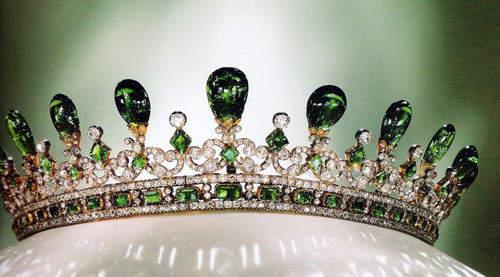
The origin of the name "Queen Victoria's Emerald and Diamond" Tiara is self explanatory, as the celebrated tiara was once the valued possession of Queen Victoria, the Queen of the United Kingdom of Great Britain and Ireland and the Empress of India, whose long period of reign of 63 years and 7 months that extended from June 1837 to January 1901 was the longest in the history of the British Monarchy. In keeping with her status as the monarch of the largest and most powerful empire in the world, Queen Victoria had a fabulous collection of jewelry of all varieties such as tiaras, necklaces, chokers, stomachers, brooches, bracelets, earrings, rings etc. set with the most expensive of jewels such as diamonds, emeralds, rubies, sapphires and pearls. The "Queen Victoria's Emerald and Diamond Tiara" was one of the most exquisitely crafted tiaras in her collection, and also one of her favorite pieces of jewelry, designed by her own husband, the Prince Consort, Prince Albert of Saxe-Coburg and Gotha, in the Gothic style.
Characteristics of the tiara
features of Gothic ornaments
The tiara represents a rare and typical example of a 19th century tiara crafted in the Gothic revival style. The Gothic period that influenced art, architecture, literature and jewelry crafting extends from about 1140 A.D. to 1500 A.D. The Gothic style was the successor of the Roman or Romanesque style and was succeeded by the Renaissance style. The Gothic style in architecture was probably influenced by the ogees of Arabic and Middle Eastern origin, and the mathematical influences on architecture that came to Europe from the Islamic nations during the crusades. The ogee shape is one of the characteristics of the Gothic style of architecture, introduced to the European cities from the Middle East. Besides architecture, the Gothic style also influenced the creation of jewelry and artifacts such as sculptures, silverware, book covers and illustrations. The Gothic style was revived in the 19th century and came to be known as neo-Gothic. Gothic ornaments in jewelry had some characteristic features such as Quatrefoils (an ornamental design of four leaves resembling a flower), Trefoils (an ornamental design with three lobes like a clover leaf), Vesica piscis (fish bladder), spikes and pinnacles.
Gothic features in the Queen Victoria Emerald and Diamond tiara
The most prominent Gothic features on the Queen Victoria Tiara are the curved diamond mounted structures and emerald and diamond mounted spikes on the upper side of the tiara. The quatrefoils at the base of the cabochon emerald spikes is another characteristic Gothic feature. Besides this, some of the cabochon emeralds themselves have the vesica piscis shape, another Gothic feature. The vesica piscis, which literally means "the bladder of a fish" refers to a shape formed by the intersection of two circles with the same radius, intersecting in such a way that the center of each circle lies on the circumference of the other. Sometimes the word is used to refer to the biconvex symmetric lens produced by the intersection of the two circles. The ratio of its height to its width is said to be 265:153 which is approximately equal to the square root of 3 or 1.7320508... The number 153 is significant in Christianity, as according to the Gospel of John (21:11), it is the number of fish Jesus caused to be caught in a miraculous catch of fish. Thus the vesica piscis became a symbol of Christian art in the mediaeval period.
The circlet of the tiara is made up of two parallel bands set with hundreds of small round brilliant-cut white diamonds. The two bands are interconnected by short vertical ribs each set with two round brilliant-cut diamonds. Each rectangular space between two ribs is occupied by a large rectangular-shaped emerald. Curved diamond mounted structures arise from the upper band of the circlet, with their curved ends mounted with two large round brilliant diamonds. At the points where the curved structures meet are placed long and short spikes alternating with one another. Each long spike ends with a large drop-shaped cabochon-cut emerald, but the ones towards the ends are almost biconvex in shape like the vesica piscis. The cabochon-cut emerald arises from a quatrefoil at its base. Each short spike consists of a large baroque-cut emerald with a round brilliant-cut emerald placed at its end.
History of the Queen Victoria Emerald Tiara
The Queen Victoria Emerald Tiara was designed by Prince Albert, the Prince Consort of Queen Victoria, who got the tiara executed by the court jewelers under his supervision in the year 1845. Prince Albert while maintaining a low profile during public occasions due to his German ancestry, actively involved himself in the day to day activities of the palace, becoming the chief adviser to the Queen especially after the death of Lord Melbourne, the prime minister. He also took an active interest in the arts, science, trade and industry and was the mastermind behind the Great Exhibition of 1851. Thus the Prince was a man of varied interests, and his ability to design such a unique tiara was not surprising. It is on record that the Prince also took a keen interest in the re-cutting of the Koh-i-Noor diamond in 1852, after its arrival in England from India, in order to improve the brilliance of the stone. He laid the groundwork for the re-cutting after carrying out initial scientific consultations, and obtaining the opinion of leading physicists, mineralogists, and lapidarists of the time. The Duke of Wellington was also involved in this project. The exquisitely crafted "Queen Victoria Emerald and Diamond Tiara" was indeed a testimony to the creative abilities of Prince Albert, a man of varied and multiple interests. It appears that Prince Albert not only designed the "Queen Victoria Emerald and diamond Tiara" but also most other tiaras worn by his beloved wife Queen Victoria. Four tiaras designed by Prince Albert were included in a display of 200 tiaras mostly from royal families of Europe, at the Victoria Albert Museum in 2002.
The fate of the Queen Victoria Emerald and Diamond Tiara
The present whereabouts of the Queen Victoria Emerald and Diamond Tiara is not known, but it is believed that the celebrated tiara is now in the possession of one of the descendants of Queen Victoria. It appears that the "Queen Victoria's Emerald and Diamond Tiara" like the "Queen Victoria's Diamond and Sapphire Tiara" never entered the British Crown Jewels, and being Queen Victoria's personal property was bequeathed to one of her nine children or their descendants. The present owners of the "Queen Victoria's Diamond and Sapphire Tiara" are the Earl and Countess of Harewood. But, the present owners of the "Queen Victoria's Emerald and Diamond Tiara" are not known.
In 1997, an exhibition called "One Hundred Tiaras - An Evolution of Style, 1800-1900" was organized by Geoffrey Munn, managing director of Wartski's jewelry firm, which was founded in 1865 by Morris Wartski, situated in Grafton Street, Mayfair, London; a firm that had held appointments as Jewelers to H.M. the Queen and H.R.H. the Prince of Wales. The exhibition was held at the Grafton Street premises of the jewelry firm. The "Queen Victoria's Emerald and Diamond Tiara" was one of the tiaras displayed at this exhibition. In the year 2001, Geoffrey Munn, published his famous work "Tiaras, A History of Splendor" On page 12 of this book, Geoffrey Munn discusses about the "Queen Victoria's Sapphire and Diamond Tiara" worn in the famous Winterhalter portrait. On pages 72-75 of the book there are several beautiful photos of the "Queen Victoria's Emerald and Diamond Tiara." In discussing about the tiara on page 77, Geoffrey Munn says that the tiara was made by Kitching in 1845, at a cost of £1,150. He also states that the tiara survives intact in the hands of a descendant of Queen Victoria, who was kind enough to lend it to Wartski for the 1997 exhibition.
But, after its appearance in the 1997 exhibition, unsubstantiated reports have circulated that the "Queen Victoria's Emerald and diamond Tiara" had been sold and subsequently dismantled by its new owner.
Exhibition of tiaras at the Victoria Albert Museum in 2002
A second exhibition of tiaras was held at the Victoria Albert Museum from March 21st to July 14th, 2002, also organized by Geoffrey Munn, the managing director of Wartski's jewelry establishment, and was officially declared open by actress Joely Richardson. The exhibition put on display a collection of 200 tiaras, that included not only old and historic pieces loaned from European royal and aristocratic families but also latest creations worn by celebrities such as Victoria Beckham, Joanna Lumley, Elton John, Wonder Woman and Gwyneth Paltrow. It included 20 tiaras of British Royal origin, out of which four were designed by Prince Albert for Queen Victoria. The tiaras designed by Prince Albert included the "Ruby and Diamond Oriental Circlet Tiara" that was worn by Queen Victoria and later Queen Elizabeth, the Queen Mother. Another tiara designed by Prince Albert was the Gothic style "Diamond and Sapphire Tiara" loaned by the Earl and Countess of Harewood. But, there were no reports of the "Queen Victoria Emerald and Diamond Tiara" appearing at this exhibition, which seemed to confirm earlier reports of its dismantling.
Geoffrey Munn, the curator of the exhibition said, "I doubt whether there will ever be a jewelry exhibition which brings together so many historic and royal tiaras again."
Some of the other remarkable pieces that were on display at the exhibition include:-
The diamond tiara worn by Her Majesty the Queen on her wedding day on 20th November 1947.
A pearl and diamond tiara from the French Crown Jewels.
An early 20th century tiara made for Queen Mary, the grandmother of Her Majesty Queen Elizabeth II.
The tiara worn by Victoria Beckham on her wedding day, when she married David Beckham.
Tiara worn by Gwyneth Paltrow in the film "Shakespeare in love."
Tiara worn by Elizabeth Hurley in the film "Bedazzled."
Tiaras produced by contemporary designers like Vivienne Westwood, David Linley, Philip Tracey, Wendy Ramshaw, and others.
Tiaras made of unconventional material such as dog bone, sheep pelvis, feathers, horns, plastic, steel and rubber.
Geoffrey Munn, the organizer of the exhibition, commented after the conclusion of the successful event, "I hope I have managed to convey some idea of the hauteur and elegance that raises these dramatic objects to the position of supremacy they hold over every other type of jewelry."
Prince Albert of Saxe-Coburg and Gotha - A short biography
His birth and relationship to Queen Victoria
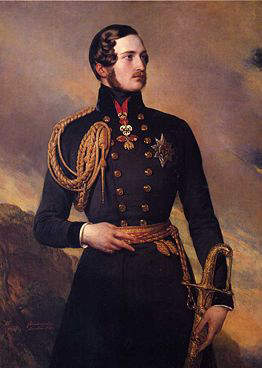
Albert Francis Charles Augustus Emmanuel, who after his marriage to Queen Victoria of the United Kingdom of Great Britain and Ireland, on February 10, 1840, came to be known as Prince Albert of Saxe-Coburg and Gotha, and subsequently as His Royal Highness the Prince Consort, was born on August 26, 1819, in Schloss Rosenau, near Coburg, Bavaria, Germany. He was the second son of Ernest III, the Duke of Saxe-Coburg and Gotha. Albert's aunt, Victoria Maria Louisa of Saxe-Coburg and Gotha, had married the Duke of Kent, Prince Edward Augustus, who was the 4th son of King George III of the United Kingdom; and the future Queen Victoria was the only product of this marriage. Thus Albert and Queen Victoria were closely related, being first cousins. Both Albert and Victoria were born in the same year 1819, but Victoria was elder to Albert by about three months, being born on May 24, 1819.
Early childhood and education
Albert was just seven years, when his father divorced his mother on grounds of adultery, and Albert and his elder brother Ernest, grew up together and spent their youth in close companionship. Their mother was exiled to Switzerland and forbidden to see her children. The children were educated by private tutors and later attended the University of Bonn, where Albert studied law, philosophy, economics and art history. As extra-curricular activities he took an interest in music, and excelled in gymnastics, fencing and riding.
Prejudices against Prince Albert
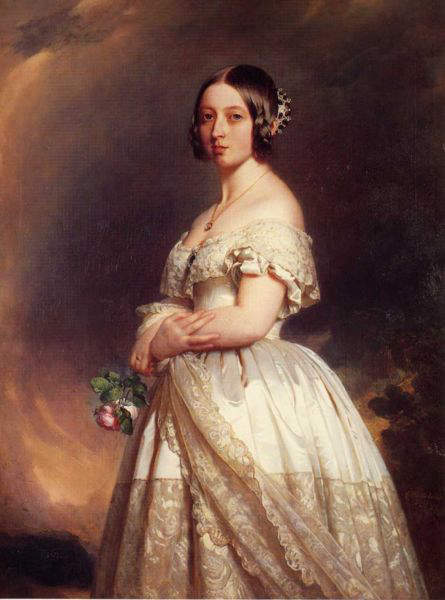
Princess Victoria of Kent, heir to the British throne, succeeded her uncle King William IV, as Queen Victoria on June 20, 1837, at the age of 18 years. She married Prince Albert her cousin, on February 10, 1840, at the age of 21 years. She granted Prince Albert the title of His Royal Highness, and appointed him as member of the Privy Council. Even though the marriage turned out to be a perfect match, a harmonious union that produced nine children, and one of the most successful royal marriages ever solemnized, it became very unpopular initially with the British Parliament and the British public, mainly because of Prince Albert's German origin. The Parliament always tried to exclude Prince Albert from being given a political role, and opposed his ennoblement, and even granted him a smaller allowance than previous consorts. The bitterness of the public against the marriage was clearly manifested when three attempts were made to assassinate the royal couple, first in June 1840, just 4 months after the marriage, by Edward Oxford, who was later judged insane, and two other attempts on 29 and 30 May 1842, by John Francis, who was condemned to death but later reprieved. Miraculously in all three attempts the royal couple was unhurt. The way Prince Albert conducted himself during and after these attacks had a positive effect on his standing in the eyes of the British public and helped to reduce the prejudices against him, and the British Parliament went to the extent of designating him as regent, in the event of Victoria's death before her child reaches maturity.
His services to his adopted country
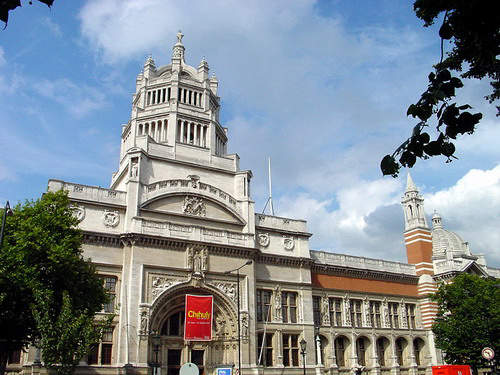
The great gentleman that he was, Prince Albert fully appreciated the sensitivities of the British parliament and the public, and adopted a low profile initially, being very tactful and diplomatic in his dealings as the Prince Consort. While acting as the Queen's chief adviser and private secretary, after the death of Lord Melbourne, the Prime Minister, he encouraged his wife to take a greater interest in social welfare activities. Albert himself began to take on non-controversial public roles such as President of the Society for the Extinction of Slavery, Chancellor of the University of Cambridge, President of the Society of Arts, and President of the British Association for the Advancement of Science. He also involved himself in promoting many public educational institutions. His espousal of science brought him into conflict with the Church, and his proposal for a knighthood for Charles Darwin, after his publication of the "Origin of Species," was rejected. His special interest in the application of science to the manufacturing industry led him to mastermind the Great Exhibition of 1851, in spite of opposition from the House of Lords and the House of Commons, to showcase the industrial achievements attained by Britain, and to bring the best manufactured products of other nations to Britain, that might result in an exchange of technical knowledge and the further improvement of the British manufacturing industry. The exhibition proved to be a colossal success, and one of the greatest achievements of Prince Albert. A total of 186,000 pounds sterling was raised as profits from the exhibition, which Prince Albert used to purchase land in South Kensington, and establish a number of educational and cultural institutions, including what would later be called the Victoria and Albert Museum.
Victoria Albert Museum
His final days
His abilities as a great statesman was brought to the forefront in 1861, when he intervened in a diplomatic row between Britain and the United States, that helped to avert war between the two countries. Around this time his health was failing and in spite of that he was busy as ever with arrangements for the next international exhibition. By the beginning of December Prince Albert's condition was very serious, and his doctors diagnosed him as having typhoid fever, complicated by the congestion of his lungs. Then on December 14, 1861, Prince Albert died in the blue room at the Windsor Castle, at the young age of 42 years.
An assessment of his achievements
Prince Albert's contributions to the nation went unrecognized for 17 years, and finally it was only in 1857 that the nation finally recognized his contributions and awarded him the title of Prince Consort, just four years before he died. The 42 years of his life was a life that was well spent in the service of his adopted country. His service to his nation was selfless, and not with the intent of gaining any recognition or peerage that was wrongfully denied to him by parliament. This is strongly borne out by his last request to Queen Victoria and his children before he died, that no effigies of him, by which he meant statutes, memorials and other monuments, should be erected anywhere after his death. Prince Albert indeed was a great statesman, and all services he rendered during a short life span of 42 years was just a practical expression of his beliefs, which was clearly espoused in one of his celebrated speeches: "Wealth is an accident of society, and those that enjoyed its benefits had a duty to those who were, through accident, deprived of it."
You are welcome to discuss this post/related topics with Dr Shihaan and other experts from around the world in our FORUMS (forums.internetstones.com)
Related :-
2) Cambridge and Delhi Dunbar Parure
3) Grand Duchess of Vladimir Tiara
4) Tiaras of the Iranian Crown Jewels
External Links:-

 Home
Security & Guarantee
How it Works
Technology Partners
Updated Tables
Famous Diamonds
More Famous Diamonds
Famous Pearls
Famous Gemstones
Contact Dr Shihaan Larif
Contact Senior Editor
Famous Jewelry
Reference Database
Forums
Learning Center
Gemstone Gallery
e-mail Notifications
Advertise
Press Release
About Us
Privacy Policy
Contact Us
FAQ'S
Site Map
Staff Mail Login
Staff Documents
Birthstones
History
Minerals
Shows
Live Metal Prices
Jewellery Gallery
News
Marketplace
Marketplace Support
Open Store
Online Auctions
Join Us & Contribute
Directory
Classifieds
List your products
Wholesale Trading
Post Buy Request
Go Green Policy
Site Updates
Upcoming-ToDo List
Latest News
Latest Articles
Latest Blog Updates
Chat Rooms
Job Board
User Gallery
Videos
New Newsletter Archive
Old Newsletter Archive
Jewelry & Mineral Blog
User Blogs & Social Network
Search
Answers (Q & A)
Valuation
Help me find a diamond/jewelry
pin.internetstones.com- Social Pinboard- Sart yours & connect with millions
Invite Friends From Yahoo, Gmail etc-One Click
Home
Security & Guarantee
How it Works
Technology Partners
Updated Tables
Famous Diamonds
More Famous Diamonds
Famous Pearls
Famous Gemstones
Contact Dr Shihaan Larif
Contact Senior Editor
Famous Jewelry
Reference Database
Forums
Learning Center
Gemstone Gallery
e-mail Notifications
Advertise
Press Release
About Us
Privacy Policy
Contact Us
FAQ'S
Site Map
Staff Mail Login
Staff Documents
Birthstones
History
Minerals
Shows
Live Metal Prices
Jewellery Gallery
News
Marketplace
Marketplace Support
Open Store
Online Auctions
Join Us & Contribute
Directory
Classifieds
List your products
Wholesale Trading
Post Buy Request
Go Green Policy
Site Updates
Upcoming-ToDo List
Latest News
Latest Articles
Latest Blog Updates
Chat Rooms
Job Board
User Gallery
Videos
New Newsletter Archive
Old Newsletter Archive
Jewelry & Mineral Blog
User Blogs & Social Network
Search
Answers (Q & A)
Valuation
Help me find a diamond/jewelry
pin.internetstones.com- Social Pinboard- Sart yours & connect with millions
Invite Friends From Yahoo, Gmail etc-One Click




Our Global Jewelry Industry Job Network


Buy & Sell in our Marketplace

Subscribe to our Newsletter

List in our Classifieds

List in our Directory

User Uploaded Gallery

Powered by Ultra Secure
Amazon (USA) Cloud Network

Founder Internet Stones.COM
Register in our Forums

| Featured In
|
|
|
|
|
|
|
|







Blog & Education Feed
Articles Feed
 |
 |
 |

Copyright © .Internet Stones.COM. All rights reserved.