Second Largest Freshwater Pearl - A Yellow to Pinkish Orange Near-Spherical Nacreous Pearl
Open FREE Unlimited Store Join Our Newsletter
Origin of Name :-
The unnamed, freshwater, nacreous pearl weighing 60.36 carats (241.44 grains) with an almost spherical appearance and a unique combination of yellow to pinkish-orange colors, appeared at a Christie's Contemporary Jewelry and Watches Sale, held on April 29, 2008, at the Jumeirah Emirates Towers Hotel, in Dubai, United Arab Emirates. The pearl has gone down on record as the second largest freshwater pearl and the 13th largest nacreous pearl in the world. The pearl also netted a whopping $713,000, the highest price ever paid for a natural freshwater pearl.

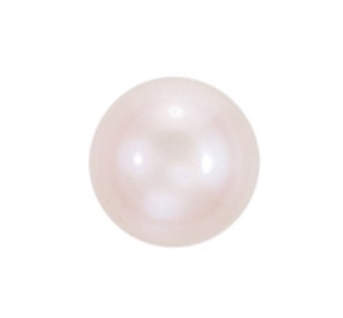
Second largest freshwater pearl- Yellowish to pinkish orange near spherical nacreous pearl.
© Christie's
Characteristics of the freshwater pearl
The Shape of the Pearl - The freshwater pearl is the largest near-spherical nacreous pearl in the world
The pearl has an apparently perfect spherical shape, but the dimensions of the pearl show that it has a longest and shortest diameter of 21.1 and 19.4 mm. By calculating the variation in diameter of the pearl, we can decide whether the pearl qualifies to be perfectly spherical, near spherical or button. A perfectly spherical or round pearl is defined as a pearl having the same diameter all round or has a variation in diameter of less than 2%, between its shortest and longest diameters. A pearl having a variation in diameter of greater than 2% and less than 20%, is known as a near-spherical or near-round pearl. A pearl that has a variation in diameter of approximately 20% is known as a button pearl.
The variation in diameter of a pearl is given by the formula :-
(1 - shortest diameter/longest diameter) x 100 %
Applying this formula for the given dimensions we have -
( 1 - 19.4/21.1) x 100 %
= (1 - 0.92) x 100 %
= 0.08 x 100
= 8%
The variation in diameter of the pearl is 8%, which falls between 2% and 20% Thus this unusually large freshwater pearl is actually a near-spherical pearl. Accordingly, this freshwater pearl becomes the largest near-spherical nacreous pearl in the world, and if we disregard the Paspaley pearl which is a cultured nacreous pearl, the pearl becomes the largest spherical/near-spherical natural nacreous pearl in the world. See table below.
In nature the normal tendency among large pearls is to form irregular or distorted shapes, known as baroque, as seen in the table, where the first six largest pearls are all baroque in shape. Pearl Nos. 7, 8, 10 and 11 have a fairly regular shape, and are pear-shaped drop pearls, but are not symmetrical. Pearl No 9 is the largest freshwater pearl and it is baroque. The first perfectly spherical pearl is the Paspaley Pearl, but it is cultured and not natural. The first near-spherical pearl, is the 13th largest pearl, the natural freshwater pearl, which is the subject of this webpage. The first perfectly symmetrical drop-shaped pearl, is the 14th largest pearl, the natural grey/brown pearl. Thus regular symmetrical shapes, whether spherical, near-spherical or drop shapes are extremely rare in nature. Therefore, the near-spherical shape of this freshwater pearl is an extremely rare occurrence.
Table of famous nacreous pearls arranged in descending order of weight
| S/N | Name of Pearl | Weight in Carats and Grains | Shape of Pearl |
Type of Pearl | Color of Pearl |
| 1 | Pearl of Asia | 600 carats, 2,400 grains | Baroque, garden-egg shaped | Saltwater, nacreous pearl | White |
| 2 | Arco-Valley Pearl | 575 carats, 2300 grains | Baroque | Saltwater, nacreous pearl | White |
| 3 | Big Pink Pearl | 470 carats, 1,880 grains | Baroque | Saltwater, nacreous abalone pearl | Pink |
| 4 | Hope Pearl | 450 carats, 1,800 grains | Baroque drop-shaped | Saltwater, nacreous pearl | White |
| 5 | Christopher Walling Abalone Pearl | 187.5 carats, 750 grains | Horn shaped | Saltwater , nacreous pearl | Multi-colored |
| 6 | Imperial Hong Kong Pearl | 127.5 carats, 510 grains | Irregular drop | Saltwater, nacreous pearl | White |
| 7 | Gogibus Pearl | 126 carats, 504 grains | Pear-shaped drop | Saltwater, nacreous pearl | White |
| 8 | Shah Sofi Pearl | 125 carata. 500 graina | Pear-shaped drop | Saltwater, nacreous perl | White |
| 9 | Survival Pearl | 90.35 carats, 361.40 grains | Baroque | Freshwater, nacreous pearl | White |
| 10 | La Regente | 75.67 carats, 302.68 grains | Pear-shaped drop | Saltwater, nacreous pearl | White |
| 11 | Pearl of Kuwait | 64.35 carats, 257.40 grains | Asymmetrical drop-shape | Saltwater, nacreous pearl | White |
| 12 | Paspaley Pearl | 60.94 carats, 243.76 grains | Perfectly spherical | Saltwater, nacreous, cultured pearl | White |
| 13 | Large natural freshwater nacreous pearl, that appeared at Christie's sale 7664 at Dubai | 60.36 carats, 241.44 grains | Near-Spherical | Freshwater nacreous pearl | Yellowish- orange to pinkish-orange |
| 14 | Natural Grey/Brown Pearl | 56.81 carats, 227.24 grains | Symmetrical drop-shape | Saltwater, nacreous pearl | Grey/Brown |
| 15 | La Peregrina | 55.95 carats, 223.8 grains | Pear-shaped drop | Saltwater, nacreous pearl | White |
| 16 | Sara Pearl | 55.0 carats, 220 grains | Drop-shaped | Saltwater, nacreous pearl | Gray |
| 17 | Shaista Khan's Pearl | 55.0 carats, 220 grains | Pear-shaped drop pearl | Saltwater nacreous pearl | White |
| 18 | Peacock Throne Pearl | 50 carats, 200 grains | Pear-shaped drop | Saltwater nacreous pearl | Yellow |
| 19 | Mancini Pearls | 50 carats, 200 grains. 50 carats, 200 grains | Drop-shaped pearls | Saltwater nacreous | White |
| 20 | Moghul Pearls | 45.5 carats, 182 grains. 45.5 carats, 182 grains | Pear-shaped drop | Saltwater nacreous pearls | White |
| 21 | Drexel Pearl | 33.80 carats, 135.2 grains | Symmetrical drop-shape | Saltwater nacreous pearl | Black Tahitian |
| 22 | La Pelegrina one | 33.29 carats, 133.16 grains | Pear-shaped drop | Saltwater, nacreous pearl | White |
| 23 | Charles II Pearl | 32.5 carats, 130 grains | Pear-shaped drop | Saltwater, nacreous pearl | White |
| 24 | Tararequi Pearls | 31 carats, 124 grains | Pear-shaped drop | Saltwater, nacreous | White |
| 25 | Bapst Pearls | 113.75 grains, 113.25 grains | Perfectly spherical pearls | Saltwater nacreous pearls | White |
| 26 | La Pelegrina two | 27.88 carats, 111.5 grains | Perfectly spherical pearl | Saltwater nacreous pearl | White |
| 27 | La Reine De Pearls | 27.5 carats, 110 grains | Perfectly spherical pearl | Saltwater, nacreous pearl | White |
| 28 | Oviedo Pearl | 26 carats, 104 grains | Perfectly spherical pearl | Saltwater, nacreous | White |
| 29 | Queen/Patterson Pearl | 23.25 carats, 93 grains | Baroque | Freshwater, nacreous pearl | White |
| 30 | Paspaley Drop-shaped Pearls | 18.75 carats, 75 grains. 18.75 carats, 75 grains | Drop-shaped pearls | Saltwater, nacreous pearl | White |
| 31 | Finest black pearl in Europe in 1900 | 12.25 carats, 49 grains | Pear-shaped drop pearl | Saltwater, nacreous pearl | Black pearl with green overtone |
The Weight of the Pearl - The freshwater pearl is the 13th-largest nacreous pearl and the second largest freshwater pearl in the world
The weight of the freshwater pearl is given as 60.36 carats, which is equal to 60.36 x 4 = 241.44 grains. Accordingly in the table of famous single nacreous pearls above arranged in descending order of weights, 241.44 grains occupies the 13th position, and the pearl becomes the 13th largest nacreous pearl in the world. It also becomes the second largest freshwater nacreous pearl in the world, after the largest freshwater pearl, the 361.40-grain, baroque, Survival Pearl.
The Color of the Pearl - The pearl becomes the largest colored freshwater pearl and the largest colored spherical/near-spherical nacreous pearl in the world
The color of the pearl is unique for a freshwater pearl and is a combination of yellowish to pinkish-orange. Commenting on the color of the pearl the Gemological Association of Great Britain (Gem-A), in an appendix to its report No. 0127771 dated December 07, 2007, authenticating the natural provenance of the pearl, states as follows :-
"the combination of fine lustre, even shape and size in this pearl are noteworthy, but its colour described as 'yellow to pinkish orange' is especially unusual. In normal colour terms, orange can veer towards a red hue (thus 'pinkish') or towards a yellow hue, but the extraordinary way in which the surfaces of fine pearls refract and reflect light (orient and lustre) results here in a remarkable appearance that might best be compared with a dawn sky."
According to this report the remarkable appearance of the pearl, compared to the color of the dawn sky, is due to the extraordinary way in which the surface of the pearl refract and reflect light. Refraction of light in a pearl gives rise to its "orient or iridescence" and overtone colors, and reflection gives rise to "luster." Thus, the report attributes the unique color of the pearl, to a combination of body color and overtone colors produced by refraction. However, it is difficult to say which color is the body color and which color represent overtones. If we assume, yellow and orange colors of the pearl to be its basic body colors, then pink represents an overtone color, the combination of pink and orange giving pinkish-orange. The occurrence of two body colors, together with an overtone color, is an extremely rare occurrence in pearls.
The color imparted to this freshwater pearl by a combination of body color and overtones, makes this pearl, the largest colored freshwater nacreous pearl, as well as the largest colored near-spherical nacreous pearl in the world.
The luster and surface quality of the pearl
The luster of the pearl is a reflective property of the surface layers of the pearl and like orient is dependant on the thickness of the nacre. Normally saltwater pearls have a greater luster than freshwater pearls, but the luster of this pearl is extraordinary for a freshwater pearl. The surface quality of the pearl is also exceptional, appearing smooth and free of blemishes.
Why the pearl deserves to be listed among the most famous pearls of the world ?
The combined qualities of exceptional size, one of the largest among freshwater pearls; an exceptional and extremely rare near-spherical shape; and an exceptional color combination of body colors, reminiscent of the color of the dawn sky, makes this enormous freshwater pearl worthy of being listed among the most famous pearls of the world, and explains the whopping $713,000 realized at the auction, unprecedented for a freshwater pearl.
Possible sources of the freshwater pearl
Some important ecosystems that support freshwater mussels
Freshwater pearls originate in freshwater mussels, which like saltwater oysters are also bivalve mollusks. Freshwater mussels living on the bottom of rivers, streams and lakes, have a worldwide distribution, found in all continents except the Antarctica. Out of around a 1,000 species of freshwater mussels found worldwide, around 300 species are found in North America alone, making this region the world's richest and most diverse assemblage of freshwater mussel species, anywhere on the earth. The Ohio River basin in North America, that includes rivers and streams in 13 States is the world's single largest ecosystem, that supports the largest number of species (127 species), of freshwater mussels. Other important ecosystems that supported different species of freshwater mussels were the rivers and streams of Scotland, a historically important source of freshwater pearls, that prompted Julius Caesar's invasion of Britain in 55 B.C.
Habitat of freshwater mussels
Freshwater mussels are commonly found in fast-flowing rivers and streams, that provide abundant supplies of oxygen, calcium and food particles such as algae, bacteria and other organic matter, conducive to their growth and reproduction. Some species of mussels have adapted themselves to living in static bodies of water, such as ponds, lakes and reservoirs.
Some of the uses of freshwater mussels in ancient times
Freshwater mussels had been harvested by native Indians of America, since ancient times.
1) One of the primary uses of mussels was as a source of food, especially during the winter months when other sources of food were very scarce.
2) Discarded mussel shells were fashioned into useful tools and utensils, such as spoons, scrapers and hoes.
3) Mother-of-pearl obtained from shells were fashioned into pieces of ornamental jewelry.
4) Crushed shells were mixed with clay in pottery as tempering, to strengthen the clay.
5) Use of mussel shells as a form of currency for trading purposes.
6) Use of occasional pearls recovered from the mussels for ornamental purposes.
The discovery of freshwater pearls in the United States in 1857, that triggered a pearl mania decimating mussel populations
Since the time of the ancient Indians, the first freshwater pearl discovered in the United States was in 1857, when a 93-grain pink pearl was discovered by a carpenter named Jacob Quackenbush, near Paterson City, New Jersey, in the streams of Notchbrook. The pearl that came to be known as the "Paterson Pearl" was purchased by Charles L. Tiffany for $1,500, and later sold in Paris for $2,500, to a gem dealer, who sold it to Empress Eugenie de Montijo, queen consort of Napoleon III, from whom the pearl acquired its alternative name as "Queen Pearl." The discovery of the "Paterson Pearl" in 1857, triggered a pearl mania in Paterson City, and later the entire State of New Jersey, in which all rivers, brooks and streams and other bodies of water such as ponds and lakes, were scoured for freshwater mussels and searched for the elusive pearl. Considerable quantities of freshwater pearls were discovered during this period, but soon the mussel population was totally eliminated due to overexploitation. The pearl mania, spread to other neighboring states as well, and pearls were discovered in states such as, New York, Ohio, Texas, Arkansas, Wisconsin, Mississippi, Kentucky, Illinois, Tennessee and other states.
Exploitation of mussels for pearls, triggers the shell-button industry to make use of the discarded shells. Subsequently the shell-button industry became the main industry based on freshwater mussels and pearls became a by-product of this industry
The exploitation of mussel populations in southern, eastern and central United States, left heaps of discarded shell along the banks of rivers, streams, and lakes, a by-product of the natural pearl-harvesting industry, with no apparent use. Such discarded heaps of mussel shells drew the attention of J. F. Boepple, a German immigrant to the United States, who was had been a pearl button maker while in Germany. Boepple who had been amazed by the unlimited supply of mussel shells, started the first pearl-button manufacturing plant in the United States in 1887, that made use of these discarded shells. Boepple's success in this venture was emulated by other entrepreneurs and by the turn of the century nearly 200 button manufacturing plants had been set up in the United States. The mother-of-pearl button industry, turned out to become a multimillion dollar industry, with disastrous consequences for the mussel populations due to overexploitation, but the industry survived until world war II, when shell buttons were eventually replaced by plastic buttons. This was good news for the freshwater mussel populations that were given an opportunity to regenerate and recover after prolonged overexploitation.
Large scale export of freshwater mussel shells to Japan to meet the increase in demand for bead nuclei in the Akoya cultured pearl industry.
In the early 1950s Japanese pearl culturists made an important discovery, that had bearing on the exploitation of freshwater mussels in the United States. They found that freshwater mussel shells from the United States provided the best material for bead-nuclei in the Akoya cultured-pearl industry. To meet the enormous demand for such material in the cultured-pearl industry of Japan, the exploitation of freshwater mussels in the United States resumed in the early fifties, leading to the formation of companies, like the Tennessee Shell Company, that became the main supplier of mussel shells to the Japanese market. The value of this industry stood at $50 million in the 1990s, and the occasional natural freshwater pearl continued to be produced as a by-product of this industry. John Latendresse, the owner of the Tennessee Shell Company, founded the American Pearl Company in 1961, in Camden, Tennessee, that pioneered the culturing of freshwater pearls in America, from freshwater mussels. During the period of his involvement in the pearl trade, since the early 1950's he initiated a collection of natural pearls, which eventually became the largest collection of natural pearls in the world. The famous 90.35-carat, snail-shaped, freshwater baroque pearl, the "Survival Pearl," the largest freshwater pearl in the world, became an important part of this collection.
The variety of colors and shapes of freshwater pearls
Freshwater pearls have a greater variety of colors than their saltwater counterparts. The mother-of-pearl, the inner surface lining of mussel shells, that produces nacre, has a variety of colors, ranging from white to shades of pink, salmon, gray and purple. Thus, any pearls produced by the mussels can assume any one of these colors. Besides these colors, other colors in which freshwater pearls are produced are :- cream, yellow, green, blue, brown, and red. However, the most sought-after colors in freshwater pearls are pink, rose, lavender and purple.
Thus, yellow and pink colors found in the near-spherical, 2nd-largest freshwater pearl in the world, the subject of this webpage, are common body colors of freshwater pearls. However, the pinkish-orange color of this pearl is an extreme rarity, and has not been previously reported.
Likewise, the shape of freshwater pearls are more often baroque, slugs and wings. A perfectly round or near-round freshwater pearl is an extreme rarity. Hence, the near-round or near-spherical shape of this freshwater pearl is indeed an extreme rarity, that has contributed to its enhanced value.
The possible source countries of the second largest freshwater pearl ?
The source country of the largest freshwater pearl is the United States
While the source country of the largest freshwater pearl in the world, the "Survival Pearl" is the United States, the source country of the second largest freshwater pearl, the 60.36-carat, near-spherical pearl that appeared suddenly at a Christie's auction in Dubai on April 29, 2008, probably from an anonymous collection, has not been identified. Nothing is known about the provenance of this pearl, and the identity of its previous owners. The pearl probably belonged to the private collection of an enthusiast, whose identity has not been revealed. In this context, identifying the possible source countries of the pearl, is only a matter of conjecture.
Can the United States be a possible source country for the pearl ?
Given the long tradition of harvesting freshwater pearls, dating back to the 1850s, the United States could be one of the possible sources of this extremely rare near-spherical freshwater pearl. The largest freshwater pearl, the "Survival Pearl" that was discovered in the United States, is now part of the natural pearl collection of John Latendresse. However, given the enormous size of the pearl, 60.36 carats (241.44 grains), making it the second largest freshwater pearl in the world, it is highly unlikely that such a significant discovery would go unreported, particularly in an open society such as the United States. Thus, in spite of the United States having a long tradition of harvesting natural freshwater pearls, it is highly unlikely that the pearl had its origins in this country.
Scotland is another possible source country for the pearl
Other countries that have had a tradition of harvesting natural freshwater pearls are the countries of Europe. Out of these one of the most ancient sources was Scotland in the United Kingdom, where freshwater pearls had been harvested during the pre-Christian Roman period, and in 55 BC caused Julius Caesar to invade Britain, to take control of the trade in Scottish pearls, which together with gold, underpinned the Roman monetary system. Scottish pearls appeared in the pearl markets of Europe in the 12th-century, and by the 16th-century, the commercial exploitation of Scottish pearls had become a big industry in Britain. The best Scottish pearls during this period entered the royal treasury of both England and Scotland, and were eventually used in royal jewelry such as multi-strand necklaces, earrings, bracelets etc. and in pearl-studded dresses and head-dresses of the royalty of this period, as seen in the portraits of Queen Elizabeth I (1558-1603) and Mary, Queen of Scots (1542-1587). The commercial exploitation of freshwater mussels in Scotland, England and Ireland, continued into the 19th-century, but overexploitation made the fishery unsustainable, leading to rapid decline in production and closure of the industry. However, small scale exploitation by individual pearl divers and gypsies continued into well into the 20th-century, until a total ban was imposed in 1998. It was during this small scale pearl fishery, that in 1967 a professional pearl diver by the name of William Abernethy, made a significant discovery - an extremely rare, natural, freshwater, pinkish-white, perfectly spherical pearl, weighing 11 carats (44 grains) - that came to be known as the "Abernethy Pearl." Thus, another possible source of the second largest freshwater pearl is Scotland, where the fishery was based on the Unionoidae mussel species Margaritifera margaritifera, which grows to a maximum size of around 65 mm, and could accommodate a pearl of size 19.4 - 21.1 mm, the size of the second largest freshwater pearl.
Other possible source countries for the pearl
The freshwater Unionoidae mussel species Margaritifera margaritifera, has a natural geographic range that include the northern temperate regions of the world, extending from the Arctic and the temperate regions of western Russia, through continental Europe to the northeastern seaboard of north America. Thus apart from Scotland, freshwater pearl fisheries had existed in the past in countries like northwest Russia, Sweden and other Scandinavian countries, Bavaria, the Czech Republic, Austria, England, Wales and Ireland. Thus, apart from the United States and Scotland mentioned as possible sources of the second largest freshwater pearl, other countries that could also be possible sources of the pearl are northwest Russia, the Scandinavian countries, Germany, Austria, the Czech Republic, England, Wales and Ireland.
Possible freshwater mussel species from which the second largest freshwater pearl originated
If the pearl originated in Scotland or any one of the countries of northern continental Europe as mentioned above, the mussel species where the pearl would have originated is undoubtedly Margaritifera margaritifera, the bivalve mollusk belonging to the order Unionoidae. However, if the pearl originated in the United States, apart from Margaritifera margaritifera there are at least 20 different prolific freshwater mussel species also belonging to the Unionoidae, commercially harvested in the United States, that could well be the source of the pearl. Some of these species are :- the ebony shell (Fusconaia ebena), washboard (Megalonaias nervosa), heel splitter (Potamilus alatus), pimple back (Quadrula pustulosa), elephant ear (Elliptio crassidens), maple leaf (Quadrula quadrula), three-ridge pig toe (Amblema plicata), pistol grip (Tritogonia verrucosa), and butterfly (Ellipsaroa lineola)
The sale of the freshwater pearl at the Christie's auction in Dubai
The 60.36-carat, near-spherical, yellow to pinkish-orange, freshwater pearl was put up for sale by its anonymous owner at the Christie's Contemporary Jewelry and Watches Sale, Sale No. 7664, held on April 29, 2008, at the Jumeirah Emirates Towers Hotel, in Dubai, United Arab Emirates. A pre-sale estimate of $600,000 to $800,000 was placed on the rare pearl, which was designated as Lot No. 166. At the auctions, where there was a strong demand for jewelry pieces incorporating natural pearls, the second largest freshwater pearl was sold to an anonymous buyer for $713,000, which was within the range of the pre-sale estimate.
You are welcome to discuss this post/related topics with Dr Shihaan and other experts from around the world in our FORUMS (forums.internetstones.com)
Related :-
External Links :-
1) A Highly Important Orange Natural Pearl - Christies Contemporary Jewelry and Watches Sale. Sale No. 7664. April 29, 2008. www.christies.com
References :-
1) A Highly Important Orange Natural Pearl - Christies Contemporary Jewelry and Watches Sale. Sale No. 7664. April 29, 2008. www.christies.com
2) Belle Epoque Natural Grey/Brown Pearl Pendant Necklace - www.internetstones.com
 Home
Security & Guarantee
How it Works
Technology Partners
Updated Tables
Famous Diamonds
More Famous Diamonds
Famous Pearls
Famous Gemstones
Contact Dr Shihaan Larif
Contact Senior Editor
Famous Jewelry
Reference Database
Forums
Learning Center
Gemstone Gallery
e-mail Notifications
Advertise
Press Release
About Us
Privacy Policy
Contact Us
FAQ'S
Site Map
Staff Mail Login
Staff Documents
Birthstones
History
Minerals
Shows
Live Metal Prices
Jewellery Gallery
News
Marketplace
Marketplace Support
Open Store
Online Auctions
Join Us & Contribute
Directory
Classifieds
List your products
Wholesale Trading
Post Buy Request
Go Green Policy
Site Updates
Upcoming-ToDo List
Latest News
Latest Articles
Latest Blog Updates
Chat Rooms
Job Board
User Gallery
Videos
New Newsletter Archive
Old Newsletter Archive
Jewelry & Mineral Blog
User Blogs & Social Network
Search
Answers (Q & A)
Valuation
Help me find a diamond/jewelry
pin.internetstones.com- Social Pinboard- Sart yours & connect with millions
Invite Friends From Yahoo, Gmail etc-One Click
Home
Security & Guarantee
How it Works
Technology Partners
Updated Tables
Famous Diamonds
More Famous Diamonds
Famous Pearls
Famous Gemstones
Contact Dr Shihaan Larif
Contact Senior Editor
Famous Jewelry
Reference Database
Forums
Learning Center
Gemstone Gallery
e-mail Notifications
Advertise
Press Release
About Us
Privacy Policy
Contact Us
FAQ'S
Site Map
Staff Mail Login
Staff Documents
Birthstones
History
Minerals
Shows
Live Metal Prices
Jewellery Gallery
News
Marketplace
Marketplace Support
Open Store
Online Auctions
Join Us & Contribute
Directory
Classifieds
List your products
Wholesale Trading
Post Buy Request
Go Green Policy
Site Updates
Upcoming-ToDo List
Latest News
Latest Articles
Latest Blog Updates
Chat Rooms
Job Board
User Gallery
Videos
New Newsletter Archive
Old Newsletter Archive
Jewelry & Mineral Blog
User Blogs & Social Network
Search
Answers (Q & A)
Valuation
Help me find a diamond/jewelry
pin.internetstones.com- Social Pinboard- Sart yours & connect with millions
Invite Friends From Yahoo, Gmail etc-One Click




Our Global Jewelry Industry Job Network


Buy & Sell in our Marketplace

Subscribe to our Newsletter

List in our Classifieds

List in our Directory

User Uploaded Gallery

Powered by Ultra Secure
Amazon (USA) Cloud Network

Founder Internet Stones.COM
Register in our Forums

| Featured In
|
|
|
|
|
|
|
|







Blog & Education Feed
Articles Feed
 |
 |
 |

Copyright © .Internet Stones.COM. All rights reserved.