Star of Sierra Leone
Open FREE Unlimited Store Join Our Newsletter
Origin of name
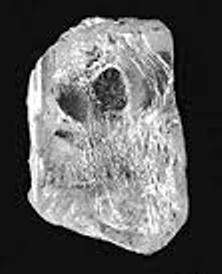
The "Star of Sierra Leone"is the largest diamond to be discovered in the alluvial deposits of Sierra Leone. The diamond is a colorless, lustrous and pellucid crystal, features that are so characteristic of the exceptional quality colorless diamonds found in the country. The name Star of Sierra Leone appears to have been inspired by the lustrous nature of this enormous crystal.

Characteristics of the diamond
The rough diamond was an enormous colorless and transparent crystal weighing 969.8 carats, which was subsequently cut into 17 stones, 13 of which were flawless.
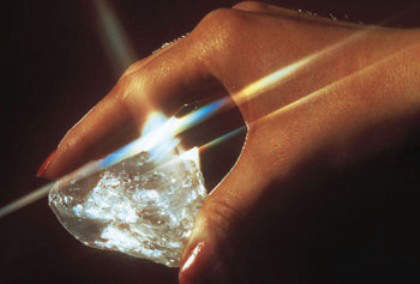
The largest stone that was cut from the diamond weighed 143.20 carats originally, but was flawed. To eliminate the flaws the stone had to be re-cut again, with a drastic reduction in weight, resulting finally in a pear-shaped, colorless, and flawless, 53.96 carat diamond.
Diamonds of Sierra Leone have an international reputation as one of the highest gem quality diamonds in the world. The diamonds are so pure and free of inclusions, that some of them are known as "glasses", clear, transparent and absolutely colorless. Even though the diamonds derived from the "Star of Sierra Leone"have not been graded for color and clarity, in all probability they are D-color diamonds and perhaps internally flawless.
Being D-color diamonds, the Star of Sierra Leone diamonds are Type IIa diamonds, that are characterized as chemically pure and structurally perfect. They are chemically pure due the absence of impurities such as nitrogen, boron, hydrogen etc. which can cause color in diamonds. They are structurally perfect due to absence of plastic distortions in the crystal, which can also impart rare fancy colors to the diamond. Thus in the absence of factors that can impart color to diamonds, these diamonds are absolutely colorless.
History
The Star of Sierra Leone diamond was discovered on February 14, 1972, in the Diminco alluvial mines in the Koidu area of Sierra Leone. Diminco is the abbreviated form of the state sponsored Diamond Mining Company. The enormous diamond had a weight of 969.8 carats and was the largest gem-quality rough diamond ever to be discovered in Sierra Leone. The largest gem-quality diamond discovered previously in Sierra Leone was the 620-carat "Sefadu"diamond, found in 1970.
The "Star of Sierra Leone"diamond has acquired the rare distinction of being the largest alluvial diamond ever discovered in the world. It is also the third largest gem-quality rough diamond ever to be discovered in the world. See table below.
List of largest gem-quality rough diamonds discovered in the world
Name
Country of discovery Year of discovery Carat Weight Position
Cullinan South Africa 1905 3,106 1 Excelsior South Africa 1893 995 2 Star of Sierra Leone Sierra Leone 1972 969.80 3 Incomparable Zaire 1984 890 4 Great Mogul India 1650 787 5 Millennium Star Zaire 1990 777 6 Woyie River Sierra Leone 1945 770 7 Golden Jubilee South Africa 1985 755 8 President Vargas Brazil 1938 726.60 9 Jonker South Africa 1934 726 10 Jubilee-Reitz South Africa 1895 650.80 11 Unnamed South Africa 1984 620.14 12 Sefadu Sierra Leone 1970 620 13 Kimberley Octahedral South Africa 616 14 Lesotho Promise Lesotho 2006 603 15 Centenary South Africa 1986 599 16 De Grisogono Central Africa 587 17 Jacob-Victoria Ssouth Africa 1884 457.50 18 Zale light of peace Sierra Leone 1969 435 19 De Beers South Africa 1888 428.50 20 Niarchos South Africa 1954 426.50 21
The rough diamond was purchased by the world renowned diamond dealers and jewelers Harry Winston Inc. of New York, in the same year it was discovered. The cutting of the diamond was entrusted to Lazare Kaplan the master cutter and cleaver who had descended from three generations of jewelers and had previously earned the distinction of cutting famous diamonds like the Jonker diamond in 1936. Mr. Kaplan learn the craft of diamond cutting in Antwerp, Belgium, and pioneered the establishment of a diamond cutting industry in Puerto Rico. He is always renowned for going in for quality of a diamond, sometimes at the expense of quantity, bringing out the maximum fire and brilliance in a stone.
Mr. Kaplan undertook a detailed study of the rough stone which lasted more than one year. The diamond was finally cleaved in front of a nationwide TV audience in America, and thus the "Star of Sierra Leone"became almost a household name in America. The Government of Sierra Leone issued a special commemoration stamp marking the event, and a special feature of this stamp was its diamond-like shape with a crown, table and pavilion, with the following print appearing on it -"SIERRA LEONE - "The Star of Sierra Leone"- Harry Winston."
The diamond was cleaved into 17 pieces, which were transformed into 17 diamonds, out of which, 13 diamonds were flawless "top color"diamonds. The largest piece which was a "top color"diamond of 143.20 carats was however flawed, and was again re-cut to a flawless pear-shaped diamond of 53.96 carats. Six of the "Star of Sierra Leone"diamonds were later set by Harry Winston in the famous "Star of Sierra Leone"brooch.
Diamond industry in Sierra Leone
Sierra Leone is an independent republic in the West African region, bordered by Guinea on the north and east and Liberia on the South. The country was a British Colony since 1787, and became an independent republic in 1961. The capital city of Sierra Leone is Freetown, which derives its name from the freed slaves who were re-settled there after the abolition of slavery by the British in 1787. The country is rich in mineral resources such as diamond, gold , platinum, bauxite, chromite, iron ore, rutile, and monazite. The mainstay of the economy is agriculture followed by mining, the most important industry in terms of employment and exports. Diamonds mined in the alluvial deposits of the country are one of its main exports.
The diamond fields of Sierra Leone are situated in the hilly terrain, north of the town of Kenema, in the southeastern and eastern parts of the country. The area is bounded on the west by the Sewa-Bafi river and on the east by the borders of Liberia and Guinea. The diamond fields cover an area that constitute about one-third of the total area of the country. The diamond fields are mainly concentrated in the Kono, Kenema and Bo districts, and are situated in the drainage basins of Sewa, Bafi, Mano, Woa and Moa rivers.
Alluvial diamonds were first discovered in Sierra Leone in January 1930, by two Geologists of the Sierra Leone Geological Survey N. R. Junner and J. D. Pollet. A company by the name of Sierra Leone Selection Trust (SLST) acquired a diamond prospecting lease for the whole country, and commenced alluvial diamond mining in the Kono area in 1934, and annual production reached one million carats by 1937. In 1954 the company started mining in the Tongo area. In 1970, the Government of Sierra Leone established the Diamond Mining Company known as Diminco, which acquired a 51 % interest in the assets of the SLST. Peak annual output from the two fields in the Kono and Tongo areas exceeded one million carats in the 1960s and 1970s, but declined steadily to less than 100,000 carats by mid-1980s. Large scale illicit mining and smuggling of diamonds began after the country gained independence in 1961.
Kimberlite diamond pipes were first discovered in Sierra Leone in 1948 in the Koidu (Kono) area and later in the Tongo area. Studies conducted by diamond mining companies like the Koidu Holdings Ltd. and the Rex Diamond Mining Corporation have revealed the existence of substantial quantities of diamonds up to a depth of about 300 meters. Koidu Holdings Ltd. started trial mining and bulk sampling programs at the Kimberlite pipe in Koidu, producing an initial output of 18,000 carats, and the company has been given a license to exploit the other Kimberlite pipe at Tongo.
Sierra Leone was engulfed in a civil war between the Government and the Revolutionary United Front (RUF) rebels, between 1991 and 2002, that resulted in hundreds of thousands of deaths and the displacement of over two million people, who fled to the neighboring countries as refugees. The civil war destroyed much of the economy and infrastructure of the country. The rebel forces that controlled the diamond producing areas of the country, were diverting the diamonds produced to the international markets, through Charles Taylor's Liberia, and used the funds acquired to purchase weapons, to sustain the civil war against the government. The situation became so critical that the United Nations had to step in and impose a ban on the sale of diamonds originating from Sierra Leone and Liberia, which were referred to as "blood diamonds."
On the initiative of the United Nations all stakeholders in the international diamond industry which included the international diamond mining companies, international diamond dealers, the Central Selling Organization that controls the international diamond trade, diamond producing countries, diamond processing companies, and Non-Governmental Organizations, have been brought together, to formulate a policy on the orderly marketing of diamonds, known as the Kimberley Process. The main objective of the Kimberley Process is to exclude "conflict diamonds"or "blood diamonds"from the legitimate international diamond market, in order to prevent the financing of war through the sale of such diamonds. Blood diamonds have been implicated in the civil wars of many diamond producing African countries such as Sierra Leone, Liberia, Angola and the Congo. Under this arrangement legitimate diamonds are provided with certificates of origin known as the Kimberley Certificate, which has to accompany the diamonds from the time of production until it reaches the end users of the diamonds. No diamonds could be exported from one country to another without an accompanying Kimberley certificate.
After the official ending of the civil war in Sierra Leone in January 2002, and the disarming of the RUF rebels and the Civil Defense Forces, elections were held in May 2002, and the legitimate government of Sierra Leone had been able to re-establish its authority. In June 2003, the United nations lifted the ban on the sale of Sierra Leone diamonds, and the government of President Tijjan Kabbah, embraced the Kimberley Process, leading to increased investment in the diamond mining sector. Since the introduction of the Kimberley process, the export of legally mined diamonds increased rapidly from $ 10 million in year 2000, to $ 76 million in 2003, $ 127 million in 2004, and $ 140 million in 2005.
It appears that since the discovery of diamonds in Sierra Leone in January 1930, for the first time the benefits accruing from this valuable natural resource are beginning to reach the impoverished masses of this poor African nation.
Back to Famous Diamonds,Gemstones and Pearls
 Home
Security & Guarantee
How it Works
Technology Partners
Updated Tables
Famous Diamonds
More Famous Diamonds
Famous Pearls
Famous Gemstones
Contact Dr Shihaan Larif
Contact Senior Editor
Famous Jewelry
Reference Database
Forums
Learning Center
Gemstone Gallery
e-mail Notifications
Advertise
Press Release
About Us
Privacy Policy
Contact Us
FAQ'S
Site Map
Staff Mail Login
Staff Documents
Birthstones
History
Minerals
Shows
Live Metal Prices
Jewellery Gallery
News
Marketplace
Marketplace Support
Open Store
Online Auctions
Join Us & Contribute
Directory
Classifieds
List your products
Wholesale Trading
Post Buy Request
Go Green Policy
Site Updates
Upcoming-ToDo List
Latest News
Latest Articles
Latest Blog Updates
Chat Rooms
Job Board
User Gallery
Videos
New Newsletter Archive
Old Newsletter Archive
Jewelry & Mineral Blog
User Blogs & Social Network
Search
Answers (Q & A)
Valuation
Help me find a diamond/jewelry
pin.internetstones.com- Social Pinboard- Sart yours & connect with millions
Invite Friends From Yahoo, Gmail etc-One Click
Home
Security & Guarantee
How it Works
Technology Partners
Updated Tables
Famous Diamonds
More Famous Diamonds
Famous Pearls
Famous Gemstones
Contact Dr Shihaan Larif
Contact Senior Editor
Famous Jewelry
Reference Database
Forums
Learning Center
Gemstone Gallery
e-mail Notifications
Advertise
Press Release
About Us
Privacy Policy
Contact Us
FAQ'S
Site Map
Staff Mail Login
Staff Documents
Birthstones
History
Minerals
Shows
Live Metal Prices
Jewellery Gallery
News
Marketplace
Marketplace Support
Open Store
Online Auctions
Join Us & Contribute
Directory
Classifieds
List your products
Wholesale Trading
Post Buy Request
Go Green Policy
Site Updates
Upcoming-ToDo List
Latest News
Latest Articles
Latest Blog Updates
Chat Rooms
Job Board
User Gallery
Videos
New Newsletter Archive
Old Newsletter Archive
Jewelry & Mineral Blog
User Blogs & Social Network
Search
Answers (Q & A)
Valuation
Help me find a diamond/jewelry
pin.internetstones.com- Social Pinboard- Sart yours & connect with millions
Invite Friends From Yahoo, Gmail etc-One Click




Our Global Jewelry Industry Job Network


Buy & Sell in our Marketplace

Subscribe to our Newsletter

List in our Classifieds

List in our Directory

User Uploaded Gallery

Powered by Ultra Secure
Amazon (USA) Cloud Network

Founder Internet Stones.COM
Register in our Forums

| Featured In
|
|
|
|
|
|
|
|







Blog & Education Feed
Articles Feed
 |
 |
 |

Copyright © .Internet Stones.COM. All rights reserved.