Susan Hendrickson's Conch Pearls
Open FREE Unlimited Store Join Our Newsletter
Origin of name
The name refers to two extraordinarily large conch pearls weighing 22.4 carats and 17.9 carats, given on loan to the National Museum of Natural History of the Smithsonian Institution by Susan Hendrickson, the marine archaeologist and collector of conch pearls, to be exhibited at the "Allure of Pearls" Exhibition, held between March 18 and September 5, 2005, and co-sponsored by the Gemological Institute of America, Paspaley Pearls Pty. Ltd. and Iridesse Pearls. Susan Hendrickson had been a connoisseur and collector of conch pearls for almost two decades.

She purchased the pearls from the queen conch fisherman of the Caribbean, who harvested them primarily for their meat which became a popular delicacy. The conch pearls were actually a by product of this thriving queen conch fishery. Susan Hendrickson has now gone into partnership with the renowned Geneva-based jewelry maker Georges Ruiz, to turnout conch pearl jewelry, which they believe would be the most popular pearl of the future, given the natural provenance of the pearl, their extreme rarity, and the array of colors in which they are found. Only one in ten thousand queen conches can yield a conch pearl, out of which only about 10% are of gem quality. The variety of colors in which conch pearls exist are pink, yellow, brown, white and golden. The most sought after color in conch pearls is a salmon-colored orange-pink. Besides their striking colors conch pearls, especially the pink and the whitish-pink colored pearls, have a unique feature known as a "flame structure," a spectacular chatoyancy effect that appears on the surface of the pearl, as if a fire is burning on the surface.

Susan Hendrickson's Conch Pearls
Characteristics of the Susan Hendrickson's Conch Pearls
Weight, color, shape and flame structure of the conch pearls
The two large conch pearls belonging to Susan Hendrickson's collection of conch pearls are extremely rare specimens given the fact that the average size of a conch pearl is less than 3 mm and average weight less than 1 carat (4 grains). The larger conch pearl weighs 22.4 carats, equivalent to 89.6 grains and the smaller one 17.9 carats, equivalent to 71.6 grains. Both pearls have a deep-pink color which is the most sought after color in conch pearls. The pearls also have the characteristic flicker across their surfaces, known as the "flame structure." Besides pink, conch pearls can also have other colors such as yellow, brown, white and golden. White and brown colors are relatively rare in conch pearls. The usual shape of conch pearls is either baroque or oval, and both Susan Hendrickson's pearls conform to the latter shape, even though one of them is somewhat spherical. Thus the Susan Hendrickson's conch pearls undoubtedly qualify to be categorized under famous pearls on account of their extraordinary size, color and shape.
Conch pearls are natural non-nacreous pearls produced by the sea-snail Strombus gigas (queen conch) found in the Caribbean and Gulf of Mexico
Susan Hendrickson's Conch Pearls are extremely rare natural pearls produced by the sea-snail Strombus gigas, whose natural home is the Caribbean and the Gulf of Mexico. According to the technical definition of "true pearls," pearls that produce nacre, a complex organic-inorganic substance, that is responsible for their luster and iridescence, are the only pearls that could be characterized as "true pearls." Pearls produced by pearl oysters and freshwater mussels come under this category. However, pearls produced by sea-snails, such as conch pearls and melo-melo pearls, and pearls produced by giant clams, do not qualify to be classified under "true pearls" as they do not produce nacre, and hence do not have the luster and iridescence of "true pearls." These pearls have a matte-like appearance like ceramic or porcelain, and are said to be porcellaneous. Hence non-nacreous pearls are just characterized as "calcareous concretions" made up of only insoluble calcium salt, like calcium carbonate. These calcareous concretions are in a way similar to the kidney stones in human beings, which are made up of insoluble calcium oxalate. In conch pearls calcium carbonate is found in the crystalline form known as calcite.
The presence of a chatoyant effect in conch pearls make them unique among non-nacreous pearls
Among the non-nacreous pearls, conch pearls hold a unique position, as they exhibit a form of chatoyancy known as a "flame structure" which produces a shimmering effect in pink and white pearls, and sometimes in other colors, reminiscent of a fire burning on the surface. Thus there has been a recent move to reclassify conch pearls as "true pearls" given the fact that in some conch pearls the spectacular shimmering effect surpasses the luster, orient and iridescence of some "true pearls. Mr. Kenneth Scarrat, the director of the GIA in Bangkok argued recently that conch pearls be reclassified as true pearls as they deserve this distinction, due to their unique chatoyancy that imparts a unique beauty on these pearls. The chatoyancy in conch pearls is caused by calcite microcrystalline fibers that constitute bundles arranged in concentric layers in a lamellar fashion. It is the interaction of light with these micro fibers that causes the shimmering effect known as "flame structure."
Conch pearls, a by product of the queen conch fisheries
Queen conches had been harvested by man since ancient times mainly as a source of food. The meat of the queen conch is a delicacy and very popular in the Caribbean and the United States. The flavor is somewhat similar to that of scallops, clams and abalones, and lacks the fishy taste found in most sea foods. Ancient man also had other uses for the queen conches that he harvested. The shell of the queen conch was used as bugles and trumpets, ink holders, hand weapons and for the manufacture of jewelry. However, ancient man used ancient techniques in the harvesting of the conches, and took only what was needed for his survival from the sea. His exploitation was sustainable and provided ample opportunities for the recovery of the populations. In modern times queen conch meat is still valued as a nutritious and cheap source of food in the countries of the Caribbean, and continues to be exploited mainly for this purpose. The shells are also valued as souvenirs, and used to turn out cameos, curios and jewelry. Another important by product of the queen conch fishery was the very rare pearls that were recovered from the queen conches. These conch pearls were extremely rare and has a frequency of occurrence of one in 10,000.
The swaying popularity of conch pearls
The rise and fall of conch pearl popularity in the late 19th and early 20th centuries
Conch pearls were popular during the late 19th and early 20th centuries during the end of the Victorian period and particularly during the Edwardian period that followed, and until the beginning of World War I. The Queen Mary conch pearl brooch is a typical example of a piece of jewelry of this period that incorporated conch pearls. However, immediately after the end of World War I, the popularity of conch pearls rapidly declined. The main reason attributed to this loss of popularity was the successful culturing of Akoya pearls by the Japanese in the 1920s, which made available a range of cultivated pearls in a variety of colors, shapes and sizes and at affordable prices. This was a terrible blow to the natural pearl fishing industries of many traditional pearl producing countries such as the countries of the Persian Gulf region, and Sri Lanka with its ancient pearl fishing grounds in the Gulf of Mannar.
Conch pearls were the only natural pearls produced after the collapse of the natural pearl industry
However, in spite of the lack of demand, conch pearls continued to be produced in the Caribbean and the Gulf of Mexico, as the pearls were only a by product of another major industry in this region, harvesting queen conch for their meat. Significant quantities of conch pearls were produced in this manner but unfortunately there were no buyers for these pearls. The only buyers for these pearls were pearl enthusiasts and collectors who purchased them from the Caribbean pearl fisherman and added them to their collections. One such pearl enthusiast was Susan Hendrickson, the marine archaeologist, paleontologist and professional diver, who built up one of the largest collections of conch pearls in the world, during her diving expeditions to the Caribbean, and the owner of the pearls under consideration.
Surge in popularity of conch pearls in recent years.
Recently there has been surge in popularity of conch pearls, perhaps due to an increase in demand for natural pearls. All conch pearls available in the market are necessarily natural pearls, as attempts to produce cultured conch pearls have failed, due to the sensitivity of the sea-snail, and the difficulty in gaining access to the pearl-producing area of the snail, as a result of the spiral shape of the shell. A combination of factors seem to have been responsible for the increase in popularity of conch pearls. This include the natural provenance of the pearls, combined with their rarity, the array of colors in which they are found, the flame structure of the common colors, pink and white, and the hardness and resistance of the pearls in comparison to other pearls.
History of the Susan Hendrickson Conch Pearls
The source of the conch pearls
The source of the Susan Hendrickson's conch pearls is undoubtedly the Caribbean or the Gulf of Mexico, the natural home of the marine gastropod mollusk Strombus gigas, commonly known as the queen conch. The queen conch is found in the territorial waters of almost 36 countries and dependant territories in the Caribbean from the State of Florida in the United States to the northern coast of South America. The queen conch was one of the most important fishery resources in this region sustaining a conch meat industry whose annual output was around $60 million. Some countries that earned valuable foreign exchange by the export of conch meat were Honduras, Haiti and the Dominican Republic.
Susan Hendrickson builds up the largest collection of conch pearls in the world
Susan Hendrickson becomes a professional diver collecting aquarium fish, shells and lobsters off the coast of Florida
Susan Hendrickson had worked for almost 35 years as a professional diver, paleontologist and marine archaeologist in different countries around the world. During her early years she had left her home and was moving from city to city across the United States, living and working unusual odd jobs in order to make a living. While living and working in California she saw for the first time a tropical fish store, selling aquarium fish to customers. She inquired from the store owner from where he got his supplies of tropical fish, and was told that people use to catch them in the tropical waters and send them to his store. She immediately decided that catching tropical fish would be an ideal option to pursue, not only to sustain herself but also to satisfy her curious and adventurous predisposition. She learnt that the best environment in the United States where tropical fish abound were Florida and Hawaii, and therefore decided to return to Florida, where she was originally based. In the 1970s, she joined a group of people in the Florida Keys who collected and sold aquarium fish. Even though Susan did not know how to dive, she had on the job training on diving and became an expert diver in due course. The fish that were caught in the tropical waters of Florida were sold to aquariums and pet stores around the United States and Canada. Besides aquarium fish, she also collected shells and lobsters in the Florida Keys for which there was a ready market.
Susan Hendrickson begins a collection of conch pearls while working as a professional diver in Florida
It was while working as a professional diver in the Florida Keys that she first came across conch pearls, that were found occasionally in the queen conches that were harvested off the coast of Florida. These glowing pink natural wonders aroused her curiosity and she began collecting them, sometimes purchasing them from other divers and queen conch fisherman. Conch pearls had no value at that time and was purchased only by collectors.
Coincidentally around the 1970s when Susan Hendrickson started her conch pearl collection, the conch-fishing industry ignited in the Caribbean and experienced a rapid boom. By the mid-1970s thousands of tons of queen conches were harvested and their meat exported to meet an ever-increasing international demand. Initially what began as a sustainable food business supplying the domestic markets to satisfy the palettes of the local population, expanded in the next 20 years into a major export industry.
An important by product of this thriving conch meat industry was the rare conch pearls, which were produced in substantial quantities by these Caribbean States. Unfortunately there were no buyers for these pearls as there was no demand for conch pearls in the jewelry industry. The pearls were purchased only by pearl enthusiasts and collectors, and prominent among these collectors was Susan Hendrickson, the renowned marine archaeologist, paleontologist and professional diver, who gained international fame for her discovery in 1990 in the Black Hills of South Dakota, one of the largest, most complete and best preserved fossil skeletons of Tyrannosaurus rex. She also took a keen interest in the collection of amber and conch pearls during her expeditions to the Dominican Republic and some other Caribbean countries.
Susan Hendrickson goes on expedition to the Caribbean and purchases more conch pearls eventually building up the largest private conch pearl collection in the world
Susan Hendrickson traveled through many Caribbean States, from town to town, fisherman to fisherman and diver to diver, always asking for conch pearls. Her first great conch pearl of considerable size, a 10-carat beauty with excellent pink color and flame structure, came in the late 1970s from a fisherman in the Dominican Republic. In the absence of the fisherman, she negotiated with his wife for three days, as she was reluctant to sell without her husband's permission. Eventually she bought the pearl for $50, much higher than the usual $10 she paid for a conch pearl. This was twice the amount that was needed for an average person in the Dominican Republic to survive for a month, which was $25. Hendrickson herself was surviving in the Dominican Republic at that time on $100 per month. The market value of a 10-carat pearl of that color and beauty would today be around $25,00 to $35,000.
Susan Hendrickson continued her conch pearl collection in the Caribbean particularly when she was based in some Caribbean countries like the Dominican Republic, Bahamas, Cuba and Honduras, where she undertook diving expeditions. She purchased the conch pearls from the queen conch fisherman of these countries, and eventually built up one of the largest and most valuable private conch pearl collections in the world. Starting as a pearl enthusiast and collector in the mid-1970s, Susan Hendrickson eventually became the world's leading authority on conch pearls.
The possible countries where the conch pearls originated
Some of the countries where Susan Hendrickson undertook diving expeditions in the Caribbean were the Dominican Republic, Bahamas, Cuba and Honduras, all of which had thriving queen conch fisheries. Thus the Susan Hendrickson's queen conch pearls might probably have originated in any one of these four countries where she lived and worked, and collected conch pearls.
Susan Lee Hendrickson - A Short Biography
Her early days at school
Susan Hendrickson was born in Chicago, Illinois, on December 2, 1949. However, she grew up in the suburb of Munster, Indiana, and was the middle of three children, with an older brother and a younger sister. She enjoyed going to school and was more intelligent than the average student in her class. From her younger days she always showed a tendency and curiousness to know more about everything in her environment. To satisfy this curiosity she became a voracious reader, reading almost anything she could lay her hands on, and usually finishing a book a day. While at school she joined the school swimming team and performed excellently in all swimming competitions. Her love for swimming and being in the water served her very well in later years, when she became a professional diver.
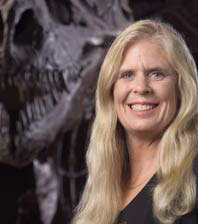
Susan Hendrickson
Susan begins to rebel and has a hard time fitting in at school
However, around the age of 15, Susan Hendrickson, the perfect and well-behaved child who would be the pride of any parent, began to rebel. Hendrickson herself confessed that she had a hard time fitting in at school. Her mother compared her to a square peg in a round hole, too bright and too far ahead to fit in. Her reading habit had placed her far above her colleagues in the classroom, and aroused her curiosity and urge to known more about things in a practical way, rather than acquiring that knowledge theoretically around the four walls and dull atmosphere of a classroom. It is said that at the age of 16, Susan Hendrickson often lied to her parents telling them she was visiting a friend's house, but instead sneaked into the city of Chicago and sat on the docks of the Navy Pier, secretly wishing that she was far away. Hendrickson later told a Chicago Tribune reporter, "I was bored, I hated my high school, and I hated my home town."
Susan moves to Florida for a change of environment. The turning point in her life
Her attitude brought her into conflict with her parents, and things came to a head when there were several heated clashes between her and her mother Mary. Finally both mother and daughter agreed that a change of environment might help in setting things right, and it was decided that Hendrickson should move in to her uncle and aunt's house in Ft. Lauderdale, Florida, where she continued her high school. While at Florida, one day she was rebuked and grounded by her uncle and aunt for staying away from home one whole night. This incident was the turning point in her life when she decided that she could confidently face the world single-handed, and be independent from her parents control. She dropped out of school and went to live with her boy friend, and never came back home again.
The challenges faced by Susan after she gets married
The newly married couple sat down and planned their future together. The boy liked to dive and she too loved the water; so they planned to work on a shrimp boat in Lafitte, Louisiana. However, they ran into trouble in Louisiana and their plans did not materialize. They were then compelled to move around the country living and doing odd jobs in cities from San Francisco to Boston. Things were becoming difficult for the young couple and they constantly ran short of money. It was then that Susan tried to open a line of communication with her parents, and her father agreed to loan her a small sum of money, which she used to make the down payment for a 30-foot sailboat at California. They lived on the sail boat for two years at California, and made a living by painting and varnishing the boats of their wealthy neighbors. It was while at California, that she walked into a tropical fish store, and decided that one day she would catch these fishes and supply them to the market to make a living.
Susan becomes a professional diver catching tropical fish off the coast of Florida
After two years in California the couple separated and Susan Hendrickson and her boy friend went their separate ways. As she made up her mind at the tropical fish store previously, she decided to catch aquarium fish for a living. She learnt that the best waters for tropical fish in the United States were the waters off the coast of Florida and Hawaii. Susan Hendrickson then decided to return to Florida, where she was formerly based, and joined a group of people who collected and sold tropical fish. She then began life as a diver, receiving on the job training on diving, while catching tropical fish and collecting lobsters and shells. The fish they caught were sold to aquariums and pet stores around the United States and Canada.
Susan reconciles with her parents and after passing the high school GED equivalency test explores the possibility of following a program in Marine Biology
After working for about an year as a diver, Susan Hendrickson moved to Seattle, where her parents had relocated, and tried to re-establish the family bonds she had once broken. She was 21 years of age now, and once again thought of completing school. After passing the high school GED equivalency test easily, she approached the chairman of the Marine Biology Department of the University of Washington, to explore the possibility of enrolling in their programs, but having learnt from the chairman that she could only aspire to become a research scientist, dissecting fish or taking pollution counts after seven long years of study, she decided against joining the program, and opted to continue her chosen career as a professional diver. However instead of returning immediately to Florida, she remained in Seattle for another year, working as a sail maker. After this she once again moved to Marathon, Florida, where she resumed her career as a professional diver.
Susan gets a second breakthrough in her career as a salvage operator
The next breakthrough in her career as a professional diver came in the summer of 1973, while visiting diver friends in Key West, when a friend asked her to help him rescue a large boat that was stuck on a reef. After five days of hard work the freighter was salvaged from the reef. This was Susan Hendrickson's first salvage job, and even though the work was tough, she gained first hand experience in carrying out a salvage operation. The novel experience opened new avenues for her as a professional diver, and she moved to Key West, where she offered her services as a salvage operator. In this new role she helped salvage several sunken boats and planes from the sea.
Susan gets yet another breakthrough in her life as a Marine Archaeologist
In the year 1974, Susan Hendrickson was invited by a group of divers to participate in a marine archaeology project, involving a historic shipwreck off the coast of the Dominican Republic, which she gladly accepted. This opened yet another field in her chosen carrier as a professional diver. During her stay in the Dominican Republic she fell in love with the country and its people, and returned whenever she got the opportunity. She also pursued her passion for collecting conch pearls during her visits to the country.
Susan becomes a world recognized expert on amber and is introduced to the exciting fields of Entomology and Paleontology
Susan visits the amber mines in the mountains of the Dominican Republic
It was during one such visit to the Dominican Republic that she decided to take a trip to the mountains of the republic which were famous for their amber mines. Amber is a fossil tree resin, a clear orange yellow substance that originated from resins, secreted by epithelial cells of resin ducts, in the tree trunks of coniferous trees of the class Gymnosperms like Pine (Pinus), Cypress (Cupressus), Junipers (Juniperus), Araucaria, cedar (Cedrus), firs (Abies), redwood (Sequoia), spruces (Picea) etc. Conifers have a fossil record extending back about 300 million years to the Paleozoic, in the late Carboniferous period. Most modern coniferous Genera are recognizable from fossils 60-120 million years old. The resin produced is sticky and gum-like and tiny insects can be trapped in this secretion, and get fossilized producing amber. As the resin hardens and becomes buried in the earths crust it can sometimes preserve the tiniest forms of pre-historic life. Thus amber can provide a fossilized record of previous life dating back to millions of years. Amber of good quality is considered as an organic gemstone, and used in the manufacture of ornamental objects and jewelry.
Susan helps build the amber collections of museums and universities in the United States and overseas
When Susan reached the amber mines in the mountains of the Dominican Republic, the miners showed her some golden lumps of amber mined by them, with embedded and well preserved insects inside them. Susan was fascinated by what she saw and began reading all literature she could lay her hands on about amber. When she returned to the Dominican Republic again she attempted to dig in search of amber herself, but soon realized that one could spend a whole year digging for amber and yet not recover a single specimen of amber. She then decided to buy amber specimens directly from the local miners, paying $10 to $35 for each specimen. After purchasing sufficient quantities of amber, she carried them to an entomologist friend in Gainesville, Florida, to study the embedded insects, and he was able to identify several new species of fossil insects, that were new to science. Her dealings in amber eventually made her a world-recognized expert on amber, and her assistance was sought in building up major collections of amber in museums such as the Smithsonian's National Museum of Natural History, the American Museum of Natural History of New York City, and the natural history museums of Karlsruhe and Stuttgart in Germany.
Susan meets Peter Larson in Peru while on a whale fossil expedition and joins Larson's fossil hunting crew in South Dakota
Susan Hendrickson also collaborated with the Swiss Paleontologist Kirby Siber in building a fossil museum outside Nasca in Peru. Siber and Hendrickson struck a friendship, and it was Siber who pursued Susan to hunt for larger fossils, and invited her for a whale fossil expedition in Peru in 1985. Their team worked six winters in the deserts of Peru, and uncovered several enormous whale fossils, as well as seals and dolphins. While in Peru, Susan was introduced to the South Dakota fossil hunter Peter Larson with whom she established a partnership that eventually had a bearing on Paleontology for years to come. She worked with Larson for three summers in South Dakota, digging for fossils. But the summer of 1990 turned out to be the most memorable in her life, that led to the most sensational discovery in the history of Paleontology and propelled Susan Hendrickson to the status of an international celebrity.
The sensational discovery of the well preserved and most complete fossil of Tyrannosaurus rex by Susan Hendrickson
The day was August 12, 1990. Larson's fossil hunting crew, who worked for the Black Hills Institute of Geological Research founded by him, had explored six outcrops of Cretaceous rock that day, but decided against looking at the seventh and final cliff in the area as dusk was drawing near. They decided to call it a day and was about to leave the site, when to their surprise they found one of the tires of the truck had gone flat. Four men in the group left with the tire to get it fixed, while Susan stayed behind. The sun was now setting quickly, and Susan was getting tired of waiting. She saw that this was a good opportunity for her to explore the remaining unexplored cliff, and decided to take a walk across the valley towards the cliff face, accompanied by her dog. She reached the base of the cliff, and still keeping her head down began to look for loose bones that may have fallen from the rocky ledges. She noticed some small bone fragments lying on the ground. Curious of what she saw on the ground, her next natural reaction was to lift her head up and gaze at the face of the cliff, to look for the source of the bone fragments on the ground. She was dumbfounded at the amazing sight that beheld her. She saw about eight feet above her head, three dinosaur backbones, which obviously she knew was the bones of the great Tyrannosaurus rex. She quickly walked back to her base and yelled at Larson, and together they ran over to the site. Larson too was amazed at what he saw, and confirmed that the vertebrae and the leg bones belonged to Tyrannosaurus rex.
The challenging task of excavating the fossil skeleton from its rocky tomb
The next challenging task for the crew was to free the fossil skeleton from its rocky tomb. The use of heavy machinery would have damaged the skeleton; so the crew was compelled to use handheld tools such as shovels, picks, and crowbars. As they got closer to the skeleton they had to use smaller and smaller equipment. It took a little more than two weeks for the crew to completely excavate the fossil skeleton, and to their astonishment they found that it was almost 90% complete, making it the most complete Tyrannosaurus rex specimen ever unearthed. It was also the largest, with a length of 42 feet, a height of 13 feet at the hip, with 200 well preserved bones, including the longest T. rex tooth ever found, which was one foot long. The age of the skeleton was estimated around 67 million years, yet most of her bones were in excellent condition and had a high degree of surface details, even showing places on the bones where muscles, tendons and other soft tissues rested against or were attached to the bones. The completeness of the skeleton helped scientists to learn new facts about T. rex. One of the significant bones discovered on the skeleton by scientists, was the furcula or the wishbone, which was similar to that found in birds, thus upholding the theory that modern birds evolved or are related to dinosaurs. By studying the skeleton scientists were also able to estimate the speed at which T. rex was able to walk and run, being around 6 m.p.h. and 15 m.p.h. respectively, which was much slower than the previous estimates.
Peter Larson christens the fossil Tyrannosaurus rex as "Sue" in honor of its discoverer Susan Hendrickson
Larson then moved the excavated skeleton to his lab in Hill City, in South Dakota, after paying $5,000 to the land owner Maurice Williams, in whose land the fossil was found. They cleaned and studied the bones of the Tyrannosaurus, which they christened "Sue" in honor of its discoverer Susan Hendrickson.
Larson's plans for a Paleontology Museum in the Black Hills thwarted by Maurice Williams' legal action claiming the fossil skeleton
Larson planned to reassemble the bones and make it the centerpiece of a planned Paleontology museum in the Black Hills, but unfortunately Maurice Williams the land owner had filed legal action in early 1992, demanding the fossil back, claiming that the deal under which he received $5,000 in August 1990 for the specimen found in his land, was not valid, because the bones of "Sue" were a part of his land, which was actually owned by the Sioux tribe, and held in trust by the U. S. Government.
The court decides in favor of Maurice Williams who puts up "Sue" for sale at Sotheby's New York City. "Sue" sold for a record breaking $8.36 million to the Field Museum of Natural History, Chicago, Illinois
The court case was not resolved until January 29, 1996, when the bones of "Sue" were awarded to Maurice Williams, who decided to put it up for sale at Sotheby's Auction House in New York City, on October 4, 1997. Larson attempted to purchase back the fossil at the auctions, and had sent representatives to the auction armed with a million dollars, half a million dollars more that the price the fossil was expected to fetch at the auctions. However, what transpired at the auction was astounding and went beyond the expectations of all concerned, the original discoverer and owner Peter Larson, the new legal owner Maurice Williams, and the auctioneers themselves, Sotheby's Auction House, New York City. "Sue" was sold for a staggering $8.36 million, and the successful bidder was the Field Museum of Natural History in Chicago, Illinois.
"Sue" is reassembled by Paleontologists and put on display at the Field Museum
The bones of "Sue" were reassembled by the Field Museum with the assistance of paleontologists like Dr. Chris Brochu. The team of scientists adopted a new technique in the reassembly in which each bone was surrounded by its own small metal frame, enabling researches who wished to study any bone to simply unlock the particular frame and remove the bone. The completed mount of "Sue" was unveiled at the Field Museum on May 17, 2000. The skeleton of "Sue" is mounted in a posture reminiscent of the live animal temporarily distracted while hunting. The original skull of "Sue" is displayed in its own display case on the second floor balcony that overlooks the Sue mount. A mural painting depicting "Sue" in her Cretaceous environment, painted by the renowned paleoartist John Gurche, is appropriately displayed near the skull, overlooking the skeletal mount.
Susan Hendrickson's inborn desire to explore leads her to team up with Franck Goddio, the renowned French marine archaeologist
The discovery of "Sue" the largest and most complete Tyrannosaurus rex specimen ever discovered was undoubtedly the climax of the challenging and adventurous career of Susan Hendrickson, the professional diver, marine archaeologist, paleontologist, conch pearl collector, and amber expert. Her multiple interests in life reveals a determined woman with a never ending curiosity about everything in her environment. According to Susan Hendrickson, her life had mostly been about her freedom to explore. Being able to go wherever the next project takes her, and not knowing where that might be, was as important to her as breathing. Having made the most sensational and greatest discovery in her life, one would hardly expect her to relax and rest on her laurels, given the determined nature of the woman and her inborn desire to explore. Thus in the year 1992, she teams up again with the renowned French marine archaeologist Franck Goddio, who heads the organization known as The European Institute of Underwater Archaeology, sponsored by the Hilti Foundation. This organization has conducted some of the world's most exciting and productive excavations.
Susan Hendrickson takes part in the salvage operation of the Spanish galleon San Diego carried out by Goddio's team
In the year 1992, Franck Goddio's team had discovered a 400-year old sunken Spanish galleon called the San Diego in the waters off the Philippines. The San Diego was a cargo ship that had been carrying goods, mainly Chinese porcelain from Chinese ports to Spain and then to other markets in Europe. The Spanish galleons first called at Philippines before taking the transpacific route to Acapulco in Mexico. From Acapulco the goods were carried overland by mule train to the port of Veracruz on the gulf coast, and then loaded into Spanish Galleons that sailed to Cuba. All the galleons that sailed from Vera Cruz in Mexico, Portobello in Panama, and Cartagena in Colombia, assembled at Havana in Cuba, and the entire fleet sailed together from Havana, and through the straits of Florida entered the Atlantic Ocean. They then sailed across the Atlantic to various ports in Spain.
In the year 1600 the San Diego was used as a battle ship and was lost in the South China Sea off the coast of Philippines. The ship remained at the bottom of the sea for 400 years before it was rediscovered. Franck Goddio's team including Susan Hendrickson, started salvage work on the ship after it was discovered. A huge water dredge was first used to remove large quantities of sand and rock covering the wreckage. Subsequently the salvage team was able to recover substantial quantities of submerged cargo from the ship, which included 570 large stone jars, 430 gold and silver coins, and more than 800 pieces of beautiful, blue-and-white Chinese Ming porcelain. Besides this 400 chicken eggs and human bones were also found in the wreckage. According to Susan Hendrickson the excavation of the San Diego shipwreck was the best shipwreck excavation of her life.
Susan Hendrickson takes part in two marine archaeological expeditions in Egypt with Franck Goddio's team
Susan Hendrickson's greatest marine archaeological expeditions were undoubtedly the two expeditions she took part in Egypt still under Franck Goddio's team. One was the discovery of Napoleon Bonaparte's fleet of ships sunk in the "Battle of the Nile" by Admiral Nelson's British fleet in 1798 in an area called Aboukir Bay. The other was the discovery of the city of Herakleion and Cleopatra's Royal Quarters built on the Isle of Antirhodos, submerged in an earthquake 2,300 years ago, also in the Bay of Aboukir.
Discovery and excavation of Napoleon's lost fleet
Napoleon Bonaparte set sail to Egypt in 1798, with 365 ships and 50,000 men. This was a military campaign to conquer Egypt. A British fleet led by Admiral Horatio Nelson engaged Napoleon's fleet in a battle known as "The Battle of the Nile." Napoleon Bonaparte's flagship L'Orient exploded and most of the other ships were sunk in an area called the "Bay of Aboukir" Napoleon Bonaparte was thus forced to abandon his attempt to conquer Egypt. The L'Orient was reported to have carried a great deal of gold, silver and copper coins. In 1998, exactly two centuries after the famous "Battle of the Nile" Goddio's team including Susan, located the L'orient and began its excavation. The team was able to bring up most of the gold, silver and copper, together with cannons, muskets, cooking pots, bottles, tools and swords from other ships in the fleet.
Discovery and excavation of the submerged city of Herakleion and Cleopatra's Royal Quarters
The excavation of Napoleon's lost fleet was followed by the excavation of the submerged city of Herakleion, and Cleopatra's Royal Quarters in the year 2000. During these excavations an important statue of a priest holding Osiris-Canobos from Cleopatra's private temple was also recovered. A shipwreck dating from Cleopatra's time, and Mark Antony's home, the Timonium, was also explored by the divers. The submerged city of Herakleion had yielded some remarkable treasures such as colossal 18-foot statues, sunken ships and gold jewelry. These treasures lie 30 feet below the water on the sands of the Bay of Aboukir.
Susan Hendrickson, her life in retrospect
Susan Hendrickson now lives on the Island of Guanaja, off the coast of Honduras. On one occasion Susan Hendrickson is reported to have made the following comments : "I do this type of work, like my other passions, mainly because I am like a child who never grew up. I love to look for and find things. The thrill of discovery is a real emotion, like a "rush," the excitement is worth the days or months of hard work and keeps me going on an on, looking for more. I've been very lucky in my life to be able to follow what I wanted to do. Like the others, I do this because it's great! To try to rationalize the reason for following this career, it is to further education, knowing the past is important, but really I just selfishly love this work."
The above comments made by Susan Hendrickson clearly explains her philosophy of life and justifies the course of action she had taken throughout her life. Her never ending desire to explore was motivated by the thrill of discovery, and kept her going on and on. This also explains the fiercely independent stance taken by her throughout her life, making her the master of her own destiny. She also confesses that one of the reasons for choosing the career she did, was to further education. The whole world undoubtedly recognizes the enormous contributions she has made towards the development of science, in the fields of Paleontology, Marine Archaeology, and Gemology (amber and conch pearls). Her desire for exploration and discovery are indeed qualities of a great scientist. However, what is astounding is that all this was achieved not by an academic who had gone through the great halls of learning of a higher educational institution such as a University, but by an ordinary high school dropout who was disappointed by the dull atmosphere of a classroom. Her great achievements in life must be food for thought for educationists and educational policy makers, who should endeavor to make education more meaningful to the child, making it more practical oriented and giving opportunities to the child to explore and discover things by himself or herself. It was clearly a failure of the system that made a gifted child like Susan a school dropout, prompting her to follow her own course to explore her surroundings and acquire knowledge on her own, reading voraciously on what interested her and getting guidance from leading experts in the field. Susan was essentially a self-educated woman. The University of Illinois recognizing the contribution made by Susan Hendrickson towards the advancement of science, awarded her an honorary doctorate (PhD) degree, which she gratefully accepted.
You are welcome to discuss this post/related topics with Dr Shihaan and other experts from around the world in our FORUMS (forums.internetstones.com)
Related :-
1) Queen Mary Conch Pearl Brooch
3) Drexel Pearl
External Links :-
References :-
1) Sue Hendrickson - Susan Hendrickson's website, www.sue-hendrickson.net
2) Beneath the Sands of Time : Explorations with Sue Hendrickson - Anne L. Doubilet. www.explorers.org
3) Sue Hendrickson - From Wikipedia, the free encyclopedia
4) Susan Lee Hendrickson - www,wingsworldquest.org
5) What About the Susan Who Found Sue - A Portrait of Susan Hendrickson - by Steve Brusatte. www.dinodata.org
6) The Allure of Pearls - www.mnh.si.edu/exhibits/pearls/intro.htm
7) The Allure of Pearls- GIA, Events & Trade Shows
8) Conch Pearls - www.pearl-guide.com
9) Gem Profile 10 : Conch Pearl, www,airesjewelers
10) Conch - From Wikipedia, the free encyclopedia
11) Strombus gigas - From Wikipedia, the free encyclopedia
 Home
Security & Guarantee
How it Works
Technology Partners
Updated Tables
Famous Diamonds
More Famous Diamonds
Famous Pearls
Famous Gemstones
Contact Dr Shihaan Larif
Contact Senior Editor
Famous Jewelry
Reference Database
Forums
Learning Center
Gemstone Gallery
e-mail Notifications
Advertise
Press Release
About Us
Privacy Policy
Contact Us
FAQ'S
Site Map
Staff Mail Login
Staff Documents
Birthstones
History
Minerals
Shows
Live Metal Prices
Jewellery Gallery
News
Marketplace
Marketplace Support
Open Store
Online Auctions
Join Us & Contribute
Directory
Classifieds
List your products
Wholesale Trading
Post Buy Request
Go Green Policy
Site Updates
Upcoming-ToDo List
Latest News
Latest Articles
Latest Blog Updates
Chat Rooms
Job Board
User Gallery
Videos
New Newsletter Archive
Old Newsletter Archive
Jewelry & Mineral Blog
User Blogs & Social Network
Search
Answers (Q & A)
Valuation
Help me find a diamond/jewelry
pin.internetstones.com- Social Pinboard- Sart yours & connect with millions
Invite Friends From Yahoo, Gmail etc-One Click
Home
Security & Guarantee
How it Works
Technology Partners
Updated Tables
Famous Diamonds
More Famous Diamonds
Famous Pearls
Famous Gemstones
Contact Dr Shihaan Larif
Contact Senior Editor
Famous Jewelry
Reference Database
Forums
Learning Center
Gemstone Gallery
e-mail Notifications
Advertise
Press Release
About Us
Privacy Policy
Contact Us
FAQ'S
Site Map
Staff Mail Login
Staff Documents
Birthstones
History
Minerals
Shows
Live Metal Prices
Jewellery Gallery
News
Marketplace
Marketplace Support
Open Store
Online Auctions
Join Us & Contribute
Directory
Classifieds
List your products
Wholesale Trading
Post Buy Request
Go Green Policy
Site Updates
Upcoming-ToDo List
Latest News
Latest Articles
Latest Blog Updates
Chat Rooms
Job Board
User Gallery
Videos
New Newsletter Archive
Old Newsletter Archive
Jewelry & Mineral Blog
User Blogs & Social Network
Search
Answers (Q & A)
Valuation
Help me find a diamond/jewelry
pin.internetstones.com- Social Pinboard- Sart yours & connect with millions
Invite Friends From Yahoo, Gmail etc-One Click




Our Global Jewelry Industry Job Network


Buy & Sell in our Marketplace

Subscribe to our Newsletter

List in our Classifieds

List in our Directory

User Uploaded Gallery

Powered by Ultra Secure
Amazon (USA) Cloud Network
Founder Internet Stones.COM
Register in our Forums

| Featured In
|
|
|
|
|
|
|
|







Blog & Education Feed
Articles Feed
 |
 |
 |

Copyright © .Internet Stones.COM. All rights reserved.