Tarantula Brooch
Open FREE Unlimited Store Join Our Newsletter
Origin of Name
The name "Tarantula Brooch" is self explanatory, and obviously refers to the unique design of the brooch made of yellow gold studded with gemstones, in the form of a tarantula, that is stunningly natural. The centerpiece of the brooch which is the abdomen and thorax of the tarantula is occupied by a rare oval-shaped horse conch pearl and umba sapphires respectively. The brooch which was designed by Steffan Hemmerle of Hemmerle Jeweliere of Munich, Germany, attracted international attention when it was exhibited around the world as part of the traveling exhibition known as "Pearls : A Natural History," organized by the American Museum of Natural History, New York, in collaboration with the Field Museum of Chicago. Since October 2001, when the exhibition was first held at AMNH, New York, the traveling exhibition has been hosted in many museums around the United States and also in countries like Canada, France, Japan, Australia and the United Arab Emirates. In the designing of this unique brooch Steffan Hemmerle has drawn inspiration from a historic theme, using plant and animal motifs in jewelry designs, that had been prevalent since the time of ancient Egyptians and ancient Greeks, and reached its climax during the Art Nouveau period at the turn of the 20th century between 1890 to 1905, and continued to prevail well into the 20th century.
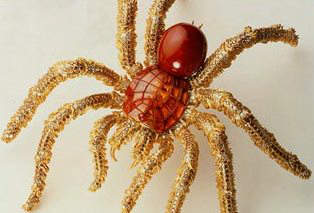
Tarantula Brooch
© Hemmerle Juweliere
Characteristics of the brooch
The materials used by Steffan Hemmerle in the creation of this extraordinary natural-looking Tarantula Brooch were yellow gold, pearl, umba sapphires, white and brown diamonds and ruby. The abdomen of the tarantula is occupied by a large, oval-shaped, orange-red pearl from a horse conch known as Pleuroploca gigantean, with a diameter of 27 mm along its long axis. The shape of the pearl matches exactly with the natural shape of the abdomen of tarantulas.
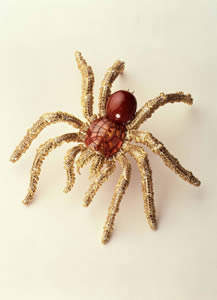
Tarantula Brooch
© Hemmerle Juweliere
The cephalothorax is set with brown umba sapphires. The cephalothorax (fused head and thorax)) or prosoma in a tarantula is the area to which most of its appendages are attached. The four pairs of legs, a pair of pedipalps and a pair of chelicerae with fangs, are attached to the cephalothorax. The legs are jointed with seven segments. The pedipalps are six-segmented appendages connected to the cephalothorax near the mouth and protruding on either side of both chelicerae, and used in food handling. The chelicerae are double segmented and are located just below the eyes, and directly forward of the mouth. The chelicerae contain the venom glands that vent through the fangs. Steffan Hemmerle in designing his tarantula brooch has tried as much as possible to conform to what is seen naturally in a tarantula, at least in its main characteristics. The four pairs of jointed legs, the jointed pedipalps, the chelicerae with the fangs are clearly depicted, including the hairs and bristles on the appendages. The appendages are made of yellow gold and studded with brown and white diamonds, and attached to the gold frame of the cephalothorax. Overall the orange-red abdomen, the brown cephalothorax and the golden yellow jointed legs and other appendages, seem to conform to the natural color of a tarantula, whose color varies from tan to reddish-brown to black, depending on the species.
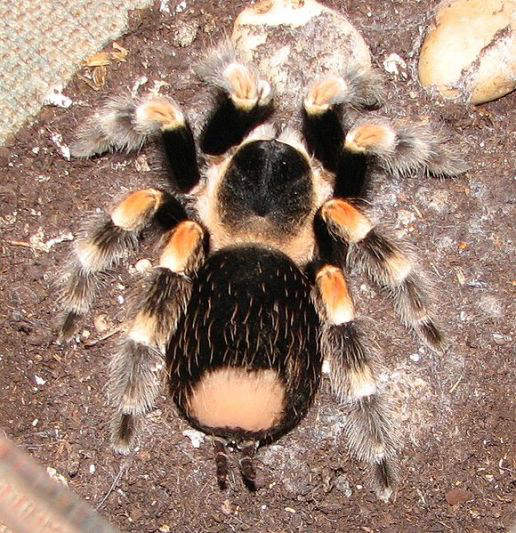
Mexican Red Knee Tarantula- Brachypelma Smithii
Tarantulas have eight simple eyes arranged in two rows of four eyes, above the chelicerae on the forward part of the prosoma. The front eye in each row is larger than the other three eyes. The two large front eyes constitute the main pair of simple eyes. However the vision of tarantulas is only restricted to the perception of light, darkness, basic shapes and motion. Thus the hairs on the body of the tarantula, called setae are the primary sensory organs that maintains awareness of its surroundings. Thus the sense of touch is its keenest sense, and the setae are the main sensitive organs, that can sense vibrations, wind direction, chemical stimuli and possibly even sound. In Steffan Hemmerle's jewel-studded creation of the tarantula, the main pair of eyes are represented by small rubies, behind and above the chelicerae on the forward part of the prosoma.
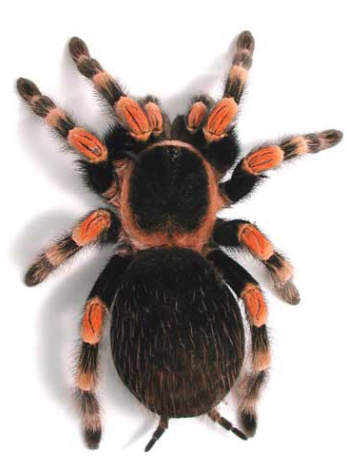
Mexican Red Knee Tarantula -Brachypelma Smithii
History of the brooch
History of the usage of plant and animal motifs in jewelry designs
Pre-historic man learnt to fashion jewelry even before he developed the spoken word or the written language
In the cultural evolution of pre-historic man the use of tools and clothing were among the first skills learnt by him, and it appears that next thing he learnt was the fashioning and adornment of jewelry. Archaeological evidence suggests that mankind used jewelry even before he developed the spoken word or the written language. Little wonder that the British archaeologist Archibald Campbell Carlyle said in the late 19th century of primitive man, "the first spiritual want of a barbarous man is decoration."
Jewelry fashioned in the Paleolithic age
The oldest known man-made jewelry discovered in a cave in Blombos, South Africa, consisted of perforated mollusk shells that would have been strung as beads of a piece of jewelry such as a necklace, and have been found by dating to be 75,000 to 100,000 years old, equivalent to the middle Paleolithic age (300,000 to 30,000 B.C.). Another discovery made at Enkapune Ya Muto, in Kenya, consisting of perforated ostrich shells, have been found to be 45,000 years old. The jewelry pieces made by early Cro-Magnon man who migrated from Central Africa to Asia and Europe, over 40,000 years ago, and replaced Neanderthal man, were crude necklaces and bracelets made of bone, teeth, stone, shells and mother-of-pearl, strung together on a piece of twine or a strip of animal sinew. Such crudely fashioned necklaces and bracelets were discovered by the French Archaeologist, Edouard Piette in the 19th century, at a Paleolithic cave site, in the Pyrenees mountains of France, known as Mas d'Azil, found to be 8,500 to 20,000 years old.
Gold artifacts made of native or "free gold" discovered from the Maltravieso caves in Carceres, Spain and the El Miron caves in Cantabrian, Spain, are believed to be the earliest known metals used by humans, and date back to the "golden age" of the late Paleolithic period, around 40,000 to 10,000 B.C.
Jewelry of the Neolithic age
The first signs of the use of copper, silver and tin in creating tools and perhaps jewelry occurred around 10, 000 years ago. Copper awls found at a pre-pottery Neolithic site on the Anatolia plateau of Eastern Turkey, have been found to date back to around 7,000 B.C. Most of the Neolithic jewelry were made of the same material as the Paleolithic jewelry, such as stone, bone, sea shell, mother-of-pearl etc, but rarely metal ornaments belonging to this period have been discovered, such as the beautiful dangling earrings made of cut leaves of gold and silver bracelets that wind up the wrist like slinkies, discovered around Thessaly and Macedonia. The first alloying of metals to make bronze took place round 3500 B.C. marking the beginning of the Bronze age.
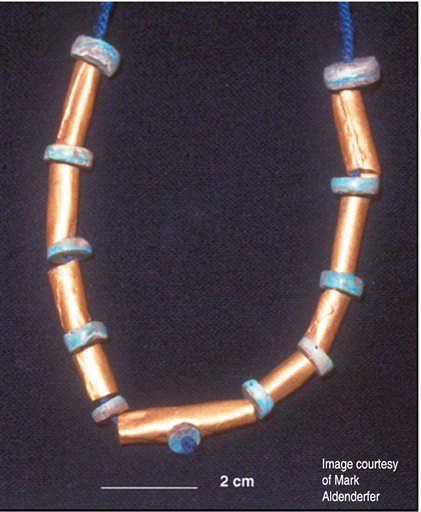
Gold and turquoise necklace from Peru- 2000 B.C.
Use of animal motifs in Egyptian jewelry
Jewelry crafting became an established industry in ancient Egypt about 3,000 to 5,000 years ago (1000 to 3000 B.C.) They worked with gold and silver and discovered the techniques and processes of ornamenting metal that are still employed today. They produced engraved and inlaid jewelry, inlaid with semi-precious stones such as lapis lazuli, turquoise, amethyst, carnelian and jasper. The types of jewelry produced included diadems, collars, necklaces, bracelets and rings. Common jewelry motifs used were animal motifs such as the scarab (beetle), falcon, serpent, the eye and plant motifs like the lotus, derived from religious symbols. In ancient Egypt, jewelry became the symbol of both religious and secular power, and the jewelry workshops were attached to the temples and palaces. The jewelry of the royalty and the wealthy, were used to adorn the mummified bodies after their death, and were placed inside their coffins as grave goods. Vast quantities of jewelry of different designs have been unearthed from the tombs of the Pharaohs, and those recovered from the tomb of Tutankhamen of the 18th dynasty, who reigned between 1333-1323 B.C. are now displayed in the Egyptian Museum in Cairo. Queen Ahhotep of the 18th or 19th dynasty also had a collection of jewels dating from the 16th century B.C. considered as one of the richest treasures in the world.
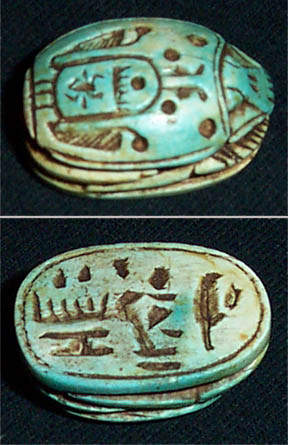
Scarab Beetle amulet- Ancient Egyptian
The animal motifs used in ancient Egyptian jewelry had symbolic meanings of a spiritual nature, such as the scarab or beetle design common in the jewelry of the tombs, that was associated with life and rebirth. Other symbols like the "eye" represented the eye of Horus, the hawk-god, the cobra, an emblem of divine and royal sovereignty, the "tet" an emblem of endurance, and the human-headed hawk, an emblem of the soul. One of the most powerful symbols in Pharaonic Egypt was the "ankh" a symbol of life often carried by Gods and Pharaohs.
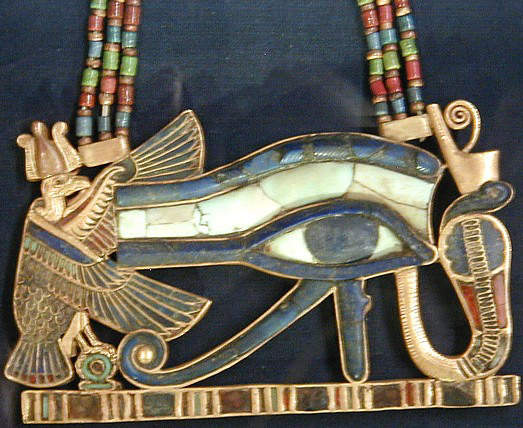
Eye of Horus (Wedjat) Pendant ,with a falcon on the left and serpent on the right.
Jewelry from Mesopotamia
Around 4,000 - 5,000 years ago (2000-3000 B.C.) jewelry manufacturing had become a significant craft in Sumeria, Babylonia and Assyria in Mesopotomia, as revealed by archaeological evidence from the Royal Cemetery of Ur, where hundreds of burial tombs, dating from 2900 to 2300 B.C. were discovered. The tombs contained enormous quantities of artifacts in gold, silver and semi-precious stones such as lapis lazuli, agate, carnelian and jasper, that included crowns decorated with gold figurines, choker necklaces, multi-strand necklaces, earrings, ankle bracelets, animal amulet figures and jewel-headed pins. Jewelry produced was worn by both men and women, and was also used for adorning statutes and idols. Metal working techniques included cloisonné, engraving, fine granulation and filigree. Favored shapes and designs of the period included plant motifs such as leaves, spirals, bunches of grapes etc, and animal figures for amulets. A well known examples of Mesopotamian jewelry, displayed at the British Museum in London, is a royal diadem from Ur, designed with thin gold beech leaves.
Use of insect motifs in Minoan and Mycenaean jewelry
Minoan civilization was a Bronze Age civilization that prospered in the Island of Crete between 2700 to 1400 B.C. (3,400 to 4,700 years ago). The Minoan civilization was followed by the Mycenaean civilization that flourished in Peloponnesian peninsula in Southern Greece during the last phase of the Bronze Age between 1600 B.C. and 1100 B.C. (3,600 to 3,300 years ago). Both the Minoan and Mycenaean civilizations were heavily influenced by the older civilizations of Egypt and Mesopotamia. We do not know what the Minoans and Mycenaeans called themselves, but archaeologists have named the former after their legendary king Minos and the latter after the archaeological site of Mycenae. Agamemnon was one of the Mycenaean kings, who was the key figure in the Trojan War, as retold in Homer's poem Iliad. While the Minoans were great ship builders and masters of the sea, engaging in trading activities in the eastern Mediterranean, the Mycenaeans advanced their civilization through conquest. Both civilizations were advanced culturally, with their own spoken and written languages, advanced artwork including fresco painting, sculpturing and jewel crafting with materials such as ivory, gold and silver. Types of jewelry executed were necklaces, bracelets and earrings. Metal working techniques included granulation, filigree, stamping and enameling. Motifs were naturalistic representations of animals like cuttlefish and starfish and insects such as butterflies and bees.
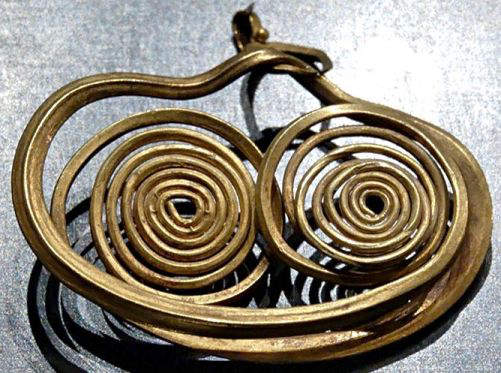
Mycenaean gold earring- 1600 B.C
Jewelry from ancient Anatolia, Persia and Phoenicia
Fine gold and silver jewelry was also turned out in ancient Anatolia, Persia and Phoenicia (1550 to 300 BC). Metal working techniques included granulation, filigree, cloisonné, enameling. They also produced inlaid jewelry inlaid with gemstones. However, Phoenician jewelry was heavily influenced by Egyptian jewelry traditions and Anatolian and Persian jewelry by Mesopotamian jewelry traditions, brought about by trade and other contacts.
Jewelry from the Classical period of Greece
The Classical period of Greece extending from the 6th century to the 4th century BC, was a period of high cultural advancement, that laid the foundation for the modern state and politics, scientific thought, artistic thought, literature and philosophy. During this period in the art of jewel craft granulation went out of use, enamel reappeared and filigree was widely employed. Other processes used were repousse, chasing, engraving, intaglio and soldering. Jewelry styles of the period were delicate and refined. Eg. Plaited gold necklaces were decorated with flowers and tassels, and hoop earrings with filigree disks and rosettes. During the Hellenistic period (323 to 31 BC), some of the common motifs used in jewelry were pendant vases, cupids and doves. Colored semi-precious stones such as garnets were incorporated in jewelry such as bracelets, earrings etc.
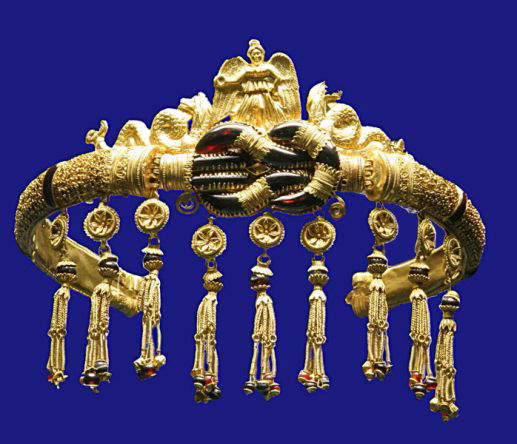
Ancient Greek jewelry- 300 B.C.
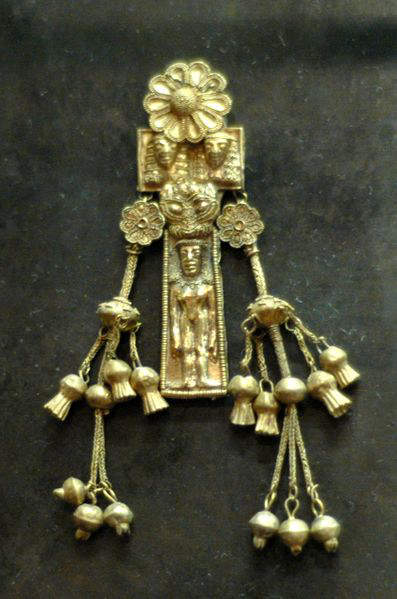
Ancient Greek jewelry- Pendant with naked woman made of electrum, Rhodes- 620 B.C.
Jewelry from the Roman Empire
Jewelry produced during the Roman empire (27 BC to 476 AD), show a combination of jewelry traditions of many previous civilizations such as the Etruscans, a civilization of ancient Italy and Corsica and the Greeks, who were subdued by the Romans. The use of colored gemstones in jewelry was further elaborated by the Romans who also incorporated pearls in their settings. Enameling became very common, and the technique of cameo cutting was perfected. A type of brooch resembling a safety pin known as the fibula became very popular. Rings and ornaments made of amber were also in great demand. Necklaces and bracelets made of gold coins set in elaborate mountings were also produced.
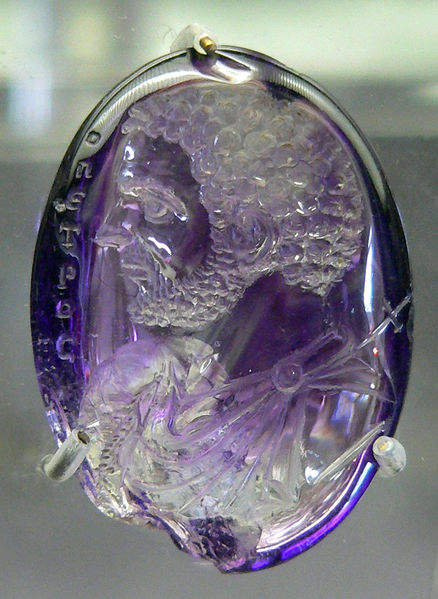
Amethyst intaglio of Roman Emperor Caracalla-212 A.D.
Jewelry from the Byzantine Empire
In 300 AD, Emperor Constantine established Constantinople in Byzantium as the capital of the Roman Empire. After the end of the western Roman empire in 476 AD, Constantinople and Byzantium still survived until 1204 as the Byzantine Empire. During this period jewelry designing was highly advanced and was a synthesis of the craftsmanship of ancient Greece and Rome, the symbolism of Christianity and the stylistic trends of the east. The mosaics at the Ravenna in Italy depict the climax in jewelry designing during this period, in which Empress Theodora is shown wearing gold robes set with precious stones like rubies, emeralds and pearls, emeralds encircling her neck and shoulders. Emperor Justinian beside her wears a diadem on his head and a mantle hung with lavish pendants. A common Byzantine earring executed in gold repouss had a crescent shape with a central cross flanked by peacocks. The cross was the favorite breast pendant, and rings also bore Christian symbols. Apart from gold and silver, gilded bronze was also used in jewelry manufacture. Cloisonné enameling reached a high degree of refinement during this period.
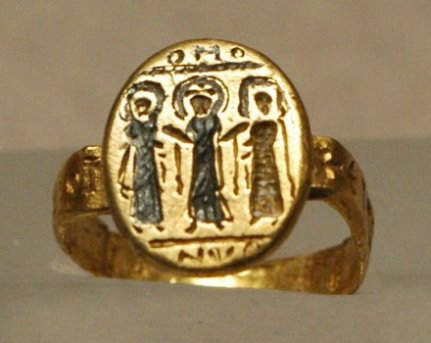
Gold Byzantine wedding ring-7th Century A.D
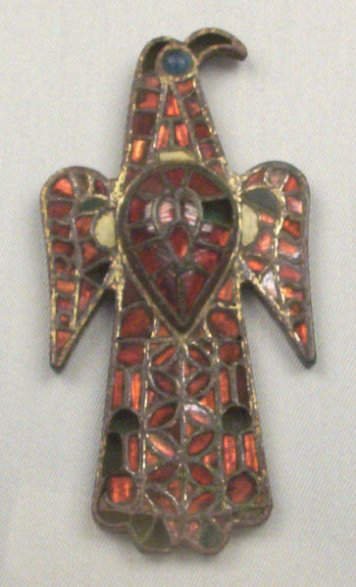
Bronze eagle shaped fibula, cloisonné enamel. 6th A.D.
Jewelry of the Medieval period
Information about stylistic trends in the Medieval period become scarce as the practice of burying the dead with jewelry had long been abandoned and the owners of jewelry including the royalty tended to reset and recast their old jewelry to reflect styles in vogue. However some sculptures created during this period gave some indication of the personal ornamentation of the time, which showed Byzantine influences. Middle Eastern and Arab influences were also brought to bear in the Medieval West, especially after the crusades from 1095 to 1291. Dress materials being woven with golden thread and being studded with gems and pearls were ideas borrowed from the Arab Middle East.
The Gothic architecture which originated in the late Medieval period in the 13th century, whose characteristic features included the pointed arch, were features borrowed from Islamic architecture, after the conquest of Islamic Sicily in 1090, and ideas borrowed from the Middle East and Islamic Spain after the crusades. The Gothic Style was also reflected in the jewelry designs of the period.
A new type of enameling using translucent enamel on metal, chased, and modeled in shallow relief, producing transparent pictures, known as basse-taille enameling became popular. Colored stones did not match this type of enameling, and were replaced by pearls that were set into the metalwork. Other type of jewelry of this period were mainly set with cabochon stones, whose surface was rounded and polished in a convex shape.
Brooches were a common form of jewelry during this period, and were penannular such as the Tara Brooch of Irish origin in the National Museum of Dublin. The principal motifs used were stylized animals and intricate interlacing. Another penannular brooch is the 12th century Eagle Brooch in the Mainz Museum. Chased or enameled pendants of crucifixes and other religious emblems were common during this period.
Jewelry of the Renaissance period
During the period of the Renaissance that lasted for almost 300 years from the 14th to 17th centuries jewelry designing underwent several radical changes. Increased exploration and colonization lead to increased availability of wide variety of gemstones as well as precious metals for jewelry manufacture. There was also an increased exposure to the art of other cultures. The use of gemstones in jewelry settings peaked during this period. Color was an important characteristic of Renaissance jewelry. Delicately worked gold enriched with many colored enamels, were set with bright colored gems, such as sapphires, rubies and emeralds. In the designing of jewelry religious subjects were gradually replaced by classical and naturalistic themes. The sculptural pendant combining irregular baroque pearls, colored gemstones and enameling were typical of this period. Examples of such pendants are the "Sea Dragon Pendant" believed to have originated in Germany in 1575, and the "Canning Jewel" another spectacular work of art of the Renaissance period which combines a baroque pearl, rubies, diamonds and enamel forming a merman, that is preserved in the Victoria Albert Museum. Brooches or pendants incorporating a miniature portrait also became popular. Eg. the Phoenix Jewel Pendant incorporating a silhouette bust of Queen Elizabeth I designed around 1570 to 1580. During the middle ages women wore their hair over their ears, that did not allow the wearing of earrings. But, by the 16th century women began to wear earrings. Even men sometimes wore earrings during this period. At the time King Charles I was taken for beheading on January 30, 1649, he wore a single large drop-shaped pearl measuring 5/8 th of an inch mounted on a gold top, as an ear pendant, which he is reported to have removed and gifted to a faithful follower before he was beheaded.
Baroque jewelry
The Baroque period is a style in art, decoration and architecture that developed around 1590 just before the onset of the 17th century, and was prevalent throughout Europe during the entire 17th century and continued into the early 18th century, until the emergence of the Rococo style in 1730. The style originated in Italy, but soon spread to other countries in Europe such as Germany, Austria, the Low Countries of Netherlands, Belgium, Luxembourg and the Iberian Peninsula (Spain and Portugal). In France, under Louis XIV, a severely classical version of the Baroque became popular. The Baroque style was a further development of the previous Renaissance styles, and was characterized by lively, curved and exuberant forms, by rich ornament based on classical sources, being symmetrical as distinguished from the asymmetry of the Rococo style that followed.
During the Baroque period pearls, gemstones and diamonds played a larger role in jewelry designing, than the polychrome effects of enameling. In the 1630s to 1680s naturalistic floral styles predominated, as a result of the Botanical mania, then current in Europe, that led to the awareness and appreciation of natural flora. The discovery of the Golconda diamond mines in the mid-16th century, near Hyderabad, India, ensured a steady supply of high quality diamonds, which together with the introduction of new diamond cutting methods, such as the rose-cut from India, enabled their frequent incorporation in jewelry produced during this period.
Georgian jewelry
Georgian jewelry refers to jewelry made during the reign of four successive kings of Great Britain, George I, George II, George III, and George IV, whose period of rule extended from August I, 1714, when George I ascended the throne of Great Britain, as the first monarch of the House of Hanover, until the death of King George IV on June 26, 1830. Styles of jewelry produced during this period included Rococo, Gothic Revival and Neo-Classical.
Metals used included gold with high carat content, an alloy of copper and zinc used as a gold substitute, known as Pinchbeck after its inventor, "Berlin Iron" used during the period of the Napoleonic wars instead of gold as a display of patriotism. Enameling in black, white and blue colors, and the use of foil-backed gemstones in setting was common.
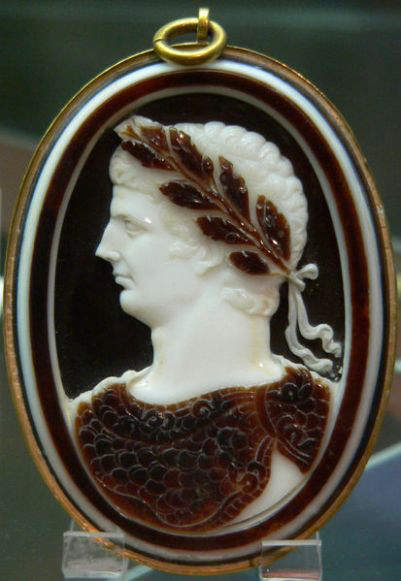
Sardonyx cameo-1791
In the early 18th century the preferred gemstones for setting in Georgian jewelry were diamonds. This was the period when Brazilian diamonds in large quantities were reaching Europe. The Brazilian supplies were not enough to meet the unprecedented demand for white diamonds, and jewelry craftsmen employed cheap substitutes such as rock crystal, marcasite, cut steel and glass paste copies of real diamonds. The high quality and sophistication of these diamond substitutes earned the approval of even the royalty who did not hesitate to wear them in their courts. Besides the traditional table and rose cuts, new cuts such as cushion and brilliant cuts were introduced during this period. In the 2nd half of the 18th century, the use of colored stones in settings also became popular, and gemstones such as rubies, emeralds, sapphires, chrysoberyl, topaz, amethyst, garnets and organic gems like pearls, ivory and coral were used.
The introduction of carved classical theme jewelry popularized the use of materials like obsidian, onyx, carnelian and shells. In the mid-18th century (1748) the discovery and excavation of the city of Pompeii, destroyed by volcanic eruptions of the Mount Vesuvius in 79 A.D. initiated a style that came to be known as Neo-Classical after artifacts discovered on the site. At the beginning of the 19th century (1804), when Napoleon Bonaparte crowned himself as the Holy Roman Emperor, his crown was decorated with antique Roman cameos, that sparked off a craze for cameos.
The type of jewelry that were popular in the Georgian times were tiaras, aigrettes, jeweled bands worn on the hair, chokers, stomachers, brooches, hair combs, bracelets, index finger rings, girandole earrings with a gemstone at the ear lobe and three drops that hang from it, crosses, buckles and memorabilia jewelry. Designs and motifs used included cameos, intaglios, crowned hear design for rings, mosaic, acorns, urns, doves, phoenix, wheat and plumage, floral designs with a single stem or bouquet of flowers for brooches.
Victorian Jewelry
The Victorian era signifies the long period of rule of Queen Victoria of the United Kingdom from 1837 to 1901 (64 years). The era is divided into three periods :- 1) The Early Victorian Period or Romantic Period (1837-1860) 2) The Mid or High Victorian Period or Grand Period (1860-1890) 3) The Late Victorian Period or Aesthetic Period (1890-1901).
1) The Early Victorian or Romantic Period (1837-1860) - This is the period of Queen Victoria's youth, courtship, marriage and early family life until the death of her beloved husband Prince Albert in 1861. Britain was in the midst of its industrial revolution and living standards of the people had increased, increasing their purchasing power. Jewelry was purchased by a wider section of the people, which hitherto was owned mainly by the clergy, aristocracy and upper classes of society. The style of jewelry produced were from the Middle Ages and the Renaissance, that inspired the naturalistic themes common during this period. Popular plant motifs were flowers, bouquets of flowers, branches, leaves, grapes and berries. Animal motifs included the snake and serpent motifs, love and song birds and insects.
Metals used in jewelry included 18k to 22k gold, tri-color gold, silver, and rolled gold. Electroplating with gold that covered the surface of a piece of jewelry made of cheap metal, with a thin film of gold, that imparted a gold-like appearance to the article, was also introduced. Early Victorian jewelry were still hand manufactured, but the foundation for mechanization was being laid such as the development of a method for cutting and stamping settings.
Gemstones used on jewelry were rose-cut and brilliant-cut diamonds, and colored stones such as ruby, emerald, sapphire, garnet, turquoise, amethyst, pink and golden topaz, chalcedony, peridot, zircon, citrine, aquamarine, corals and seed pearls. Cameos turned out of obsidian, shells, corals and quartz were also popular. The type of jewelry included cameos, hair jewelry, necklaces, brooches, earrings, rings, slides, tassels on pins, stickpins, lockets and pocket watches. The techniques used were filigree, piercing, cannetille, chasing and repousse, die rolling and engraving.
2) Mid or High Victorian or Grand Period (1860-1890) - In 1861, Queen Victoria lost her mother, the Duchess of Kent, followed by her husband Prince Albert later in the year. This double tragedy was a great loss to the Queen, and thrust her and the nation into a state of mourning. In the immediate aftermath of this loss, jewelry designs became more somber and austere. During the first year of full mourning black clothing and black jewelry were worn by the mourners. After the first year of mourning half-mourning colors such as gray, mauve and purple clothing were used. Dark stones such as onyx, jet, vulcanite, amethyst and deep red garnets were used in mourning jewelry.
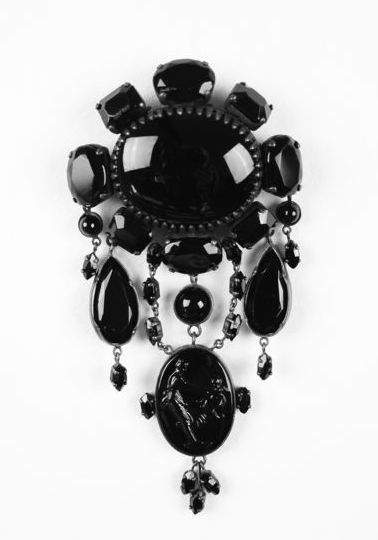
19th Century mourning jewelry-jet brooch
The Mid Victorian Period is also known as the Grand Period, because of the grand way in which gemstones, and metals were used in the manufacture of jewelry. The discovery of gold in America and Australia made available this precious metal in large quantities to jewelry designers, and with this came the revival of ancient gold-working techniques and designs, such as Etruscan, Egyptian, Classical, and Renaissance styles. After the discovery of silver in Virginia City, Nevada in the 1860s, the price of silver dropped, and silver metal was also used extensively in the production of jewelry.
Popular gemstones used during the mid-Victorian period include diamonds, emeralds, rubies, sapphires, pearls, amethysts, garnets, opal, onyx, black glass, jet ivory, tortoise shell etc. Opals were previously believed to bring bad luck to its wearer, a belief that originated in a book titled "Anne of Geierstein" written by Sir Walter Scott, in which an opal hair ornament brings catastrophe to its owner. When large deposits of opal were discovered in Australia in 1870, one of the several countries of the vast British Colonial Empire where the sun never set, Queen Victoria herself dispelled the superstitions surrounding opals, by wearing opal-set jewelry.
Sentimental lockets, engraved bangle bracelets and monogram and name brooches became popular during this period. Motifs of the period include acorns, anchors, monograms, bells, sphinxes, stars, hearts, birds, swans, bees, and daisies.
3) The Late Victorian or Aesthetic Period (1890-1901) - During this period the automobile was revolutionizing transportation, and Darwin's controversial theories on evolution were being widely publicized. After over 25 years of mourning, the Aesthetic Period ushered in a sense of fun and light-heartedness to jewelry, characterized by motifs such as crescent moon and stars, griffins and dragons, and butterflies and salamanders, which were crafted into jewels of extraordinary beauty. Diamonds mined from the recently discovered Kimberly Mines in South Africa, reached the United Kingdom, and were used in large quantities in jewelry settings, that added sparkle to the jewelry, in contrast to the darker, somber tones of the mourning jewelry. As Queen Victoria grew older, her daughter-in-law Princess Alexandra became the royal trend setter. Some of the jewelry designs popularized by Princess Alexandra included the star and crescent motif, encrusted with diamonds, pearls, corals and sapphires or turquoise, and the dog collar design known as the choker.
Towards the end of the Victorian era the manufacture of jewelry shifted from hand crafting to mass production by machine. One of the first pieces of machine-made jewelry introduced to the markets were the curb-link bracelets with dangling hearts and keys. The Darwinian controversy and new botanical discoveries, once again popularized jewelry motifs based on natural themes such as plants and animals. Some of the popular designs included gem-set butterflies, enameled beetles, and gold houseflies. Hunting and sporting motifs also became popular during this period.
Art Nouveau Jewelry
Art Nouveau is an international movement that originated in France affecting the style of art, architecture and decorative arts, around 1890 and lasted until around 1915. The name Art Nouveau was derived from a gallery for interior decoration and the new art form opened by a Japanese art collector Siegfried Bing in Paris in 1895, known as "La Maison de l'Art Nouveau." It was a style adopted for all decorative arts including jewelry. The Art Nouveau jewelry designers experimented with new forms, new materials and new techniques. The Art Nouveau designs featured free-flowing, curving lines with asymmetrical natural motifs, such as the human female form, and other natural and organic forms both plant and animal inspired. The common representation of the female form was as a female head with long flowing hair. Motifs from nature included insects, birds and reptiles. Common insect motifs included butterflies, dragonflies, and bees; bird motifs peacocks and swans, and the snake was the reptile motif. The plant motifs included undulating vines, leaves such as that of Gingko biloba, ferns and a variety of flowers such as orchids, irises, water lilies, poppies, ivy etc.
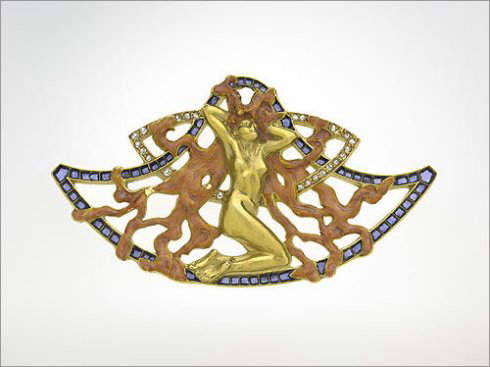
Art Nouveau brooch with female figure
© Museum of Fine Arts, Boston
In Art Nouveau jewelry, the aesthetics of design were considered more important than the intrinsic value of the materials. Thus apart from gold, silver and diamonds, other materials such as copper, clarified horn, ivory, mother-of-pearl, crystal and carved glass and plique-a-jour enamel were used. Cabochon gemstones such as opal and moonstones, and spherical pearls with their rounded surfaces, matched well with the stylized motifs from nature with their curvilinear features. Faceted diamonds and colored gemstones were used only if necessary to enhance the beauty of a piece. The Art Nouveau style affected all types of jewelry such as, necklaces, pendants, bracelets, brooches, rings, tiaras and diadems, and accessories such as cufflinks, hatpins, hair combs, belt buckles and corsage ornaments.
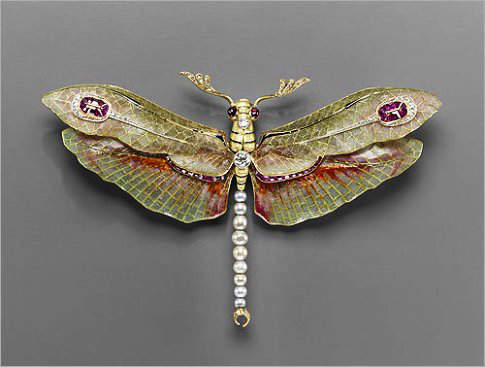
Art Nouveau dragon fly pearl brooch with rubies and diamonds
© Museum of Fine Arts, Boston
The Tarantula Brooch, based on a recurrent naturalistic theme since very ancient times
Thus the Tarantula Brooch designed by Steffan Hemmerle is based on a recurrent naturalistic theme, that had appeared from time to time in the history of jewelry manufacture since very ancient times. The theme first appeared in ancient Egyptian and Mesopotamian jewelry, and then reappeared in the Minoan and Mycenaean jewelry, jewelry of classical period of Greece and Rome, the Medieval period, the Renaissance period, Georgian period and reached a climax in the Victorian period, which continued into the Art Nouveau Period and Edwardian Periods. After the Art Nouveau period of 1890-1915, the use of animal and plant motifs in jewelry are being reintroduced by individual jewelry designers based in different countries. Steffan Hemmerle of Hemmerle Jeweliere, Munich, Germany, is one such designer who turned out the Tarantula Brooch, that has become internationally famous after its display in the traveling exhibition, "Pearls : A Natural History."
The source of the orange-red pearl
The large oval-shaped orange-red pearl that occupies the abdomen of the Tarantula Brooch, originated in the Horse Conch, a species of snail, native to the marine waters of the southeastern United States and northeastern Mexico. The snail is commonly found in the waters of Florida, and the horse conch shell has been designated Florida's state shell since 1969.
Classification of the Horse Conch - Pleuroploca gigantea
Kingdom : Animalia
Phylum : Mollusca
Class : Gastropoda
Order : Neogastropoda
Family : Fasciolariidae
Genus : Pleuroploca
Species : gigantea
Pleuroploca gigantea - Habitat, characteristics of the shell and feeding habit
The Florida Horse Conch also known as the "giant band shell," is one of the two largest univalves in the world, that can reach a length of up to 2 feet (24 ins or 60 cm). The natural habitat of this large sea snail is the Atlantic coast of America from the U.S. state of North Carolina in the north to Brazil in the south. It is more common in Florida found on both coasts, from the estuary to a depth of about 30 meters. In other areas the species is found from the low inter-tidal zone to a depth of about 6 meters.
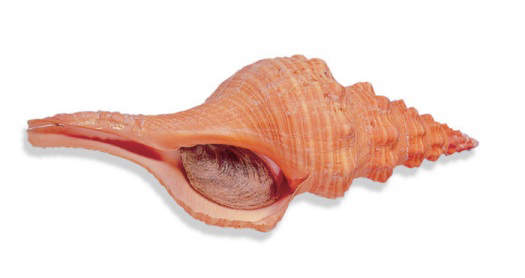
Horse Conch Shell
The shell is spindle-shaped, covered with bands and nodules, but rarely the shells can be smooth without nodules. The young shell is pale-orange in color. The adult shell is orangish, cream or brown in color, with a thin scaly covering, called the periostracum. Very rarely the shell can be pure white in color. On one side of the shell is an orange-red aperture, through which the head and the foot of the mollusk can jut out or be retracted inside when necessary.
The body that is divided into the head, visceral mass and foot, is protected by the hard spiral shell. The head has two pairs of tentacles and the proboscis with the mouth at its end. The "horse conch" is a predatory species, feeding on other marine gastropods such as the "tulip shell" and "lightning whelk" and bivalves. The radula with denticles is used to chip a whole in the prey's shell, and allow the proboscis to be inserted. Thus the "horse conch" is a voracious carnivore.
Pearls produced by the Horse Conch
Pearls are produced not only by bivalve mollusks such as oysters and mussels, but also by univalve mollusks (gastropods), such as snails and sea-snails. Three of the gastropod sea-snails that are known to produce pearls are 1) The queen conch (Strombus gigas), found in the Caribbean and the Gulf of Mexico. 2) The horse conch (Pleuroploca gigantea), one of the largest sea-snails found along the Atlantic coast of the Americas from North Carolina to Brazil, and 3) The melo melo sea-snail found in the South China Sea. Pearls produced by sea-snails are not considered to be true pearls, as they do not produce the nacre, that causes the luster and iridescence of true pearls. These non-nacreous gastropod pearls are known as calcareous concretions. Because of their similarity to porcelain or ceramic, which has a matte-like appearance, these non-nacreous pearls are said to be porcellaneous. However, most conch pearls exhibit a unique flame-like shimmering effect on its surface known as a "flame structure," which is an optical effect, a form of "chatoyancy" caused by the interaction of light with the calcite microcrystals on the surface of the pearl. In some conch pearls the shimmering effect is so spectacular, that some gemologists think, that conch pearls should be reclassified as true pearls.
What are brown Umba sapphires ?
Umba sapphires are a type of fancy sapphires discovered in 1962 in the Umba valley, at a small bend in Tanzania's Umba River near the Kenyan border. The corundum deposit in this area has a radius of about 2 miles, and produces almost every color of sapphire imaginable. In spite of the variety of colors in which they were found, initially Umba sapphires were considered to be less valuable than the variety of sapphires originating from Sri Lanka and Tanzania's other sapphire deposit Tunduru. One of the most popular shades of Umba sapphires, is pinkish-orange or salmon color, equivalent to the pinkish-orange color of the padparadscha, for which Sri Lanka is world renowned. The pinkish-orange Umba sapphires were marketed as African padparadscha to differentiate it from the original Sri Lankan padparadscha. One drawback in the African padparadscha is the presence of a strong tinge of brown that is noticeably absent in the Sri Lankan variety.
The Umba sapphires mounted on the cephalothorax of the Tarantula Brooch has a distinct brown color, and are actually brown Umba sapphires, one of the multitude of colors in which Umba sapphires occur.
Other colors in which Umba sapphires are found are purple, yellow and golden, and the famous color change sapphires, that are green or grayish-blue in daylight and violet to cranberry red in incandescent light, similar to the color change in Alexandrites. Besides this, the entire range of fancy color sapphires are also produced, but the colors are too pale for jewelry use. The assortment of colors are however combined in bracelets and necklaces and seem to have some appeal when so combined.
The House of Hemmerle, designers of the Tarantula Brooch
The House of Hemmerle situated in Maximilian Strasse in Munich, Germany, represents a unique family heritage of superior craftsmanship. The company was established in the 19th century by two brothers Joseph Hemmerle and Anton Hermmerle. The historic breakthrough came when Hemmerle was appointed court jewelers to the Bavarian court, supplying ornaments and medals to the royal family. The jewelry store along Maximilian Strasse was opened in 1904, that offered traditionally designed jewelry of exceptional quality and craftsmanship, and thus cultivated a branding associated with the prestigious name of Hemmerle, throughout Germany. Today, the House of Hemmerle has become a fourth generation family business, with Stefan Hemmerle, the grandson of the co-founder Joseph Hemmerle, at the helm of affairs of the company. Stefan Hemmerle is assisted by his wife Sylveli, and son Christian and daughter-in-law Yasmin. The entire family is involved at every stage of each intricate design, giving a unique stamp of personality to every piece that leaves the Hemmerle workshop. The intricately designed Tarantula Brooch that passed through the Hemmerle workshop is no exception.
You are welcome to discuss this post/related topics with Dr Shihaan and other experts from around the world in our FORUMS (forums.internetstones.com)
Related :-
1) Queen Mary Conch Pearl Brooch
2) Susan Hendrickson's Conch Pearls
References :-
1) Passion for Pearls - International Art Treasure Web Magazine, August 2004
2) Tarantula Brooch - Pearls - Fun Facts
3) Tarantula Anatomy - giantspiders.com
4) Tarantula - From Wikipedia, the free encyclopedia
5) About Tarantulas - www.desertusa.com
6) Bronze Age Greece - the Minoans and Mycenaeans- www.flowofhistory.com
7) Antique Jewelry Glossary - Baroque Jewelry - www.adin.be
8) History of Jewelry - Parts 1-6, www.jewelsforme.com
9) Jewelry - From Wikipedia, the free encyclopedia
10) Victorian Jewelry - From the Antique Jewelry University
11) Georgian Jewelry - From Antique Jewelry University
12) Victorian Jewelry - A Little Bit of Everything - By Judith Anderson, www,jewelryexpert.com
13) Art Nouveau jewelry - www.senses-artnouveau.com
14) Hemmerle - www.hemmerle.com
15) Umba Sapphire - David Federman, www.modernjeweler.com
16) Horse Conch (Pleuroploca gigantea) - The Whitney Laboratory for Marine Bioscience, University of Florida.

 Home
Security & Guarantee
How it Works
Technology Partners
Updated Tables
Famous Diamonds
More Famous Diamonds
Famous Pearls
Famous Gemstones
Contact Dr Shihaan Larif
Contact Senior Editor
Famous Jewelry
Reference Database
Forums
Learning Center
Gemstone Gallery
e-mail Notifications
Advertise
Press Release
About Us
Privacy Policy
Contact Us
FAQ'S
Site Map
Staff Mail Login
Staff Documents
Birthstones
History
Minerals
Shows
Live Metal Prices
Jewellery Gallery
News
Marketplace
Marketplace Support
Open Store
Online Auctions
Join Us & Contribute
Directory
Classifieds
List your products
Wholesale Trading
Post Buy Request
Go Green Policy
Site Updates
Upcoming-ToDo List
Latest News
Latest Articles
Latest Blog Updates
Chat Rooms
Job Board
User Gallery
Videos
New Newsletter Archive
Old Newsletter Archive
Jewelry & Mineral Blog
User Blogs & Social Network
Search
Answers (Q & A)
Valuation
Help me find a diamond/jewelry
pin.internetstones.com- Social Pinboard- Sart yours & connect with millions
Invite Friends From Yahoo, Gmail etc-One Click
Home
Security & Guarantee
How it Works
Technology Partners
Updated Tables
Famous Diamonds
More Famous Diamonds
Famous Pearls
Famous Gemstones
Contact Dr Shihaan Larif
Contact Senior Editor
Famous Jewelry
Reference Database
Forums
Learning Center
Gemstone Gallery
e-mail Notifications
Advertise
Press Release
About Us
Privacy Policy
Contact Us
FAQ'S
Site Map
Staff Mail Login
Staff Documents
Birthstones
History
Minerals
Shows
Live Metal Prices
Jewellery Gallery
News
Marketplace
Marketplace Support
Open Store
Online Auctions
Join Us & Contribute
Directory
Classifieds
List your products
Wholesale Trading
Post Buy Request
Go Green Policy
Site Updates
Upcoming-ToDo List
Latest News
Latest Articles
Latest Blog Updates
Chat Rooms
Job Board
User Gallery
Videos
New Newsletter Archive
Old Newsletter Archive
Jewelry & Mineral Blog
User Blogs & Social Network
Search
Answers (Q & A)
Valuation
Help me find a diamond/jewelry
pin.internetstones.com- Social Pinboard- Sart yours & connect with millions
Invite Friends From Yahoo, Gmail etc-One Click




Our Global Jewelry Industry Job Network


Buy & Sell in our Marketplace

Subscribe to our Newsletter

List in our Classifieds

List in our Directory

User Uploaded Gallery

Powered by Ultra Secure
Amazon (USA) Cloud Network

Founder Internet Stones.COM
Register in our Forums

| Featured In
|
|
|
|
|
|
|
|







Blog & Education Feed
Articles Feed
 |
 |
 |

Copyright © .Internet Stones.COM. All rights reserved.