The Canning Jewel
Open FREE Unlimited Store Join Our Newsletter
Dr. Shihaan M. Lariff
Origin of Name
The Canning Jewel, a sculptural pendant characteristic of the Renaissance period that lasted from the 15th to 17th centuries A.D., incorporating a large baroque pearl as its centerpiece, combined with gold, enameling colored gemstones and diamonds to form the figure of a bearded merman brandishing a scimitar in the right hand and something that looks like a dragon's head in the left hand, gets its name from its one time owner Charles John Canning, Ist Earl Canning, known as Viscount Canning, who was the Governor General of India, from 1856 to 1861. This was a tumultuous period in the history of India, that saw the first organized rebellion against British rule in 1857, known in India as the First War of Independence from Britain, but otherwise referred to in history as the Indian Mutiny or the Indian uprising. This exquisitely crafted sculptural pendant considered as a lasting monument to the ingenuity, inventiveness and craftsmanship of the Renaissance jeweler, was believed to have been acquired by Viscount Canning while serving in India, in one of three possible ways - given as a gift to the Viscount; purchased by the Viscount from its owner; confiscated by the Viscount, by virtue of the powers vested in him as the Governor General, the representative of the Queen of the United Kingdom in British Colonial India.
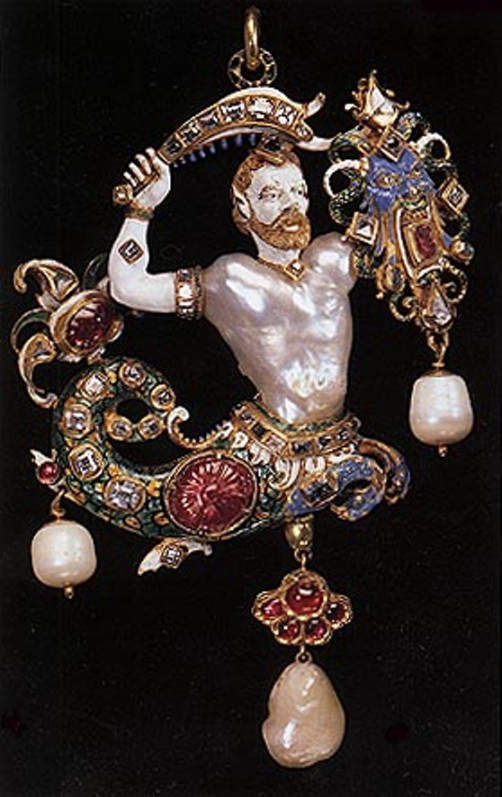
The Canning Jewel
© Victoria Albert Museum

Characteristics of the Canning Jewel
The use of baroque pearls by Renaissance jewelry craftsmen in creating sculptural pendants
The Canning Jewel is a sculptural pendant of the late Renaissance period, ascribed by some jewelry historians to Benvenuto Cellini, a celebrated sculptor, goldsmith, author and soldier of the Italian Renaissance. Around this period from the 15th to 17th centuries, baroque pearls in large quantities had reached the European markets, from the traditional pearl producing countries like the Persian Gulf, the Red Sea and Gulf of Mannar, and also from the newly discovered pearl banks of the New World, in Venezuela, Colombia and Panama, but obviously there was no demand for such pearls because of their irregular shapes, that would not fit into any type of existing jewelry at that time. Pearl dealers had large numbers of such irregular-shaped pearls in their stocks, not knowing what to do with their accumulated stocks. It was then that the enterprising jewelry craftsmen of the Renaissance period, came up with the idea, of incorporating these baroque pearls, together with other colored gemstones, in various fancy shaped pendants; shapes that bore fruit in the fertile imagination of the craftsmen taking into consideration the unique shape of each baroque pearl. The result was a host of different pendants with a multitude of shapes such as animal and bird figures, bunches of flowers and fruits, monsters, dragons, mermaids and other mythical figures; the shape of the pendants being determined by the shape of the baroque pearls that were incorporated in them. Such sculptural pendants as they were known, combined the baroque pearls with gold, silver, enameling and other colored gemstones, to obtain the pre-conceived shape of the jewelry craftsman.
Description of the Canning Jewel
The Canning Jewel is said to be 4 inches (10 cm) long, probably in the vertical direction from the scimitar above the head of the merman to the bottom of the suspended baroque pearl in the center. A large nacreous baroque pearl is the centerpiece of the jewel, that forms the torso of the merman. The remaining parts of the merman, such as the head, hands and the tail and associated structures such as the sword, the dragon head and the floral motifs, are made of gold and enamel, and studded with rubies and diamonds.
Three large pearls hanging from the lower side of the pendant, has a dual function of decorating as well as stabilizing the pendant. The largest of these is a baroque pearl hanging from the center of the pendant, just below the torso of the merman. The other two pearls are of the same size having almost the same cylindrical shape, one hanging from under the tail of the merman, and the other hanging from below the head of the monster held by the left hand of the merman. The tail of the merman is studded with a central oval-shaped ruby and eight rose-cut diamonds. The entire setting appears to be a depiction of some form of victory by the merman over a dragon-like sea monster whose head the merman holds in the left hand and the sword used in defeating the monster in the right hand.
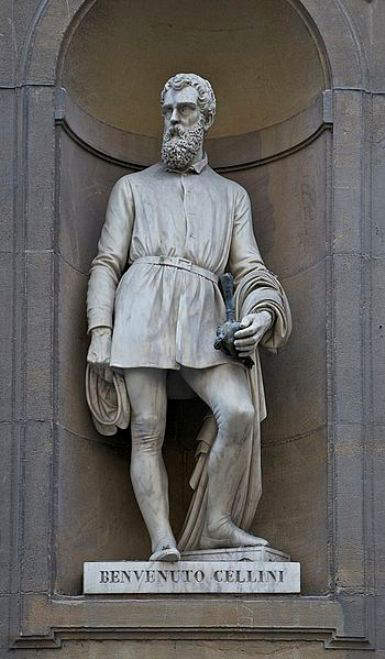
Benevenuto Cellini (1500-1571) - Goldsmith,Sculptor and Painter of 16th Century Republic of Florence (1115-1532), and later Grand Duchy of Tuscany (1569-1859)
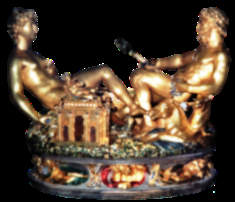
Saliera Sculpture made of gold, enamel and ebony executed by Benevenuto Cellini
Some of the well known sculptural pendants of the Renaissance period
Some of the well known sculptural pendants of the Renaissance period that are found in various museums around the world, are the Canning Jewel in the Victoria Albert Museum; the late-16th century Netherlands Swan Pendant, the late-16th century Italian Caravel Pendant, Mid-16th century French Mars Pendant, Netherlands Siren Pendant of the early-17th century, and the Netherlands Cupid Pendant of the late-16th century, all at the State Hermitage Museum, St. Petersburg, Russia; Erasmus Hornick's pendants of mythical creatures designed in 1562, German Sea Dragon Pendant designed in 1575, and the Spanish Bird and Lizard Pendants of 1580, whose photographs appear in Joan Evans book "A History of Jewelry 1100-1870" published in New York, in the year 2000.
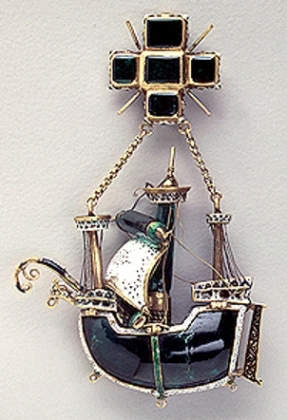
Late 16th-Century Italian Caravel Pendant
© State Hermitage Museum
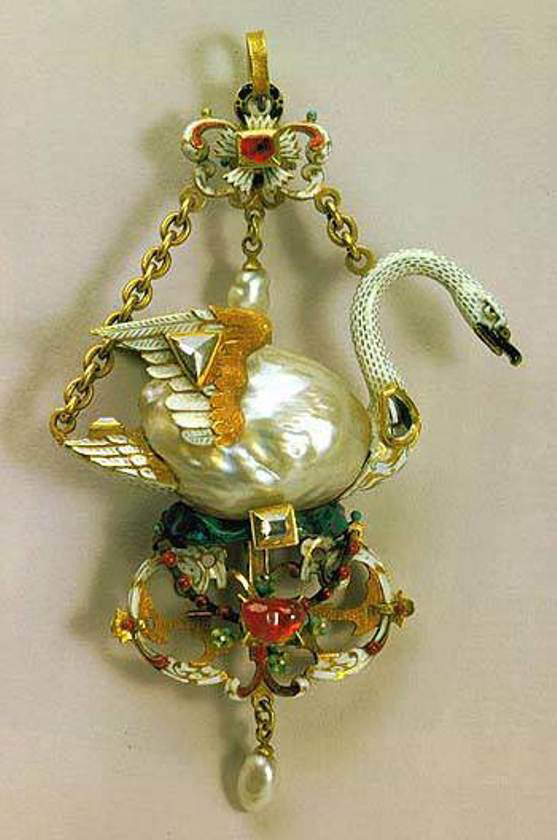
Late 16th-Century Netherlands Swan Pendant
© State Hermitage Museum
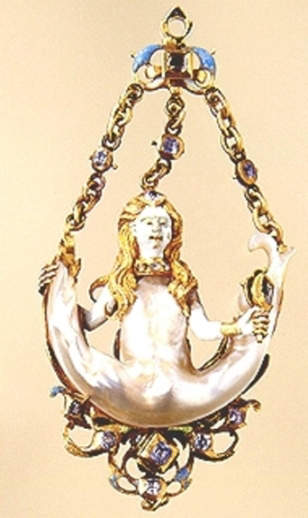
Early 17th-Century Netherlands Siren Pendant
© State Hermitage Museum
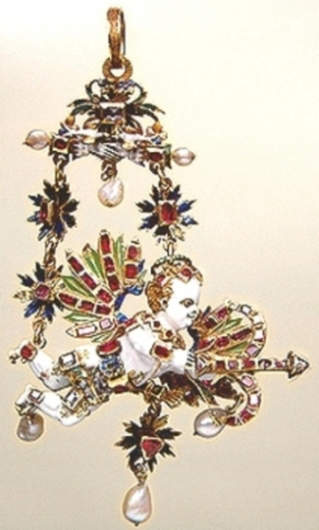
Late 16th-Century Netherlands Cupid Pendant
© State Hermitage Museum
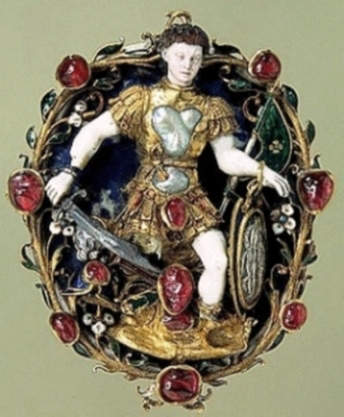
Mid 16th-Century French Mars Pendant
© State Hermitage Museum
History of the Canning Jewel
Where was the Canning Jewel designed ? How did the Canning Jewel come into India ? How did the Canning jewel fall into the hands of the British ?
At the time Sotheby's put up the Canning Jewel for sale on July 16, 1931, an elaborate catalogue, with a colored frontispiece was printed for the auction. The catalogue gave a brief history of this exceptionally fine example of a Renaissance pendant. According to this account the Canning Jewel was designed in Europe, in Florence probably by Benvenuto Cellini in the late 16th century, and later given as a gift by one of the Medicis to a Mogul Emperor of India, where it remained in the Mogul treasury until it was inherited by the last of the Mogul emperors Bahadur Zafar Shah II, whose rule was restricted to the City of Delhi. After the Indian Mutiny of 1857, Delhi was captured by the British, and Bahadur Zafar Shah II was arrested and exiled to Burma, thus ending the 331-year Mughal rule of India, that started in 1526 A.D. It is believed that after the fall of Delhi, the Canning Jewel and other jewels that were in the Mughal treasury, fell into the hands of the British forces, and thus came into the possession of Viscount Canning, who was the Governor General of India, at that time.
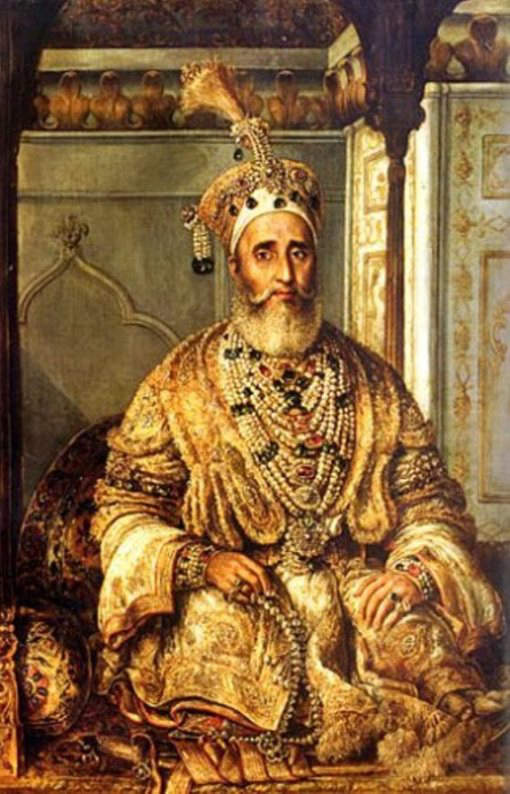
Bahadur Shah II- Last Mughal Emperor of India
The Canning Jewel originated in Italy, but the actual designer of the jewel is not known
Some authorities believe that the Canning Jewel originated in the 1580's. If we accept this as correct, the jewel could not have been designed by Benvenuto Cellini, as the renowned sculptor and goldsmith died in Florence on February 14, 1571. at the age of 70 years. Thus it is difficult to ascribe the Canning Jewel to any particular designer of the Renaissance period. Benvenuto Cellini is among the best known artisans of the Renaissance period, but none of his jewels is believed to have survived. The Italian origin of the Canning Jewel is quite plausible, as there are other sculptural pendants incorporating baroque pearls, of the Renaissance period and of Italian origin, that are preserved in various museums, such as the Italian Caravel Pendant at the Hermitage Museum.
The Canning Jewel was given as a gift by one of the Medicis to a Moghul emperor
The belief that the Canning Jewel was given as a gift by one of the Medicis to a Mogul emperor of India might be correct, but the identity of the Medici ruler or the Mogul emperor are not known. The Medicis are a bourgeois family of Florence who assumed aristocratic status after its founder Giovanni di Bicci de Medici, a merchant, amassed great wealth in trade and became the virtual ruler of Florence from 1421 to 1429. The two major branches of the family originated from the two sons of the founder. The family ruled Florence and later Tuscany from A.D. 1430 to A.D. 1737. The Medici family were benevolent patrons of the arts, and produced four popes for the Catholic Church, and married into the royal family of France. Catherine de Medici, was the queen consort of King Henry II of France from 1547 to 1559 and Marie de Medici, the queen consort of King Henry IV of France from 1600 to 1610. The rulers of Florence around the time the Canning Jewel was produced were Cosimo I, the second Duke of Florence who ruled between 1537 to 1574, Francesco I de Medici, the Grand duke of Tuscany, who ruled from 1574 to 1587 and Ferdinando I de Medici who ruled from 1587 to 1609.
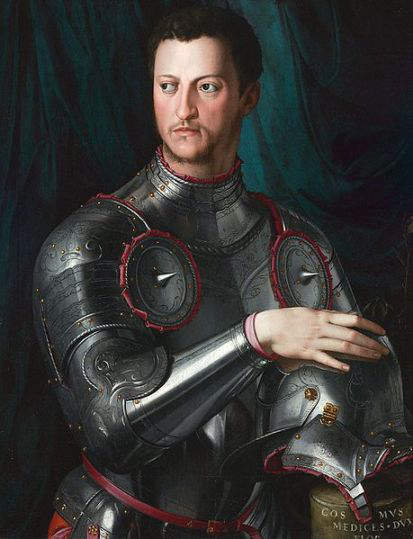
1540s Portrait of Cosimo I de Medici (1537-1574)
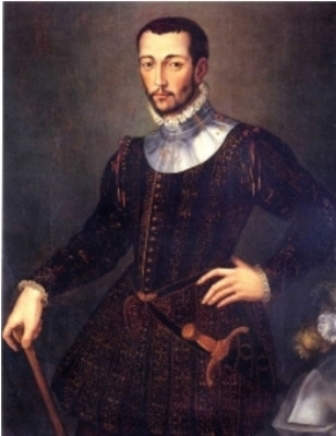
Francesco I de Medici - 2nd Grand Duke of Tuscany 1574-1587
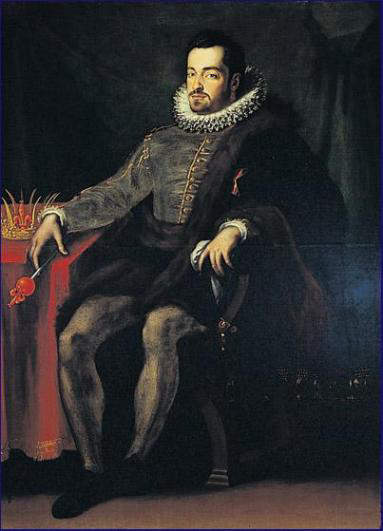
Ferdinando I de Medici - Grand Duke of Tuscany (1587-1609)
The extravagance of the Mughal courts during its classic period
Mughal rule in India began in 1526, after the capture of Delhi and Agra by Zahir-ud-Din Muhammad also known as Babar. The Mughal empire lasted until 1858, but the empire reached the height of its glory between 1556 and 1707, during the period of rule of the great Mughal Emperors, Jalaluddin Muhammad Akbar (1556-1605), Nuruddin Muhammad Jahangir (1605-1627), Shahabuddin Muhammad Shah Jahan (1627-1658) and Moinuddin Muhammad Aurangzeb (1658-1707). The Mughal period in India, was a period of great refinement and advancement. The empire commanded wealth and resources unparalleled in the history of the subcontinent. The Mughal emperors were great patrons of the arts, literature and architecture, which flourished during this period. They were also known for the pomp and pageantry of their courts, that dazzled with jewel-studded thrones, jewel-studded royal robes, and other jewel-studded ornaments worn by the Emperor and the members of his family. Such extravagance reached a climax during the period of Emperor Shah Jahan, whose "Peacock Throne" is said to be the most splendorous throne ever made in the history of mankind. The treasury of the Mughal emperors were renowned to have contained large quantities of precious stones, such as diamonds, rubies, emeralds, sapphires and pearls, both loose as well as set in different forms of jewelry. In all probability the Canning Jewel entered the Mughal treasury during its classic period between 1556 to 1707, possibly during the period of Akbar the Great (1556-1605), the most prosperous and enlightened period in the history of the Mughal empire, during which India established close relations not only with the eastern Persian and Ottoman empires, but also trade relations with the Portuguese, British, French and other medieval kingdoms of Europe.
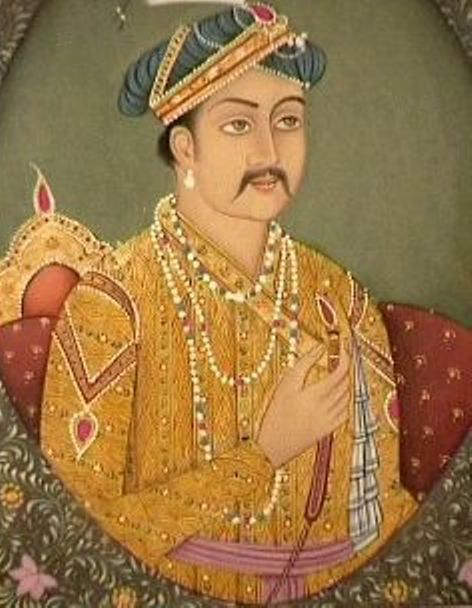
Akbar the Great - the most enlightened ruler in the history of the Mughal Empire
The possible ways in which the Canning Jewel might have come into the possession of Viscount Canning
The Canning Jewel was appropriated by the British Colonial Authorities after the fall of Delhi in 1857
According to a weekly newspaper "Notes and Queries" dated July 4, 1931, that was published every Friday, at 14, Burleigh Street, London, a report on the proposed sale of the "Canning Jewel" by Sotheby's on July 16, 1931, stated that the Canning Jewel which was believed to have been a gift from one of the Medicis to a Mogul Emperor of India, was appropriated by the Indian Colonial Government, after the fall of Delhi during the Indian Mutiny of 1857. Thus, according to this report the "Canning Jewel" came into the possession of Viscount Canning, only by virtue of the powers vested in him as the Governor General of India. The situation was similar to the appropriation of the "Koh-i-Noor Diamond" for the British Crown, by Lord Dalhousie, Viscount Canning's predecessor on March 29, 1849, after the fall of Punjab.
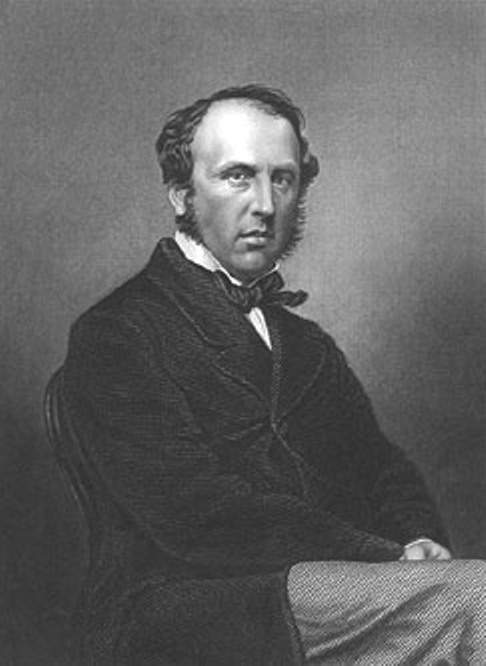
Charles John Canning-Governor General and Ist Viceroy of India
The Canning Jewel was given as a gift to Viscount Canning in appreciation of his services to India
Other authorities have suggested that the Canning Jewel was actually given as a gift to Viscount Canning by the Maharajahs of India, in appreciation of his services to India, during his tenure as Governor General. This suggestion appears to have some merit given the successful manner in which Viscount Canning steered the affairs of the state during the Indian rebellion of 1857, recapturing the areas that came under rebel control, and after establishing the authority of the Colonial Government, successfully resisting demands for widespread vengeance in retaliation for British lives lost in the mutiny, thus earning the nickname "Clemency Canning." After the mutiny, he initiated a more liberal policy and worked towards promoting the loyalty of Indians to Britain, by banning interference in Indian religion and custom, guaranteeing the continuity of princely states, founding the first Indian universities, introducing tenancy legislation, stopping land grabs and admitting Indians into the civil service. He also embarked on a program to reorganize the army. The British East India Company that ruled India was dissolved after the mutiny, and in its place the India Office, under a Secretary of State for India was created, entrusted with formulating policies for ruling India, that was implemented by the office of the Governor General of India, henceforth known as the Viceroy of India. Viscount Canning was appointed the first Viceroy of India in 1858, in recognition of his services to the British Crown during the mutiny. In 1859, Queen Victoria honored him, by making him an extra civil grand cross of the Order of the Bath, and in May of the same year granting him the dignity of an Earl, as Earl Canning. Again in 1862 after he retired and returned to England, more honors were bestowed on him, and he was created a Knight of the Garter, just one month before his death.
The Canning Jewel was purchased by Viscount Canning from its owner
A third possible way in which the Canning Jewel might have come into the possession of Viscount Canning was by purchasing the jewel either from its original owner, or from a subsequent owner who possibly appropriated the jewel from its previous owner, during the tumultuous days of the Indian Mutiny, when the British soldiers went on the rampage killing people and looting their valuable possessions, in the immediate aftermath of the fall of the centers of rebellion, such as Delhi, Kanpur and Lucknow. The report appearing on the weekly newspaper "Notes and Queries" also seem to suggest that the first Viceroy, Lord Canning purchased the jewel, after it fell into British hands in the immediate aftermath of the mutiny.
The fate of the Canning Jewel after the death of Earl Canning
The first Viceroy of India, Earl Canning retired from his post in early 1862, and left India immediately, reaching England in April 1862. By this time his health and strength had been ser iously impaired, due the strain of hard work and anxiety during the tumultuous days of the mutiny, which was compounded by the shock and grief caused by the death of his beloved wife. Just two months after his arrival in England, Earl Canning died on June 17, 1862. Being childless at the time of his death, the titles Viscount and Earl became extinct after his death.
According to the weekly newspaper, "Notes and Queries," the Canning Jewel was inherited by the second Lord Clanricarde, after the death of the first Viceroy Earl Canning. From Lord Clanricarde the jewel was inherited by Lord Harewood, who put it up for sale at a Sotheby's auction held on July 16, 1931. According to the "Illustrated London News" of 1944, the Canning Jewel sold at the Sotheby's auction in 1931 for £10,000, but the identity of the new owner is not revealed. In any case whoever who purchased the Canning Jewel at the Sotheby's auction of 1931, resold it to the Victoria Albert Museum in 1935, for £26,000, realizing a clear profit of £16,000 by the sale. The Canning Jewel had ever since remained a valuable possession of the Victoria Albert Museum, thought to be one of the finest surviving examples of a sculptural pendant of the Renaissance period.
The authenticity of the Canning Jewel as a Renaissance piece is questioned
Ever since the Canning Jewel was acquired by the Victoria Albert Museum, it remained a prized exhibit in their jewelry collection and was considered as a unique example of a sculptural pendant of late 16th-century provenance belonging to the late Renaissance period. However, a careful study of the renowned pendant recently by jewelry historians has revealed evidence that questions the authenticity of the 16th-century provenance of the jewel.
Evidences that favored the view that the Canning jewel was a Renaissance piece
Among the evidences that favored the view that the Canning Jewel was a sculptural pendant of the Renaissance period were the following :-
1) The design and concept of the pendant depicting a mythical creature like a merman, apparently victorious over some form of monster.
2) The use of a baroque pearl as the centerpiece of the design.
3) The three dangling drop pearls hanging from the lower side of the pendant, with a stabilizing function.
4) The existence of similar pieces though not exactly the same design, ascribed without any doubt to the Renaissance period, in various museums such as the Hermitage Museum in St. Petersburg.
Evidences that favor the view that the Canning Jewel is a Renaissance revival piece
Evidences that have come to light recently seem to suggest that the Canning Jewel is not actually a piece belonging to the Renaissance period but to a period one to two centuries afterwards now known as the Renaissance revival period. The production of Renaissance revival jewelry peaked in the 1860s and 1870s, but the Canning Jewel undoubtedly would have been produced before 1856, the year Viscount Canning assumed duties as the Governor General of India. The strong line of evidence that favors the view that the Canning Jewel is a Renaissance revival piece, is the presence of several rose-cut diamonds on the tail of the merman, which in the history of jewelry first came into popular use in the west in the late Baroque period during the late 17th century, i.e. at least a century after the previously accepted production year of 1580s in the late Renaissance period. Thus given the fact that the diamonds used in the Canning Jewel does not belong to the late Renaissance period, combined with the fact that the design elements are undoubtedly of late Renaissance period, has given rise to the speculation that the piece is actually a Renaissance revival piece. If we accept the view that the Canning Jewel is actually a Renaissance revival piece, the entire history of the jewel prior to its acquiring by Viscount Canning is thrown into question, and becomes murkier than ever before.
You are welcome to discuss this post/related topics with Dr Shihaan and other experts from around the world in our FORUMS (forums.internetstones.com)
Related :-
References :-
1) Monstrous Animals : Hanging Animal Pendants of the Late Renaissance, by Alexander Ceely. www.ladysmaidjewels.com
2) The Canning Jewel - www.cooljools.com
3) The Illustrated London News 1944 - www.iln.org.uk
4) The Medici Family - Encyclopedia Britannica 2009
5) Charles Canning, Ist Earl Canning - From Wikipedia, the free encyclopedia
6) Benvenuto Cellini - From Wikipedia, the free encyclopedia
7) Indian Rebellion of 1857 - From Wikipeia, the free encyclopedia
8) The Mughal Empire - John F. Richards, New Cambridge History of India, 1996.
 Home
Security & Guarantee
How it Works
Technology Partners
Updated Tables
Famous Diamonds
More Famous Diamonds
Famous Pearls
Famous Gemstones
Contact Dr Shihaan Larif
Contact Senior Editor
Famous Jewelry
Reference Database
Forums
Learning Center
Gemstone Gallery
e-mail Notifications
Advertise
Press Release
About Us
Privacy Policy
Contact Us
FAQ'S
Site Map
Staff Mail Login
Staff Documents
Birthstones
History
Minerals
Shows
Live Metal Prices
Jewellery Gallery
News
Marketplace
Marketplace Support
Open Store
Online Auctions
Join Us & Contribute
Directory
Classifieds
List your products
Wholesale Trading
Post Buy Request
Go Green Policy
Site Updates
Upcoming-ToDo List
Latest News
Latest Articles
Latest Blog Updates
Chat Rooms
Job Board
User Gallery
Videos
New Newsletter Archive
Old Newsletter Archive
Jewelry & Mineral Blog
User Blogs & Social Network
Search
Answers (Q & A)
Valuation
Help me find a diamond/jewelry
pin.internetstones.com- Social Pinboard- Sart yours & connect with millions
Invite Friends From Yahoo, Gmail etc-One Click
Home
Security & Guarantee
How it Works
Technology Partners
Updated Tables
Famous Diamonds
More Famous Diamonds
Famous Pearls
Famous Gemstones
Contact Dr Shihaan Larif
Contact Senior Editor
Famous Jewelry
Reference Database
Forums
Learning Center
Gemstone Gallery
e-mail Notifications
Advertise
Press Release
About Us
Privacy Policy
Contact Us
FAQ'S
Site Map
Staff Mail Login
Staff Documents
Birthstones
History
Minerals
Shows
Live Metal Prices
Jewellery Gallery
News
Marketplace
Marketplace Support
Open Store
Online Auctions
Join Us & Contribute
Directory
Classifieds
List your products
Wholesale Trading
Post Buy Request
Go Green Policy
Site Updates
Upcoming-ToDo List
Latest News
Latest Articles
Latest Blog Updates
Chat Rooms
Job Board
User Gallery
Videos
New Newsletter Archive
Old Newsletter Archive
Jewelry & Mineral Blog
User Blogs & Social Network
Search
Answers (Q & A)
Valuation
Help me find a diamond/jewelry
pin.internetstones.com- Social Pinboard- Sart yours & connect with millions
Invite Friends From Yahoo, Gmail etc-One Click




Our Global Jewelry Industry Job Network


Buy & Sell in our Marketplace

Subscribe to our Newsletter

List in our Classifieds

List in our Directory

User Uploaded Gallery

Powered by Ultra Secure
Amazon (USA) Cloud Network

Founder Internet Stones.COM
Register in our Forums

| Featured In
|
|
|
|
|
|
|
|







Blog & Education Feed
Articles Feed
 |
 |
 |

Copyright © .Internet Stones.COM. All rights reserved.